Key insights
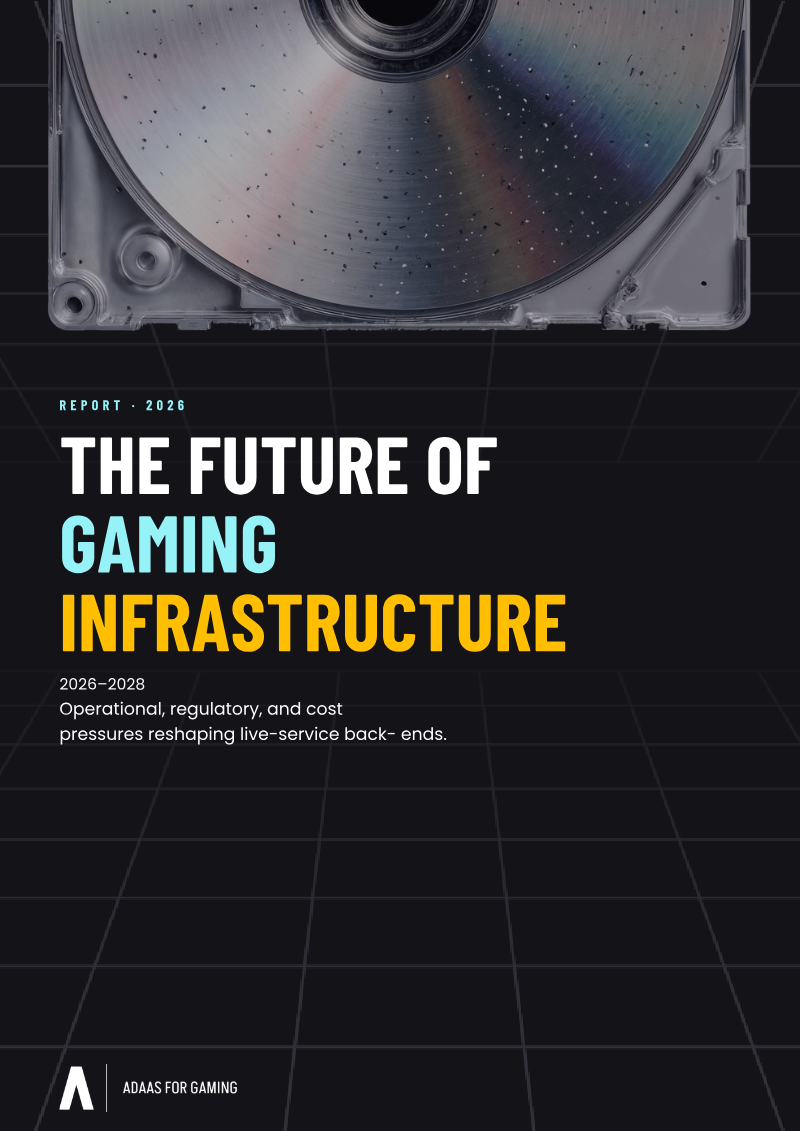
7 slides
The core problem
Fragmented backends cannot support high-velocity live-ops.
Legacy stacks rely on separate databases, caches, and search layers. Studios must shift toward unified, AI-native data planes that co-locate compute and data.
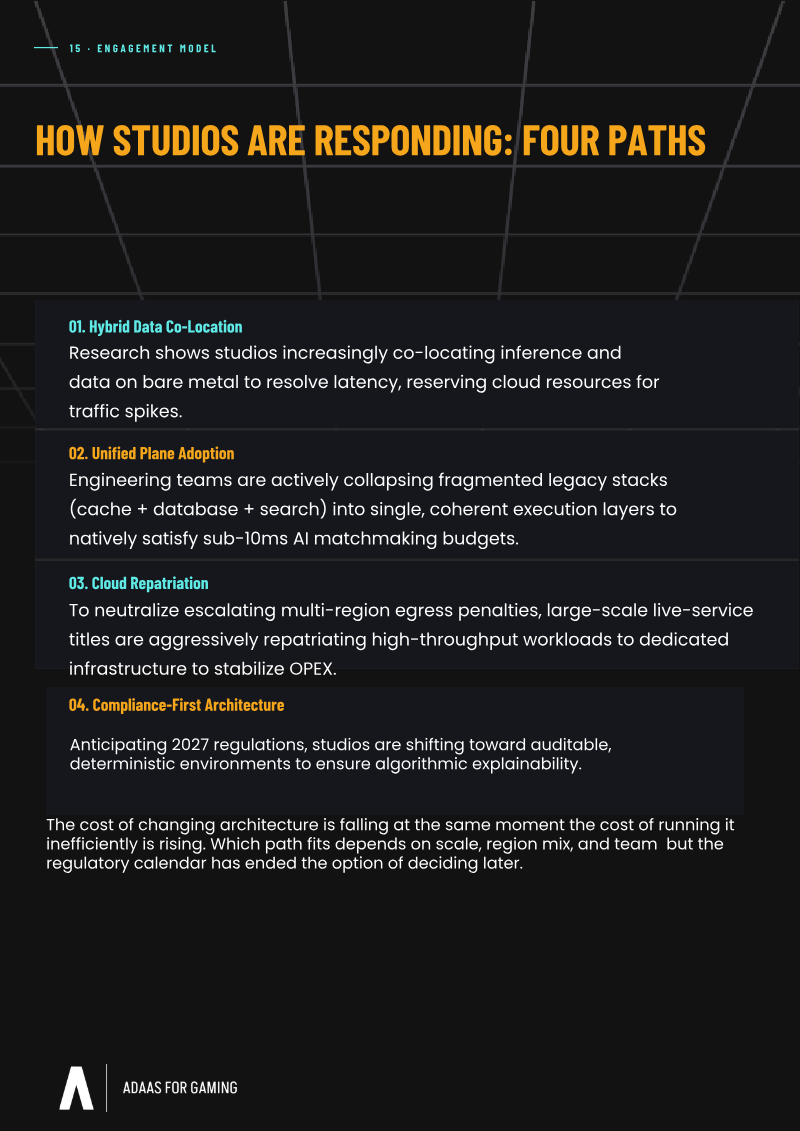
The latency gap
Only 5% of studios successfully implement player-facing AI.
Traditional, multi-hop network architectures create latency bottlenecks.
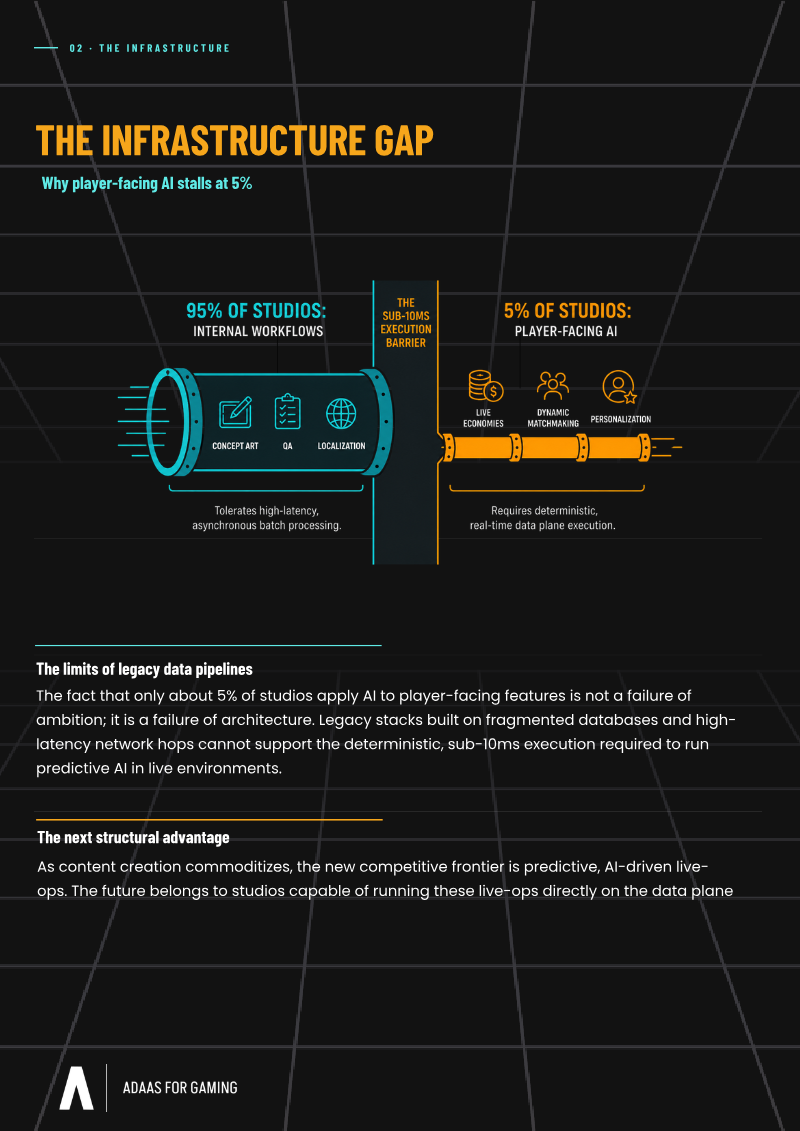
Key number
Low-latency matchmaking can increase player retention by 4% to 15%.
This requires moving away from asynchronous batch processing toward millisecond-level inference.
Retention uplift. Optimizing real-time matchmaking can increase player retention by 4% to 15%.
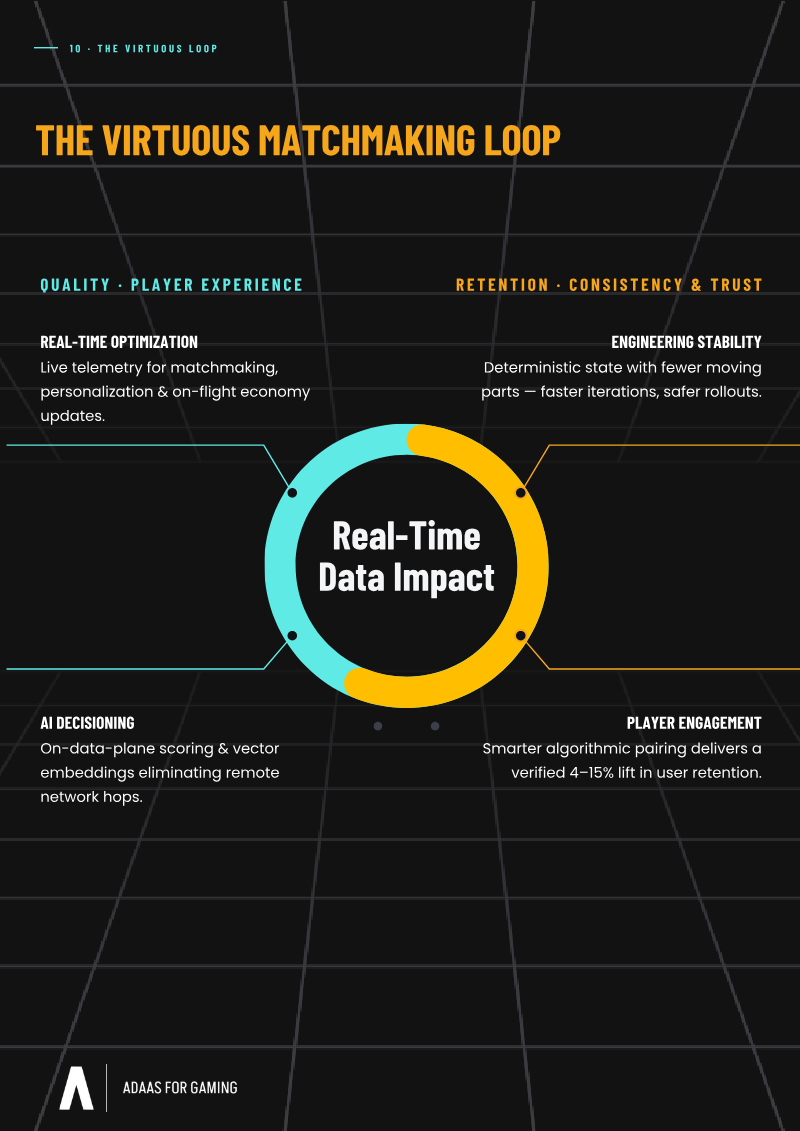
Regulatory mandate
EU acts require immutable audit logs for matchmaking.
The 2027 EU Data Act mandates the removal of cloud switching fees. The EU AI Act classifies algorithmic matchmaking as high-risk, requiring transparency and explainability.
Compliance requirements. Studios must implement immutable audit logs and transparent, explainable algorithmic systems.
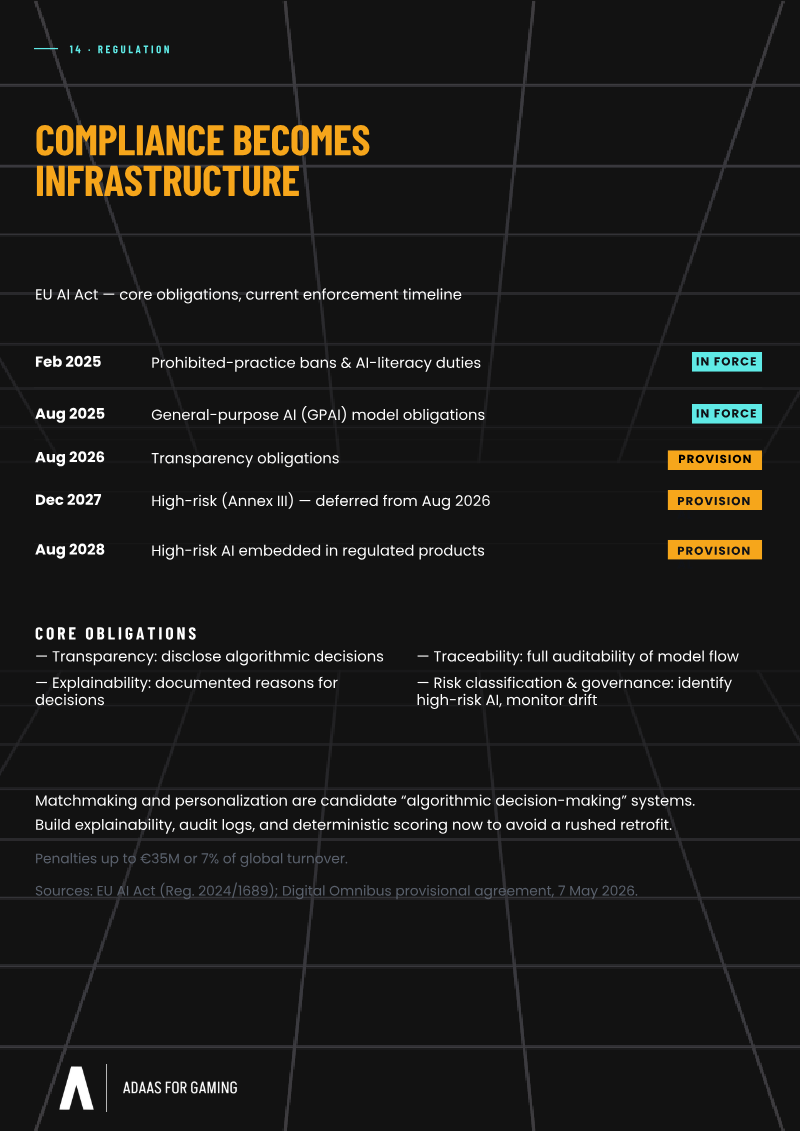
Margin defense
Hybrid deployment models stabilize operating margins against egress fees.
Studios are increasingly adopting hybrid models that combine self-hosted infrastructure with cloud resources. This stabilizes operating margins against unpredictable egress fees.
Decision complexity
Matchmaking engines process hundreds of thousands of micro-decisions per second.
Decision-making complexity is growing as engines process hundreds of thousands of micro-decisions per second. Executing logic directly on the data plane has become a primary competitive advantage.
Page 2 of the report20158
202025
202490
2027150
System consolidation
Collapsing fragmented stacks enables atomic, event-driven transactions.
This allows for atomic, event-driven transactions that satisfy performance and regulatory mandates.
Page 17 of the report- 01Collapse fragmented stacksConsolidate into a single, coherent execution layer.
- 02Eliminate redundancyRemove redundant systems and network round-trips.
- 03Enable atomic transactionsSupport event-driven transactions for performance and compliance.
1 / 7
Ask AI about this report