Global reports and market data
Documents

Shooter Monthly #6: RADICAL Marathon Solutions, Deadlock’s Secret Design, & Fortnite Extraction Mode
The modern shooter landscape is undergoing a significant transition as established titles struggle to balance core gameplay integrity with the demands of platform-based growth.
- Valve is prioritizing long-term polish for Deadlock by treating it as an iterative platform rather than a static product, leveraging expertise in both MOBA and shooter design.
- Bungie’s Marathon is currently underperforming in mass-market acquisition compared to competitors like Arc Raiders, despite possessing high-quality mechanics that drive strong player retention.
- Epic Games is facing competitive pressure from platforms like Roblox, forcing a strategic shift toward refining core monetization and gameplay quality rather than pursuing unfocused expansion in Fortnite.
Why aren’t more game developers using Kickstarter?
Kickstarter continues to serve as a vital, evolving mechanism for video game development, functioning less as a primary funding source and more as a sophisticated community-building and marketing instrument.
- Kickstarter is shifting from a primary funding source to a strategic marketing tool, with over 440 successful projects raising $26 million in the most recent annual cycle.
- Developers must treat Kickstarter as a community-building instrument, as the platform typically provides only 30 percent of a project's total backer base.
- Activity on the platform is projected to grow by 10 percent in 2025 as developers increasingly use it to secure final-stage capital and improve project visibility.
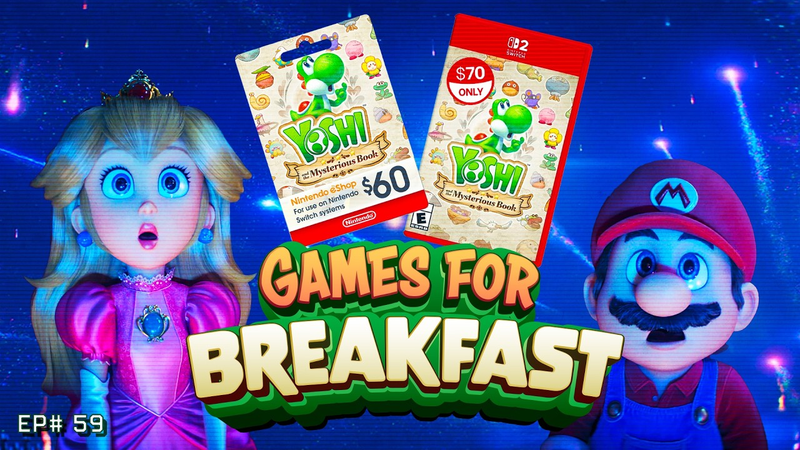
What Does a Nintendo Game Cost in 2026? -OR- Should Physical Games Cost More? | Games For Breakfast
The gaming industry is currently undergoing a structural transformation characterized by the erosion of price parity between physical and digital media.
- Nintendo is decoupling physical and digital pricing by setting physical editions at $70 while keeping digital versions at $60, signaling a shift away from traditional retail price parity.
- Publishers are increasingly adopting $70 as the new industry baseline for physical media to offset supply chain costs and the declining influence of brick-and-mortar retailers.
- The gaming industry is experiencing structural instability due to the high costs of generative AI, corporate consolidation, and the failure of growth-focused initiatives like OpenAI’s Sora.

2026 Global Mobile Gaming Marketing Trends: How Growth Is Being Won
The 2026 Global Mobile Gaming Marketing Trends White Paper analyzes the evolving landscape of mobile game marketing, shifting from new user acquisition to competitive retention strategies.
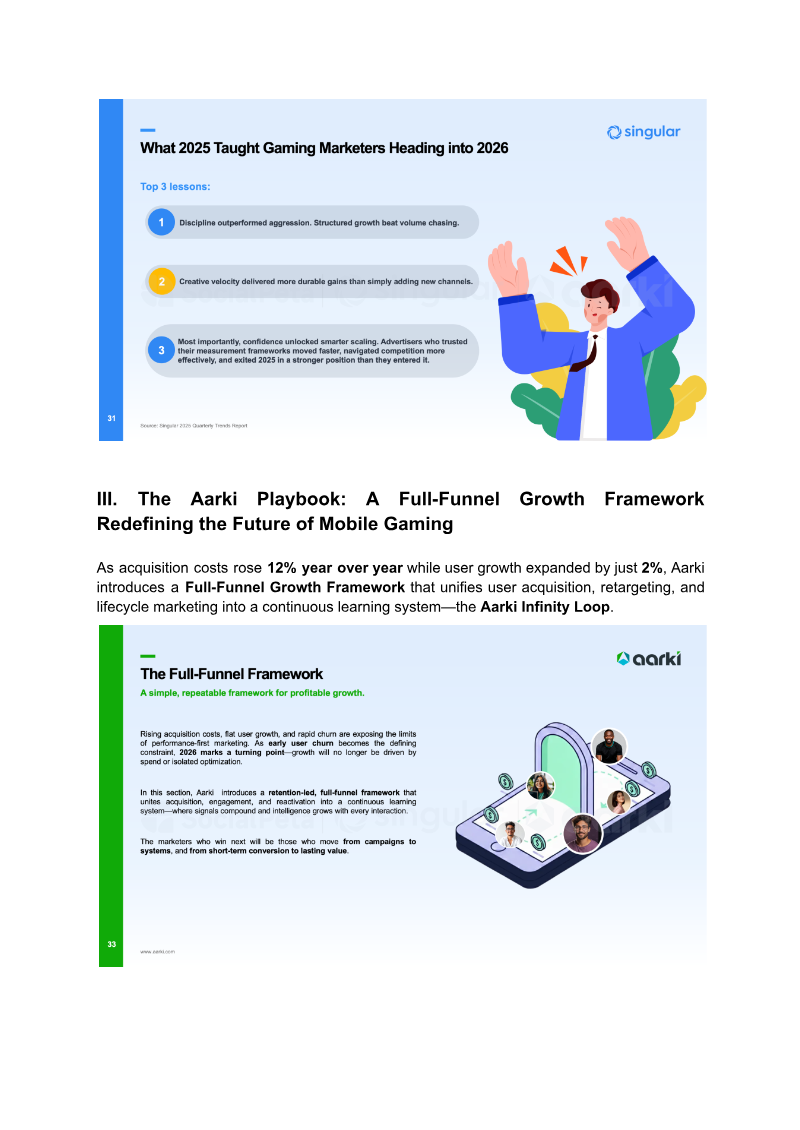
- Mobile gaming marketing has shifted to a retention-led model where full-funnel orchestration between user acquisition and retargeting can increase user lifetime value by up to 20%.
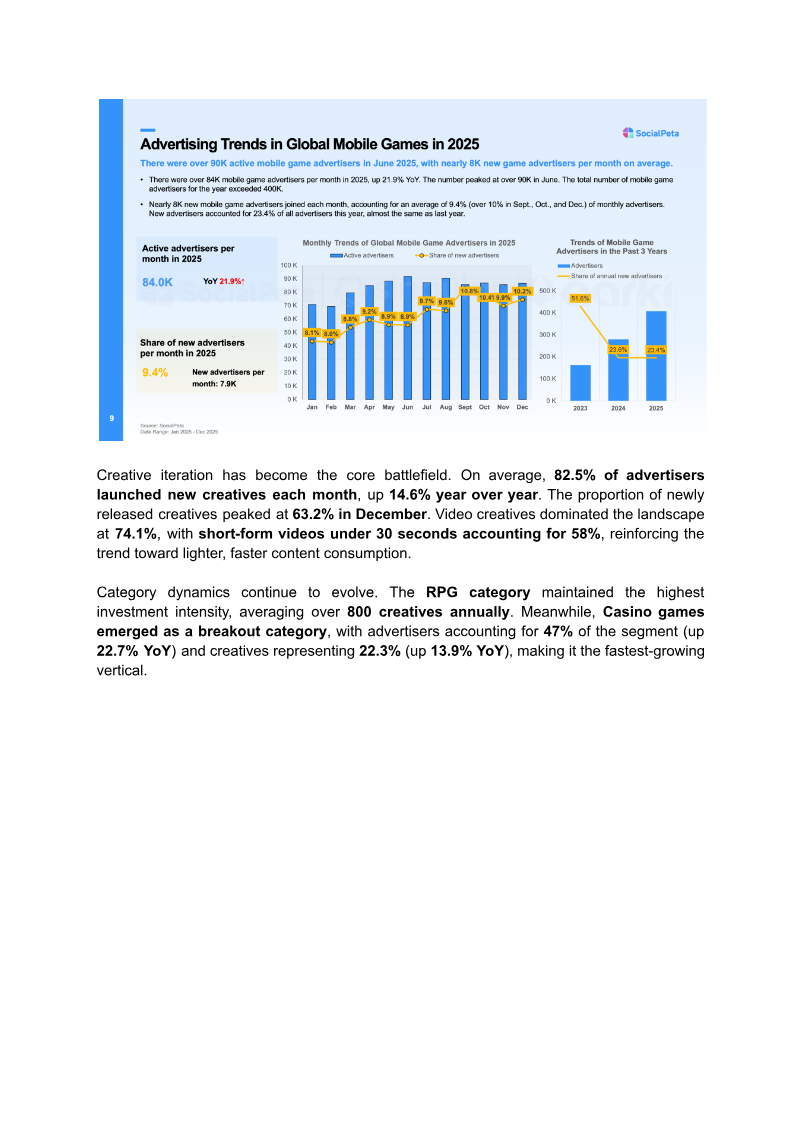
- Creative iteration is the primary competitive lever, with 82.5% of advertisers launching new creatives monthly—a 14.6% year-over-year increase—and short-form videos under 30 seconds accounting for 58% of all creative formats.
- In the 4X strategy genre, achieving a D7 retention rate of 15-18% is critical for scalability, which is heavily dependent on an Alliance join rate of over 60% by Day 3.
2026 Global Mobile App Marketing Trends White Paper
The 2026 Global Mobile App Marketing Trends White Paper analyzes the fundamental shifts in the global mobile app market during 2025, moving from traffic-driven growth to value-led operations, technology-enabled optimization, and deep localization.
- The mobile app market has shifted from volume-based growth to a quality-focused model, evidenced by a 16.7% YoY decline in active advertisers alongside a 73.3% surge in creatives per advertiser.
- Global user acquisition spend grew 13% YoY to $78 billion, with the increase driven almost exclusively by iOS advertising.
- Video remains the dominant advertising format, accounting for approximately 70% of social media inventory, while static and playable ads are relegated to testing and engagement signaling.

Insight into Global Micro Drama App Marketing for 2026
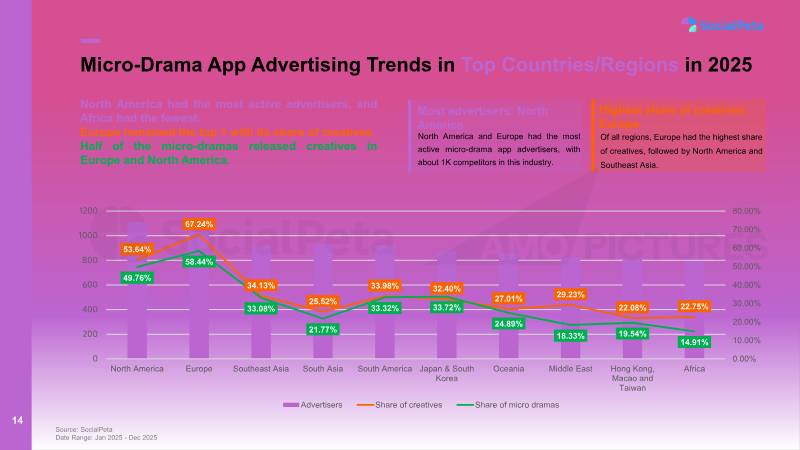
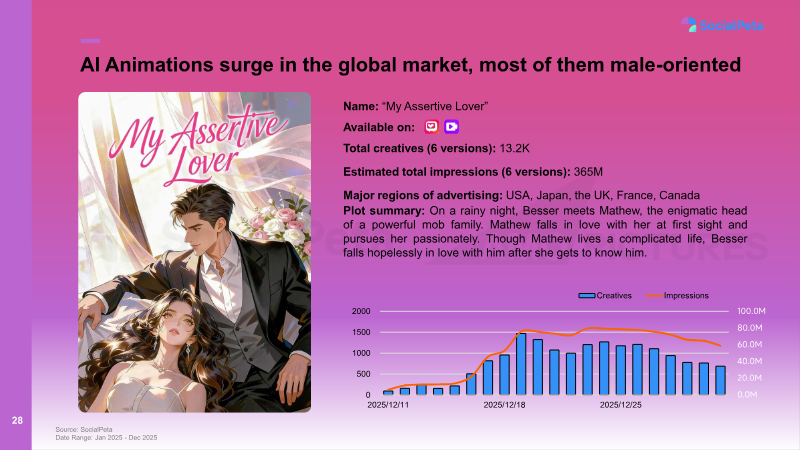
The global micro-drama market is experiencing explosive growth, reaching $3.6 billion in 2025 with a 126% year-over-year increase, and is projected to expand to $6 billion in 2026.
- The global micro-drama market is projected to reach $6 billion by 2026, supported by a 63.6% increase in active advertisers to over 700 in 2025.
- AI-powered production tools drove a 144.9% increase in creative output per advertiser in 2025, enabling rapid localization and standardized production pipelines.
- High-impact marketing campaigns, such as the 44,000 creatives for 'Evil Bride vs. The CEO’s Secret Mom,' demonstrate that short, cliffhanger-style ads with intense conflict are the most effective format for driving global engagement.

Let's Review Your Games — Ep. 049
Successful indie game development relies on a delicate balance between high-fidelity visuals, intuitive user interface design, and immersive audio feedback.
- Game design should prioritize 'wish fulfillment' as a core foundation, as seen in the successful premise of cleaning up a personal island.
- UI and game mechanics must be intuitive; players should not be confused by basic systems like energy bars or resource management.
- Audio design is critical for immersion; developers should use sound effects for repetitive actions like picking up trash and employ EQ filters to make in-game music feel diegetic.

Unity copies the AppLovin playbook with Vector | Week in Mobile Games podcast
This analysis covers recent developments in the mobile games industry, focusing on strategic shifts by major technology firms, legal challenges, and performance trends for specific titles.
- Unity is shifting its business model to mirror AppLovin by divesting its game publishing division, Supersonic, to focus exclusively on its 'Vector' growth strategy.
- The Ninth Circuit Court of Appeals has denied Apple’s request for a rehearing in the Epic Games App Store dispute, maintaining the current legal pressure regarding external transaction fees.
- Supercell’s Brawl Stars has seen a revenue resurgence, recording $33 million in February, a 9.2% increase since November 2024.

Can You Build a Real Business on Roblox?
Roblox has transitioned from a repository of viral, short-lived experiences into a robust ecosystem capable of supporting sustainable, high-quality businesses.
- Roblox has shifted from a platform for short-lived viral games to an ecosystem supporting sustainable, multi-year franchises by prioritizing long-term retention and social co-play over addictive mechanics.
- The platform’s discovery algorithm now favors deep engagement metrics, incentivizing developers to abandon 'pop-and-drop' release cycles in favor of continuous, long-term development.
- Small, lean teams of fewer than four people are currently achieving the highest success rates by launching minimum viable products and iterating weekly based on direct community feedback.

Gaming the Future: How to Make an Impact With Younger Generations
This document explores the impact of in-game advertising on younger audiences, specifically Generation Z and Generation Alpha, and how brands can effectively engage these influential demographics.
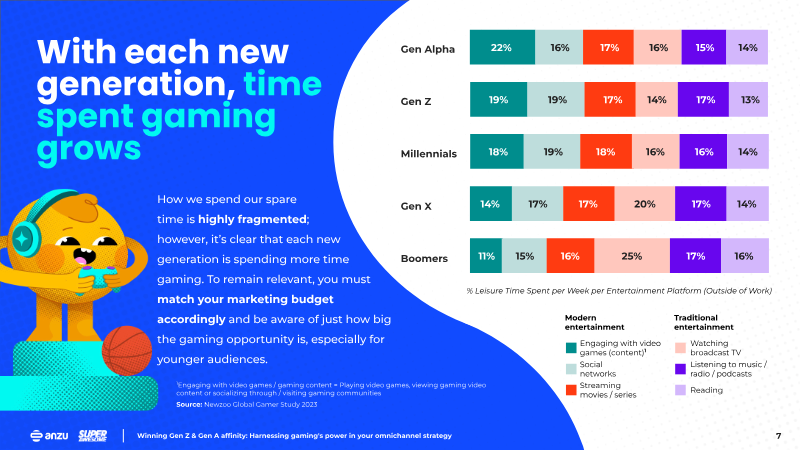
- Gaming has become the primary entertainment medium for younger demographics, with 80% of under-18s actively gaming and Gen Z dedicating up to 22% of their free time to play.
- In-game advertising significantly outperforms traditional metrics for younger audiences, driving an 86% boost in brand affinity among under-18s and increasing brand recall by 7 points and purchase intent by 9 points for those under 34.
- Younger gamers are notably more receptive to in-game ads than older adults, with 75% of Gen Z players in the UK and US reporting that ads improve their gaming experience compared to only 34% of older adults.


Ad Monetization Without Killing Retention
The document, "Ad Monetization Without Killing Retention," provides a comprehensive guide for game developers on integrating advertising effectively to scale revenue and support player progression without compromising retention, particularly within hybrid monetization models.
- Integrate advertisements as core gameplay design elements rather than external overlays to increase revenue without negatively impacting player retention.
- Deploy rewarded video ads during high-stakes moments—such as revives, boosters, or time-limited rewards—to leverage scarcity and urgency for higher conversion rates.
- Implement strategic gating for ad triggers based on level progression, total playtime, or specific cooldown periods to minimize player frustration.


2026 Global Mobile Gaming Marketing Trends White Paper
The "2026 Global Mobile Gaming Marketing Trends White Paper" analyzes the evolving landscape of mobile game advertising and user acquisition, highlighting a shift towards more sophisticated, data-driven, and AI-powered strategies for sustainable growth.
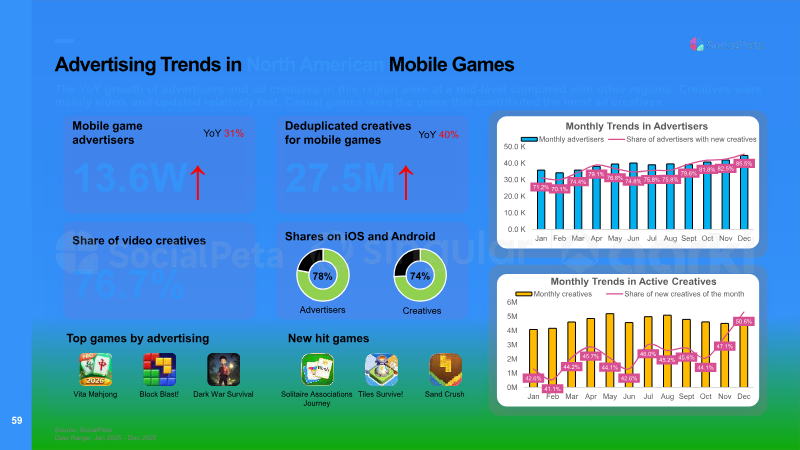
- The mobile gaming advertising ecosystem grew by 22% year-over-year in 2025, with over 90,000 active advertisers and 8,000 new entrants joining monthly.
- Video content now accounts for 74% of all mobile game ads, representing a 14% year-over-year increase in usage.
- A shift toward an 'Infinity Loop' marketing model, supported by supervised AI, can increase player lifetime value (LTV) by up to 30% by integrating acquisition, retargeting, and lifecycle management.