Global reports and market data
Documents

2026 Global Mobile Gaming Marketing Trends White Paper
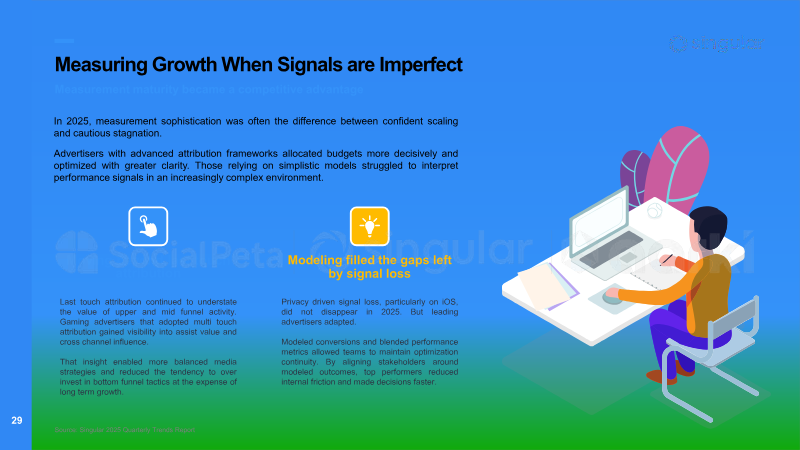
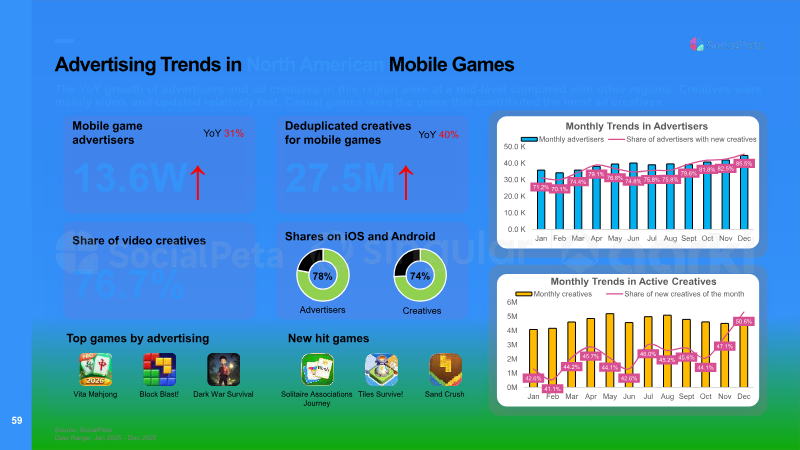
The "2026 Global Mobile Gaming Marketing Trends White Paper" analyzes the evolving landscape of mobile game advertising and user acquisition, highlighting a shift towards more sophisticated, data-driven, and AI-powered strategies for sustainable growth.
- The mobile gaming advertising ecosystem grew by 22% year-over-year in 2025, with over 90,000 active advertisers and 8,000 new entrants joining monthly.
- Video content now accounts for 74% of all mobile game ads, representing a 14% year-over-year increase in usage.
- A shift toward an 'Infinity Loop' marketing model, supported by supervised AI, can increase player lifetime value (LTV) by up to 30% by integrating acquisition, retargeting, and lifecycle management.
The Unintended Consequences of MTG's Universes Beyond | Extra Credits Gaming
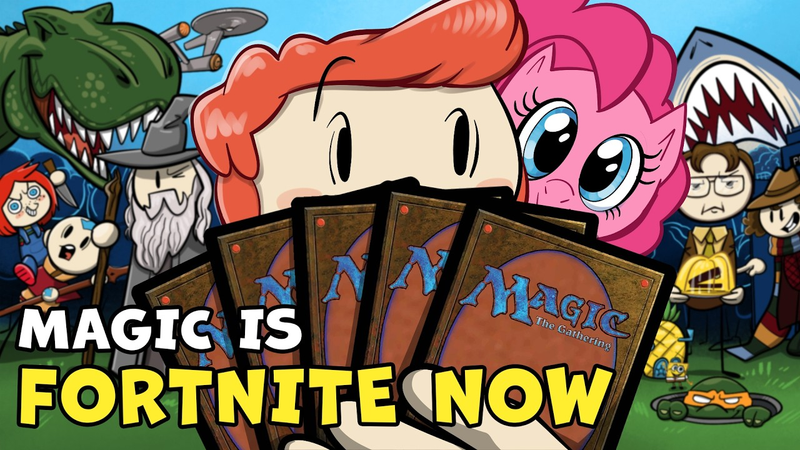
The expansion of Magic: The Gathering through the Universes Beyond initiative represents a significant strategic shift for Wizards of the Coast, characterized by the integration of external intellectual properties into the game’s established multiverse.
- Wizards of the Coast's 'Universes Beyond' strategy has driven significant financial growth, with Magic: The Gathering becoming Hasbro's first brand to exceed $1 billion in annual revenue in 2022.
- The 2025 Final Fantasy set generated $200 million in revenue in a single day, a milestone that took the Lord of the Rings set six months to achieve, contributing to a 23% revenue growth for the tabletop division.
- Organized play for Magic: The Gathering saw a 40% increase in unique players during the first half of 2025, signaling strong engagement with the crossover-heavy release schedule.
The Role of the Cosmographer
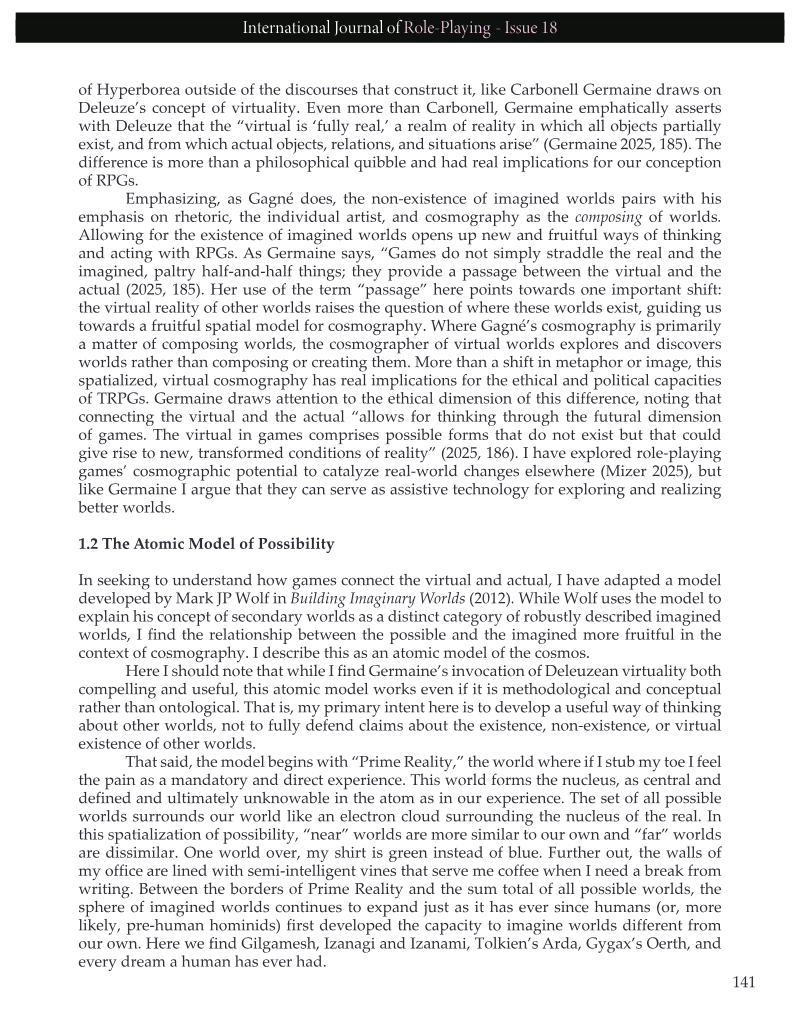
Tabletop role-playing games function as sophisticated cosmographic technologies, serving as collaborative frameworks that extend human capacity to imagine and navigate alternative realities.
- Tabletop role-playing games function as collaborative worldbuilding technologies that allow participants to simulate and navigate alternative realities beyond existing ideological constraints.
- The medium evolved from the 'Midwestern Synthesis,' a historical convergence that transitioned probability-based wargaming into a structured framework for speculative inquiry.
- Modern role-playing systems prioritize systemic world-construction over individual character performance, acting as a laboratory for testing complex social and environmental possibilities.
How is Learning in Edu-Larp as a Method Described and Seen by Practitioners?
Educational live-action role-playing functions as a sophisticated pedagogical framework that leverages immersion, agency, and playfulness to foster deep learning.
- The efficacy of educational live-action role-playing (edu-larp) depends on the synthesis of experiential embodiment during play and rigorous post-experience reflection to solidify learning outcomes.
- Edu-larp functions as a constructivist pedagogical framework that utilizes immersion, agency, and social interaction to develop empathy and social competencies alongside academic content.
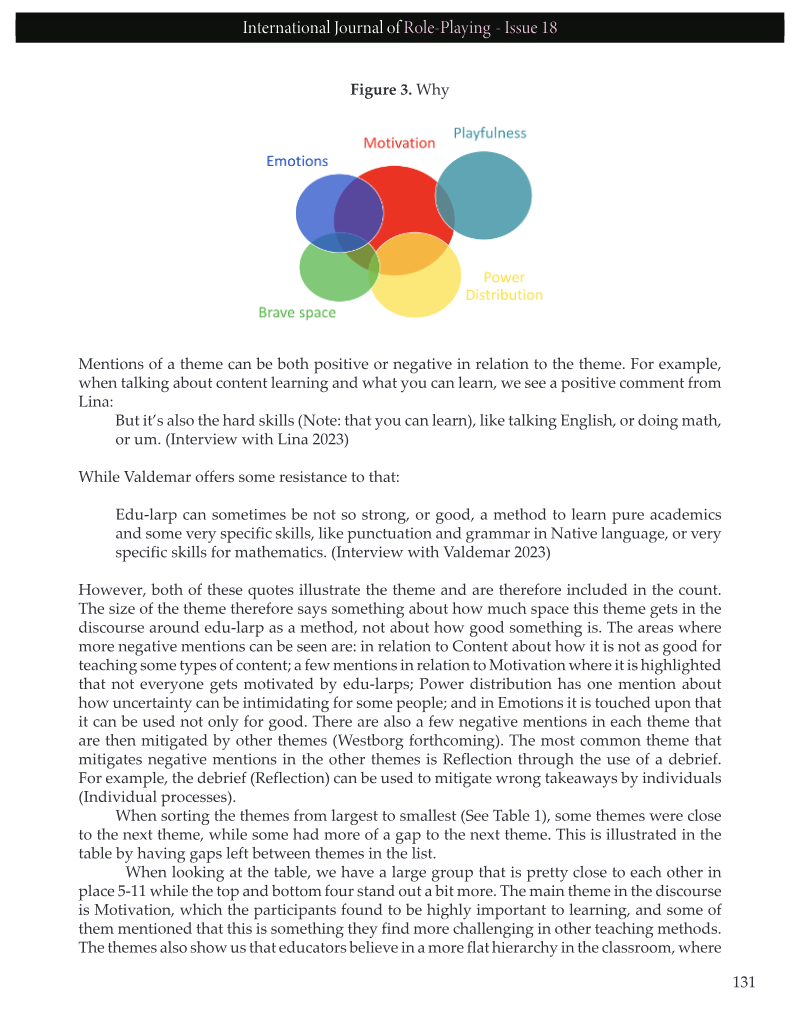
- The creation of a 'brave space'—a safe, immersive environment with distributed power—is identified by practitioners as the primary driver for student motivation.
The Dynamic Loop Model: A Systemic-Cybernetic Meta-Theoretical Framework for TRPGs
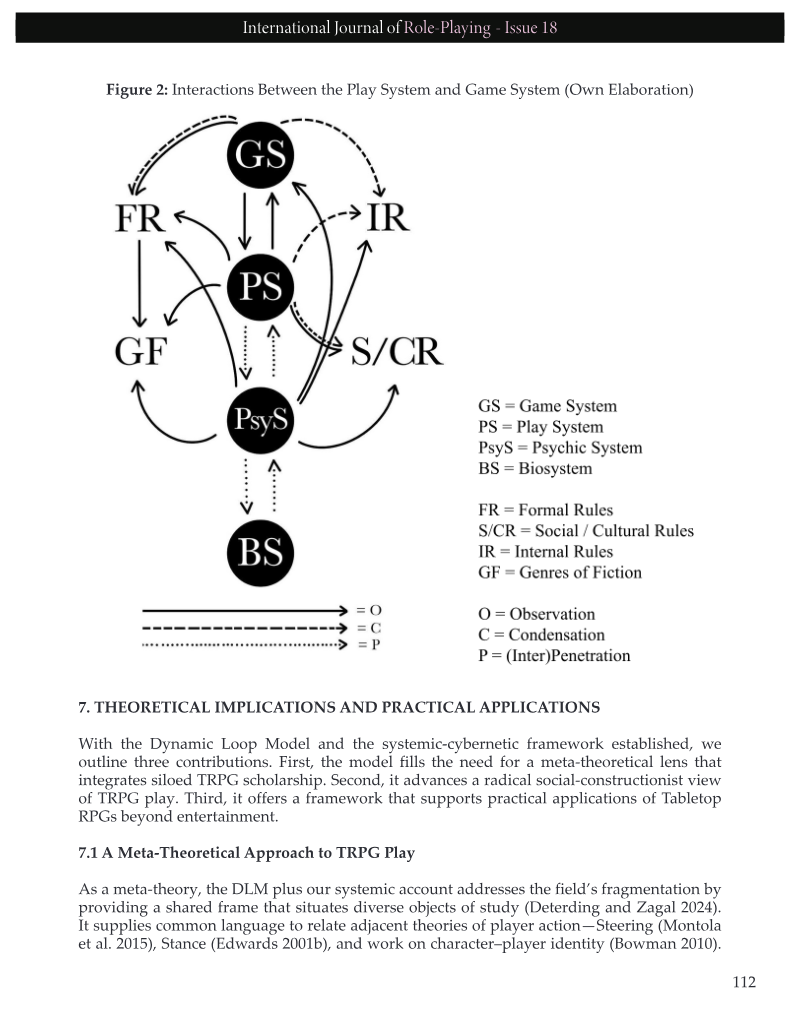
Tabletop role-playing games function as self-regulating, autopoietic systems of communication that maintain coherence through recursive feedback loops.
- TRPGs function as autopoietic, self-regulating systems that maintain narrative and mechanical coherence through recursive feedback loops.
- The model defines play as a systemic-cybernetic process that reduces complexity by continuously mediating between individual psychic systems and the broader social environment.
- Mechanical resolution acts as a structural coupling mechanism that triggers when narrative uncertainty arises, updating the game state to ensure system viability.
How Do You Want to Do This?: Us, Role-Playing Games, and the End of the World
This analysis examines the intersection of tabletop role-playing games (TTRPGs), digital media, and capitalist ideology, using the popular actual play series Critical Role as a primary case study.
- The transition of TTRPGs from private activities to monetized media like Critical Role has constrained narrative structures within capitalist ideological frameworks.
- High-fantasy narratives in actual play series often rely on 'gestural anti-capitalism,' where systemic failures are reduced to individual moral failings rather than structural exploitation.
- The mechanical reliance on combat and wealth acquisition within TTRPG systems inherently limits the potential for radical political critique, reinforcing the status quo.

Losing and Finding Oneself: Duo- and Autoethnographic Study of "Character" in the Larp Superrealism
The larp Superrealism serves as a unique case study for understanding how abstract, non-verbal, and music-driven game design facilitates profound personal transformation.
- Minimalist character frameworks and vague narrative prompts act as primary catalysts for deep emotional processing and self-discovery in larp.
- The absence of explicit narrative structure shifts the value of the game from designer intent to the player’s ability to project internal histories and repressed emotions onto the experience.
- The phenomenon of 'bleed'—where personal emotions permeate the character—is a central mechanism for transformative play in non-verbal, music-driven environments.

Slay the Spire II Early Access Review Bombing | Design Club
The recent backlash against Slay the Spire II highlights a growing friction between iterative development practices and consumer expectations within the modern Early Access model.
- Slay the Spire 2 is currently experiencing review bombing in Early Access, primarily driven by player frustration over balance changes—specifically the removal of 'infinite' deck loops—introduced in the game's opt-in beta branch.
- MegaCrit provides an in-game feedback tool accessible via the F2 key, which was recently expanded to allow up to 8,000 characters per report to facilitate direct communication between players and developers.
- The developers have implemented a voluntary, opt-in beta branch for the Early Access title to test major balance adjustments, including character card changes and complete reworks of end-game bosses, separate from the live build.

🚨📢 Breaking News: New Ubisoft Mobile Shooter + Layoffs, Layoffs and Closures
The gaming industry is currently undergoing a significant period of contraction and strategic realignment, characterized by widespread layoffs, studio closures, and the cancellation of long-term, high-budget projects.
- The gaming industry is undergoing a major contraction characterized by widespread layoffs and the cancellation of high-budget projects due to unsustainable North American development costs.
- Eidos Montreal cut 124 jobs and canceled a project that had been in development for over seven years at a cost of hundreds of millions of dollars.
- Unity is divesting from its game-publishing arm, Supersonic, to pivot toward an ad-tech model focused on AI-driven user acquisition tools.

TWIG #377: Epic for Sale, Unity Cuts Deep, and Merge Keeps Printing
The video game industry currently faces a period of intense structural realignment, characterized by a shift away from speculative hardware and niche genres toward proven, high-margin monetization models.
- The gaming industry is shifting from speculative hardware and niche genres toward high-margin, data-driven monetization models as companies prioritize risk mitigation.
- Mobile gaming success is increasingly dominated by the 'merge-two' genre, with titles like Gossip Harbor leveraging slot-style economics and card-collection mechanics to monetize player impatience.
- Unity is undergoing a strategic retrenchment, divesting from underperforming ad networks to focus on its core engine business, though analysts remain skeptical of its ability to compete with market leaders.

🚨Tactile & Loomit: How Top Games Make Money From Ads
Modern mobile game monetization requires a sophisticated balance between maximizing ad revenue and protecting the integrity of in-app purchase ecosystems.
- Developers should shift from static monetization models to hyper-segmented strategies that use geography, platform, and spending history to ensure ad revenue is incremental rather than cannibalizing in-app purchases.
- To protect long-term retention, studios must curate ad quality by requesting conservative creative formats, monitoring ad duration, and actively swapping formats to prevent aggressive ads from degrading the user experience.
- Studios should prioritize a 'buy-over-build' strategy for ad infrastructure, leveraging specialized external tools to manage complex auction dynamics rather than maintaining internal systems.
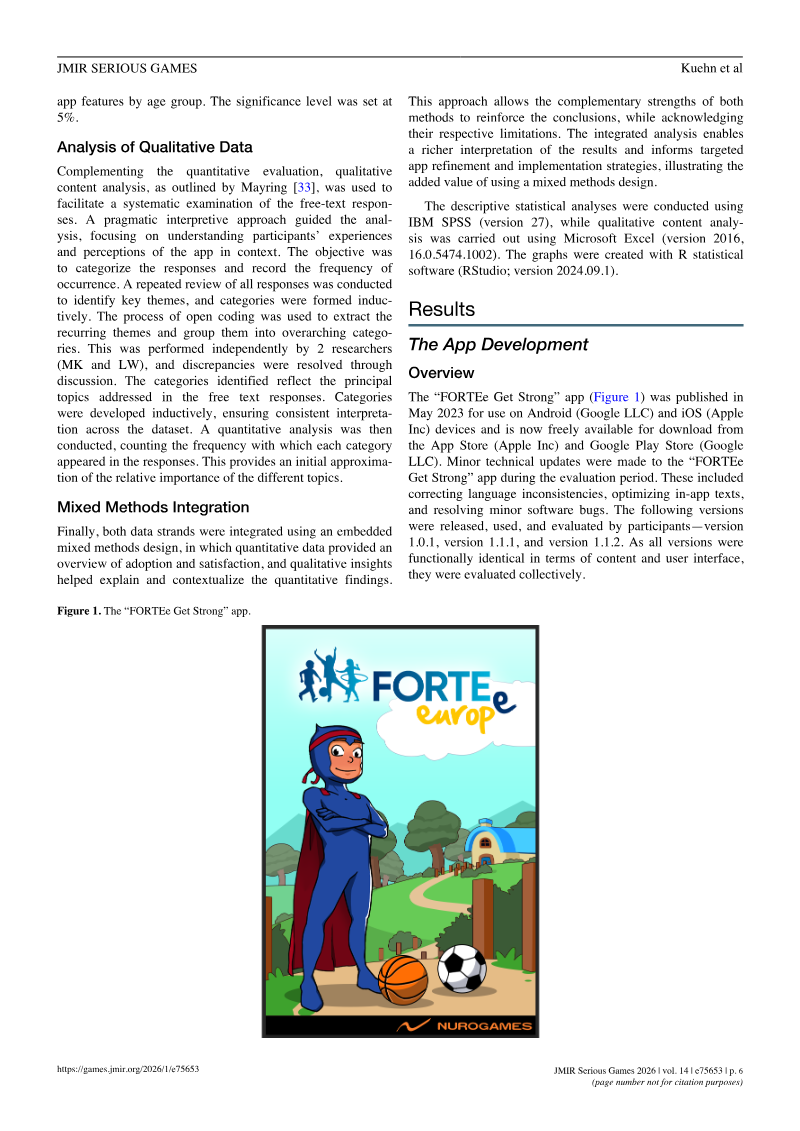
Development and Usability of the “FORTEe Get Strong” App: Mixed Methods Study
The FORTEe Get Strong mobile application serves as a gamified health intervention designed to improve physical activity levels and health literacy among pediatric and adolescent cancer patients.
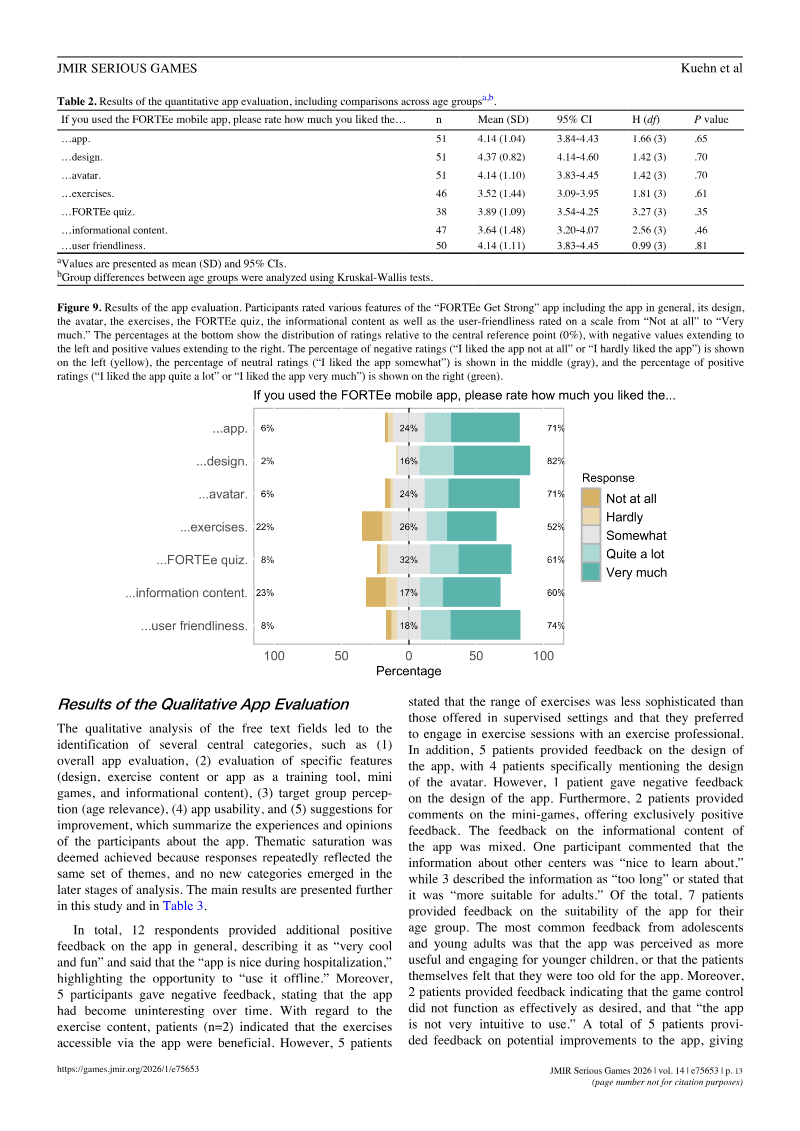
- The FORTEe Get Strong app achieved a high user satisfaction rating of 4.14 out of 5 among a multicenter trial cohort of 53 pediatric and adolescent cancer patients.
- Core gamification mechanics, including a virtual village and customizable avatars, maintained stable engagement levels across diverse demographics regardless of age, sex, or specific cancer diagnosis.
- A primary usability gap exists regarding age-appropriateness, as older adolescent users reported that existing content is better suited for younger children.