Global reports and market data
Documents
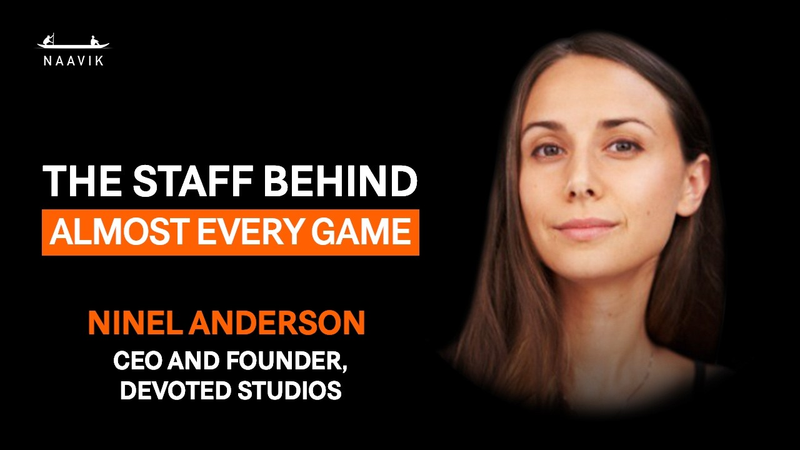
The Role of Co-Development in Modern Game Development
Modern game development is undergoing a structural shift, moving away from the traditional outsourcing model toward integrated co-development partnerships.
- The game industry is shifting from traditional outsourcing to integrated co-development, where external teams are embedded into the core creative vision rather than functioning as task-based vendors.
- Successful co-development partnerships prioritize shared decision-making, transparency, and end-to-end project ownership to optimize production pipelines more effectively than fragmented service models.
- Direct compensation models are preferred over revenue-sharing in co-development to avoid complex accounting challenges and misaligned financial incentives between studios.
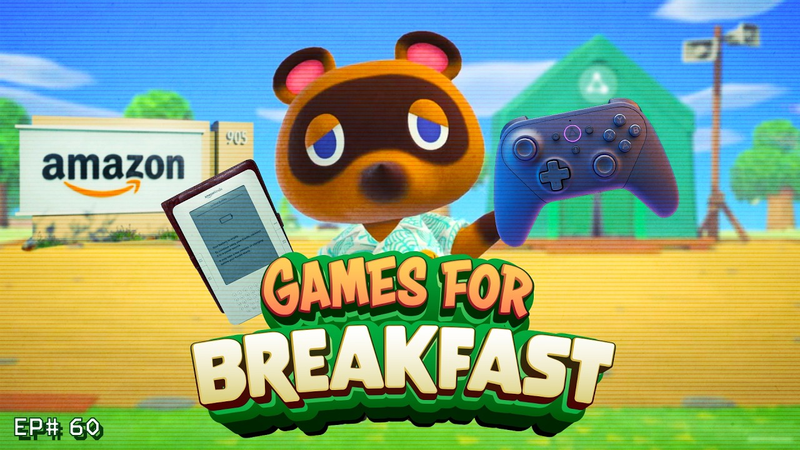
Amazon Wants You to Rent Games Forever, Roblox Pyramid Scheme & Pokemon Chaos | Games For Breakfast
The gaming industry is currently undergoing a significant shift toward subscription-based models and platform-controlled ecosystems, often at the expense of consumer ownership and hardware longevity.
- Amazon is shifting its Luna cloud gaming service to a curated subscription model, effectively revoking user access to previously purchased individual titles.
- Roblox faces criticism for a new subscription structure that incentivizes users to recruit others for platform currency, a model described as a predatory, pyramid-scheme-like system targeting minors.
- Automated, keyword-based content moderation on platforms like the Google Play Store poses risks to artistic expression, evidenced by the removal of Doki Doki Literature Club.
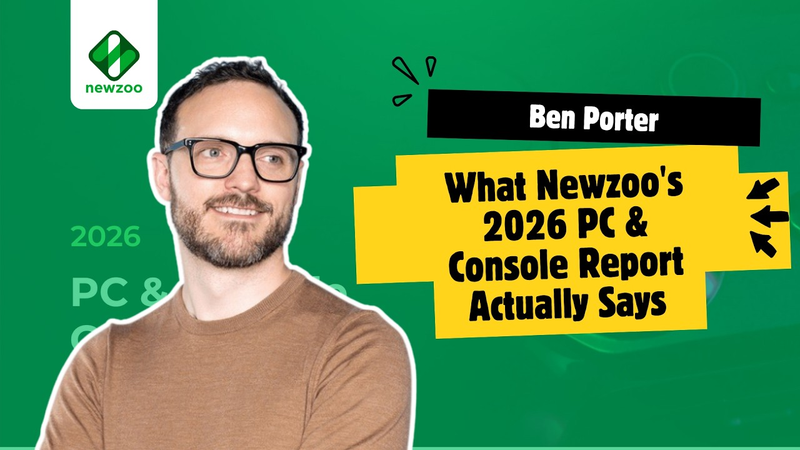
What Newzoo's 2026 PC & Console Report Actually Says
The global PC and console gaming market is currently defined by a winner-takes-more dynamic, where total player engagement remains stagnant despite incremental revenue growth.
- The global gaming market is experiencing a 'winner-takes-more' dynamic where total player engagement is stagnant, despite incremental revenue growth.
- Playtime is shifting away from traditional AAA shooters toward sandbox and social-driven platforms like Roblox, which achieved 50% year-over-year growth.
- China is a dominant market force, accounting for 43% of total growth in the PC and console sectors.

Ilkka's BAFTA Fellowship, record D2C revenue & the Super Mario Galaxy Movie | Week in Mobile Games
The mobile gaming industry is currently undergoing a structural transformation characterized by a pivot toward direct-to-consumer sales models and a move away from Western-centric market dominance.
- Major publishers like Playtika and Take-Two are increasingly bypassing traditional platform fees through direct-to-consumer models to capture higher margins, though these gains are often offset by rising user acquisition costs.
- The global mobile gaming market is decentralizing into specialized regional hubs, with Asian markets leading in live operations and innovation while Western firms rely on established console intellectual property.
- Industry leadership is shifting toward a focus on creative autonomy and long-term cultural health, exemplified by Supercell’s Ilkka Paananen, as a counter-strategy to short-term monetization pressures.
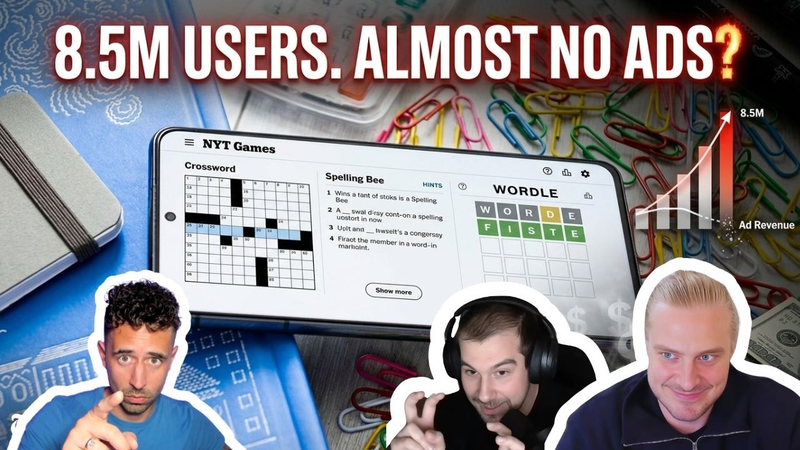
📰 NYT Games Wordle & Crossword: The most PREMIUM audience in gaming
The New York Times Games app represents a unique case study in the mobile gaming industry, functioning as a massive, high-retention ecosystem rather than a traditional revenue-optimized mobile game.
- The New York Times Games app maintains 8.5 million daily active users, positioning it as one of the largest gaming platforms in the U.S. alongside Discord and Roblox.
- The platform prioritizes brand integrity and subscription retention over aggressive monetization, generating approximately $6 million in monthly subscription revenue.
- By eschewing interstitial ads in favor of static banners, the app earns only $15,000 to $20,000 daily, whereas standard industry practices could theoretically increase this to over $400,000 per day.

🚨📢 BREAKING NEWS: Unity kills ironSource, Meta lawsuits, AppLovin moves
The mobile gaming and ad tech sectors are currently undergoing a significant transition characterized by market stabilization, consolidation, and a shift toward operational efficiency.
- The mobile gaming market is stagnating, with in-app purchase revenues plateauing at $20 billion for three consecutive quarters and download volumes hitting multi-year lows as of Q1 2026.
- Unity is restructuring its ad business by sunsetting the ironSource network and divesting its Supersonic publishing arm to prioritize its Unity Vector ad stack, which has achieved 15% sequential growth.
- Meta is moving toward a fully autonomous AI-driven advertising model by 2026 via its Advantage Plus and Andromeda systems, shifting the focus from manual campaign management to creative diversity and first-party data.
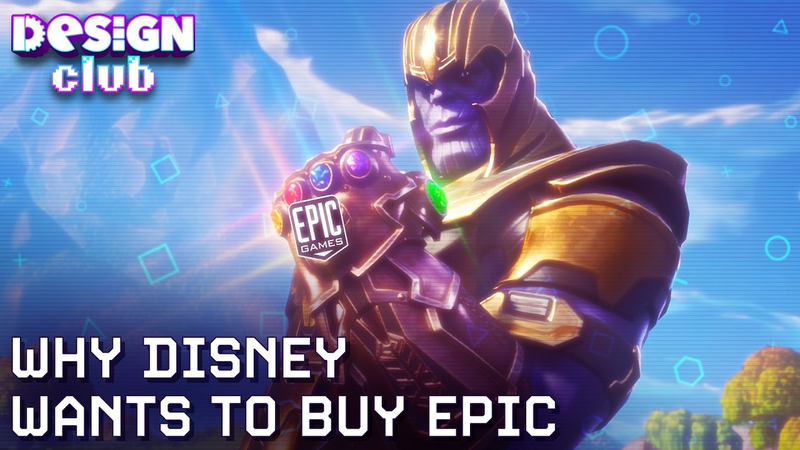
Why Disney Wants To Buy Epic | Design Club
Disney is actively pursuing a strategic acquisition of Epic Games to address a critical deficiency in its corporate portfolio: the lack of a robust, internal first-party gaming infrastructure.
- Disney lacks strong internal game development capabilities, making the acquisition of Epic Games a strategic move to gain control over high-value gaming assets and infrastructure.
- Epic Games provides three critical pillars for Disney: the Unreal Engine for content creation, the Fortnite platform for user engagement, and the Epic Games Store as a distribution channel.
- Integrating Epic into Disney's ecosystem would allow for massive content bundling, such as offering legacy Disney, Marvel, and Star Wars game titles as part of a Disney+ subscription.

TWIG #378: Mario Smashes the Box Office, Take-Two Cuts AI, and Monopoly Go Goes Social
The global video game industry is currently navigating a complex structural correction defined by a paradox of record-breaking revenues and widespread workforce instability.
- The video game industry is experiencing a structural correction characterized by record revenues alongside widespread workforce instability caused by post-pandemic over-hiring and market oversaturation.
- Early-stage venture capital deal volume has reached multi-year lows, while Saudi-backed entities remain the primary drivers of current merger and acquisition activity.
- Younger demographics are shifting preference toward low-friction, social-first titles like Monopoly Go, forcing developers to move away from traditional AAA production cycles toward more iterative, accessible models.
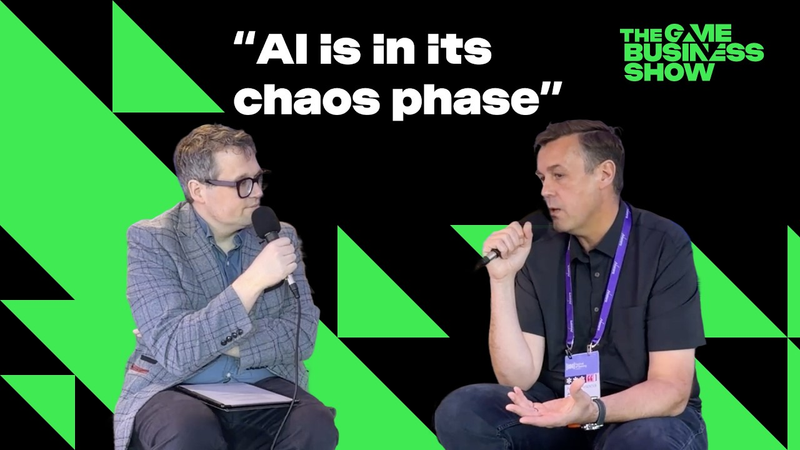
One of the world’s biggest game makers reveals ‘the uncomfortable truth’ about AI
The game development industry is currently navigating a volatile transitional period characterized by widespread AI adoption alongside significant professional skepticism.
- Approximately 90 percent of game developers currently utilize AI tools, yet over 50 percent of the workforce remains skeptical regarding job security and creative quality.
- The industry is currently transitioning from a phase of novelty-driven AI demos to the development of governed, legally secure, and reliable production pipelines.
- Sustainable AI integration requires studios to pivot away from flashy, single-prompt generation and instead focus on automating repetitive, mundane production tasks.

Playtika for sale, data nuggets, Ilkka's BAFTA, Netflix Playground, game writers on mobile, more
The mobile games industry is currently navigating a period of significant strategic shifts and market stabilization.
- Playtika has initiated a strategic review to explore a potential sale, with an estimated enterprise value of $2.7 billion to $2.9 billion, following a 91% decline in market capitalization since January 2021.
- Global mobile in-app purchase (IAP) earnings remained flat in Q1 2026 at approximately $20.5 billion, with China-based publishers leading the market while US-based publisher revenue declined 14% year-on-year.
- Regional market performance in Q1 2026 showed significant growth in Singapore (up 22%) and Turkey (up 28%), while Japan’s market remained flat.

🤑 Top 5 Advanced Ad Placements by Jakub Remiar
This analysis outlines five advanced ad placement strategies designed to optimize revenue and user engagement in mobile gaming, alongside a supplemental system for long-term scaling.
- Implement a 'rewarded ads hub' that tracks cumulative ad views to grant permanent character or gameplay stat increases, creating a compounding engagement loop.
- Avoid direct resource handouts in ad placements to prevent the cannibalization of in-app purchase economies, focusing instead on mechanics that provide increased chances of success.
- Utilize before-level boosters to offer players a higher probability of winning without granting direct power, maintaining the integrity of the game's core economy.

How Game Devs Use AI Today
Artificial intelligence is currently transforming the global game development landscape by prioritizing operational efficiency, cost reduction, and workflow optimization.
- Game studios are increasingly using AI to optimize Live Ops, such as the case where a studio reduced the team required to maintain 'Sunrise Village' from approximately 25 people to two by implementing AI-assisted content production.
- Large publishers like Nexon and Embark are leveraging AI to reduce internal 'blindness' by integrating company-specific data into models, aiming to improve decision-making and development efficiency.
- AI is currently being deployed across the entire game development pipeline, starting with pre-production ideation at companies like Capcom and extending to rapid prototyping that allows teams to test new game modes in hours rather than weeks.