1 free read left. Create a free account for unlimited reading + AI research.
Create free accountReport Anzu
Anzu
1 free read left. Create a free account for unlimited reading + AI research.
Create free accountReportAnzu
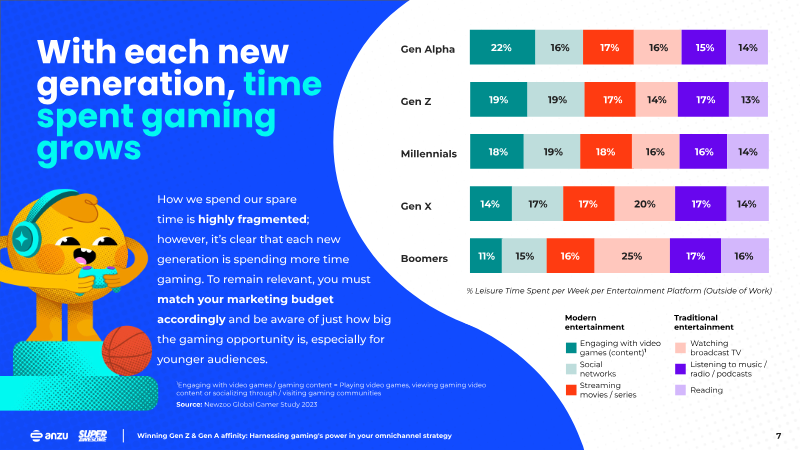
80% of under-18s actively game. Gen Z dedicates up to 22% of their free time to play.
Gaming has become the dominant entertainment medium for younger generations, with 80% of under-18s actively gaming and Gen Z allocating up to 22% of free time to play. The study, combining first-party data from SuperAwesome and Anzu with social listening, qualitative research, quantitative surveys, syndicated data, brand lift studies and parent-tracking panels, covers the UK, France, Germany, the United States and global markets from 2023-24. A sample of 30 000 children, teens and young adults (ages 4-24) plus parent responses informs the analysis.
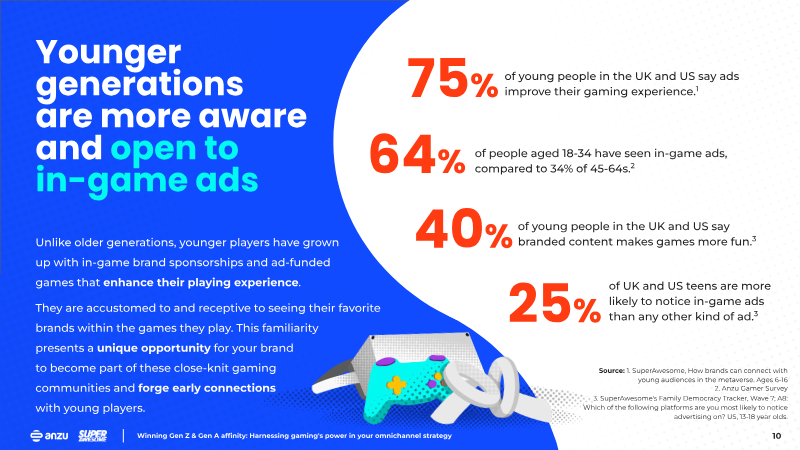
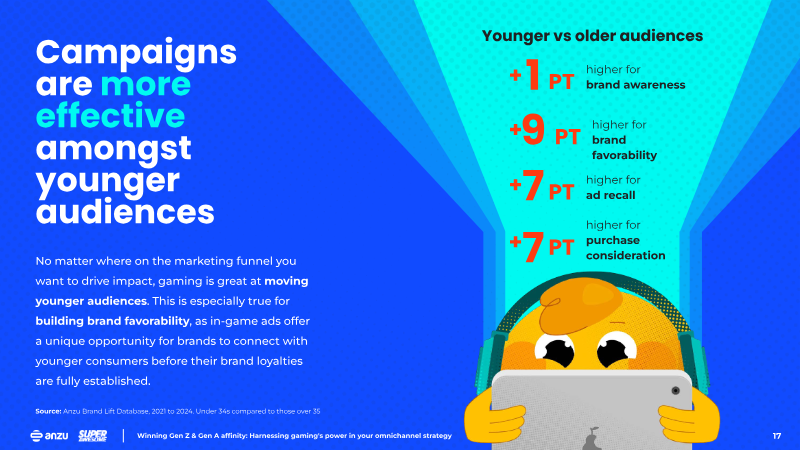
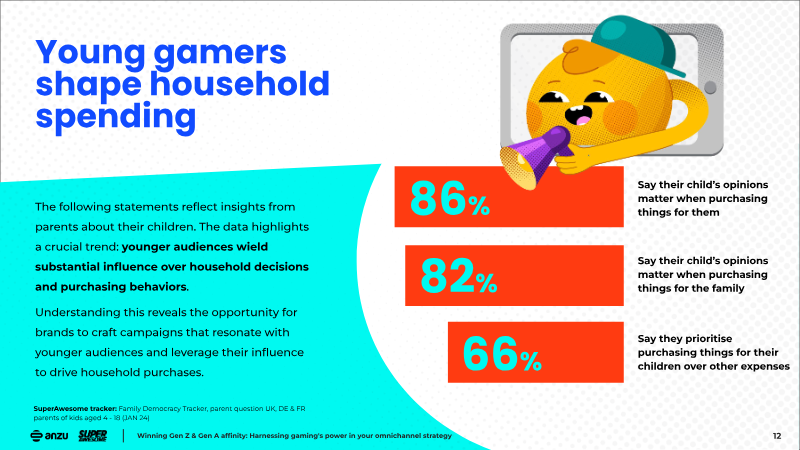
Key findings show that gaming captures more attention than social media for Gen Z, with 55% of under-18s reporting a strong affinity for branded in-game experiences. Younger gamers are highly receptive to ads, with 75% of Gen Z players in the UK and US saying in-game ads improve their experience, compared to 34% of older adults. In-game advertising drives higher brand recall (+7 pts) and purchase intent (+9 pts) for audiences under 34, and generates a “halo effect” that boosts brand affinity by up to 86% among under-18s. Parents report that children influence household spending, with 86% saying their child’s opinions matter in purchases and 82% prioritising items for children.
The report recommends a multi-platform, contextual approach that respects emerging data-protection regulations and Age Appropriate Design Codes. It emphasizes early engagement before brand loyalties lock at age 16, contextual targeting over behavioural profiling, and rigorous creative vetting to avoid manipulative design. The analysis underscores gaming’s strategic importance for reaching Gen Alpha and Gen Z, offering measurable lift across awareness, consideration and purchase stages.
Deconstructor of Fun · 2025