Market (Mobile)·Updated Apr 8, 2026 by Sensor Tower
Report · April 5, 2026
Published by Sensor Tower
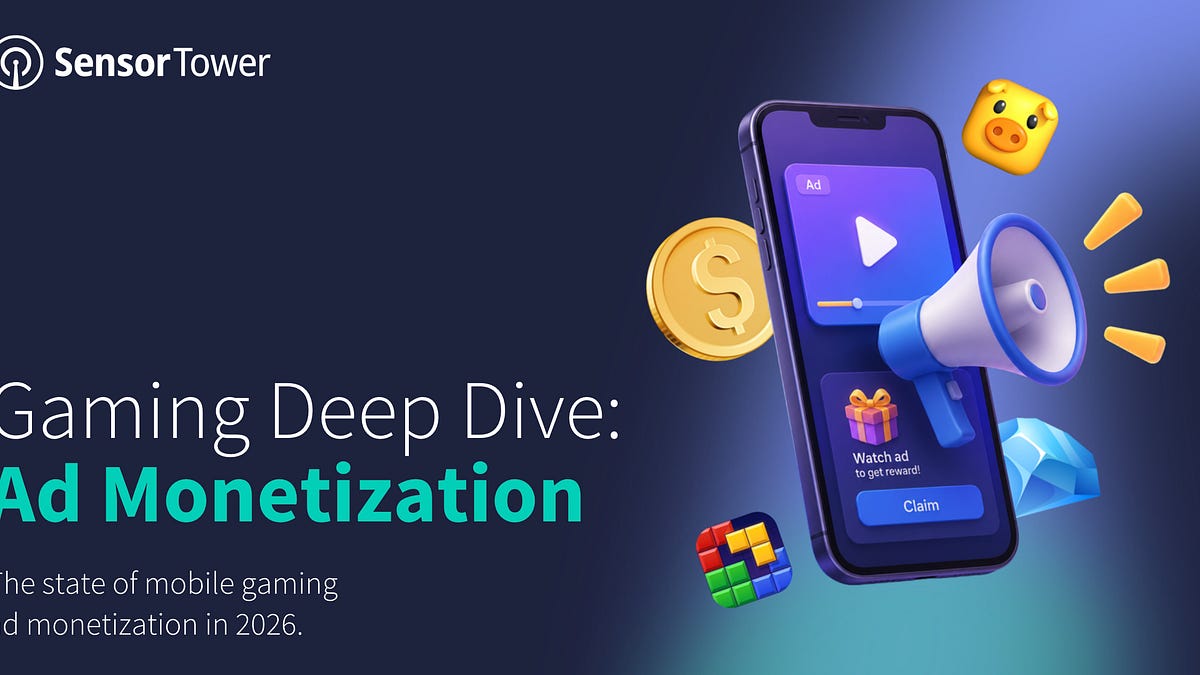
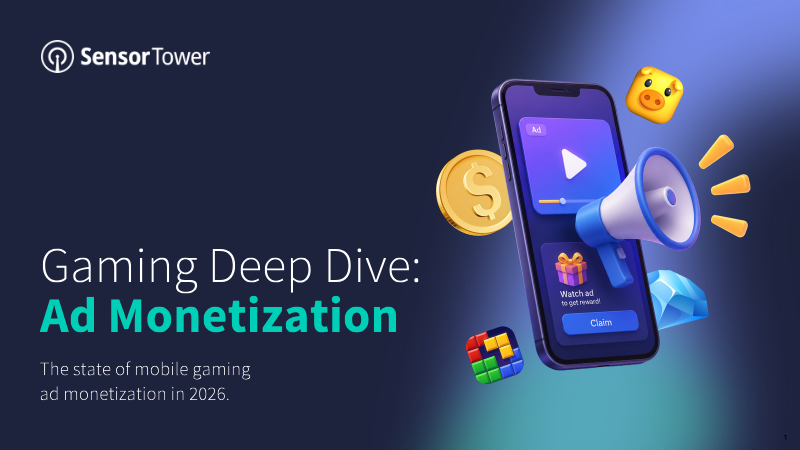
Hybrid monetization can increase revenue without eroding player retention by treating advertisements as an integral part of the game’s design system. Three core ad formats—interstitials, rewarded video (RV), and banners—are positioned strategically through careful gating on level progression, playtime, or cooldown periods. Optimal triggers and placement reduce player frustration while maximizing eCPM, ensuring that monetization flows naturally with gameplay. Rewarded video is most effective when offered during high‑stakes moments such as revives, boosters, or time‑limited rewards. Leveraging scarcity and urgency in these contexts drives conversions while preserving the core experience. Consistent visual cues, a clear distinction between coin rewards and RV value, and optional “No Ads” bundles further balance monetization with player comfort. Selling “No Ads” bundles requires thoughtful presentation. Bundles should appear side‑by‑side with regular items, use distinct visual cues and anchoring to convey high value, and be gated behind a minimum purchase tier to protect payer retention. Segmenting ad exposure—capping impressions, applying cooldowns, and filtering out disruptive creatives—maintains a positive user experience while sustaining revenue. Overall, the strategy blends ad formats with gameplay mechanics, employs scarcity and urgency for rewarded video, and offers high‑value “No Ads” options. This approach delivers robust monetization across diverse segments while safeguarding long‑term player engagement and retention.
Remove A Ad Monetization Collect Without Killing Retention yazio With Photos Track Meals Best Hybrid Practices Best Hybrid Practices
Playliner by Sensor Tower Playliner, Sensor Tower’s state-of-the-art platform for analyzing Live Ops, enables you to dive into a rich repository of events, updates, and monetization offers across hundreds of top games. Whether you’re designing a new offering, reengaging existing players, or optimizing your monetization tactics, use Playliner to secure your competitive edge in the mobile gaming world. This report gives you a preview of the rich insights available in-platform – use these evidence-based recommendations to move with confidence and revamp your strategy for 2026.
Three Ad Types We’ll Break Down Bad Ads kill Retention. Good Ad architecture scales LTV Ads are often treated as pure negativity. In Hybrid games, that’s a mistake – Ads can support the player and scale revenue without killing retention. The key is to treat ads as a design system: right format, right moment, right pressure. Interstitials Rewarded Video (RV) Banners Your main tool for coverage – monetizes a The most flexible and safest Ad format: Usually the lowest eCPM and often a smaller large share of players, fast. ● RV is the most player-friendly format: can share of total Ad revenue – added late as an But it’s also the easiest way to damage support progress, grants extra extra layer. retention if you place it in the wrong emotional ● currencies Their real risk is not revenue – it’s distraction: moment (e.g., after a loss) or stack it too often. but can also break the economy and bright competitor creatives, misclick zones difficulty curve if it starts replacing coin sinks Goal: add incremental revenue – while Goal: maximize coverage while minimizing minimizing negative impact =with minimal negative impact on retention Goal: improve engagement and progression distraction without cannibalizing IAP
Core Building Blocks of an Ad System 1 2 3 Fundamentals Triggers & Timing Placements Interstitials + banners = scale, but End-of-level (WIN vs LOSE) + risky ● Proven RV spots minimize damage triggers (unpause, mid-level). ● Banner-safe screens RV = value exchange Match ads to the player’s emotional ● Interstitial-safe moments state. 4 5 6 Control Knobs Strategy by Monetization Model Extra Tips & Edge Cases Start gates (level + playtime), Different rules for Ads-first, IAP-first, Creative filtering, banner refresh sweet frequency, cooldowns, daily caps, and Hybrid: start timing, RV coverage, spot, offline rules – small details that per-placement limits and others. No Ads logic protect trust & retention.
Triggers: After Level Completion Most Common Trigger: After Level Completion But this is actually two separate triggers: After IN – The Lowest Risk Variant After LOSE – Higher Risk Trigger WHY? Most common trigger is after level end. This is a natural emotional release point. But Lose must be treated separately from Win. Level completed, Reward Granted → the loop is closed, and the player is in ● Player already experiences frustration a positive state ● Adding an Interstitial may create a double negative When Exactly Should You Show the Ad? ● Lose + Ad = higher churn risk Most common placement: Choose the Timing Carefully ● After tapping 'Collect' on the reward screen Show Interstitial only after the full Lose flow is completed: ● Before returning to lobby ● Show the main Lose popup → Show LiveOps loss warnings WHY it works? At every step, the player may convert. ● Emotional release already happened ● But consider this: a. What if the player wants to Double reward via Rewarded Video? b. If you show Interstitial first – You block a higher-value RV and interrupt monetization hierarchy If you show an Interstitial too early: ● You increase frustration and block higher-value monetization (Continue the level vie Ad or Coins) In many cases, it’s smarter to sacrifice one Interstitial than to lose a Revive conversion.
Triggers: Unpause and Mid-level On Unpause (App Return) When a player returns after minimizing the app: ● They are still motivated to continue ● They are unlikely to quit immediately ● This can be a relatively safe interruption point LEVEL 334 Reward Mid-Level AD BREAK... This is not a user-friendly trigger by default. Use only when: Levels are truly long (5+ minutes) Unlock 40 Locked Slots 0/40 15 How to Smooth Both Triggers Don’t interrupt instantly. Use a pre-ad pop-up first. Pre-ad pop-up should: ● Warn the player that an ad is about to start ● Show a clear reward for watching ● Reinforce progress and motivation: 'You’re already 50%+ through the level'
A well‑designed in‑game offer system is presented as the most potent driver of lifetime value and average revenue per paying user. By integrating a limited set of synergistic offer types—login bonuses, triggered prompts, endless streams, “1 + X” bundles, battle‑passes, stamp‑cards, and curated bundles—and optimizing their frequency, timing, pricing, segmentation, and economic balance, developers can achieve conversion rates as high as ninety‑six percent on login offers and lift repeat‑purchase value by roughly twenty percent through endless offers. Conversion is shown to be a function of repeated exposure rather than a single impression; players typically require about seven viewings before taking action. The most effective moments to surface offers are at login, during “out‑of‑currency” events, after level failures, or in high‑momentum gameplay phases. A dynamic, tiered pricing ladder that escalates after each purchase and regresses after periods of inactivity—exemplified by a seven‑tier structure ranging from under one dollar to ninety‑nine dollars—enables precise alignment with player spend propensity while avoiding both under‑monetization of high‑potential users and alienation of low‑spenders. Segmentation must extend beyond basic recency and frequency metrics to incorporate geographic tier, acquisition source quality, and player progression. Lower‑tier regions demand adjusted price ladders and reduced offer frequency, whereas high‑quality acquisition channels justify more complex bundles. Early‑game players respond best to inexpensive, simple offers, while mid‑ and late‑game users can be presented with higher‑value packages. Anchoring the entire shop around a stable, low‑priced entry pack establishes a reference point that shapes perceived value across all offers. Collectively, these principles apply to mobile and casual games operating globally, reflecting current industry practices and data from recent case studies. Implementing the outlined framework promises measurable improvements in monetization efficiency, player satisfaction, and overall revenue performance.
A well‑designed Live Ops strategy is essential for capitalising on the heightened player activity that occurs during the holiday period. Analysis of hundreds of mobile games worldwide demonstrates that a coherent Live Ops framework can produce a substantial uplift in sessions, revenue and player retention throughout the season. The core argument is that developers should treat the holidays as a series of tightly integrated, short‑term experiences that reinforce the game’s everyday loop while delivering clear, time‑bound incentives. Short‑term events that run for one to three days are most effective for generating quick spikes in engagement. These events focus on immediate objectives—such as a burst of sessions, a specific resource collection, or a limited‑time reward—while employing a “soft‑sawtooth” difficulty curve that eases players in, ramps up challenge, offers a brief respite, and then escalates again. By keeping the event mechanics a natural extension of the main gameplay loop, developers avoid disrupting player expectations and maintain momentum. For the broader holiday window, the most successful structures combine a single, clearly defined Battle‑Pass progression path with social‑cooperation events that reward group performance through prestige items like avatars, badges and leaderboard positions. Layering weekly quests, long‑term collection albums, and brief “bonus amplifier” events creates cumulative engagement loops. Linking these components through shared currencies and diversified motivations systematically drives both retention and monetisation, particularly for mature titles that benefit from community‑driven competition. Overall, the guidance applies to the global mobile gaming sector during the Q4 holiday season and emphasizes that incremental, interconnected events—anchored by transparent progression and social incentives—are the key levers for maximising holiday‑season performance.
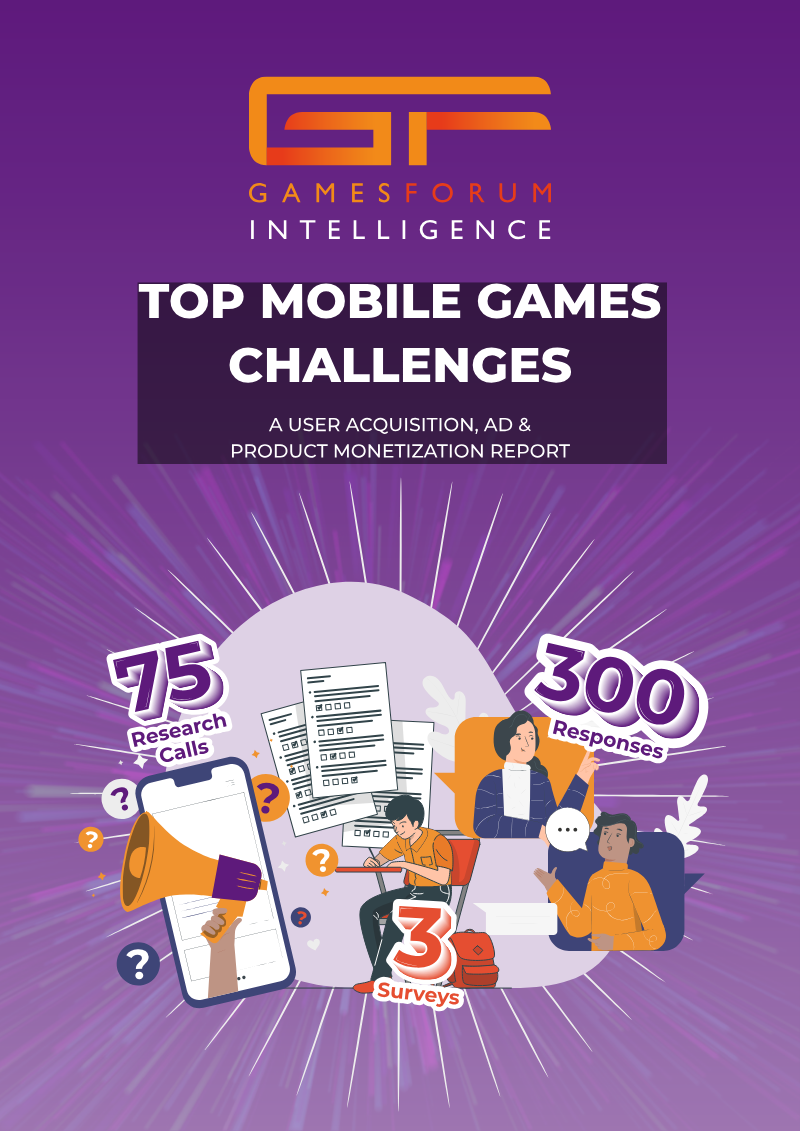
The mobile gaming landscape heading into 2025 is defined by the critical difficulty of performing within an increasingly crowded market space. Approximately 41% of user acquisition managers identify market saturation and rising costs per installment as their primary obstacles, driven largely by intense competition from non-gaming entities. This environment has forced a strategic pivot away from traditional acquisition tactics toward sustainable growth rooted in long-term retention and creative iteration. Consequently, the industry is transitioning from a focus on sheer volume to a model centered on maximizing lifetime user value through sophisticated engagement strategies. Ad monetization and product management sectors face parallel pressures, specifically regarding effective user segmentation and the declining value of electronic cost per mille (eCPM). While segmentation is the most widespread concern for monetization teams, senior executives are particularly focused on innovating new revenue streams to compensate for diminishing ad returns. In the realm of product management, LiveOps development and the accurate assessment of return on investment have emerged as the dominant priorities. Nearly 30% of product managers rank LiveOps as their most significant challenge, outweighing traditional concerns such as game economy balancing or initial prototype testing. To navigate these hurdles, the industry is moving toward data-driven personalization and revenue diversification. Success in the maturing mobile market now requires leveraging artificial intelligence for audience segmentation and expanding monetization models to include subscriptions and alternative storefronts. By moving beyond simple acquisition hacks and focusing on robust LiveOps and incremental growth through retention, developers aim to stabilize revenue in a volatile privacy-centric environment. This shift underscores a broader industry evolution where deep audience understanding and operational agility are the primary drivers of commercial viability.
Mobile gaming solidifies its position as the leading segment of the global video‑game market, with revenue projected to reach $83 billion in 2024, reflecting a 6 percent year‑over‑year increase. In contrast, home‑console spending is expected to decline by 1 percent to $42 billion, while handheld revenues are slated to fall 2 percent to just under $2.5 billion. The upward trajectory of mobile is driven primarily by rapid expansion in emerging regions such as India and Indonesia, where user acquisition and spending are accelerating faster than in mature markets. Within mobile, fast‑growing sub‑genres—particularly simulators and multiplayer online battle arenas—accounted for $2.34 billion, representing 5.8 percent of total mobile revenue, and achieved a modest 0.4‑point rise in download share during the latest reporting period. In the United States, monetisation patterns among mobile players continue to favour rewarded‑video advertisements. These ads recorded the highest net‑sentiment score of +20 points and were the most frequently encountered format in the third quarter of 2023. Other ad formats, including playable, native, banner/display, and standard video, lagged behind both in visibility and user sentiment, indicating a clear preference hierarchy that shapes publisher revenue strategies. Overall, the data underscore a market increasingly centred on mobile platforms, propelled by growth in developing economies and reinforced by user‑friendly ad experiences. Console and handheld segments face modest contractions, suggesting that future investment and innovation will likely concentrate on mobile‑first titles, emerging‑region outreach, and optimisation of rewarded‑video ad ecosystems to sustain growth.