Global reports and market data
Documents
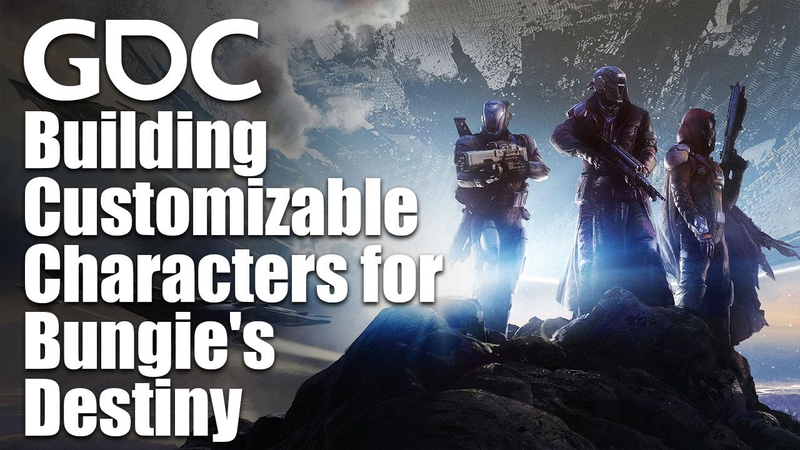
Building Customizable Characters for Bungie's Destiny
The transition from the singular hero archetype of the Halo franchise to the player-centric design of Destiny necessitated a fundamental shift in character development.
- Bungie developed a modular character customization system for Destiny that broke character designs into base elements called 'bits,' allowing artists to swap gear pieces without needing to re-skin or re-animate models.
- The system enabled artists to create complex new character assets, such as a helmet, in approximately 20 minutes by assembling pre-defined modular bits.
- To maintain performance across four platforms, the toolset provided real-time memory profiling for both textures and geometry, allowing artists to adjust resolution or swap bits to stay within strict hardware budgets.
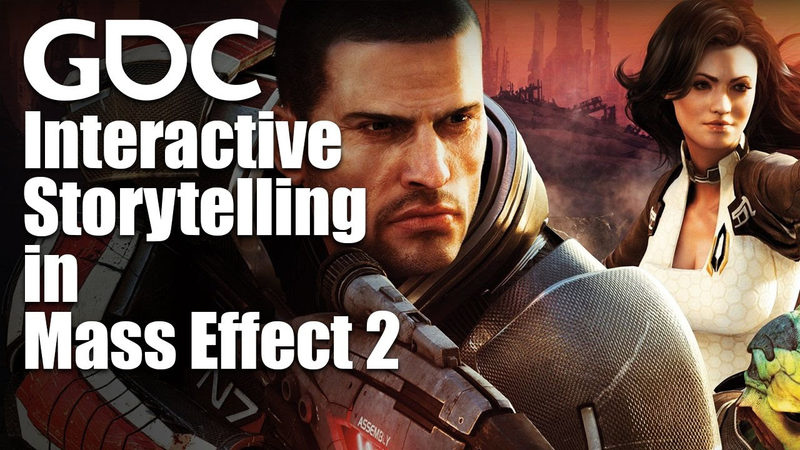
Interactive Storytelling in Mass Effect 2
Interactive storytelling in Mass Effect 2 centers on the successful integration of cinematic design with player agency, shifting the traditional role-playing paradigm from a purely subjective avatar experience to an objective character-driven model.
- BioWare treats game design and narrative as symbiotic, refusing to differentiate between the two by starting with story and building gameplay around it.
- The 'conversation wheel' interface uses 32-character paraphrases to provide players with a condensed, predictable preview of dialogue options, ensuring they understand the intent behind their choices.
- Mass Effect 2 shifted from a purely subjective role-playing model to an objective one, where the player controls a pre-defined character (Shepard) rather than a blank-slate avatar.
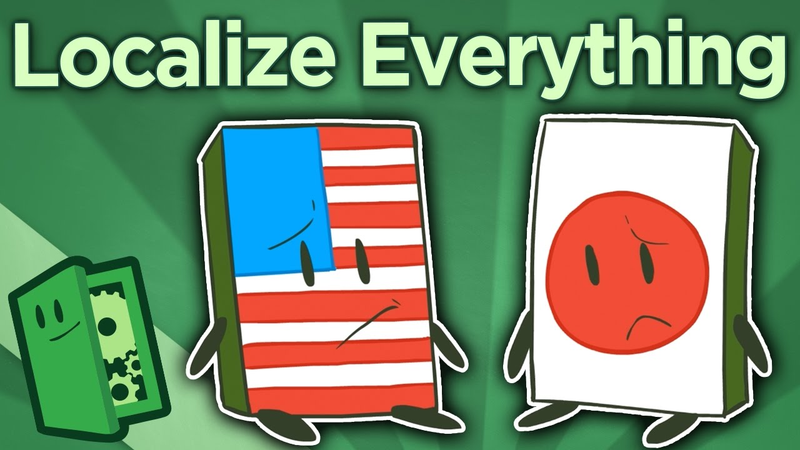
Localize Everything - Finding Hardcore Fans Worldwide - Extra Credits
The primary argument presented is that console platform holders—specifically Microsoft, Sony, and Nintendo—should adopt a strategy of aggressive, widespread localization for niche international titles to drive hardware sales and cultivate a loyal, vocal user base.
- Console platform holders like Microsoft, Sony, and Nintendo should fund the localization of niche international titles in exchange for regional exclusivity to drive hardware sales.
- Investing in niche localization is a cost-effective alternative to securing expensive AAA exclusives, as it requires significantly lower capital while still providing high-value content.
- Digital distribution has eliminated traditional barriers like physical retail space and inventory management, making it easier to bring specialized international games to global markets.
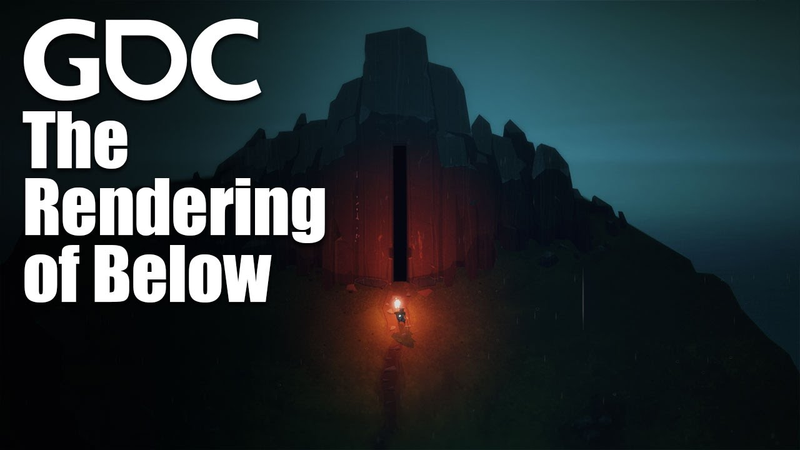
The Rendering of Below
The development of the rogue-like action-adventure game Below required a specialized rendering pipeline to balance high-density visual detail with a moody, intentionally dark aesthetic.
- The development team implemented a tiled forward lighting system using compute shaders to overcome the performance inefficiencies of standard deferred lighting on Xbox hardware.
- A gamma-correct pipeline was utilized to perform all lighting, post-processing, and color grading in linear space, effectively mitigating color banding and visual artifacts.
- The engine leveraged binary arithmetic and bit-masking to manage numerous light sources simultaneously, enabling complex light-based gameplay mechanics while maintaining compatibility with multi-sample anti-aliasing (MSAA).
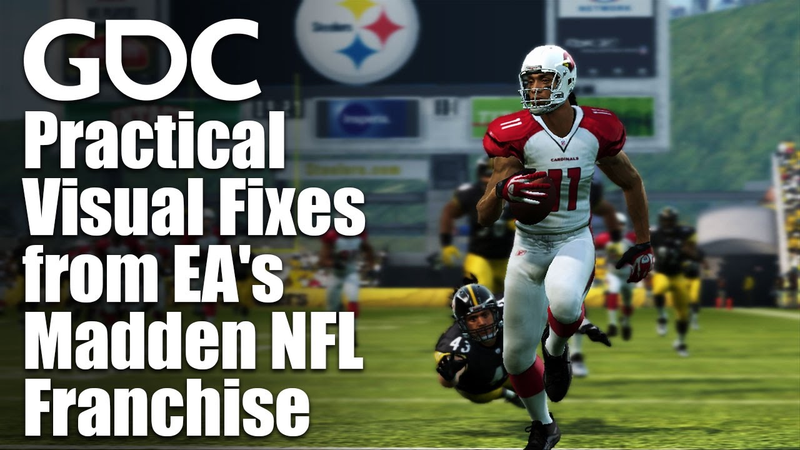
Game Accessibility: Practical Visual Fixes from EA's Madden NFL Franchise
The integration of accessibility features into the Madden NFL franchise demonstrates that significant improvements for players with visual impairments can be achieved through cost-effective, software-based solutions.
- Accessibility features can be integrated into AAA titles with minimal resources, as demonstrated by a single developer implementing these changes for Madden NFL 17 within a one-month timeframe.
- High-impact visual improvements for low-vision players include enlarging pass icons, standardizing UI placement, and providing user-adjustable brightness and contrast controls.
- Modified color-shifting algorithms are superior to standard color-blind filters, which often compress color ranges and negatively impact gameplay clarity.
Adolescents as Game Designers: Developing New Literacies
Engaging adolescents in structured game design programs serves as a powerful pedagogical tool for fostering critical digital literacy.
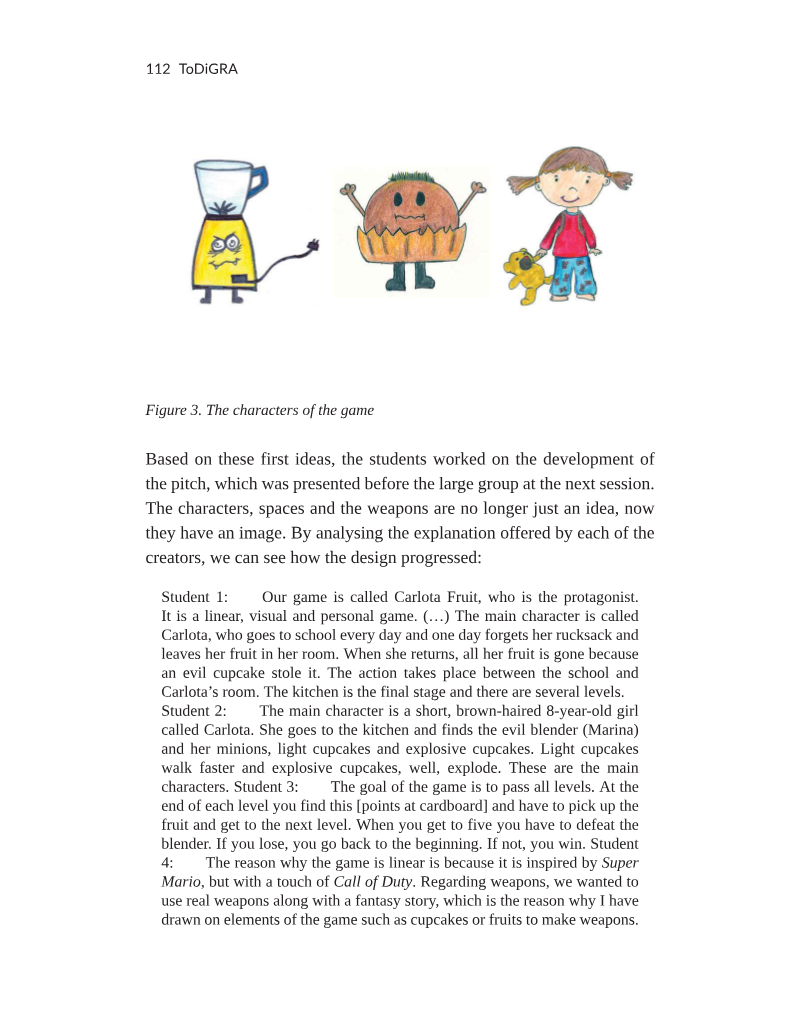
- Structured game design programs transform adolescents from passive consumers into active producers, fostering critical digital literacy by revealing games as complex, systemic objects.
- Collaborative, role-based learning environments—where students adopt professional titles like director, programmer, or artist—effectively bridge the gap between technical skill acquisition and social design dynamics.
- The research, conducted via ethnographic and action-based methodologies with a cohort of twenty adolescents, demonstrates that a full development lifecycle approach—from conceptualization to technical implementation—is essential for mastery.
Scarcity and Survival Horror: Trade as an Instrument of Terror in Pathologic
Survival horror games frequently employ resource scarcity to cultivate vulnerability, yet most titles ultimately provide players with reliable economic systems that facilitate predictable progression.
- Survival horror games, such as the 2005 title Pathologic by Ice-Pick Lodge, subvert the standard gaming loop of work, reward, and reinvestment by introducing extreme scarcity and unpredictable economic systems.
- Unlike conventional games where in-game economies provide reliable progress and agency, Pathologic uses an unstable, fluctuating market to force players into agonizing trade-offs between short-term survival and long-term goals.
- In Pathologic, time is treated as a critical, scarce resource; players have only twelve in-game days to complete objectives, creating a high-pressure environment where failure to manage time results in the loss of narrative and gameplay content.
Finding a Way: Techniques to Avoid Schema Tension in Narrative Design
The perceived incompatibility between narrative and game design stems from the reliance on rigid, imported structural models rather than an inherent conflict between the two disciplines.
- Narrative and game design siloing is caused by 'schema tension'—conflicting mental models taught to creators—rather than any inherent incompatibility between story and gameplay.
- The 'sequence approach' used in screenwriting, which focuses on audience experience through objective-driven sequences, provides a shared language that bridges the gap between narrative writers and game designers.
- Game design often relies on first and second-order design (focusing on objects and symbols), whereas integrating narrative effectively requires third-order design, which prioritizes the player's activity and experience.
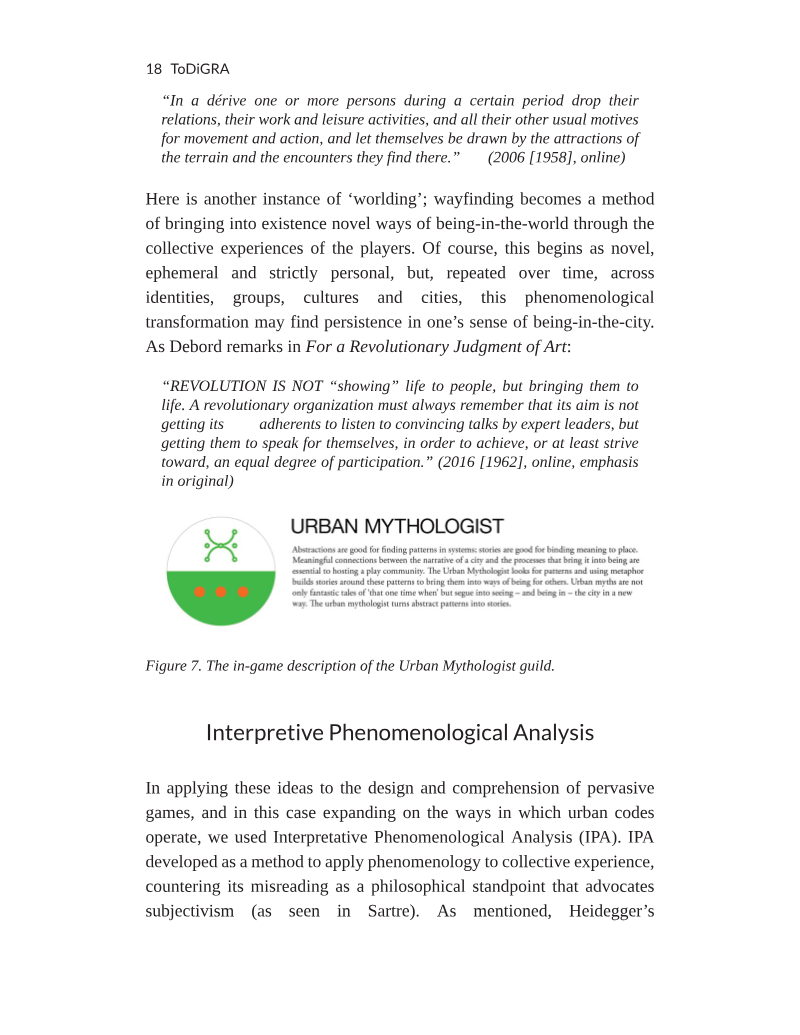
Ways of Being: Pervasive Game Design Ethos in Urban Codemakers
Urban Codemakers functions as a pervasive game designed to disrupt the rigid, instrumental nature of modern urban environments by fostering new phenomenological ways of being.
- Urban Codemakers is a pervasive game designed to disrupt the instrumental nature of urban environments by blending digital elements with physical navigation.
- The project utilizes a ludic and autotelic design philosophy to encourage participants to view the city as a malleable, dynamic space rather than a static backdrop.
- By applying psychogeography and Interpretative Phenomenological Analysis, the game shifts player engagement from analytical observation to embodied, non-instrumental interaction.
Character Balance in Skylanders: More than the Numbers
Character balance in the Skylanders franchise prioritizes the subjective player experience and accessibility for a demographic aged six to ten over traditional competitive metrics.
- Character balance is driven by player perception rather than raw numerical data; if a player perceives a move as powerful due to visual effects or sound design, it functions as powerful regardless of its underlying math.
- In Skylanders: Swap Force, developers managed difficulty by scaling enemy damage output rather than hit points, implementing a 'fair fight' mechanic that grants players a one-second window of immunity after taking lethal damage to prevent frustration.
- The development team prioritized creating characters that players either loved or hated over those that were merely 'okay,' as strong emotional reactions drive engagement and playground discussion among the target demographic.

Put a Face on It: The Aesthetics of Cute
The aesthetic of cuteness functions as a sophisticated design strategy rather than a superficial stylistic choice.
- Cuteness functions as a strategic design tool that uses rounded forms and exaggerated features to simplify complex information and lower barriers to entry for diverse player demographics.
- Designers utilize a 'cute' aesthetic as a mask to juxtapose playful visuals with darker, sensitive themes like trauma or societal constraints, making difficult narratives more approachable.
- The aesthetic creates a unique tension by framing profound or uncomfortable subject matter within a nostalgic, safe visual environment, which subverts player expectations for greater narrative impact.
A Case for Cutscenes - Everything Old is New Again - Extra Credits
The prevailing design philosophy in the game industry often characterizes cutscenes as inherently flawed or lazy, suggesting that developers should prioritize gameplay over passive cinematic sequences.
- Cutscenes are most effective when used to convey subtle character moments and emotional interiority that current gameplay mechanics cannot replicate.
- Designers should shift away from using cutscenes for grand action sequences, which often create a disconnect by forcing players to watch events they would prefer to control.
- The Yakuza 0 development model demonstrates that cutscenes excel at depicting nuanced facial expressions and physical gestures that define character depth.