1 free read left. Create a free account for unlimited reading + AI research.
Create free account
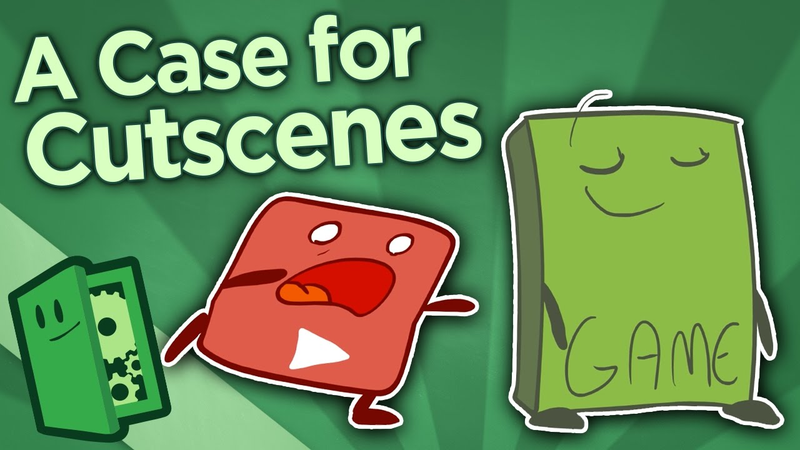
A Case for Cutscenes - Everything Old is New Again - Extra Credits
Key insights
6 takeaways- 01Cutscenes are most effective when used to convey subtle character moments and emotional interiority that current gameplay mechanics cannot replicate.
- 02Historically, cutscenes were used to bridge the gap between limited graphical capabilities and player imagination, but modern technology allows for more intentional, selective application of the medium.
- 03Designers should shift away from using cutscenes for grand action sequences, which often create a disconnect by forcing players to watch events they would prefer to control.
- 04Developers should evaluate the necessity of a cutscene based on whether gameplay mechanics are sufficient to express the specific narrative or emotional goal.
- 05The Yakuza 0 development model demonstrates that cutscenes excel at depicting nuanced facial expressions and physical gestures that define character depth.
- 06The industry's prevailing view that cutscenes are inherently lazy or a failure of interactive design is an oversimplification that ignores their utility as a specialized storytelling tool.
Ask AI about this video
Transcript
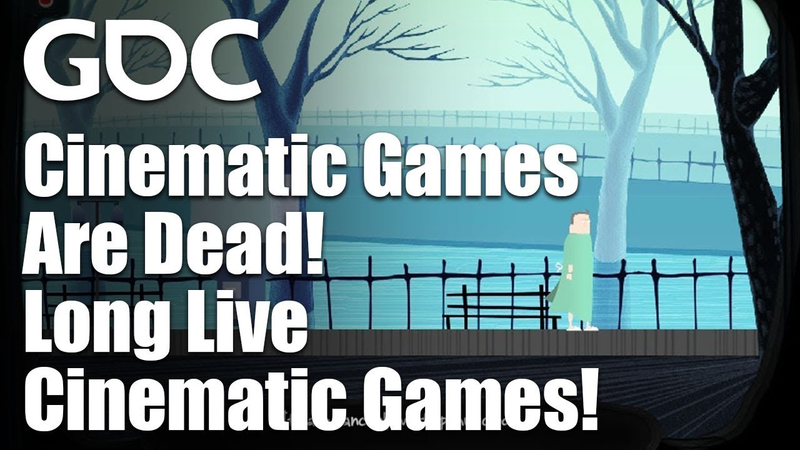
James had the strangest experience with Yakuza Zero. The game was about 30% cutscene the way he played it, and he didn't [Music] mind. Cutscenes have long been a whipping boy of game design. We joke about Kajjima and Naughty Dog games just being movies. We groan when any game is released with cutscenes that you can't skip. In fact, among designers, cutscenes have been seen as an inherently flawed design element for so long that it's sort of become a mantra. Cutscenes are bad, or at least lazy game design. Never do in a cutscene what you could be doing through gameplay. And I get where that's coming from. But if I may just pump the brakes for a moment here, I think it's important to take a step back here and remember that nothing is inherently bad game design. Anything that we can do within a game is a tool. One of many in our designer's tool belt. Now, some of those tools may have incredibly limited applications, and some of them can be disastrous when used
wrong. But that doesn't mean that we should throw them out entirely. I mean, even something as seemingly bad as terrible ragd doll physics can be harnessed to give us something like Goat Simulator and the entire genre of comedy physics sims around it. So, everything has its uses. With that in mind, I think it's time we take a second look at cutscenes. And just for the sake of clarity, let's define the cutscene in this case as a portion of a game where control is taken away from the player so that a video can play out. Maybe it's pre-rendered. Maybe it's all happening in engine, but the player is just sitting and watching, pressing no buttons while a little movie plays. Now, for one thing, I think there's a case to be made for the merit of the film game hybrid like Metal Gear Solid or Uncharted. After all, we readily embrace book game hybrids in the form of the visual novel. So why shut the door on games built with cutscenes as part of their core experience? But I realize that's sort of sidest stepping the whole discussion. So let's just tackle that designer mantra headon. Don't do with a cutscene what you could do with
gameplay. All right, but what if a cutscene can do something that your gameplay can't? Think back to what cutscenes did for us in the old days? Why did we start using them to begin with? Well, in an era where realtime graphics capabilities were extremely limited, cutscenes allowed us to show things that we could never do justice to in engine. But let's go a little deeper. If you go all the way back to the days of Final Fantasy 7, the game that launched a thousand cutscenes, what did those cutscenes often show? Well, sometimes they showed establishing shots of your location. Other times they highlighted key story elements, but most often they showed you action. make reactors exploding, cloud jumping on a train amidst a hail of gunfire, your party making a daring escape as a city collapses around them. They showed the characters doing amazing things, way cooler than anything that happened during gameplay. And that trend continued as the series grew. Cutscenes showed your characters rail grinding down airship cables, fighting in epic battles, or matrixing their way through
train cars full of heavily armed guards. And the goal in all of this was to give the imagination a crutch. After all, Final Fantasy Combat wasn't super exciting to look at. But when you pressed the button to choose attack commands from a menu, this was what you were supposed to imagine. When you used your small handful of moves over and over and over again to fight back waves of generic enemies, you were supposed to envision it as the sort of action spectacle you saw in those cutscenes. Cutscenes attempted to bridge the gap to help you imagine a spectacle that the game just wasn't capable of. But this sort of backfired as players. You watch these cut scenes and you think, "I want to do that. I want this game to be that." Creating this expectation of the gameplay experience and setting you up for disappointment every time you went back to this. So, we started trying to figure out how do we make our gameplay look like this? We tried turning action cutscenes into quicktime events to make them at least somewhat interactive. We started making heavily scripted action
setpiece sequences to help make certain segments of our gameplay feel like those cutscenes looked. Even Final Fantasy has strived and succeeded to a degree in making their gameplay combat more like the spectacle you saw in their cutscenes. Heck, Naughty Dog has nearly perfected the art of transitioning between cutscene and gameplay so that the player is given control over as many of the exciting action moments as possible without breaking the flow of things. Slowly over the years, we've tried to transition all of that cutscene action spectacle into gameplay action spectacle. We've been reasonably successful in this effort over the years, and I think it's been a change for the better. In fact, I'm prepared to go out on a limb here and say that in most cases, we should not ever be using cutscenes for action sequences. Sure, sometimes those scenes are cool, but they just evoke in the player the sense of wanting to do rather than just see. Which of course leaves us asking, what should we be using cutscenes for? And to that, I answer, the thing we used them for originally, that which our gameplay
or graphics cannot do. So, let's go back to Yakuza Zero for a minute. Playing the game, you might notice that many of the cutscenes aren't just action sequences. The game lets the player handle all of the action stuff. It lets them do the flips and the kicks and the punches and feel like a Yakuza while doing it. And why not? Today's games can deliver on action spectacle like never before. No, Yakuza's cutscenes are saved for the quieter moments, moments that show off subtleties of character that we simply couldn't as clearly express through gameplay. A flicker of a facial expression or drawing attention to the way somebody nervously adjusts their tie in a tense conversation. Yakuza uses its cutscenes to round out and fully realize its characters in ways that its gameplay cannot. Without cutscenes, the Yakuza Zero experience would actually lose a great deal. And that, I believe, is the way that we should treat the cutscene going forward. Not as the shortcut to spectacle, but to subtlety because quiet character emotion can be incredibly difficult to deliver on within the
confines of gameplay, at least right now. And in those places where our gameplay cannot deliver, sometimes the humble cutscene might just be the best tool for the job. Always be wary of accepting conventional design wisdom as design law. Don't just write off a potentially useful tool as inherently bad design or a lazy way to approach problems just because it's fallen out of favor. Instead, ask, "How can this be applied? And in what scenario would this tool be ideal?" Sure, conventional wisdom is often conventional for a reason. Cutscenes may be a terrible choice in many cases, but if we just throw out a tool like cutscenes entirely, we only hamstring ourselves. See you next week. You say you're not. I'm here. I'll stay. You're the one I can escape.
Summary
The prevailing design philosophy in the game industry often characterizes cutscenes as inherently flawed or lazy, suggesting that developers should prioritize gameplay over passive cinematic sequences. However, this perspective overlooks the utility of cutscenes as a specialized tool in a designer's repertoire. While early game development utilized cutscenes primarily to bridge the gap between limited graphical capabilities and the player's imagination—often depicting action spectacles that gameplay could not replicate—modern technology has largely allowed developers to integrate such spectacle directly into interactive sequences.
The core argument posits that while using cutscenes for action sequences often creates a disconnect by making players want to participate rather than watch, they remain vital for conveying elements that gameplay cannot easily express. By analyzing the design of Yakuza 0, it becomes clear that cutscenes are most effective when reserved for quiet, subtle character moments. Rather than serving as a shortcut for grand action, these sequences allow for the depiction of nuanced facial expressions and subtle physical gestures that define character depth in ways current gameplay mechanics struggle to achieve.
Ultimately, the industry should move away from treating conventional wisdom as absolute law. Instead of dismissing cutscenes as a relic of poor design, developers should evaluate them based on their specific application. When gameplay mechanics are insufficient to convey emotional complexity or character interiority, the cutscene remains an essential, effective instrument for storytelling. By focusing on subtlety rather than spectacle, designers can leverage this tool to enhance the overall player experience rather than viewing it as a failure of interactive design.












Comments