Global reports and market data
Documents

Building Beauclair in The Witcher 3: Wild Hunt - Blood and Wine
The development of Beauclair for The Witcher 3: Blood and Wine centered on creating a dense, vacation-inspired urban environment that balanced high visual fidelity with rigorous technical performance constraints.
- To manage performance in the dense city of Beauclair, the team used Umbra to optimize rendering by limiting the number of visible meshes based on the player's line of sight, significantly reducing triangle counts for complex structures.
- The development team implemented a custom blend shader that used monochromatic textures combined with color tints and pattern overlays to create unique visual variations for assets while minimizing memory usage.
- Designers controlled player navigation and visibility by bending streets and using landmarks like the Gorgon Mountain and the palace to break lines of sight, which helped hide asset popping and streaming latency.

Dark Patterns: How Good UX Can Be Bad UX
Dark patterns in game design represent a critical intersection where effective user experience (UX) techniques are repurposed to manipulate player behavior for short-term monetary gain.
- Dark patterns prioritize short-term revenue through deceptive UX, but they ultimately damage brand reputation and increase long-term player churn.
- Common manipulative tactics include bait-and-switch advertising, UI designs that trigger accidental purchases, and notifications using guilt-tripping language.
- Exploitative design relies on psychological pressure, such as leveraging social peer pressure or low-probability rewards, to force player compliance.

Still Logged In: What AR and VR Can Learn from MMOs
The development of virtual and augmented reality platforms represents a fundamental shift from hardware-centric design to the creation of complex, persistent social societies.
- AR and VR platforms must transition from hardware-centric development to prioritizing server-side social infrastructure and behavioral systems to ensure long-term viability.
- Developers should treat every game mechanic as a potential vector for abuse, requiring the implementation of granular permission controls, persistent identity systems, and administrative logging.
- Fostering personal investment through established digital identities is a primary strategy for discouraging griefing and promoting positive social interaction within virtual environments.

Illustrating Fantasy in League of Legends
The visual identity of League of Legends champions has evolved from rigid, action-oriented box art toward a narrative-driven philosophy that prioritizes emotional resonance and thematic storytelling.
- Riot Games shifted its illustration philosophy from creating 'aspirational' hero shots to focusing on the 'true fantasy' of a character, which exists in the player's imagination rather than the game's low-poly models.
- The illustration team discovered that breaking arbitrary rules—such as forcing a character to stand or showing their primary gameplay hook—often leads to higher player resonance, as seen in the successful redesign of Elise.
- Splash art is treated as a narrative tool to convey a champion's core personality and story, prioritizing the 'feeling' of a character over a literal representation of their in-game abilities or appearance.
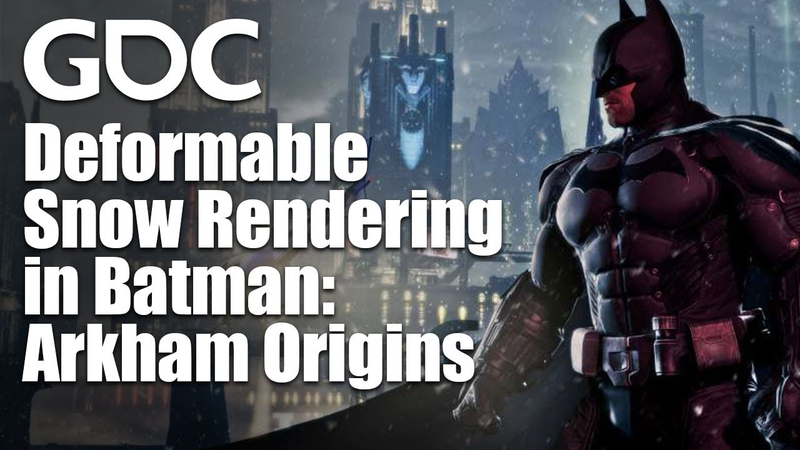
Deformable Snow Rendering in Batman: Arkham Origins
The development of the snow rendering system for Batman: Arkham Origins focused on creating a high-performance, low-memory solution for organic, deformable surfaces.
- The deformable snow system uses a runtime-generated displacement height map technique that avoids expensive raycasting or physics-heavy calculations, making it performant for previous-gen consoles like the PS3 and Xbox 360.
- To manage memory efficiently, the system uses a pre-allocated memory pool and only tracks 'active' surfaces—those within a specific distance of characters—releasing memory for distant surfaces to maintain a strict 2MB budget.
- The technique renders character interactions into a height map, which is then processed via a four-tap bilinear Poisson disc blur to create smooth, organic gradients for footprints, sliding, and fighting movements.

Analog Game Studies: Volume 2
"Analog Game Studies: Volume 2" offers a comprehensive exploration of analog games, examining their cultural significance, design principles, and social implications across various genres.
- Analog games are not neutral: their settings, mechanics, and conventions encode social assumptions about race, colonialism, gender, and sexuality, from orientalist "historical exoticism" in Eurogames to heteronormative and patriarchal ideals in children's games such as Girl Talk.
- Queer representation in RPG source books shifted from villainization in the late 1980s toward matter-of-fact inclusion, a change driven largely by individual publishers rather than industry-wide norms.
- The author's "First Nations of Catan" remix reframes the game around indigenous occupancy, illustrating how designers can deliberately redesign representations in commercial board games.

Lifestyle Games - The Play's the Thing - Extra Credits
The concept of lifestyle games identifies a distinct category of titles that transcend traditional genre labels—such as MOBAs, MMORPGs, or shooters—by becoming central to a player’s social life, daily routine, and identity.
- Lifestyle games are defined as titles that integrate into a player's daily routine, social life, and personal identity, transcending traditional genre classifications.
- To achieve lifestyle status, games must feature robust social interaction, functionally infinite content through competitive or procedural systems, and a consistent update cadence that validates the player's time investment.
- Successful lifestyle titles require mechanical or narrative depth that encourages engagement outside of active play, supported by external ecosystems like wikis, streaming, and esports.
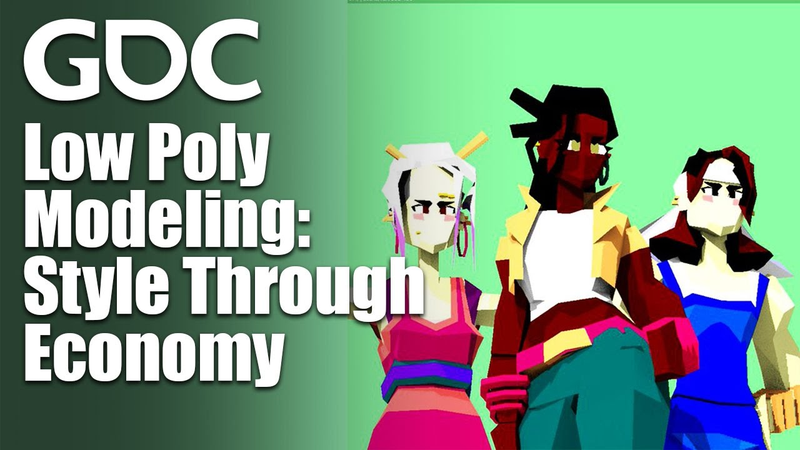
Low Poly Modeling: Style Through Economy
Low-poly modeling functions as a deliberate design philosophy centered on surface economy, prioritizing stylistic efficiency and the clear communication of visual ideas over the pursuit of high-fidelity realism.
- Adopting a low-poly first workflow increases productivity and iteration speed by eliminating the need for manual decimation or retroactive optimization.
- Low-poly modeling prioritizes surface economy and silhouette legibility, allowing developers to maintain consistent visual quality while managing limited resources.
- Low-poly geometry functions as an efficient control cage for subdivision surfaces, enabling rapid structural adjustments before final detailing and sculpting.
Experience, 60 Frames Per Second: Virtual Embodiment and the Player/Avatar Relationship
Video games represent a sophisticated intersection of narrative, mechanics, and psychology that transcends the traditional view of avatars as mere functional tools or vehicles.
- Avatars function as autonomous characters with distinct histories and personalities, transforming gameplay from simple tool operation into a dynamic, theatrical performance.
- Modern game design increasingly utilizes elements like idle animations and deep narrative backstories to cultivate a shared identity between the player and the digital character.
- Titles such as Assassin’s Creed and Fez serve as primary examples of games that explicitly integrate embodied experiences into their core mechanics to deepen player immersion.

Early Access Lessons from Raw Data
Raw Data established a significant milestone in the virtual reality industry by becoming the first title to surpass $1 million in revenue within its initial 30 days.
- Raw Data achieved the first $1 million revenue milestone for a VR title within its initial 30 days of release.
- The game’s success was driven by a design philosophy prioritizing high-fidelity, active physical engagement and intuitive weapon handling over rigid realism.
- Cooperative, social gameplay served as the primary engine for long-term player retention and organic market growth.

Lessons from Escape Rooms: Designing for the Real World and VR
The design of immersive experiences, whether in physical escape rooms or virtual reality, centers on the fundamental human desire for agency, storytelling, and social connection.
- Immersive design relies on puzzles as pacing tools that direct player attention and drive narrative progression through a cycle of observation, organization, and pattern recognition.
- Designers must balance complex mechanics with human limitations by mitigating physical fatigue and managing cognitive load to prevent player exhaustion.
- Environmental design should prioritize accessibility and safety, as deep immersion often causes players to lose awareness of their physical surroundings.

Player Segment Analysis: Example Report
This document presents a player segment analysis derived from a comprehensive gamer motivation model.
- The research utilizes a dataset of over 400,000 global participants to map psychometric data against specific gaming motivations like mastery, achievement, and social interaction.
- Player segments are identified by filtering out base-rate popularity bias, revealing unique mechanics that drive engagement for specific player types rather than just general game popularity.
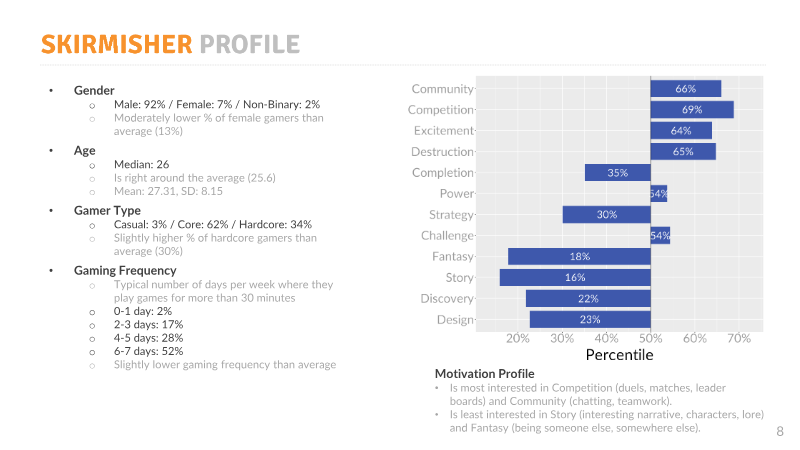
- The study sample consists primarily of core and hardcore gamers with a median age of 25, recruited through social media sharing.