Global reports and market data
Documents
The Benefits and Challenges of Supporting Third-Party Developers in Eve Online
CCP Games maintains a highly successful third-party developer ecosystem for Eve Online by providing open access to static data, image servers, and web APIs.
- CCP Games offloads the development of niche, complex utilities—such as financial tracking and asset management—to the player base to preserve internal resources for core game development.
- The studio maintains control over the third-party ecosystem by retaining the authority to modify or revoke APIs that threaten game balance or facilitate market automation.
- Community-built tools like killboards serve as critical intelligence and marketing assets, often acting as prototypes for future official client features.
Small Teams, Big Dreams: How to Build a Small Team to Do Great Things
Building a high-performance game development studio requires a strategic balance between a stable core team and a flexible network of specialized contractors.
- Build a high-performance studio by combining a stable core team with a flexible network of specialized contractors to maintain agility.
- Implement a T-shaped personnel model to balance deep individual expertise with the cross-disciplinary empathy required for effective collaboration.
- Prioritize early prototyping and iterative user testing to identify design flaws before committing resources to full-scale production.
Liminal Space - Incorporating Real Life into Games - Extra Credits
Modern gaming platforms have evolved from simple, isolated hardware into connected systems that aggregate significant amounts of personal user data, including contact information, social connections, and behavioral habits.
- Integrating real-world personal data into games creates opportunities for deeper emotional resonance and immersion, but it carries significant risks of causing real-life distress or social friction.
- Developers must prioritize player agency by adopting an opt-in model for data access, requiring explicit authorization for specific features rather than relying on complex opt-out menus.
- The use of personal data, such as social connections or contact information, must be managed carefully to avoid the accidental inclusion of sensitive individuals, such as deceased friends or estranged contacts.
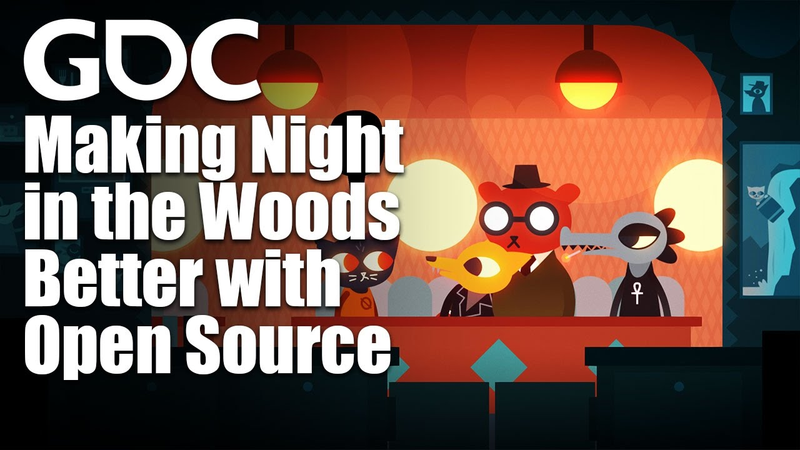
Making Night in the Woods Better with Open Source
The integration of open-source tools into game development serves as a powerful mechanism for managing complex narrative structures while simultaneously offloading technical maintenance to a broader community.
- Open-source narrative tools like Yarn Spinner allow studios to manage massive dialogue requirements, such as the 139,000 words and 130 characters featured in Night in the Woods.
- Releasing proprietary tools under permissive licenses like MIT or Apache 2 offloads technical maintenance and bug fixing to the broader developer community.
- Successful community management requires lowering barriers to entry by breaking development tasks into small, manageable issues and automating routine administrative workflows.
Balancing League of Legends for Every Player, from Bronze to Bengi
Balancing a competitive title like League of Legends necessitates navigating a massive skill gap that often exceeds 1,000% between casual participants and professional competitors.
- Riot Games balances League of Legends by targeting the 'sweet spot' of High Platinum to Low Diamond skill tiers, as this range provides the best intersection between the high volume of players and the sensitivity to balance changes.
- Designers must interpret raw data with nuance, such as accounting for 'experience bias' where a champion's high win rate may reflect the player's mastery of that specific character rather than the champion being objectively overpowered.
- Balance changes should be iterative and systemic; when simple tuning fails to resolve an outlier, developers should pivot to broader structural updates, such as the preseason overhaul of assassin items and stealth mechanics.
Building Non-Linear Narratives in Horizon: Zero Dawn
The development of Horizon: Zero Dawn centered on establishing a robust quest architecture capable of supporting a vast open-world environment without sacrificing narrative coherence.
- Horizon: Zero Dawn utilized a graph-based narrative framework that treated quest progression as a probability space rather than a fixed sequence to balance player agency with structural integrity.
- The system relied on nodes representing plot points connected by cause-and-effect relationships, using a defined set of core verbs to dynamically manage the locking and unlocking of narrative beats.
- This architecture successfully supported the production of nearly 150 distinct quests and enabled automated features such as the player job system.
Storytelling is a Team Sport
Effective game development requires treating storytelling as a collaborative team sport rather than a siloed task.
- Treat storytelling as a collaborative, cross-disciplinary effort rather than a siloed task to prevent fragmented project vision.
- Appoint designated 'gatekeepers' to defend the core narrative vision while facilitating communication between art, sound, and engineering departments.
- Utilize concise, searchable documentation featuring visual aids and bullet points to ensure narrative guidelines remain functional and accessible to all staff.
Creating with (Un)Limited Possibilities: Normative Interfaces and Discourses in Super Mario Maker
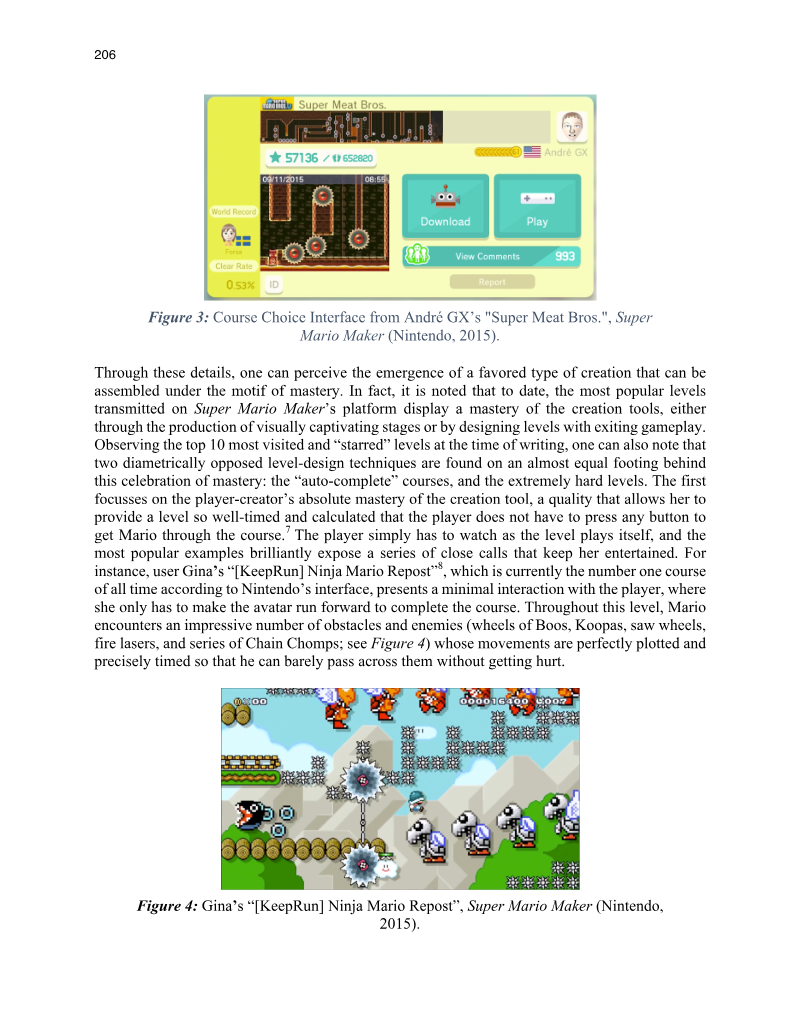
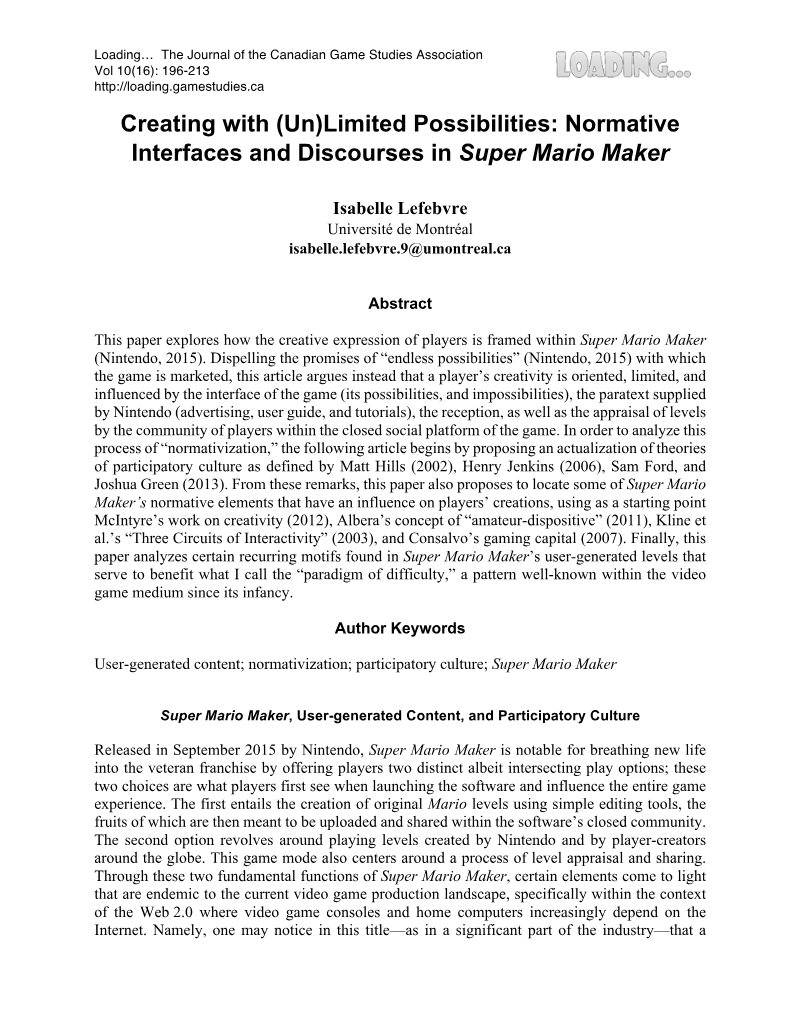
Super Mario Maker operates under a marketing narrative of limitless creative freedom, yet the actual user experience is defined by a rigid framework of technical and social constraints.
- Super Mario Maker restricts creative freedom through a rigid framework of technical and social constraints, despite marketing narratives of limitless expression.
- The platform enforces a dominant design paradigm by mandating that creators must successfully complete their own levels before publication, which prioritizes high-skill benchmarks.
- Creative output is funneled into a narrow range of content, primarily consisting of automated spectacles or punishingly difficult courses that align with community expectations.
Affective Symmetry: Affect and Networks in Blizzard's StarCraft II: Legacy of the Void
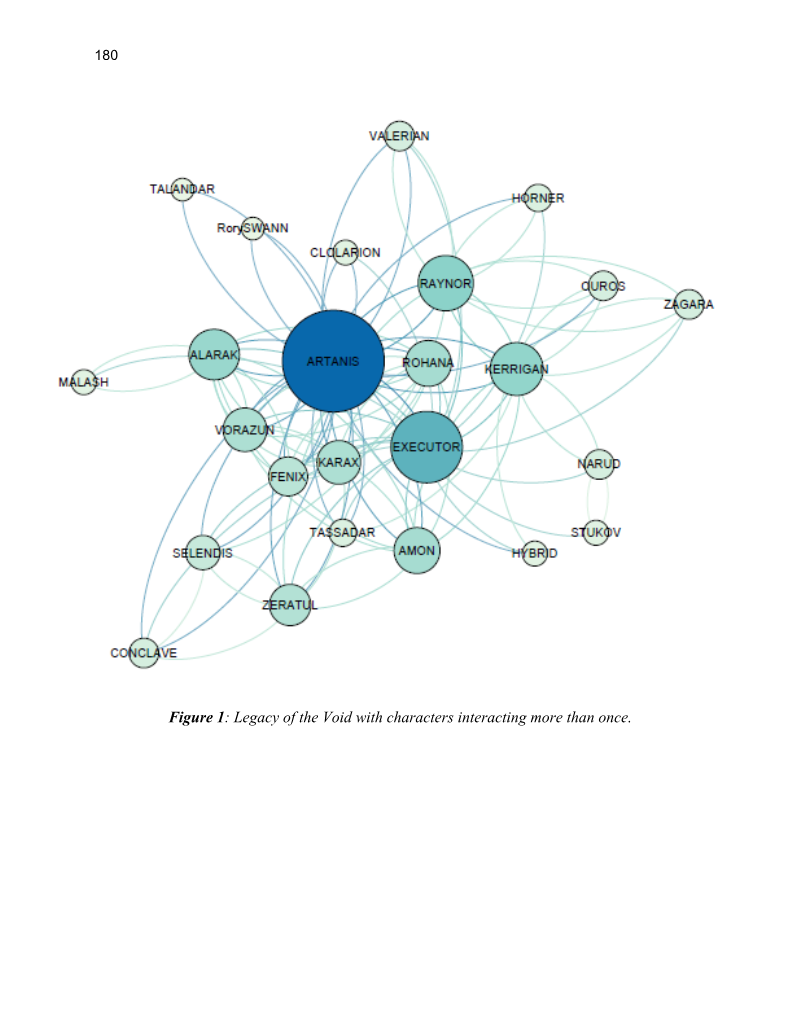
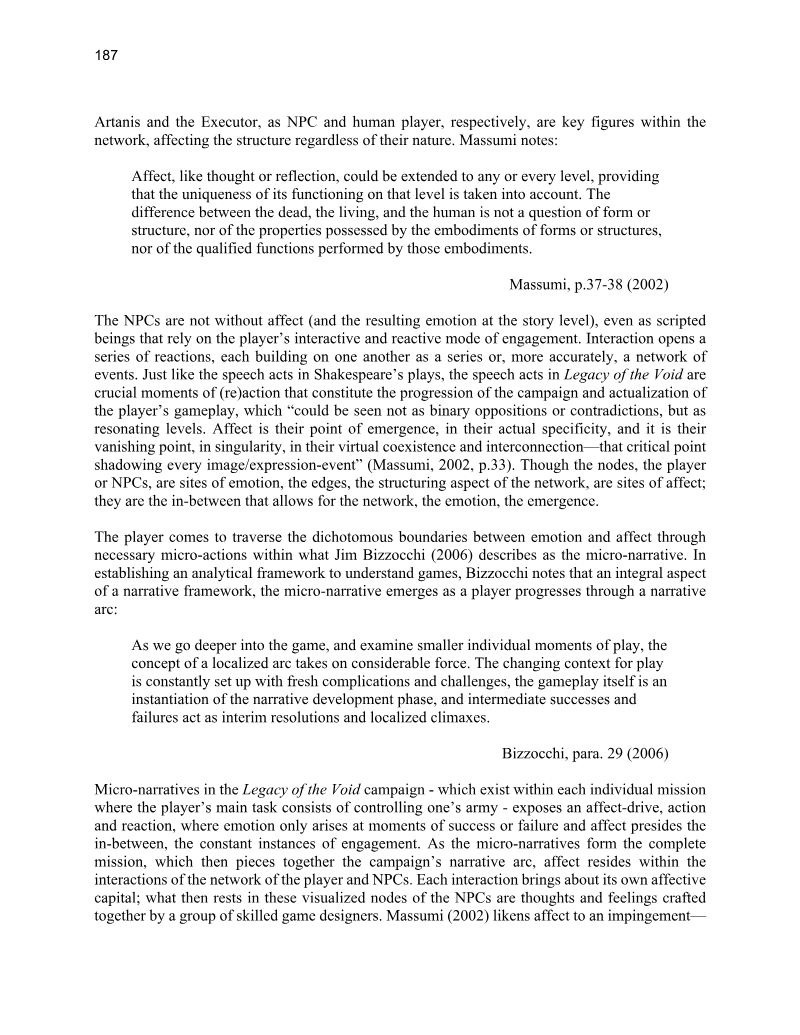
The single-player campaign of StarCraft II: Legacy of the Void functions as a sophisticated affective network that fundamentally reshapes the player’s relationship with virtual entities.
- The StarCraft II: Legacy of the Void campaign utilizes a network of 1,342 unique dialogue interactions to position the player and the protagonist, Artanis, as mutually dependent nodes.
- The game design transforms narrative progress into 'affective capital,' which binds the player to non-human characters through active participation rather than just gameplay mechanics.
- By adopting the role of the Executor, players are interpellated into a virtual community where success requires navigating complex ethical responsibilities.

Play and Gameful Movies: The Ludification of Modern Cinema
The convergence of digital gaming and contemporary cinema represents a fundamental shift in narrative structure and audience engagement, driven by the process of ludification.
- Modern cinema is undergoing 'ludification,' a structural shift where narrative arcs are increasingly organized around game-based logic, such as trial-and-error progression and rule-bound systems.
- The transformation of film is defined by five core dimensions: the construction of play worlds, implementation of ludified quests, integration of interfaces, simulation of play experiences, and adoption of game-like narrative structures.
- Films like 'Edge of Tomorrow' demonstrate how cinematic storytelling is remediating specific game mechanics, such as respawn loops and quest-based progression, to structure the viewer's experience.

The Future of Art Production in Games
The future of game art production is defined by a shift from labor-intensive technical execution toward a focus on artistic intent and storytelling.
- Art production is shifting from manual, labor-intensive technical execution toward a focus on artistic intent and storytelling as automation replaces reductive tasks like UV unwrapping and collision mesh creation.
- The integration of photogrammetry, procedural generation, and simulation allows studios to treat virtual environments as sets to be dressed and lit, significantly increasing production efficiency and visual fidelity.
- Deep learning and neural networks are poised to automate animation and asset creation, enabling software to execute artistic intent with minimal manual intervention.
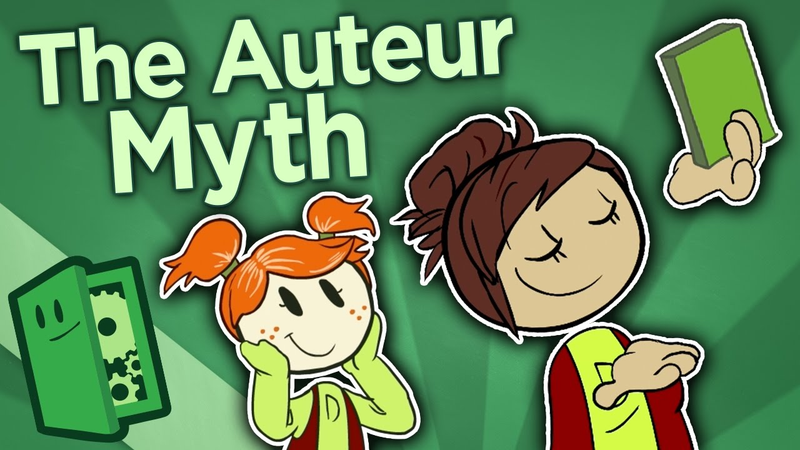
The Auteur Myth - Lone Visionaries... and Their Teams - Extra Credits
The gaming industry frequently suffers from the auteur myth, a persistent misconception that complex video games are the product of a single, visionary creator.
- Modern game development is an inherently collaborative process that relies on the specialized contributions of dozens or hundreds of professionals, including programmers, artists, designers, and sound engineers.
- The 'auteur myth'—the misconception that games are the product of a single visionary—obscures the reality of team-based production and creates unrealistic expectations for aspiring developers.
- Attributing success to a single individual often ignores the essential contributions of contractors and part-time specialists who are frequently necessary to achieve high-quality output in both indie and AAA sectors.