1 free read left. Create a free account for unlimited reading + AI research.
Create free accountReport Quantic Foundry
1 free read left. Create a free account for unlimited reading + AI research.
Create free accountReportQuantic Foundry
The research mapped psychometric data against specific gaming motivations, including mastery, achievement, and social interaction.
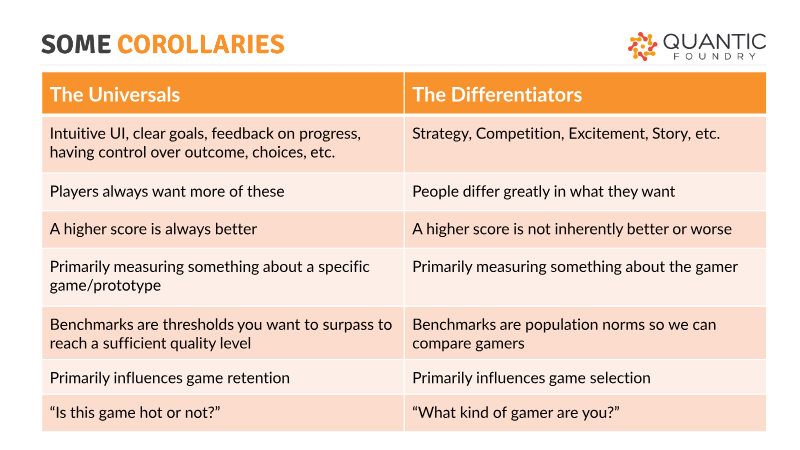
This analysis provides a comprehensive framework for understanding player behavior by mapping psychometric data to specific gaming motivations. The primary objective is to categorize gamers into distinct segments based on their preferences for action, social interaction, mastery, achievement, immersion, and creativity. By utilizing a robust motivation model, the research identifies how specific game mechanics—such as competition, strategy, or world-building—correlate with player demographics and engagement patterns, offering developers actionable insights into audience preferences.
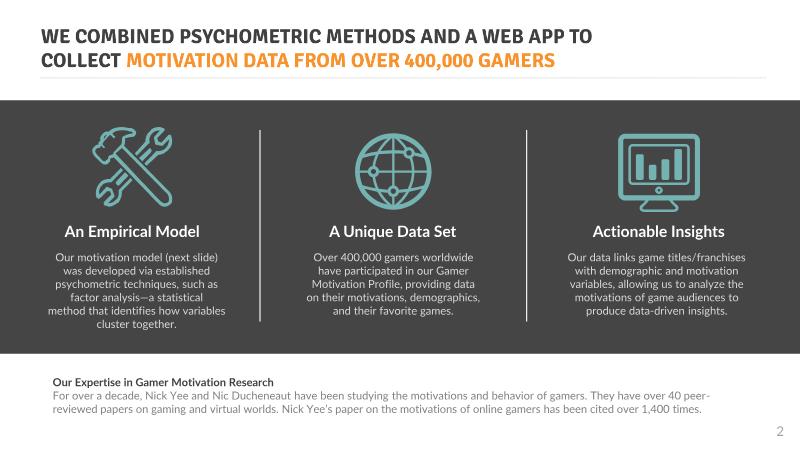
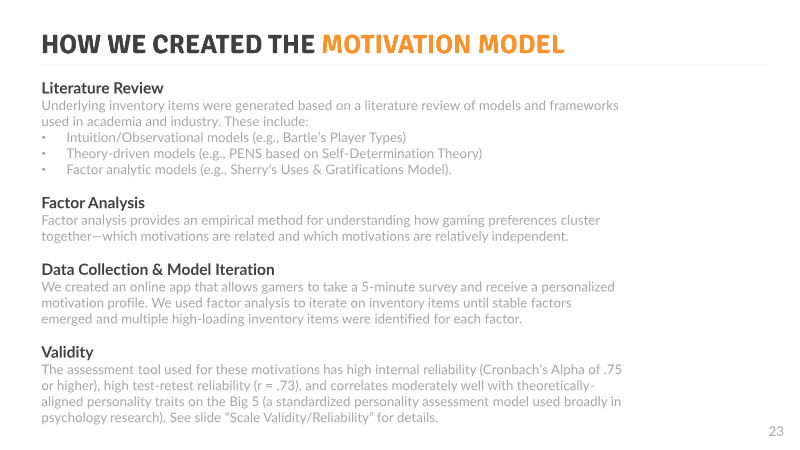
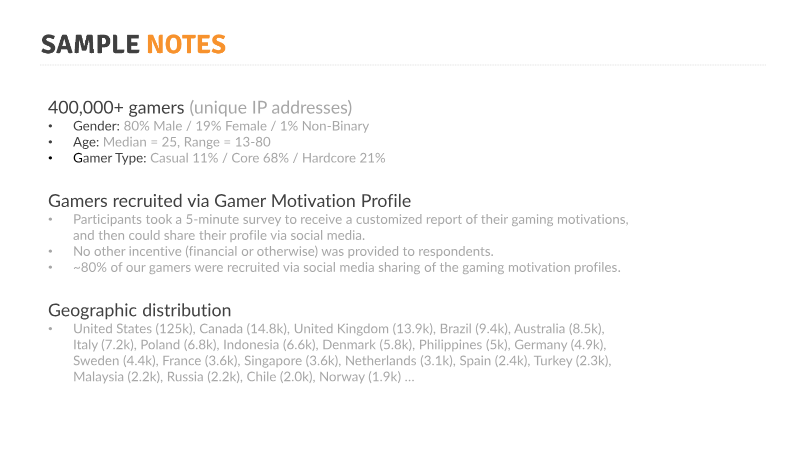
The methodology relies on a large-scale dataset of over 400,000 global participants who completed the Gamer Motivation Profile. This research employs factor analysis to ensure statistical validity, achieving high internal and test-retest reliability. The sample, which skews toward core and hardcore gamers with a median age of 25, was recruited primarily through social media sharing of individual results. By analyzing disproportionately popular and unpopular titles within specific segments, the study filters out base-rate popularity bias to reveal the unique mechanics that drive engagement for different player types.
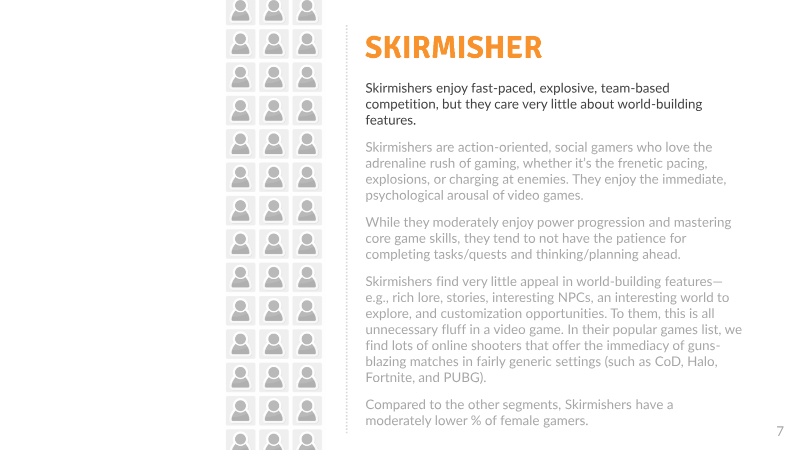
Key findings illustrate the diversity of the gaming audience through specific segments, such as the Skirmisher, Tactician, and World Designer. For instance, Skirmishers are identified as a predominantly male, action-oriented segment that prioritizes competition and community while showing a marked aversion to narrative-heavy or world-building features. Conversely, other segments demonstrate a preference for strategic depth or creative expression. These findings underscore that player motivations exist on a spectrum, and successful game design requires aligning specific mechanics with the psychological drivers of the target audience.
Quantic Foundry · 2026
Quantic Foundry · 2025
Quantic Foundry · 2025
Quantic Foundry · 2025
Quantic Foundry · 2025
Quantic Foundry · 2024
Quantic Foundry · 2023
Quantic Foundry · 2023
Quantic Foundry · 2023
Quantic Foundry · 2021
Quantic Foundry · 2021
Quantic Foundry · 2021
Anzu · 2026