1 free read left. Create a free account for unlimited reading + AI research.
Create free account
Lifestyle Games - The Play's the Thing - Extra Credits
Key insights
6 takeaways- 01To achieve lifestyle status, games must feature robust social interaction, functionally infinite content through competitive or procedural systems, and a consistent update cadence that validates the player's time investment.
- 02Successful lifestyle titles require mechanical or narrative depth that encourages engagement outside of active play, supported by external ecosystems like wikis, streaming, and esports.
- 03Designers should shift away from exploitative 'Skinner-box' reward loops toward intentional, humane design that fosters positive, long-term value for the player.
- 04Meaningful player engagement can be cultivated by integrating real-world skill development, such as leadership, teamwork, and analytical problem-solving, into the core gameplay loop.
- 05Developers should prioritize community-building tools and shared celebratory experiences to facilitate genuine social connections among the player base.
- 06Lifestyle games are defined as titles that integrate into a player's daily routine, social life, and personal identity, transcending traditional genre classifications.
Ask AI about this video
Transcript
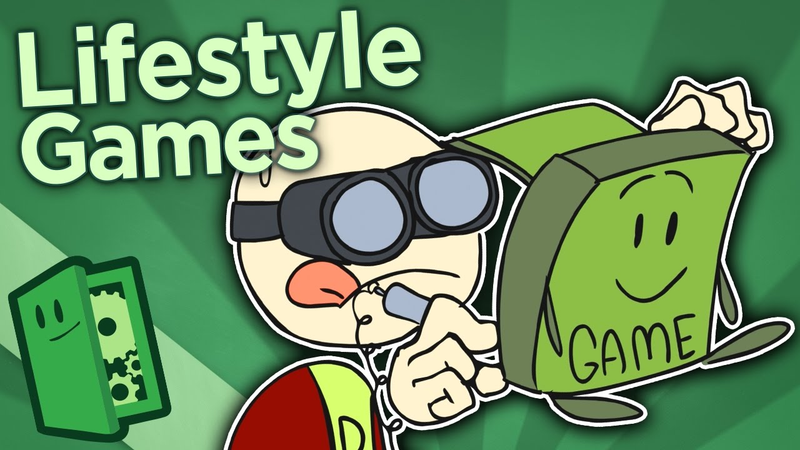
At a recent convention, James and his friends were talking about a type of game that we don't really have a proper term for yet. But given the fact that they have their own special forms of design and marketing and longer-term development, we could really use one. Let's go with lifestyle games. Also, by the way, this is Josh. He's doing the guest art today, so say hello. Sometimes a game is more than just a game. It's a lifestyle. You play it more than any other game. Your social life revolves around it. You study it, you talk about it with your friends, you watch other people play it on Twitch, you make friends over this game, and you find yourself spending less time with the friends who don't play it. Your humor involves a lot of jokes about the game, and your daydreams often wander to it. League of Legends, World of Warcraft, Call of Duty, Overwatch, and even Madden often fall into this category. And there is nothing wrong with that, within reason. There are plenty of people who make a lifestyle out of this sort of thing in a healthy
and positive way. It can give people a social circle that they might not otherwise have had, and give them something to always think about and look forward to. But it's hard to have a good design conversation around games like these when we've never really had the terminology to help us conceptualize all of these games fitting into one basket. Usually, when we talk about Dota or Warcraft or Call of Duty, we talk about them as a MOBA, an MMORPG, and an FPS. We talk about how they relate to their genres rather than talking about what they have in common with each other. So, we haven't really talked enough about how to make them better both at being lifestyle games and at being so in a humane and positive way. But if we're going to do that, the first question we have to ask is, can you intentionally design a game to be a lifestyle game? Is that something that just sort of happens with a large enough fanbase and a lot of luck, or are there common elements that these games share which allow them to become lifestyle games. Well,
yes, both kind of. I don't think you can make something that's 100% guaranteed to achieve lifestyle game status, but I do think that there are common design elements which make it a lot more likely. But before we dive into these, a quick sidebar. Not everybody's going to experience lifestyle games as a lifestyle. Any lifestyle game is going to have plenty of people who play these games for maybe a few hours every couple of weeks. Also, for almost any you can probably find a small number of people who experience it as a lifestyle, even though it may seem unlikely to do so. When I talk about lifestyle games here, I'm talking not about absolutes, but simply about games that a significant amount of people end up experiencing as a lifestyle. So, with that caveat, what elements seem to improve the likelihood that a game becomes a lifestyle game? Well, it has to have robust social interaction, because we're social creatures. And even the most introverted of us wants at least the potential opportunity to share something as
meaningful to them as a lifestyle pursuit with other people. Next, it needs functionally infinite content. If it doesn't have that, it cannot become a lifestyle, because people are just going to exhaust what's there and move on. Often, this infinite content comes in the form of competition against other people, because the people you play against are a varied, interesting, and potentially inexhaustible well of content. But infinite content could also come in the form of procedural generation. Or, with cases like World of Warcraft, it could come in the form of a lot of things that take a lot of time to do, like acquiring all of the best raid loot. When content takes that long to master, the devs have time to make more of it before any but the hardest core players have exhausted what's already there. Which leads us to our next similarity between these games. They have to be regularly updated with new content, patches, and other supports to give players something to look forward to. Something for them to think about. Something to provide players with the implied promise that the game to which
they have devoted so much of who they are won't just end or disappear on them. Of course, it will eventually end. No game is permanent. It just has to feel like all of that time and effort that players are investing isn't being wasted. And finally, any lifestyle game has to be deep enough to occupy the player's thoughts outside the game, either mechanically or narratively. And that has to be supported by opportunities to do so. When the player can't be in the game itself, they need to be able to delve into Reddit threads or watch streamers or check out new builds or pour over wikis or turn on some e-sports to watch the pros play. So, those are the common elements, the features a game needs in order to become a lifestyle. But now that we have this concept of a lifestyle game that we can design for and improve upon, we next have to ask ourselves, how can we make it good for the player? Healthy. I mean, I've played my share of lifestyle games that felt more like an obsession, where I put them down after a while and it felt like waking up from a stupor, where
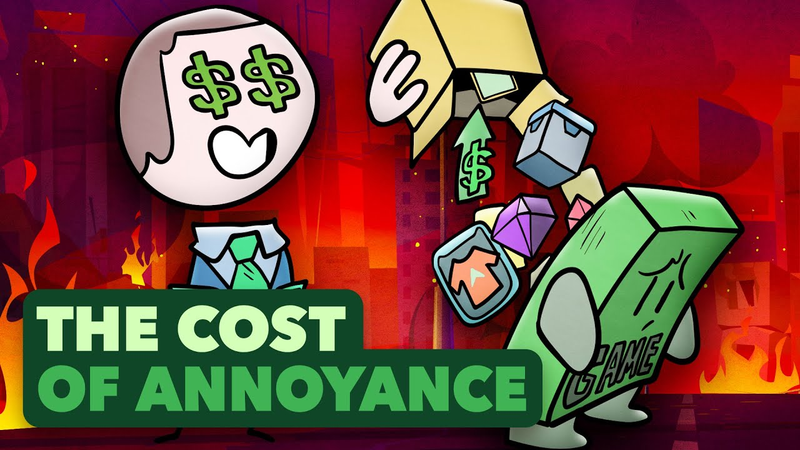
the last few weeks or months or years of my life just felt like a blur, like the game stole that time from me. But there have been others that I played where I made lifelong friends and I came away feeling like, "Yeah, that was a massive investment of time, but I got something valuable from that time. I formed relationships. I've learned something about myself or about the world." That first type of game, the obsession game, those usually involve a great deal of Skinner boxing. We've done a whole episode on that topic before, but suffice it to say, don't do that, please. I mean, as a designer, you're probably not going to be able to avoid putting some treadmills into a game that's meant to be played for a thousand hours, but if the game is about the treadmill, if there's no other reason to play it, then you've done something very wrong. But avoiding harmful design like that is the easy part. The harder question is, how do we actually put positive elements into these games? Well, first, you can include real-world skills as part of play. The simplest is stuff like leadership and teamwork. Allowing people to practice those for
thousands of hours as part of their lifestyle pursuit is a powerful thing. And I'm sure that many of you have stories of how you learned to work in a team or learned to be a better leader through play. Many lifestyle games also get the player to practice math, whether it's the advanced math that sometimes goes into figuring out what equipment you should use or simply forcing the player to get really good at doing quick arithmetic in their head. These are skills that stick with people long after the game itself has been put away. And there's all kinds of meaningful experiences that you can build into the world and the lore of your lifestyle game. If your game is suited for it, there can even be opportunities for a bit of tangential learning about history or mythology. Finally, let your game help people build friendships. Have your company organize events like Friday night magic or build in tools that allow players to stay in touch and hang out even when they're not looking to be super hardcore about your game. Give them moments of triumph to celebrate not as individuals, but together. And don't be embarrassed when your game gives them
something to laugh about. So, whether it be Magic the Gathering or Street Fighter or League or Dota, lifestyle games come in all flavors. And yes, they may come from different genres, CCG, fighting game, MOBA, or MMO, but those labels don't adequately describe the experience that these games are providing. So, it's time we start thinking about how we can design better, more compelling versions of these games which lives will for some time revolve around. We can get even better at making these, whether it be on the practical side by making these experiences better at being lifestyle experiences or on the moral side by Skinner boxing less and giving players something to take with them when they finally put the game down. We can do better. See you next time.
Summary
The concept of lifestyle games identifies a distinct category of titles that transcend traditional genre labels—such as MOBAs, MMORPGs, or shooters—by becoming central to a player’s social life, daily routine, and identity. While these games often emerge from large fanbases, they share specific design characteristics that increase the likelihood of achieving this status. These include robust social interaction, functionally infinite content—often derived from competitive play or procedural generation—and a commitment to regular updates that reassure players their time investment is secure. Furthermore, these games must possess enough mechanical or narrative depth to occupy a player’s thoughts outside of active play, supported by external ecosystems like wikis, streaming communities, and esports.
The analysis emphasizes that designers should move beyond merely creating addictive loops, which can lead to unhealthy, obsessive play patterns. Instead, the goal is to foster positive, meaningful experiences that provide long-term value. This can be achieved by integrating real-world skill development, such as leadership, teamwork, and analytical problem-solving, into the core gameplay. Additionally, designers are encouraged to facilitate genuine social connections by providing tools for community building and shared celebration.
Ultimately, the thesis posits that by recognizing these titles as a unique design category, developers can move away from exploitative mechanics like Skinner-box reward systems. By focusing on intentional, humane design, the industry can create games that offer players lasting personal growth and social enrichment, ensuring that the time invested remains valuable even after the player eventually moves on to other pursuits.














Comments