Global
Documents

The Games We Watched: Lurkit’s Top 500 Global Stream Report
The global gaming industry experienced a period of significant contrast in 2023, characterized by record-breaking streaming engagement despite internal industry volatility such as widespread layoffs. Analysis of 170,000 games and 12 million channels reveals that the top 500 titles alone generated nearly 15 billion hours of viewership on Twitch. This engagement is heavily concentrated at the top of the market, with only 11 titles accounting for half of the total viewership among the top 500. Grand Theft Auto V maintained its position as the most-watched title with 1.3 billion hours, while Fortnite demonstrated the broadest creator appeal, engaging 2.8 million unique streaming channels.
The performance of mid-tier and newly released titles illustrates a diverse landscape where evergreen sandbox games compete with high-impact narrative launches. While established hits like Stardew Valley maintained steady viewership, 2023 releases such as Alan Wake II and Armored Core VI achieved high average viewership densities, signaling strong concentrated interest during their launch windows. Even at the lower end of the top 500 rankings, titles like PICO PARK maintained substantial footprints, recording nearly 1.8 million hours watched. This indicates a deep tail of engagement where hundreds of games sustain millions of hours of annual viewership.
Methodologically, these findings focus exclusively on digital video game software, omitting non-gaming categories such as "Just Chatting" and tabletop games to provide a precise view of the interactive entertainment market. The data accounts for active engagement by excluding streams with zero concurrent viewers, a factor that impacts total hours watched by less than 1%. Ultimately, the 2023 streaming data confirms that while a small number of blockbuster titles dominate the majority of audience attention, the ecosystem remains robust enough to support hundreds of titles with significant, multi-million-hour viewership totals.
- The top 500 games generated nearly 15 billion hours of viewership on Twitch in 2023, despite broader industry volatility.
- Market engagement is highly concentrated, with just 11 titles accounting for 50% of the total viewership among the top 500 games.
- Grand Theft Auto V was the most-watched title of 2023, accumulating 1.3 billion hours of viewership.
- Fortnite achieved the highest creator appeal, with 2.8 million unique streaming channels broadcasting the game throughout the year.
- New 2023 releases like Alan Wake II and Armored Core VI demonstrated high average viewership density during their launch windows, proving the viability of high-impact narrative launches.

Sustainability Report 2023
Room 8 Group transitioned toward a formal Environmental, Social, and Governance (ESG) framework in 2023, achieving Global Reporting Initiative (GRI) compliance while scaling its global operations. The organization expanded its workforce to 1,300 professionals across diverse geographic regions, including Brazil and Romania, while simultaneously improving customer satisfaction ratings to 8.7 out of 10. This growth was accompanied by a strategic focus on leadership seniority and the implementation of a "Green Office" policy designed to mitigate the environmental footprint of its physical and digital infrastructure.
Environmental performance remains a low-impact area for the group, with total Scope 1 and 2 emissions estimated at under 1,000 tCO2. These results are supported by a shift toward green-energy data centers and high renewable energy usage in specific regional hubs, such as Brazil’s 100% renewable energy mix. Social responsibility initiatives are anchored by a significant commitment to Ukraine, totaling over $8 million in donations. These efforts provided critical humanitarian aid, including water purification for 15,000 people and technology hardware to support remote education for displaced students.
Internal governance and workforce development saw measurable progress through a 50/50 gender split at the board level and a 34% female representation across the total workforce. The establishment of a compliance hotline and an updated Code of Ethics resulted in zero reported discrimination incidents during the period. Moving into 2024, the strategic focus shifts toward formalizing a comprehensive Corporate Social Responsibility strategy that prioritizes mental health, enhanced e-waste management, and rigorous data protection through mandatory cybersecurity training for all employees.
- Room 8 Group achieved GRI compliance in 2023 while scaling its global workforce to 1,300 professionals across regions including Brazil and Romania.
- The company contributed over $8 million in humanitarian aid to Ukraine, supporting water purification for 15,000 people and remote education hardware for displaced students.
- Total Scope 1 and 2 emissions remained under 1,000 tCO2, supported by the use of green-energy data centers and a 100% renewable energy mix in Brazilian regional hubs.
- Internal governance metrics include a 50/50 gender split at the board level and 34% female representation across the total workforce, with zero reported discrimination incidents.
- Customer satisfaction ratings reached 8.7 out of 10 during the 2023 reporting period.

Room 8 Group Sustainability Report 2023
The 2023 sustainability analysis presents Room 8 Group’s comprehensive ESG strategy, positioning environmental stewardship, social responsibility, and robust governance as core drivers of its competitive advantage in the global gaming services sector. By integrating sustainability into corporate planning, the firm seeks to demonstrate that long‑term value creation can coexist with measurable reductions in ecological impact and heightened stakeholder trust.
During the reporting year, the organization expanded its workforce to more than 1,260 specialists and delivered 1,300 projects for roughly 700 clients, achieving a 12.7 % increase in customer‑satisfaction scores and earning 89 award nominations across more than 300 distinct titles. The environmental program centers on cutting greenhouse‑gas emissions, improving energy efficiency, and scaling renewable‑energy and recycling initiatives, with the Green Office policy applied across sites in Poland, Romania and Brazil. This policy has introduced green computing, renewable‑energy‑sourced data centres, remote‑work options, low‑carbon transport and mandatory waste‑sorting, while internal audits and training ensure compliance; the combined Scope 1 and 2 emissions are classified as non‑significant.
Social initiatives emphasize diversity, equity and inclusion, health and safety, charitable engagement and transparent governance. A dedicated data‑protection framework—featuring a Data Protection Officer, compulsory privacy and cybersecurity training, and regular DPIAs—aligns the company with GDPR and global privacy standards. Looking ahead to 2024, the firm pledges to broaden workforce diversity, strengthen mental‑health and burnout support, further reduce e‑waste, and refine CSR performance through KPI tracking, external benchmarking and periodic policy reviews. These actions collectively illustrate a holistic approach to sustainability that spans operational, social and governance dimensions across multiple geographic regions within the gaming industry.
- Room 8 Group scaled its operations in 2023 to over 1,260 specialists, delivering 1,300 projects for approximately 700 clients.
- The company achieved a 12.7% increase in customer-satisfaction scores while securing 89 award nominations across more than 300 gaming titles.
- The firm’s Green Office policy, implemented in Poland, Romania, and Brazil, utilizes renewable-energy-sourced data centers and remote-work models to keep Scope 1 and 2 greenhouse-gas emissions at non-significant levels.
- A formal data-protection framework, managed by a dedicated Data Protection Officer, ensures compliance with GDPR and global privacy standards through mandatory cybersecurity training and regular Data Protection Impact Assessments (DPIAs).
- The 2024 sustainability roadmap prioritizes expanding workforce diversity, enhancing mental-health and burnout support, and reducing e-waste through structured KPI tracking and external benchmarking.

How UGC, AI, & Cloud Are Transforming Gaming
The gaming industry is currently undergoing a fundamental transformation driven by the social behaviors of Gen Alpha and Gen Z, over 90% of whom utilize gaming as their primary interactive outlet. This demographic shift has catalyzed the rise of User-Generated Content (UGC), artificial intelligence, and cloud infrastructure, collectively democratizing development and allowing indie titles to compete with AAA productions. The cloud gaming market is expanding rapidly, reaching nearly 400 million users within four years, while the integration of AI in gaming is projected to achieve a $4.2 billion valuation by 2029.
UGC has emerged as a critical driver of retention, with dominant platforms like Roblox, Minecraft, and Fortnite accounting for 19% of total global playtime and distributing over $1.3 billion to creators in 2023. To overcome the technical and legal hurdles of content creation, the industry is increasingly turning to generative AI, a sector expected to reach $1.8 billion by 2025. These tools automate complex processes such as texture upscaling and level generation, lowering the barrier to entry for creators across diverse genres.
While cloud technology offers the potential for real-time updates and massive concurrency, infrastructure limitations remain a significant bottleneck. Approximately 76% of players identify latency as a primary concern, suggesting that while 5G will eventually facilitate mass consumer adoption, the immediate utility of the cloud lies in B2B applications like secure playtesting and instant discoverability. The convergence of these technologies is ultimately moving the industry toward a live-service ecosystem of "endless games," where the boundaries between traditional media and interactive community-driven platforms continue to blur.
- User-generated content (UGC) is a primary driver of player retention, with Roblox, Minecraft, and Fortnite accounting for 19% of global playtime and distributing $1.3 billion to creators in 2023.
- The integration of AI in gaming is projected to reach a $4.2 billion valuation by 2029, while the generative AI sector specifically is expected to hit $1.8 billion by 2025.
- Cloud gaming has scaled to nearly 400 million users in four years, though 76% of players cite latency as a primary barrier to mass adoption.
- Generative AI is lowering development barriers by automating complex technical tasks like texture upscaling and level generation, enabling indie titles to compete with AAA productions.
- Over 90% of Gen Alpha and Gen Z now utilize gaming as their primary interactive outlet, forcing a shift toward live-service ecosystems and community-driven platforms.

Informe Mundial 2023: Comportamientos e Intereses de los Videojugadores
The 2023 Power of Play survey set out to map the motivations, social impacts and perceived wellbeing benefits of video gaming across a broad international sample. By combining responses from 12,847 active gamers who play at least once a week with findings from ten recent peer‑reviewed studies, the analysis argues that games deliver measurable social, emotional and cognitive value that extends far beyond pure entertainment.
Respondents from twelve markets—Australia, Brazil, Canada, France, Germany, Italy, Japan, Poland, South Korea, Spain, the United Kingdom and the United States—identified “having fun” as the top driver (69 % overall), followed by “entertainment” and “stress relief”. More than half of participants reported regular online play, while a third also engaged in face‑to‑face sessions. Nearly 45 % said they had met a close friend, partner or spouse through gaming, and 67 % believed games help them forge new relationships. Across the sample, 71 % felt games reduce stress, anxiety and isolation, 64 % described gaming as a healthy escape from daily problems, and 83 % reported increased happiness when playing.
Cognitive and creative gains were also prominent: 69 % linked gaming to improved problem‑solving, 65 % to greater adaptability, 60 % to enhanced communication, and 57 % to better linguistic skills. The report cites academic work that documents superior cognitive performance among gamers, reduced depressive symptoms during the COVID‑19 pandemic, and potential protective effects against age‑related memory decline and dementia. Studies of exergames and therapeutic titles further suggest benefits for pain management, motor coordination and social inclusion in clinical populations.
Methodologically, the survey employed an online, quota‑controlled panel designed to reflect each country’s demographic composition, with screening to ensure weekly gaming activity. Data were collected by AudienceNet, a market‑research firm accredited by the Market Research Society and compliant with GDPR standards. The integration of large‑scale consumer data with scholarly evidence provides a comprehensive picture of gaming’s evolving role in mental health, social connectivity and skill development worldwide.
- Gaming serves as a primary tool for emotional regulation, with 83% of players reporting increased happiness and 71% stating that games reduce stress, anxiety, and isolation.
- Social connectivity is a core outcome of gaming, as 67% of players believe games help them forge new relationships, and 45% have met a close friend, partner, or spouse through the medium.
- Players identify 'having fun' as the primary motivation for gaming (69%), followed by entertainment and stress relief as the leading drivers for engagement.
- Gaming is perceived as a driver of cognitive and professional skill development, with 69% of respondents citing improved problem-solving and 65% noting greater adaptability.
- Peer-reviewed academic research supports the survey findings, suggesting that gaming can provide protective effects against age-related memory decline and help manage depressive symptoms.
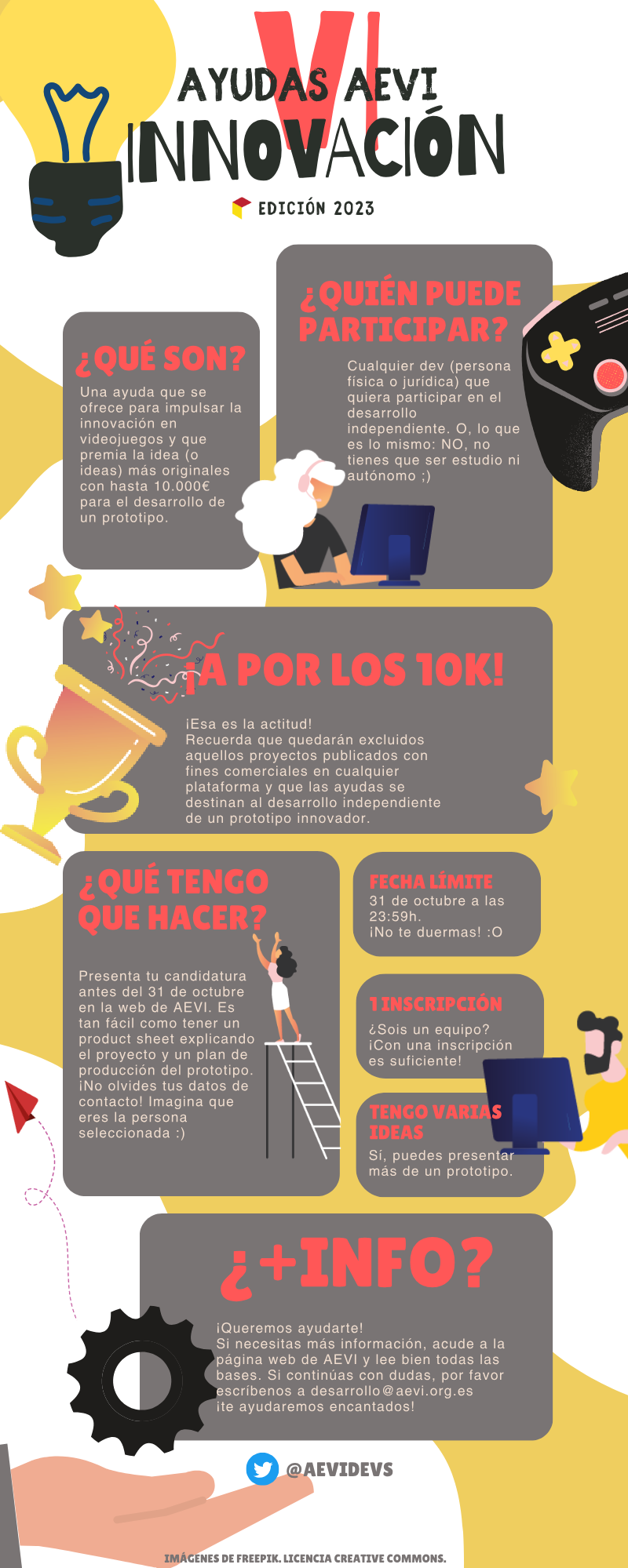
Ayudas AEVI Innovación: Edición 2023
The AEVI Innovation program for 2023 offers financial support of up to €10,000 to independent developers—both individuals and legal entities—who wish to create an innovative prototype in the video‑game sector. The aid is expressly targeted at non‑commercial projects, and any work that has already been published on any platform for commercial purposes is excluded from eligibility. Applicants may submit more than one prototype idea, provided each proposal meets the program’s criteria.
Eligibility is open to any developer, regardless of prior experience, who can demonstrate a novel concept and a clear production plan for the prototype. The application process is streamlined: candidates register through the AEVI website, upload a concise product sheet describing the project, and provide contact details. The deadline for submissions is 31 October at 23:59, and the program emphasizes a proactive attitude, encouraging developers to act promptly.
The initiative focuses exclusively on the Spanish independent game development ecosystem, with no geographic restrictions beyond the national context. No statistical data or survey methodology is presented, as the program functions as a grant call rather than a research study. The primary objective is to stimulate creativity and technical experimentation within the indie sector by reducing financial barriers to prototype development.
- The AEVI Innovation program provides financial grants of up to €10,000 to support the development of innovative video game prototypes.
- Applications must be submitted by the deadline of 31 October at 23:59 via the official AEVI website.
- Eligible projects must be non-commercial and cannot have been previously published on any platform.
- The program is open to all independent developers, including individuals and legal entities, operating within the Spanish ecosystem.
- Applicants are permitted to submit multiple prototype proposals, provided each individual project meets the program's criteria.
Global Report 2023
Power of Play: Global Report 2023 – Executive Summary
1. Scope & Methodology | Item | Detail | |------|--------| | Survey population | ≈ 12,847 active (weekly) gamers, ages 16 +, from 12 countries (Australia, Brazil, Canada, France, Germany, Italy, Japan, Poland, South Korea, Spain, United Kingdom, United States). | | Sampling | Quota‑based, nationally‑representative panels (AudienceNet). Each country ≈ 1,000 + respondents. | | Data collection | Online questionnaire covering motivations, mental‑health impacts, social behaviours, and skill development. | | Academic triangulation | Findings cross‑checked against ~10 peer‑reviewed studies (see References, p. 12). |
2. Why People Play (Top‑3 Reasons – Global)
| Rank | Reason | % of respondents (global) | |------|--------|----------------------------| | 1 | Fun / enjoyment | 69 % | | 2 | Pass the time | 63 % | | 3 | Stress relief / relaxation | 55 % |
Country‑level nuances: “Fun” dominates in every market (≥ 78 % in most). “Stress relief” is especially high in Australia (71 %) and Japan (73 %).
3. Self‑Reported Mental‑Health Benefits
| Benefit | Global agreement (average) | Range across countries | |---------|----------------------------|------------------------| | Reduces stress | 71 % | 55 % – 87 % | | Reduces anxiety | 61 % | 48 % – 78 % | | Reduces feelings of isolation/loneliness | 55 % | 45 % – 73 % | | Provides a healthy outlet for everyday challenges | 64 % | 52 % – 76 % | | Makes me feel happier | 63 % | 45 % – 83 % | | Helps me get through difficult times | 52 % | 33 % – 71 % |
> Interpretation: More than two‑thirds of gamers perceive video games as a stress‑relief tool, and roughly half feel less isolated because of gaming.
4. Social & Relational Outcomes
| Metric | Global % (approx.) | |--------|-------------------| | Play with others online (≥ weekly) | 51 % | | Play with others in‑person (≥ weekly) | 38 % | | Met a good friend, spouse, or significant other through games | 46 % | | Games helped develop deeper relationships | 43 % | | Games helped stay connected to friends/family | 46 % | | Games created lasting memories | 50 % | | Believe there is a game for everyone | 75 % |
> Key insight: Multiplayer and social features are central; almost half of respondents have formed meaningful offline relationships via gaming
- Video games function primarily as a mental health tool, with 71% of global gamers reporting that play reduces stress and 61% noting a reduction in anxiety.
- Fun and enjoyment remain the primary drivers for gaming, cited by 69% of the 12,847 respondents, followed by passing time (63%) and stress relief (55%).
- Social connectivity is a core component of the gaming experience, as 51% of players engage in online multiplayer weekly and 46% have formed meaningful personal relationships, including friendships and marriages, through games.
- Gaming serves as a significant social bridge, with 46% of respondents using games to stay connected with friends and family and 43% reporting that gaming helped them develop deeper relationships.
- The perception of gaming as an inclusive medium is high, with 75% of respondents agreeing that there is a game available for everyone.
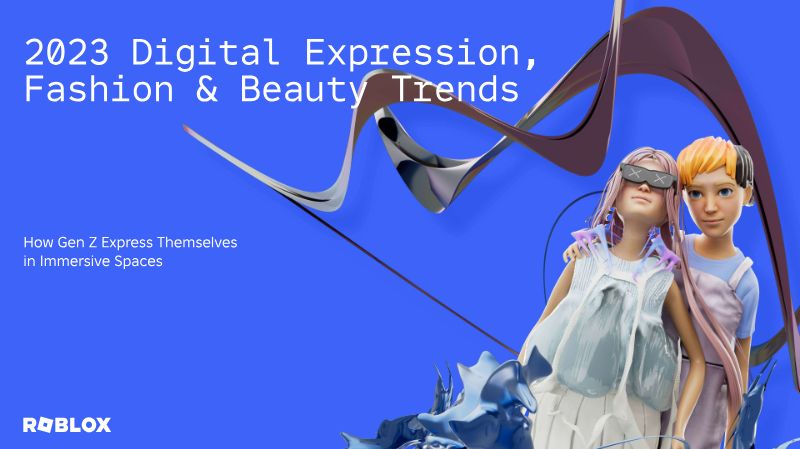
Fashion & Beauty Trends: How Gen Z Express Themselves in Immersive Spaces 2023
The 2023 analysis of digital expression among Generation Z demonstrates that immersive platforms have become the primary arena for personal style and identity formation. Across the year, more than half of Gen Z respondents now prioritize styling their avatars over physical clothing, and a substantial majority regard digital fashion as at least somewhat important, with over half noting a marked increase in relevance since the previous year. This shift is reflected in a 38 percent rise in avatar updates, reaching 165 billion actions, and a 15 percent growth in the purchase of virtual fashion items, totaling 1.6 billion transactions. Monthly spending on digital looks clusters between ten and one hundred dollars, driven especially by limited‑edition pieces that command significant resale premiums.
Customization behavior reveals a strong focus on clothing and hair, each selected by roughly half of users, while a sizable portion aligns skin tone and body type with their real‑world appearance. Daily or weekly avatar adjustments are reported by 70 percent of participants, with female‑identifying and non‑binary players leading the trend. Hairstyle purchases alone surged 20 percent to exceed 139 million items, underscoring the depth of aesthetic investment.
Beyond consumption, Gen Z leverages these spaces for co‑creation and personal development. Collaborative projects such as a Fenty Beauty product that amassed over one million community votes and student‑driven translations of digital runway concepts into physical garments illustrate the platform’s role as an incubator for fashion innovation. Moreover, 88 percent of respondents claim virtual self‑expression enhances their offline identity, while notable percentages report improved social connections, mood, and confidence, suggesting tangible mental‑health benefits. Industry forecasts anticipate that leading fashion talent will increasingly emerge from these immersive environments, positioning digital platforms as pivotal to the future of fashion and beauty.
- Digital fashion is a primary priority for Gen Z, with over 50% of users valuing avatar styling over physical clothing and 1.6 billion virtual fashion transactions occurring in 2023, a 15% growth.
- Avatar engagement is high and frequent, evidenced by 165 billion update actions—a 38% increase—with 70% of participants adjusting their avatars on a daily or weekly basis.
- Virtual aesthetic investment is significant, highlighted by a 20% surge in hairstyle purchases to over 139 million items and monthly spending on digital looks typically ranging from $10 to $100.
- Immersive platforms are functioning as fashion incubators, demonstrated by collaborative initiatives like the Fenty Beauty project that generated over one million community votes.
- Virtual self-expression has a measurable impact on offline life, with 88% of Gen Z respondents reporting that digital styling enhances their real-world identity and confidence.
Global Mobile Game & App (Non‑Game) Marketing White Paper 2022
The global mobile landscape in 2022 was defined by a 17.5% year-on-year increase in quarterly advertisers despite a 16% decline in total creative volume. This shift indicates a transition toward more dynamic, high-frequency marketing strategies, with over 90% of advertisers launching new creatives each quarter. While North America maintained the largest advertiser base, markets in Hong Kong, Macao, and Taiwan exhibited the highest creative output per advertiser. Android remained the dominant platform for volume, often doubling the creative output of iOS, though iOS advertisers grew to represent 40% of the market by year-end.
The gaming sector experienced a notable decoupling of engagement and monetization. Genres such as strategy, simulation, and casual games saw year-over-year download growth ranging from 8% to 10%, yet simultaneously faced revenue declines between 9% and 16%. To combat rising user acquisition costs and falling revenues, developers increasingly adopted "Casual + X" strategies. This trend involved integrating hyper-casual mini-games—such as "save the dog" puzzles or line-drawing mechanics—into the marketing funnels of complex RPG and strategy titles to lower costs and broaden appeal. Hybrid-casual titles also emerged as a significant force, utilizing Roguelike mechanics and high-volume video ads to bridge the gap between traditional casual play and deeper monetization.
In the non-game sector, advertising activity peaked in the fourth quarter, driven largely by utility tools, shopping, and educational applications. Video content remained the primary medium, accounting for over 70% of creatives across most global regions. Major players like TikTok and Duolingo maintained market leadership through exceptionally high creative refresh rates, often exceeding 95% new content. Regionally, Southeast Asia and Turkey showed a heavy reliance on Android and localized "big hit" formulas, while the United States and Japan remained the primary drivers of global revenue.
Looking forward, the industry is shifting toward story-centric strategies and user-generated content to navigate a privacy-first environment. With the implementation of SKAdNetwork 4.0 and the impending Android Privacy Sandbox, marketers are moving away from granular user-level targeting in favor of Media Mix Modeling. The prevailing conclusion is that long-term lifetime value and diversified monetization models are now essential to offset rising platform costs and tightening media budgets.
- The mobile gaming sector saw a decoupling of engagement and monetization in 2022, with strategy, simulation, and casual genres experiencing 8% to 10% download growth alongside 9% to 16% revenue declines.
- To counter rising acquisition costs, developers are adopting 'Casual + X' strategies, integrating hyper-casual mini-games into complex RPG and strategy titles to broaden appeal and lower entry barriers.
- Marketing strategy shifted toward higher efficiency in 2022, characterized by a 17.5% increase in quarterly advertisers despite a 16% reduction in total creative volume.
- Android remains the dominant platform for creative volume, often doubling iOS output, though iOS advertisers captured 40% of the market share by the end of 2022.
- Market leaders like TikTok and Duolingo maintain dominance through high-frequency creative refreshes, with new content rates exceeding 95% per quarter.
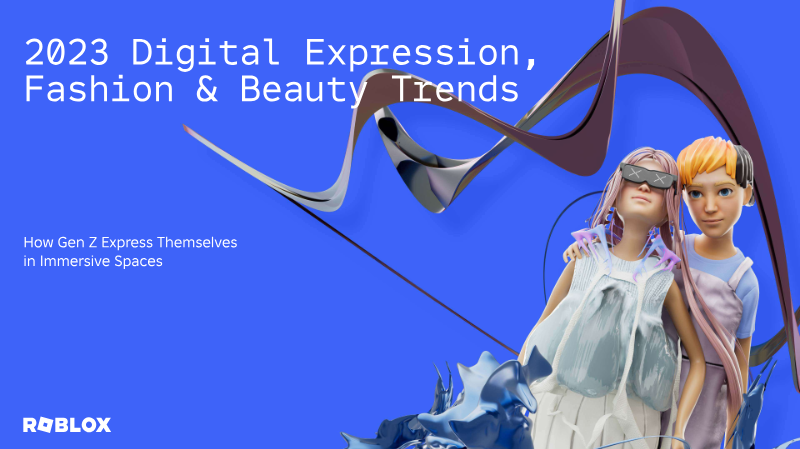
Fashion & Beauty Trends: How Gen Z Express Themselves in Immersive Spaces
This analysis explores the evolving relationship between digital identity, fashion, and physical self-expression among Gen Z consumers. The primary thesis asserts that digital avatars have become a central medium for authentic self-expression, significantly influencing physical world style, brand affinity, and mental well-being. As immersive spaces transition from mere gaming environments to social hubs, the distinction between digital and physical identity continues to blur, with a majority of users now prioritizing their virtual appearance over their physical one.
The findings are based on a dual methodology: behavioral data from the Roblox platform collected between January and September 2023, and a representative survey of 1,545 Gen Z users aged 14 to 26 in the United States and the United Kingdom. Key data points reveal a significant upward trend in engagement; total avatar updates grew 38% year-over-year to 165 billion, while purchases of digital fashion items rose 15% to 1.6 billion. Notably, 56% of Gen Z respondents stated that styling their avatar is more important than styling their physical selves, an increase from 42% in the previous year.
The research highlights a symbiotic relationship between realms, with 84% of respondents noting that their physical style is inspired by their avatar’s look. This digital-to-physical pipeline extends to commerce, as 84% of users are likely to consider a brand in the physical world after trying its items virtually. The report also emphasizes the psychological benefits of these spaces, with 88% of users crediting immersive expression with helping them feel more comfortable in the physical world. Industry segments covered include digital fashion, beauty, and music, noting a growing demand for exclusivity through limited-edition digital goods and community-created content. Overall, the data suggests that the metaverse is functioning as a low-stakes laboratory for identity, driving broader trends in gender-fluid fashion and diverse representation.
- 56% of Gen Z users now prioritize styling their digital avatars over their physical appearance, a significant increase from 42% in the previous year.
- Engagement with digital identity is surging, with Roblox users performing 165 billion avatar updates (a 38% year-over-year increase) and purchasing 1.6 billion digital fashion items (a 15% increase) between January and September 2023.
- Digital-to-physical brand influence is high, as 84% of Gen Z respondents are more likely to consider a physical-world brand after interacting with its items in an immersive space.
- Virtual spaces serve as a primary style incubator, with 84% of users reporting that their physical-world fashion choices are directly inspired by their avatar's look.
- Immersive self-expression provides tangible psychological benefits, with 88% of users stating that their virtual experiences help them feel more comfortable in the physical world.
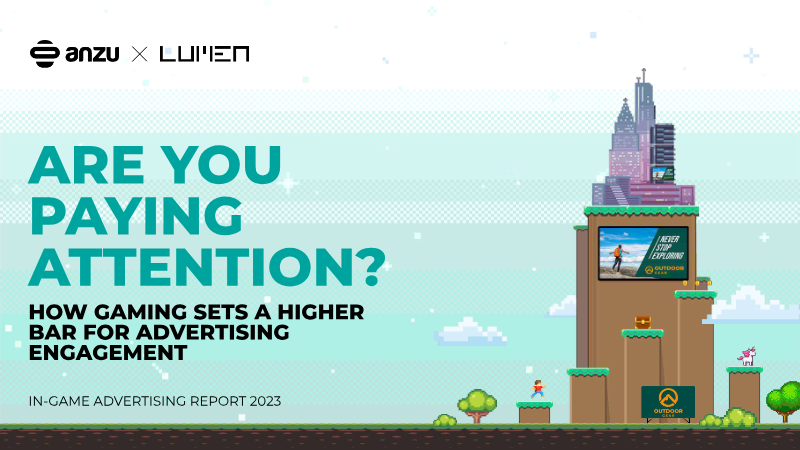
In-Game Advertising Report 2023
This analysis examines the efficacy of intrinsic in-game advertising as a high-engagement medium compared to traditional digital channels. Partnering with Lumen Research, the study utilizes eye-tracking technology and machine learning to analyze data from 25 specific brand campaigns and over 90 broader industry studies. The research focuses on global cross-platform environments, including mobile, PC, and console, comparing in-game performance against 42 standard digital advertising formats such as social media feeds and video platforms.
The findings indicate that gaming environments significantly outperform traditional digital media in viewability and attention. In-game ads achieved a 98% viewability rate, compared to a 78% average for other digital formats. Crucially, 85% of in-game impressions were actually viewed by players, surpassing the digital norm of 65%. In terms of duration, 80% of the studied in-game ads exceeded the critical two-second viewing threshold required for memory encoding, averaging 3.1 seconds of attention. This translates to 2,795 attentive seconds per 1,000 impressions, which is 22% higher than the average across all other digital formats and outperforms 76% of individual digital advertising categories, including most social media display and video.
The data concludes that high attention levels in gaming lead to measurable brand impact. Participants exposed to in-game ads showed a 9% point uplift in prompted brand awareness and a 7% point increase in purchase intent compared to control groups. For challenger brands, the impact was even more pronounced, with top campaigns seeing a 14% uplift in purchase intent. These results suggest that the immersive, "lean-forward" nature of gaming prevents the ad avoidance common in "distracted" media like TV or social scrolling, positioning in-game advertising as a superior tool for driving both brand recall and lower-funnel conversions.
- In-game advertising achieves a 98% viewability rate, significantly outperforming the 78% average observed across standard digital advertising formats.
- Gaming environments generate 2,795 attentive seconds per 1,000 impressions, representing a 22% higher attention level than the average for other digital media.
- 85% of in-game ad impressions are actively viewed by players, compared to a 65% norm for traditional digital channels.
- 80% of in-game ads surpass the two-second threshold required for memory encoding, with an average viewing duration of 3.1 seconds.
- Exposure to in-game ads results in a 9% point uplift in prompted brand awareness and a 7% point increase in purchase intent.
Q1 2023 Insights into Global Mobile Game Marketing Trends
The global mobile game marketing landscape in early 2023 is characterized by a strategic pivot toward high-quality video content and localized engagement strategies. While the number of monthly active advertisers grew by 15% to over 160,000, the volume of new creative assets declined by 16%, signaling an industry-wide shift from quantity to quality. Android remains the primary platform for advertising, accounting for nearly 70% of total ad volume. Casual games continue to lead the market in both advertiser density and creative volume, though strategy and simulation genres are experiencing the most significant growth in advertiser participation.
Marketing tactics have become increasingly sophisticated to combat rising acquisition costs and shifting consumer habits. Video content now comprises over 80% of all ad creatives, frequently utilizing "mini-game" mechanics, playable ads, and "deliberate failure" tropes to drive engagement. In the strategy sector, which is projected to see a 6.42% compound annual growth rate through 2027, developers are increasingly integrating casual gameplay elements into their marketing to broaden appeal. Conversely, the RPG market has cooled, experiencing its first revenue decline of 16% in 2022, leading advertisers in this space to rely more heavily on celebrity endorsements and gacha-related incentives.
Geographic trends reveal a stark contrast in regional preferences and growth trajectories. North America maintains the highest advertiser density, while Southeast Asia and the Middle East are emerging as high-growth hubs, with Southeast Asian revenue projected to nearly double between 2020 and 2023. Regional success depends heavily on localization, such as TikTok-driven tournament content in Southeast Asia and social-integrated voice features in the Middle East. While puzzle games offer the most cost-effective advertising in the United States, the casino and simulation sectors are finding success in South America and global markets through relaxing creative themes and slots-focused advertising.
- Mobile game advertisers are shifting from quantity to quality, evidenced by a 15% increase in active advertisers to over 160,000 alongside a 16% decline in new creative asset volume.
- Video content now dominates the advertising landscape, accounting for over 80% of all ad creatives and frequently utilizing playable mechanics or 'deliberate failure' tropes to improve engagement.
- Android remains the dominant advertising platform, capturing nearly 70% of total global ad volume.
- The strategy game genre is a key growth area with a projected 6.42% compound annual growth rate through 2027, driven by the integration of casual gameplay elements into marketing.
- The RPG sector is cooling, having experienced a 16% revenue decline in 2022, forcing developers to pivot toward celebrity endorsements and gacha-based incentives.