Global
Documents

Gaming Spotlight 2023
Mobile gaming continues to dominate the industry’s growth trajectory, yet recent regulatory tightening and rising acquisition costs are poised to curb spend by roughly 2 % in 2023. The analysis underscores that creative optimization, diversified monetization models—including ads, subscriptions, and battle‑passes—and data‑driven partner insights are essential to counter ad fatigue and maintain daily active users, stickiness, and revenue in an increasingly fragmented market. Contextual market data is highlighted as a critical tool for staying ahead of evolving consumer preferences and macroeconomic headwinds.
First‑half 2023 data reveal that free‑to‑play titles remain the most influential drivers of downloads and in‑app purchase (IAP) revenue. “Monopoly GO” led mobile downloads with over 45 million installs and $232 million in IAP, attracting a slightly higher female audience and players aged 25‑34. “Honkai: Star Rail” achieved 62 million downloads and $457 million in spend, largely fueled by a high‑price bundle that accounted for 61 % of May revenue; it appeals more to male players but enjoys strong traction among Gen‑Z gamers. “Royal Match” secured the second spot in global spend with $1.7 billion, driven by a 20 % female skew and significant engagement from players aged 45 and older. These findings illustrate a demographic shift: match‑3 games are increasingly monetized by female and older players, while high‑ticket RPGs continue to attract Gen‑Z consumers.
Survey results indicate a sharp decline in U.S. mobile gamers’ positive sentiment toward in‑game video ads—from 50 % “like” in Q3 2020 to 30 % by Q3 2022—while rewarded‑video ads maintain a more favorable reception at around 40 %. The drop aligns with the rollout of Apple’s ATT framework, yet ad fatigue and oversaturation are identified as primary drivers rather than regulatory causation. The recommendation is to diversify ad formats, prioritizing rewarded videos and playable ads, and to tailor these experiences to specific demographic segments to mitigate fatigue and sustain growth.
- Mobile gaming spending is projected to decline by approximately 2% in 2023 due to rising acquisition costs and increased regulatory pressure.
- High-performing titles demonstrate distinct demographic trends: 'Royal Match' generated $1.7 billion in revenue with a strong base of players aged 45+, while 'Honkai: Star Rail' captured $457 million by targeting Gen-Z with high-price bundles.
- Consumer sentiment toward standard in-game video ads has dropped significantly, falling from 50% positive in Q3 2020 to 30% by Q3 2022, largely due to ad fatigue and market oversaturation.
- Rewarded video ads remain more effective than standard video ads, maintaining a 40% favorability rating among U.S. mobile gamers.
- 'Monopoly GO' emerged as a top performer in early 2023, securing 45 million installs and $232 million in IAP revenue, particularly among the 25-34 age demographic.

5 Mobile App Predictions for 2024
The mobile app market is poised for a transformative year in 2024, characterized by the integration of artificial intelligence, a shift in social media monetization, and a rebound in gaming expenditures. This analysis, based on proprietary market estimates and historical data, identifies five critical trends that will define the industry landscape. The findings suggest that while macroeconomic headwinds have previously constrained growth, strategic pivots toward direct consumer monetization and AI-driven functionality are creating new avenues for revenue.
A primary driver of 2024 growth is the proliferation of generative AI, with 2.3 billion downloads expected to feature AI-integrated functionality. This represents a 40% year-over-year increase, fueled by the rapid adoption of chatbots and photo-editing tools. Simultaneously, the mobile gaming sector is projected to recover from recent declines, with consumer spending expected to reach $111.4 billion—a 4% year-over-year increase. The United States, Japan, and South Korea are identified as the primary engines for this recovery, with RPG and match-based genres leading the growth.
The social media landscape is undergoing a structural shift as microblogging platforms face declining daily active users in favor of video-first platforms. TikTok is positioned to become the highest-grossing app in history, projected to surpass $14.6 billion in lifetime consumer spend. This success is driving a broader industry trend where social networks are moving away from pure ad-based models toward in-app purchases and creator-tipping features. Media-sharing networks are expected to see a 152% increase in consumer spend, reaching $1.3 billion as platforms increasingly shift costs from advertisers to end-users. These trends collectively indicate a move toward more diversified, direct-to-consumer revenue streams across the global mobile ecosystem.
- Mobile gaming consumer spending is projected to recover in 2024, reaching $111.4 billion, a 4% year-over-year increase led by the U.S., Japan, and South Korea.
- Generative AI integration is accelerating rapidly, with 2.3 billion app downloads expected to feature AI functionality in 2024, a 40% year-over-year increase.
- TikTok is set to become the highest-grossing app in history, with lifetime consumer spending projected to surpass $14.6 billion.
- Social media platforms are shifting from ad-based models to direct-to-consumer revenue, with media-sharing networks expected to see a 152% increase in consumer spend to $1.3 billion.
- RPG and match-based genres are identified as the primary drivers for the projected growth in the mobile gaming sector.
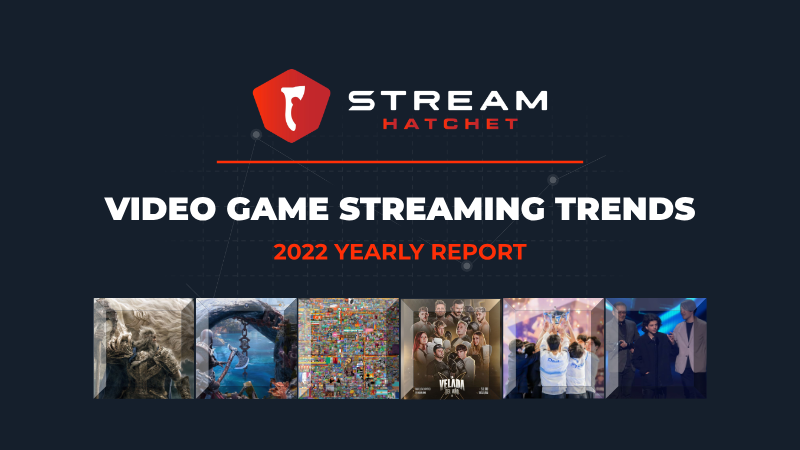
Video Game Streaming Trends 2022 Yearly Report
Western live streaming viewership experienced a 13.5% year-over-year decline in 2022, totaling 29.5 billion hours watched. This contraction was primarily driven by a 14% reduction in unique active channels, suggesting that streamer burnout impacted content supply more significantly than a lack of audience demand. While Facebook Gaming suffered a substantial 56% drop in viewership, Twitch maintained its market dominance, and YouTube Gaming solidified its status as the second-largest platform. Notably, non-gaming content reached new heights, with the "Just Chatting" category leading Twitch and female creator representation expanding across YouTube and Facebook.
The industry landscape shifted toward creator-driven events and original programming, which frequently outperformed traditional AAA game launches. High-profile spectacles like Ludwig’s Chessboxing and Ibai’s boxing matches demonstrated the immense power of individual personalities to command massive audiences. This trend extended to esports organizations, which generated 1.6 billion hours watched; however, more than half of that engagement was attributed to their rosters of content creators rather than professional competitive matches. Marketing strategies evolved accordingly, as brands prioritized long-term sponsorships with mid-sized influencers and publishers utilized "drops" campaigns to boost game viewership by as much as 412%.
Engagement metrics from 2022 highlight the continued dominance of established titles such as Counter-Strike: Global Offensive and Escape From Tarkov, alongside the rise of international creators like the Portuguese streamer Gaules. As the ecosystem matures, the integration of business intelligence, social analytics, and programmatic advertising has become essential for stakeholders. These tools allow brand marketers and media publishers to navigate a complex market where influencer management and creator-led events serve as the primary engines for revenue growth and audience retention.
- Western live streaming viewership fell 13.5% year-over-year in 2022 to 29.5 billion hours, driven largely by a 14% reduction in unique active channels.
- Twitch maintained market dominance while YouTube Gaming solidified its position as the second-largest platform, despite Facebook Gaming suffering a 56% viewership decline.
- Creator-driven events and original programming frequently outperformed traditional AAA game launches, with individual personalities proving more effective at driving engagement than professional esports matches.
- Marketing strategies shifted toward long-term sponsorships with mid-sized influencers and the use of 'drops' campaigns, which can boost game viewership by up to 412%.
- Non-gaming content, led by the 'Just Chatting' category on Twitch, reached new heights while female creator representation expanded across YouTube and Facebook.
Video Game Live Streaming Trends Report: Q3 2023
The Q3 2023 Video Game Live Streaming Trends Report provides a comprehensive analysis of the global live-streaming market, covering major platforms including Twitch, YouTube Gaming, Facebook Live, Kick, and AfreecaTV. Utilizing data from a consortium of industry analysts, the findings indicate that the market has entered a period of stabilization. Total viewership reached 7.6 billion hours watched, representing a minor 4% year-over-year decline but remaining 90% higher than pre-pandemic levels in 2019.
A significant shift in the platform landscape is highlighted by the rapid ascent of Kick, which surpassed Facebook Live and AfreecaTV to become the third most-watched platform. Kick’s growth is largely driven by non-gaming content, which accounts for 66% of its viewership, compared to 27% on Twitch. While Twitch maintains a dominant 71% market share, its esports viewership saw an 18% year-over-year decrease. Despite this, mobile titles remain strong, with MPL Indonesia Season 12 ranking as the quarter's top esports event.
The report identifies creator-driven events as a primary engine for high engagement. Events like ibai’s La Velada del Año III and Squeezie’s GP Explorer 2 generated tens of millions of hours watched and record-breaking peak viewership. In the software sector, Grand Theft Auto V reclaimed the top spot for most-watched game, while new role-playing releases Baldur’s Gate 3 and Starfield emerged as the most successful launches of the quarter, collectively generating nearly 100 million hours watched in their first months. The analysis concludes that while overall growth has slowed, the industry is sustained by high-profile creator events and the continued popularity of role-playing and variety content.
- The live-streaming market has stabilized with 7.6 billion hours watched in Q3 2023, a 4% year-over-year decline but still 90% higher than 2019 levels.
- Kick has emerged as the third most-watched platform, surpassing Facebook Live and AfreecaTV, with 66% of its viewership driven by non-gaming content.
- Twitch maintains a dominant 71% market share, though its esports viewership experienced an 18% year-over-year decrease.
- Creator-led events are primary engagement drivers, exemplified by La Velada del Año III and GP Explorer 2, which generated tens of millions of hours watched.
- Grand Theft Auto V reclaimed the top spot for most-watched game, while new releases Baldur’s Gate 3 and Starfield generated nearly 100 million hours watched in their debut months.
Video Game Streaming Trends Report: Q2 2023
This analysis of the video game live-streaming market for Q2 2023 highlights a period of stabilization and strategic shifts following the post-pandemic boom. While overall viewership declined by 9% compared to the previous quarter, the industry remains significantly larger than its pre-pandemic state, with total hours watched up 97% over Q2 2019. The data covers major global platforms including Twitch, YouTube Gaming, Facebook Live, and the emerging competitor Kick, utilizing data aggregated through third-party APIs and manual classification.
A primary finding is the rapid ascent of Kick, which secured a 2% market share to become the fifth most-watched platform. Kick’s growth was driven by a creator-friendly 95-5 revenue split and high-profile signings like xQc and Amouranth, leading to a 204% increase in unique channels. Notably, Kick’s content mix differs from Twitch; while Twitch remains 74% gaming-focused, over two-thirds of Kick’s viewership comes from non-gaming categories, specifically "Just Chatting" and "Slots & Casino."
In the gaming sector, League of Legends reclaimed the top spot for hours watched, followed by Grand Theft Auto V and VALORANT. The report emphasizes the impact of new releases, specifically Diablo IV, which generated 164 million hours watched in its first month. Blizzard’s use of a "Hardcore Mode" challenge demonstrated the efficacy of creator-led marketing, as 29% of the game's first-week viewership was tied to this specific challenge.
The esports segment showed resilience, growing 4.1% year-over-year despite the broader market cooling. The analysis also notes the continued dominance of female VTubers on YouTube and the trend of esports organizations relying heavily on content creators for viewership, with eight of the top ten teams drawing over 50% of their audience from creators rather than competitive matches.
- Despite a 9% quarterly viewership decline in Q2 2023, the live-streaming market remains 97% larger than pre-pandemic levels from Q2 2019.
- New platform Kick captured a 2% market share in Q2 2023, driven by a 204% increase in unique channels and a creator-friendly 95-5 revenue split.
- Kick’s content strategy diverges from Twitch, with over two-thirds of its viewership originating from non-gaming categories like 'Just Chatting' and 'Slots & Casino' rather than gaming.
- Diablo IV generated 164 million hours watched in its first month, with 29% of its first-week viewership directly attributed to the 'Hardcore Mode' creator-led marketing challenge.
- Esports viewership grew 4.1% year-over-year, with top organizations increasingly reliant on content creators, who account for over 50% of the audience for eight of the top ten teams.
2023 Casual Gaming Apps Report
The casual gaming landscape in 2023 is defined by a strategic pivot from rapid user acquisition toward long-term profitability and sophisticated engagement models. While iOS acquisition costs significantly exceed those of Android at $2.23 compared to $0.63, both platforms achieve a comparable Day-7 return on ad spend of approximately 7.7%. North America remains the most expensive yet lucrative market, yielding an 8.1% return on ad spend despite a high $3.59 cost per install. Simulation games have emerged as a particularly efficient entry point for developers, maintaining the lowest acquisition costs at $0.59.
Casual titles serve as the primary engine for the broader mobile ecosystem, driving 74% of installs across all gaming categories and nearly 75% of mid-core installs. Hyper-casual and puzzle games remain the dominant traffic sources, but the industry is increasingly embracing hybridization. This trend involves layering complex meta-elements, such as narrative progression and competitive social features, over simple core mechanics. By blending ad-based and in-app purchase monetization models, developers are successfully targeting crossover audiences and extending the lifecycle of traditionally short-lived genres.
Engagement strategies now heavily rely on competitive mechanics and gameplay diversification. Approximately 90% of leading level-based titles utilize solo leaderboards, while over half incorporate team-based races, debunking the myth that casual players avoid competitive environments. Furthermore, nearly a quarter of top-grossing casual games integrate minigames, such as hidden object or board game mechanics, to refresh the user experience and lower acquisition barriers. These features collectively deepen player retention and monetization, signaling a shift toward more robust, feature-rich casual experiences that prioritize player depth over simple volume.
- Casual gaming now accounts for 74% of all mobile game installs and drives nearly 75% of mid-core game installations.
- Developers are shifting from volume-based user acquisition to hybrid models that blend ad-based revenue with in-app purchases to extend player lifecycles.
- North America remains the most expensive market with a $3.59 cost per install, yet it maintains a high 8.1% return on ad spend.
- While iOS acquisition costs ($2.23) are significantly higher than Android ($0.63), both platforms deliver a comparable Day-7 return on ad spend of approximately 7.7%.
- Simulation games currently offer the most efficient entry point for developers, maintaining the lowest acquisition costs at $0.59 per install.

Gaming Spotlight 2023 Review
The global gaming market in 2023 was defined by a complex interplay between mobile contraction and steady growth in the PC and console sectors. While mobile remains the industry’s largest segment, consumer spending fell 2% to $108 billion, a decline attributed to macroeconomic instability and privacy-related shifts such as Apple’s App Tracking Transparency framework. Conversely, the PC and home console markets expanded by 4% and 3% respectively, bolstered by the rising popularity of subscription services. Handheld gaming also experienced a demographic fragmentation, with the Nintendo Switch Lite attracting a younger, female-leaning audience while the Steam Deck appealed to older, male gamers. Emerging technologies like cloud-streamed gaming are gaining significant traction, projected to reach $3.8 billion in revenue with mobile devices facilitating over a quarter of global streaming hours.
Success in the first half of 2023 was concentrated among high-performing titles that leveraged Gen Z engagement and sophisticated in-app purchase models. Monopoly GO and Honkai: Star Rail emerged as standout performers, generating hundreds of millions in revenue within their first months of release. Established franchises like Royal Match and FIFA Soccer also reached significant lifetime milestones, surpassing $1.7 billion and $1 billion respectively. These successes occurred despite a challenging user acquisition landscape where gamer sentiment toward traditional advertising formats has turned increasingly negative. While rewarded video and playable ads remain the most tolerated formats, overall ad fatigue is rising due to market oversaturation.
To navigate this evolving environment, the industry must adapt to shifting privacy standards and the impending implementation of Google’s Privacy Sandbox. Although data suggests that privacy frameworks have not directly damaged iOS ad sentiment, the general decline in ad acceptance necessitates a move toward more diverse formats and contextual market data. Strategic focus is shifting toward combating rising acquisition costs through high-value player engagement and the optimization of cross-platform experiences. As the market stabilizes, the integration of cloud services and the continued dominance of mobile-first economies in emerging regions will likely dictate the next phase of global industry growth.
- The global mobile gaming market contracted by 2% to $108 billion in 2023, driven by macroeconomic instability and privacy-related shifts like Apple’s App Tracking Transparency.
- PC and home console markets grew by 4% and 3% respectively, largely supported by the increasing adoption of subscription-based models.
- Cloud-streamed gaming is a growing revenue stream projected to reach $3.8 billion, with mobile devices accounting for over 25% of total streaming hours.
- High-performing titles like Monopoly GO and Honkai: Star Rail achieved rapid, massive revenue success by targeting Gen Z and utilizing sophisticated in-app purchase models.
- Rising ad fatigue and negative sentiment toward traditional advertising are forcing developers to move away from standard formats toward rewarded video, playable ads, and contextual market data.
Mobile Ad Creative Index
The mobile advertising landscape in 2023 is defined by a strategic shift toward high-performing creative formats as advertisers navigate macroeconomic pressures and evolving privacy regulations. Despite these challenges, mobile ad revenue continues to grow, driven by the efficiency of specific ad types tailored to distinct industry verticals. Native ads emerge as the most cost-effective format overall, boasting a $1.01 cost-per-install and delivering a leading 18% Day 7 return on ad spend within the gaming sector. Meanwhile, playable ads have established themselves as the premier tool for driving gaming installs, while banner ads remain the dominant force in e-commerce due to their low cost-per-action and high conversion rates.
Performance metrics across finance, entertainment, and social applications further underscore the importance of format selection. Native and banner ads provide the lowest entry costs for social and dating apps, yet interstitial and video formats yield significantly higher short-term returns, reaching up to 44% Day 7 return on ad spend. Creative strategies are increasingly moving away from lifestyle imagery in favor of clean, user-interface-focused designs. Implementing multi-page ad experiences has proven particularly effective, resulting in a 20% increase in installs per mille.
Optimization now relies on a sophisticated blend of interactivity and narrative depth. Interactive playable ads serve a dual purpose by engaging users and gathering valuable audience data, while longer video segments of 31 to 60 seconds drive 50% higher conversions by showcasing complex mechanics and storytelling. Furthermore, the integration of authentic user-generated content that focuses on problem-solving builds necessary trust with modern consumers. By aligning creative content with specific psychological motivations—such as competition or exploration—advertisers can maximize engagement and emotional connection across global mobile markets.
- Native ads are the most cost-effective format for gaming, achieving a $1.01 cost-per-install and an 18% Day 7 return on ad spend.
- Interstitial and video formats drive superior short-term performance for social and dating apps, yielding up to 44% Day 7 return on ad spend.
- Video ad segments ranging from 31 to 60 seconds drive 50% higher conversions compared to shorter formats by effectively showcasing complex mechanics.
- Multi-page ad experiences increase installs per mille by 20% compared to single-page designs.
- Playable ads are the primary driver for gaming installs, while banner ads remain the most efficient format for e-commerce due to low cost-per-action.

Q1 2023: Store Intelligence Data Digest
The global mobile app ecosystem experienced a slight contraction in early 2023, with total downloads falling 2.6% year-over-year to 35 billion. Despite this overall decline, the market remained bifurcated between Google Play’s 26.9 billion installs and the App Store’s 8.1 billion. While established giants like Meta and Google maintained their status as leading publishers, TikTok secured its eleventh consecutive quarter as the world’s top app. The gaming sector showed stability through the continued popularity of titles such as Subway Surfers and Roblox, even as broader consumer behavior shifted toward emerging technologies and new retail platforms.
The most significant growth occurred within the artificial intelligence and marketplace sectors. AI-powered productivity tools saw an explosive 378% increase in downloads and a nearly 400% surge in revenue, reaching $20 million in quarterly earnings driven primarily by U.S. demand. Simultaneously, the North American retail landscape underwent a major disruption as the Chinese shopping app Temu captured a 50% market share. Following a high-profile Super Bowl campaign, Temu surpassed Amazon in average monthly user engagement, clocking 64 minutes per user. This shift coincided with a general downturn in traditional social networking and messaging installs, though privacy-centric platforms like Telegram and short-video leaders continued to grow.
Comprehensive market intelligence across these sectors reveals a digital economy in transition, where established social media dominance is being challenged by specialized AI utilities and aggressive new e-commerce entrants. By tracking performance across major platforms including TikTok, YouTube, and Instagram, data indicates that while total volume may be cooling, high-value engagement is concentrating in specific, high-growth niches. These trends reflect a broader evolution in consumer priorities toward utility-driven AI and highly competitive, gamified shopping experiences.
- AI-powered productivity tools experienced explosive growth in Q1 2023, with a 378% increase in downloads and a nearly 400% surge in revenue to $20 million.
- Temu captured a 50% market share in North American retail and surpassed Amazon in user engagement, averaging 64 minutes per user following its Super Bowl campaign.
- Global mobile app downloads contracted by 2.6% year-over-year to 35 billion, with 26.9 billion installs on Google Play and 8.1 billion on the App Store.
- TikTok maintained its position as the world's top app for the eleventh consecutive quarter, even as traditional social networking and messaging installs saw a general downturn.
- The gaming sector remained stable during early 2023, supported by the continued popularity of established titles like Subway Surfers and Roblox.
How Different Generations Engage with Video Games Today
Gaming has evolved into the primary entertainment medium for younger generations, with 94% of Gen Alpha identifying as game enthusiasts. This shift signifies a transition from gaming as a solitary hobby to a multi-dimensional "way of life" that encompasses playing, viewing, and socializing. While mobile gaming maintains universal appeal across all age groups, younger cohorts like Gen Alpha and Gen Z are significantly more likely to engage across multiple platforms and participate in virtual social environments. These younger players demonstrate high spending conversion rates, with approximately 60% investing in games, often driven by a desire for social immersion and diverse genres such as Adventure and Battle Royale.
In contrast, older generations like Gen X and Baby Boomers exhibit more utilitarian engagement patterns. These cohorts primarily favor casual puzzle-solving titles and are motivated by achievement, mastery, and time-saving mechanics. While 70% of younger players are "player-viewers" who consume gaming video content for entertainment and social connection, older players use video content more informationally, such as for reviews or tutorials. This generational divide extends to brand discovery; younger players are increasingly open to discovering new brands within game worlds, making the medium a vital marketing tool for reaching modern consumers.
The global gaming landscape is characterized by both universal franchises and distinct regional preferences. Major titles like Call of Duty, Fortnite, and Genshin Impact maintain a massive international presence, yet markets such as China, Japan, and South Korea continue to support region-specific hits like Honor of Kings and Lineage. Across these diverse geographies, the 2023 data highlights that gaming has become a central pillar of social interaction and brand engagement, particularly as younger generations integrate virtual experiences into their daily identities and consumption habits.
- Gaming has become the primary entertainment medium for younger generations, with 94% of Gen Alpha identifying as game enthusiasts.
- Approximately 60% of younger players invest in games, driven by a preference for social immersion and genres like Adventure and Battle Royale.
- 70% of younger players are 'player-viewers' who consume gaming content for social connection, whereas older generations use such content primarily for information like reviews and tutorials.
- Younger cohorts engage across multiple platforms and virtual social environments, while Gen X and Baby Boomers favor casual puzzle titles focused on mastery and time-saving mechanics.
- Younger players are increasingly receptive to brand discovery within game worlds, positioning gaming as a critical marketing channel for modern consumer engagement.
State of the Market 2023
The global mobile application market underwent a period of stabilization in 2023, characterized by a slight year-over-year decline of 3.6% in downloads and 1% in total revenue. Despite these minor contractions, the industry remains a massive economic force, with a distinct divide between platform utility and monetization. Android continues to dominate the global market share by volume, facilitating 84% of all installs, while iOS remains the primary engine for monetization, accounting for 67% of total consumer spending. Geographically, while emerging markets like India and Brazil are driving significant download growth, global revenue remains highly concentrated, with the United States, China, and Japan collectively generating 58% of all spending.
Gaming persists as the most influential vertical, particularly within the Casual and RPG subgenres, though performance metrics across most categories have trended downward. A significant disparity exists between the apps that consumers download most frequently and those that generate the highest revenue. While Meta-owned platforms and utility services lead in global installs, high-engagement entertainment and social platforms like TikTok and Tinder drive the highest financial returns. Notably, Duolingo has established a unique position as a leader in both volume and monetization within the education sector, signaling the potential for specialized platforms to achieve cross-metric dominance.
The mobile advertising landscape is currently adapting to increased privacy restrictions and tracking challenges by pivoting toward AI-driven video and hybrid formats. Although the total number of advertisers and publishers decreased in 2023, the volume of creative content surged, reflecting a highly competitive environment where over half of all ads are cycled out within three days. Gaming advertisers remain the most active participants, representing 53% of all advertisers and nearly 79% of App Store traffic. Current strategic trends favor user-generated content and gamified video over traditional or misleading creatives, emphasizing high-quality, targeted engagement to maintain visibility in an increasingly saturated digital ecosystem.
- The global mobile market saw minor 2023 contractions, with a 3.6% decline in downloads and a 1% decrease in total revenue.
- Market share is bifurcated by platform: Android accounts for 84% of global installs, while iOS generates 67% of total consumer spending.
- Revenue is highly concentrated, with the United States, China, and Japan collectively accounting for 58% of all global mobile spending.
- Gaming remains the dominant vertical, with gaming advertisers representing 53% of all advertisers and 79% of App Store traffic.
- While Meta and utility apps lead in download volume, high-engagement platforms like TikTok and Tinder drive the highest financial returns.
Hyper to Hybrid: Mobile Gaming Market Trends 2023
The mobile gaming landscape is undergoing a fundamental shift as developers transition from hyper-casual to hybrid-casual business models. This evolution is driven by a significant downward trend in ad revenue profitability, influenced by Apple’s App Tracking Transparency framework, shifting post-pandemic user behaviors, and increased selectivity from major publishers. To maintain sustainability, developers are increasingly adopting self-publishing strategies and integrating sophisticated meta-gameplay components alongside in-app purchases to diversify revenue streams beyond traditional advertising.
Data from the 2022 calendar year reveals a cooling market for ad-centric models, characterized by declining ad impressions and effective cost per mille (eCPM) across both Android and iOS platforms. Conversely, the volume of in-app purchases grew on both operating systems, signaling a successful pivot toward hybrid monetization. Geographically, India emerged as the leader for Android installs, while the United States maintained its position as the primary market for both ad revenue and in-app purchase value across all devices.
The competitive landscape for ad networks and monetization channels shows distinct platform preferences. Apple Search Ads dominates iOS rankings for installs, retention, and lifetime value, while AppLovin and ironSource lead the Android market. AppLovin currently stands as the top monetization channel by total ad revenue on both platforms. These findings are based on anonymized data from the full 2022 period, utilizing a weighted average methodology for performance metrics and focusing on networks and regions that exceeded a threshold of 25 million installs. The analysis underscores a broader industry movement toward deeper player engagement and more complex economic structures in mobile gaming.
- Mobile developers are shifting from hyper-casual to hybrid-casual models to counter declining ad revenue profitability caused by Apple’s App Tracking Transparency and post-pandemic behavioral shifts.
- In-app purchase volume grew across both Android and iOS in 2022, signaling a successful industry-wide pivot toward diversified revenue streams beyond traditional advertising.
- Ad-centric monetization models faced a cooling market in 2022, characterized by a downward trend in both ad impressions and effective cost per mille (eCPM) on all platforms.
- Apple Search Ads is the top-performing channel for iOS installs, retention, and lifetime value, while AppLovin and ironSource lead the Android market.
- AppLovin currently serves as the leading monetization channel by total ad revenue across both Android and iOS platforms.