1 free read left. Create a free account for unlimited reading + AI research.
Create free accountWhitepaper DiGRA
1 free read left. Create a free account for unlimited reading + AI research.
Create free accountWhitepaperDiGRA
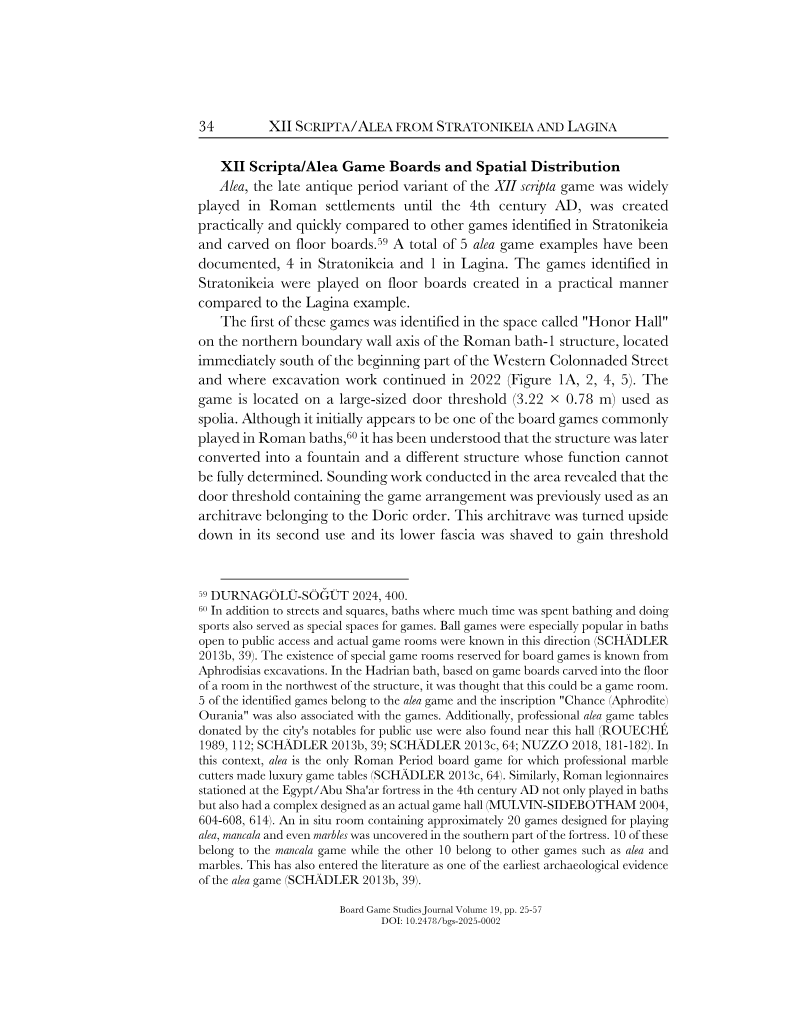
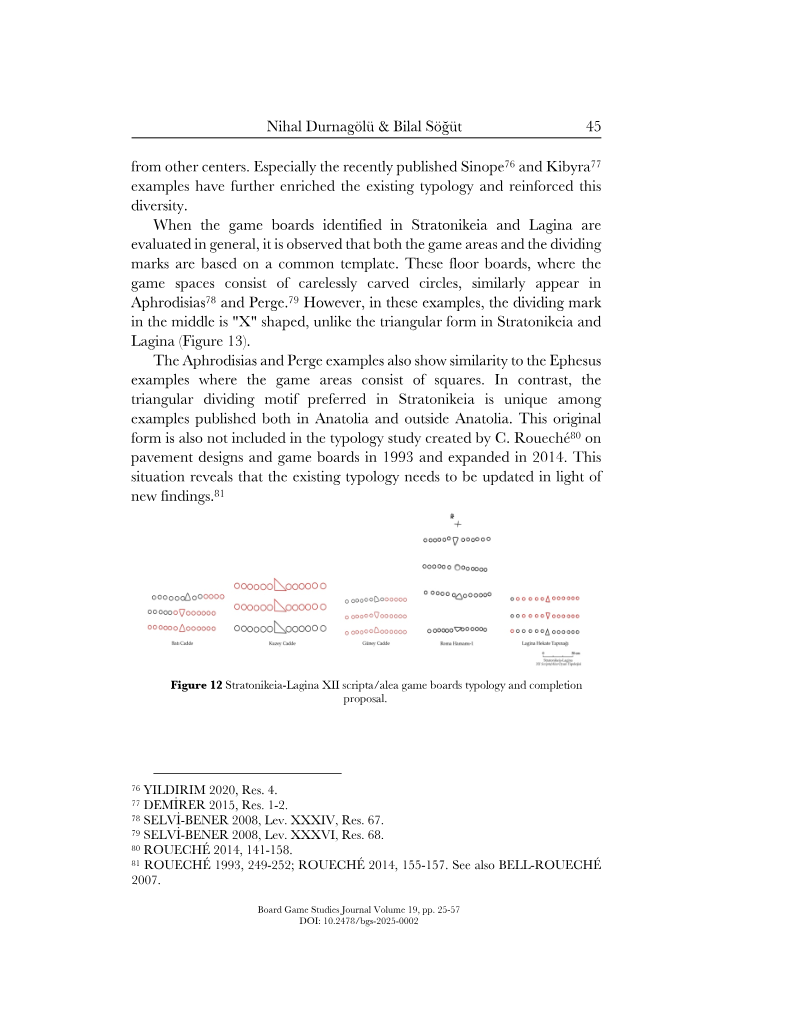
Incised game boards carved into stone are found across many early play cultures. Their permanence makes them unusually visible evidence of repeated gathering.
This paper examines incised graffiti boardgames carved into stone floors, walls, and platforms in ancient South Asian communal and sacred spaces, arguing that these markings should be read not only as evidence of recreation but as material infrastructure reflecting continuity in form, function, and collective practice across centuries. It situates the South Asian material within a broader global record, noting that incised boards are a widespread yet understudied trace of early play cultures, and that their permanence makes them unusually visible evidence of repeated social gathering in shared spaces.
The study's central observation concerns spatial clustering. Incised games frequently occur in dense concentrations, sometimes numbering dozens of distinct game types within a confined area. At Vijayanagara (Hampi), one account documents more than nine hundred boards spread across market streets and temple platforms, while field documentation by Project Kheliya and a digital archive of Ancient Indian Boardgames has geotagged and mapped incised games at multiple South Asian locations. At the Kailasa temple in Ellora, an incomplete 8×8 Ashtapada grid, a Tablan race game, an Alquerque game, and multiple Mancala cupules coexist within a single compact area, despite belonging to different traditions of play. The authors suggest these surfaces may have functioned as socially inclusive "game parlours" of the past.
The methodology combines primary field investigation at several South Asian sites, documentation and analysis of individual boards, examination of stylistic patterns within confined spaces, and comparison with global contexts such as Gebel el-Silsila in Egypt and public pavements in ancient Athens. The authors acknowledge that dating these engravings remains difficult and often contested, and so they deliberately avoid fixing the markings within a strict chronology. Instead, the research emphasizes continuous lived traditions of etching boards for play and considers what recurring patterns of communal expression these material traces reveal.

DiGRA · 2026

DiGRA · 2026



DiGRA · 2026



DiGRA · 2026



DiGRA · 2026



DiGRA · 2026



DiGRA · 2026



DiGRA · 2026

DiGRA · 2026



DiGRA · 2026



DiGRA · 2026

DiGRA · 2026
DiGRA · 2026