Game Studies reports and market data
Documents
Periscopic Play: Re-positioning the Field in MMO Studies
Contemporary research into Massively Multiplayer Online games suffers from a persistent reliance on an unproductive dichotomy between the real and the virtual.
- Current MMO research is hindered by an unproductive dichotomy between the real and virtual, which obscures the material and social contexts of digital play.
- Existing studies frequently overlook broader power structures, labor conditions, and domestic realities by disproportionately focusing on the actions of hardcore players.
- Researchers often employ a 'periscopic' approach that falsely presents them as invisible, objective observers while failing to account for their own influence on social dynamics.
Language-GAME-Players: Articulating the Pleasures of 'Violent' Game Texts
The prevailing discourse surrounding violent video games frequently relies on a media effects framework that fails to account for the nuanced perspectives of the gaming community.
- A two-year qualitative study of 61 students indicates that players view violent game content as a functional component of rule-based systems rather than a catalyst for real-world aggression.
- Players consistently distinguish between virtual obstacles and real-world morality, prioritizing strategic agency and the mastery of complex game mechanics over the content's violent nature.
- First-person shooter engagement is primarily driven by performance challenges, aesthetic appreciation, and the desire to master structured, competitive frameworks.
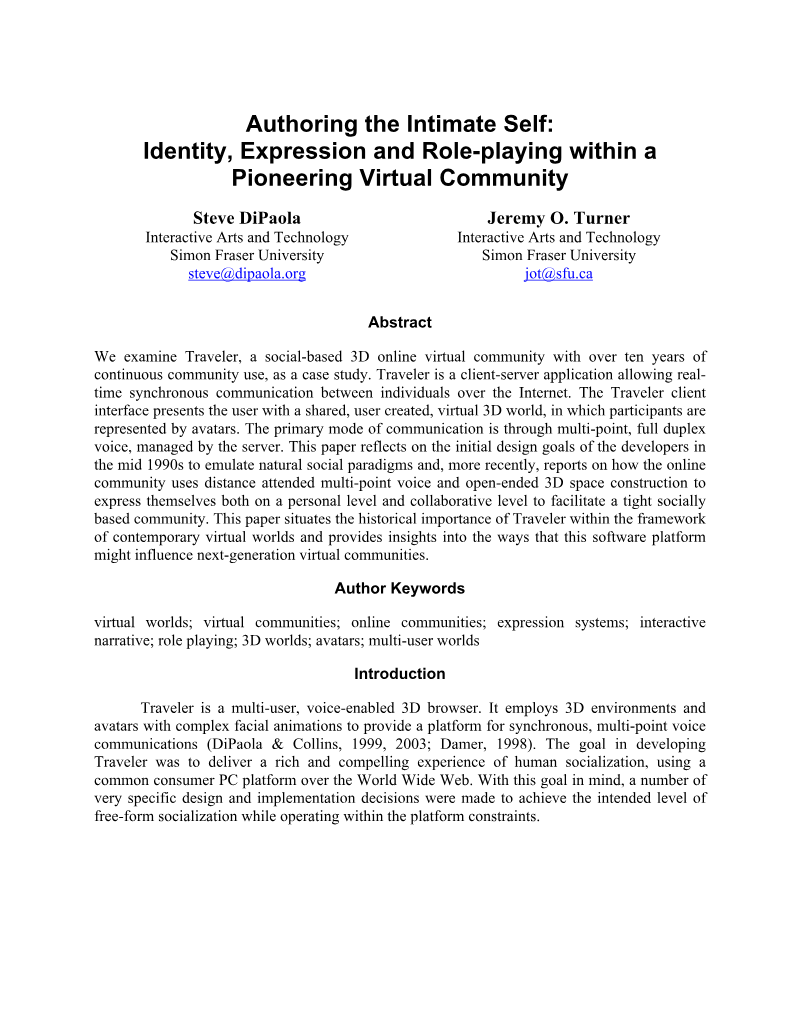
Authoring the Intimate Self: Identity, Expression and Role-playing within a Pioneering Virtual Community
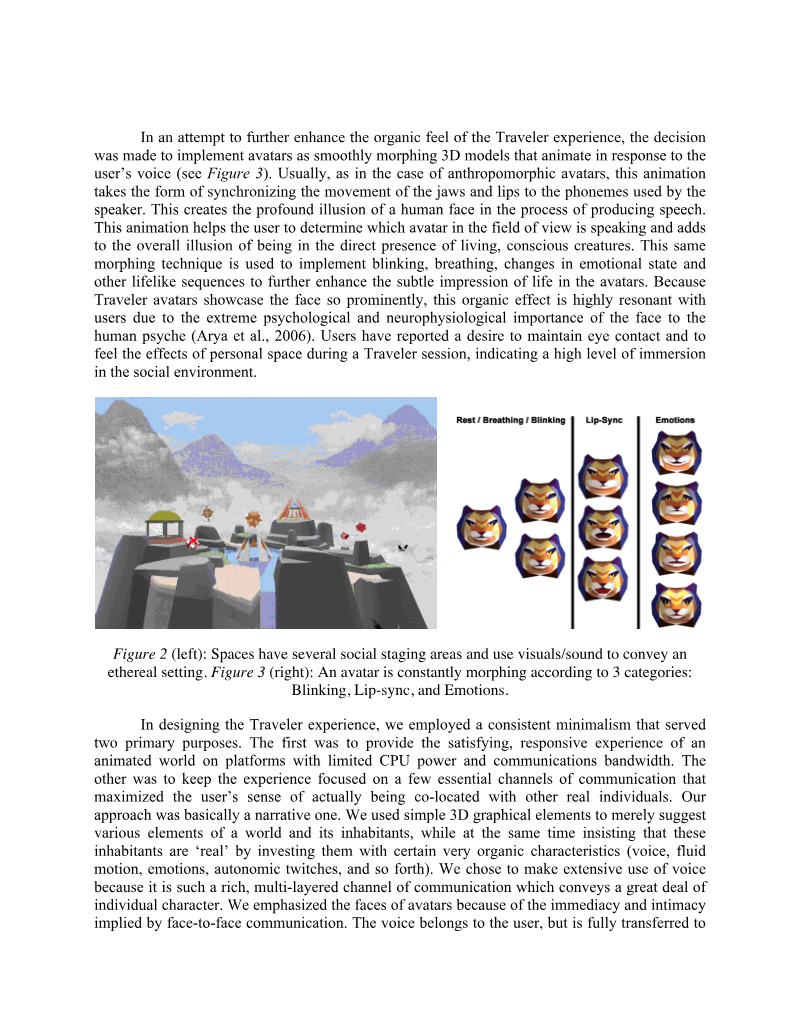
Traveler represents a foundational shift in digital interaction by prioritizing spatialized, multi-point voice communication and lip-synced avatars to foster genuine social presence.
- Long-term user engagement in virtual environments is primarily driven by the user's desire to project their intimate self and personal narrative into the platform's architecture.
- Spatialized, multi-point voice communication and lip-synced avatars are foundational technologies for fostering genuine social presence and intuitive, non-superficial interaction.
- Users naturally transform digital spaces and avatars into permanent, collaborative monuments to memorialize social experiences and build indigenous community mythologies.
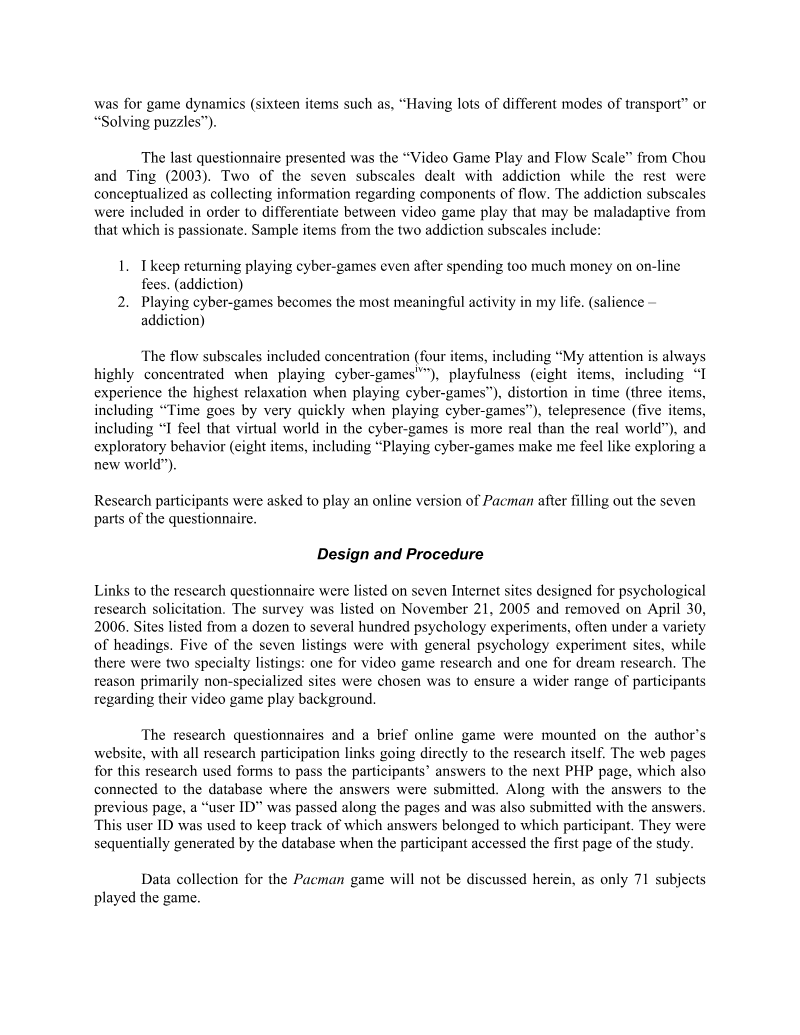
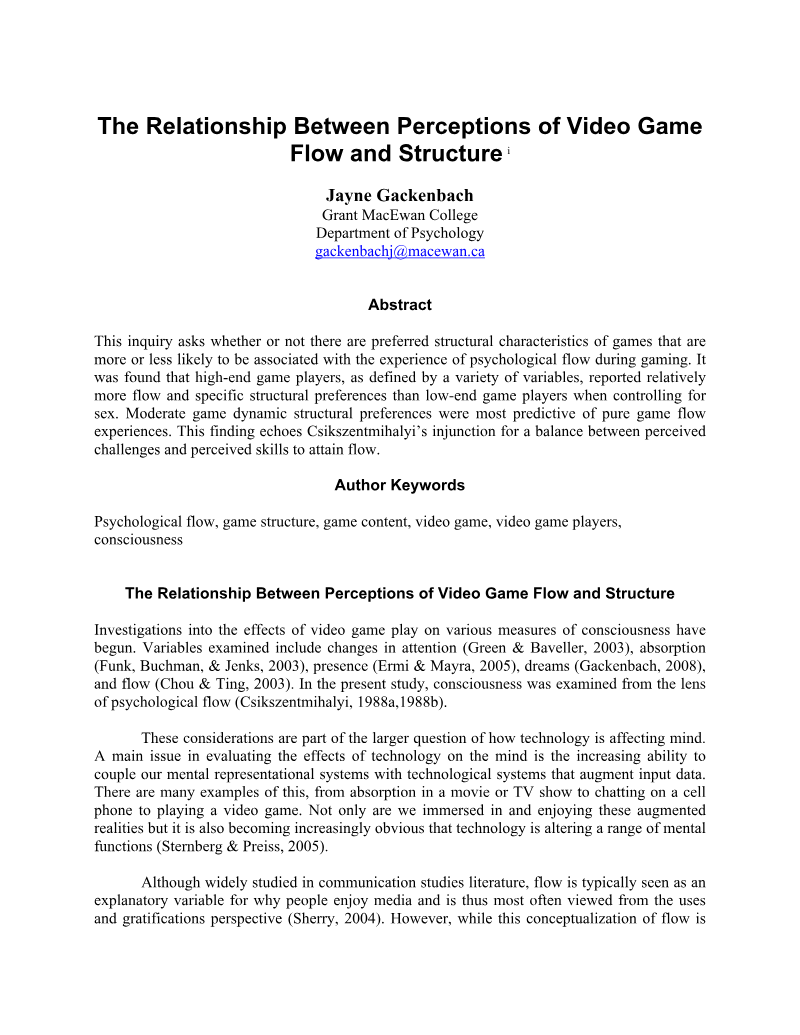
The Relationship Between Perceptions of Video Game Flow and Structure
The psychological state of flow in video games is fundamentally linked to the interplay between a player’s skill level and the structural design of the gaming experience.
- Game structure is the primary driver of flow, with moderate game dynamics serving as the most reliable predictor for balancing player challenge and skill.
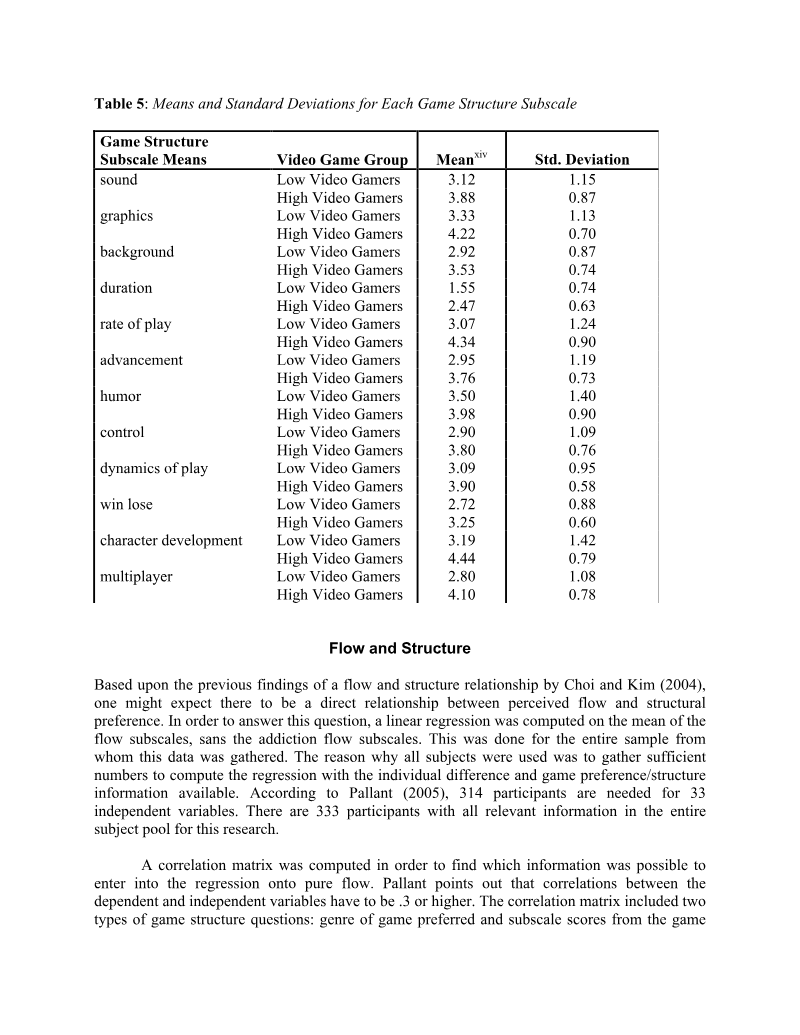
- Hardcore gamers consistently achieve higher levels of flow compared to casual players, indicating that experience and dedication correlate with deeper immersion.
- Effective game design must prioritize pacing and mechanical complexity to facilitate the equilibrium required for a state of flow.
Buttons, Simplicity, and Natural Interfaces
The push button has served as the primary interface for video games since the industry's inception, primarily due to its low cost and simplicity as an electrical switch.
- Traditional button-based interfaces create a cognitive disconnect by forcing players to memorize arbitrary mappings that lack logical connections to in-game actions.
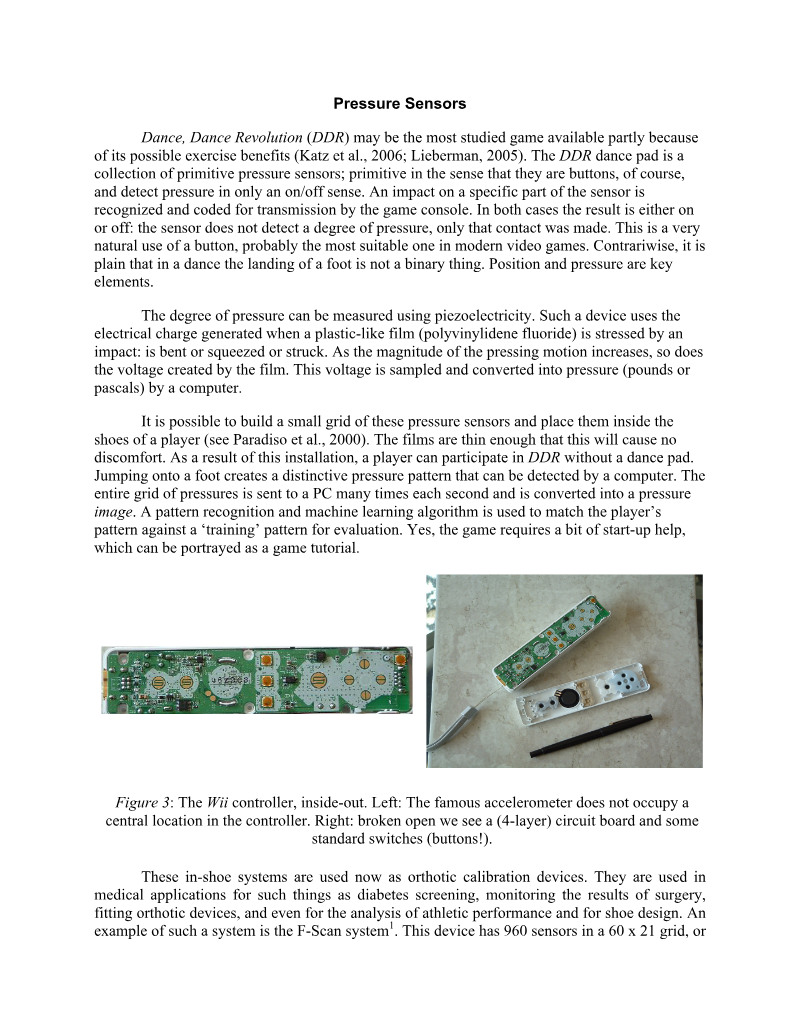
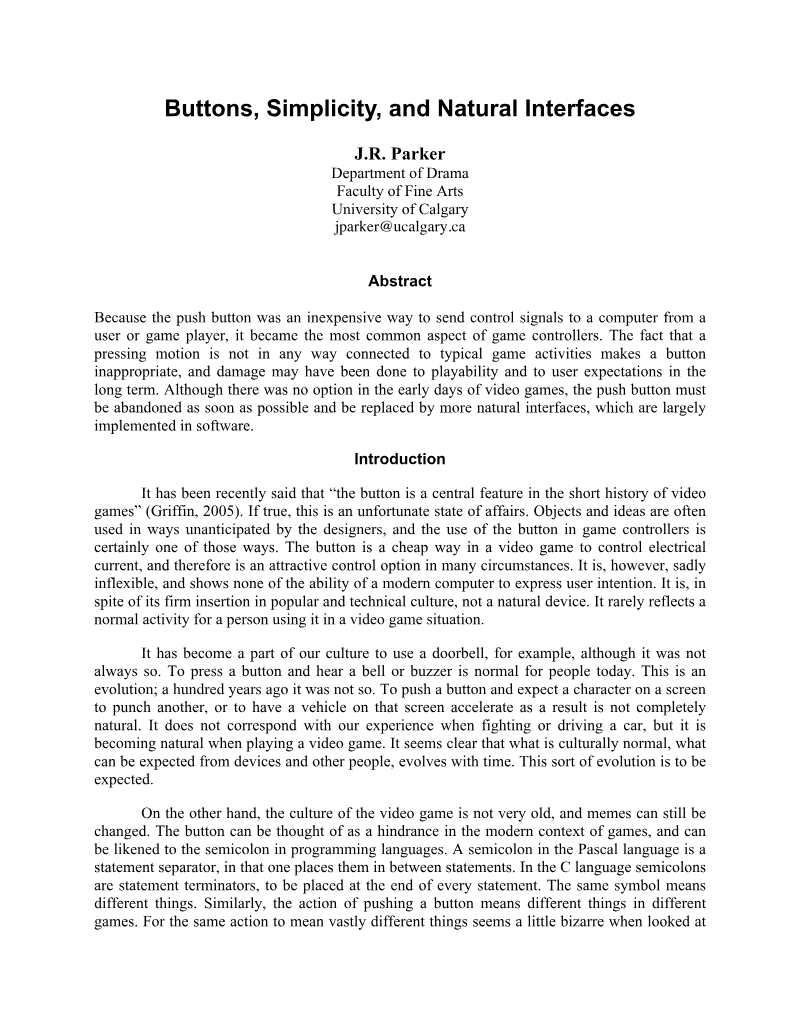
- The industry is shifting toward natural interfaces that utilize software-intensive technologies like speech recognition, gesture tracking, and pressure sensing to mirror real-world human movement.
- Natural interfaces replace binary mechanical inputs with context-aware systems, using computer vision and accelerometers to translate physical actions like swinging or running directly into gameplay.
Guitar Hero: "Not Like Playing Guitar at All"?
The Guitar Hero franchise is often criticized for its lack of simulational fidelity compared to playing a real guitar.
- Guitar Hero functions as a valid simulation by prioritizing breadth of musical experience over the deep technical accuracy required for real instrument mastery.
- The game’s interface uses a five-button controller to represent melodic and harmonic structures as a system of differential pitch intervals, making music accessible to non-musicians.
- Simulation in gaming can be achieved through two distinct strategies: modeling a wide range of experience facets or focusing on a few parameters with high precision.
Theorizing Gender and Digital Gameplay: Oversights, Accidents and Surprises
Jenson and de Castell's chapter examines why research on gender and digital gameplay has repeatedly produced the same conclusions, and argues that these conclusions are often artifacts of researchers' assumptions rather than stable features of players.
- The chapter argues that recurring findings in gender-and-games research, such as girls preferring cooperation and boys preferring competition, are artifacts of researchers' assumptions and socially constructed categories rather than stable features of players.
- Drawing on Butler's theory of gender performativity, the authors contend that repeated framings in the field limit analysis and reinforce stereotypes, and they call for critical theorization of core concepts such as competition.
- In a longitudinal study of more than 100 children aged 12 to 15, many girls enjoyed competitive play, and what was labeled 'benevolent competition' appeared to reflect a shift from novice to expert roles rather than a distinct gendered trait.
Using a Camera Phone as a Mixed-Reality Laser Cannon
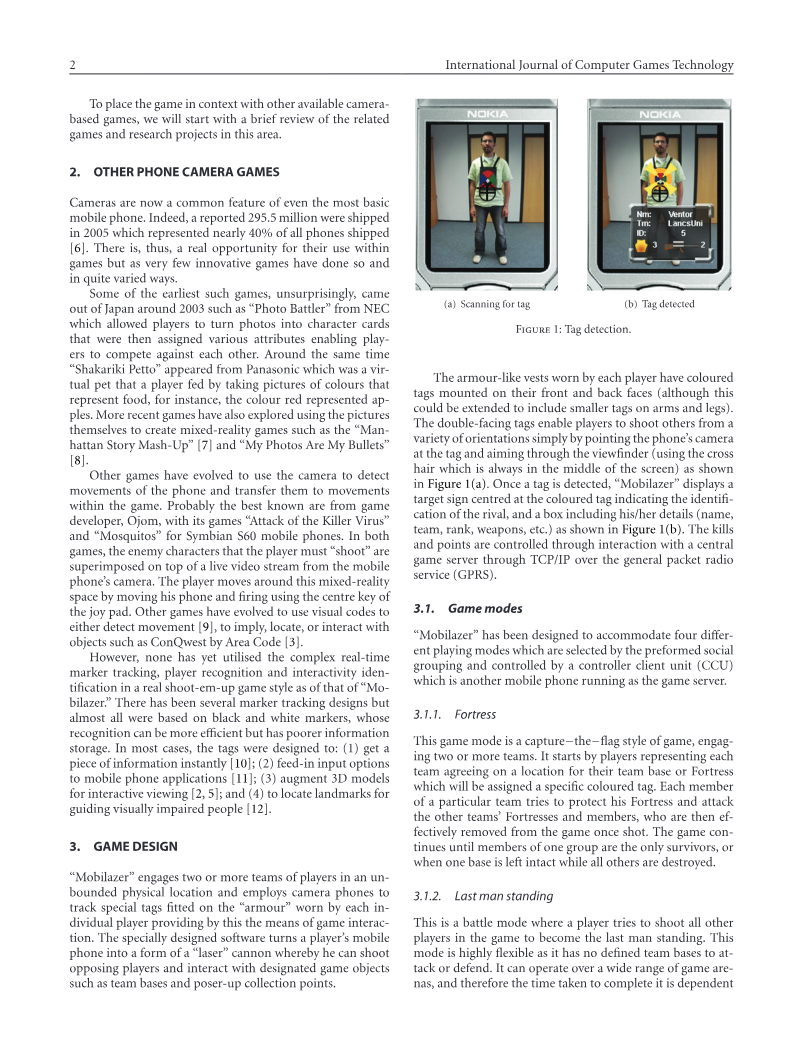
This research explores the development of Mobilazer, a location-independent, mixed-reality first-person shooter designed for standard camera-equipped mobile phones.
- Mobilazer demonstrates that standard camera-equipped mobile phones can deliver immersive, mixed-reality first-person shooter experiences without requiring specialized hardware.
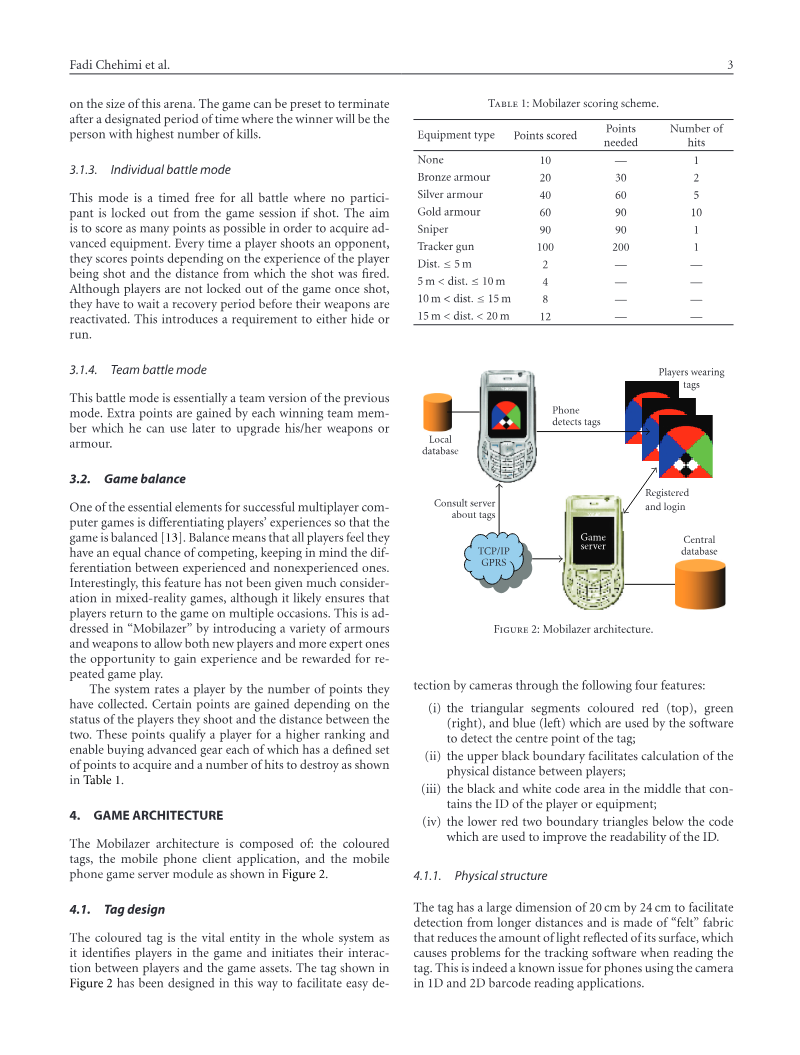
- The system utilizes real-time image processing and physical, color-coded tags worn by players to enable distance measurement, target identification, and simulated combat.
- The game architecture employs a client-server model where a central mobile device coordinates player data and status updates via TCP/IP over GPRS.
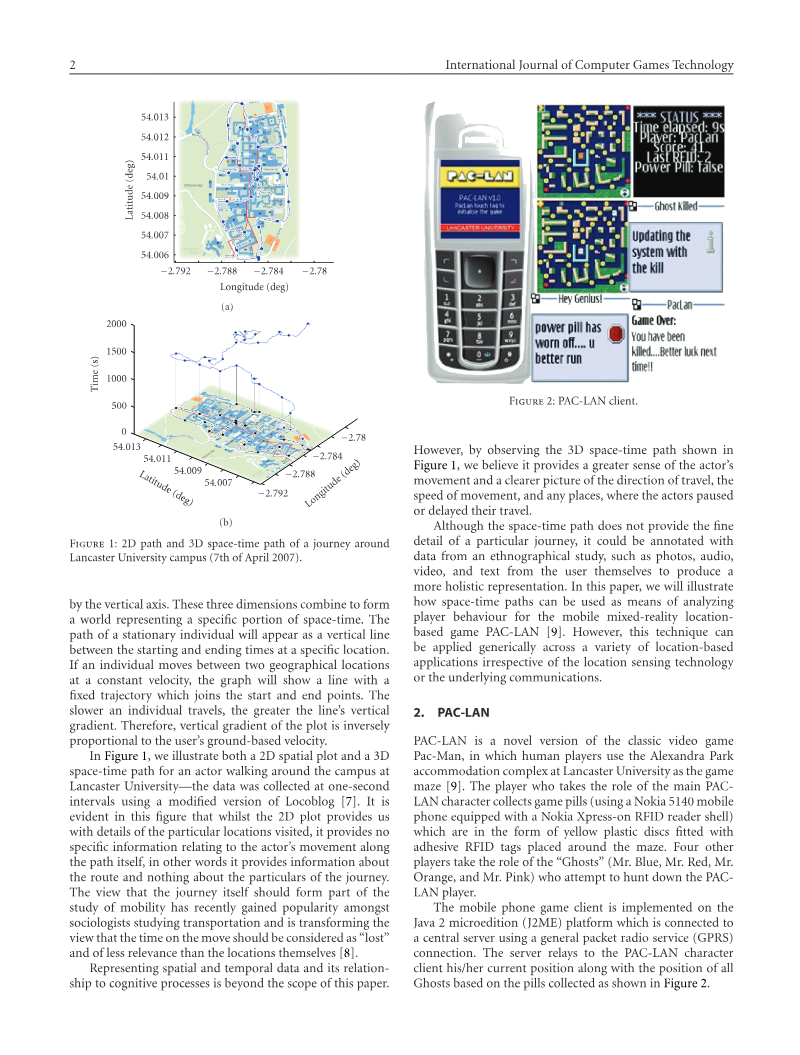
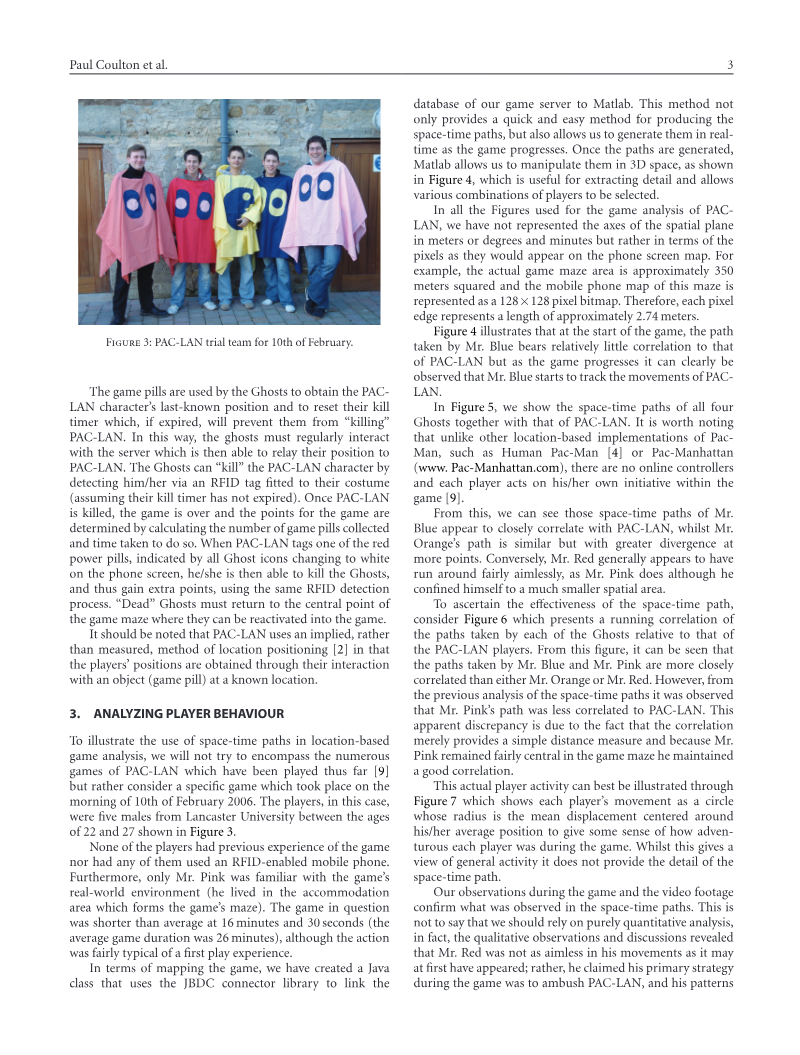
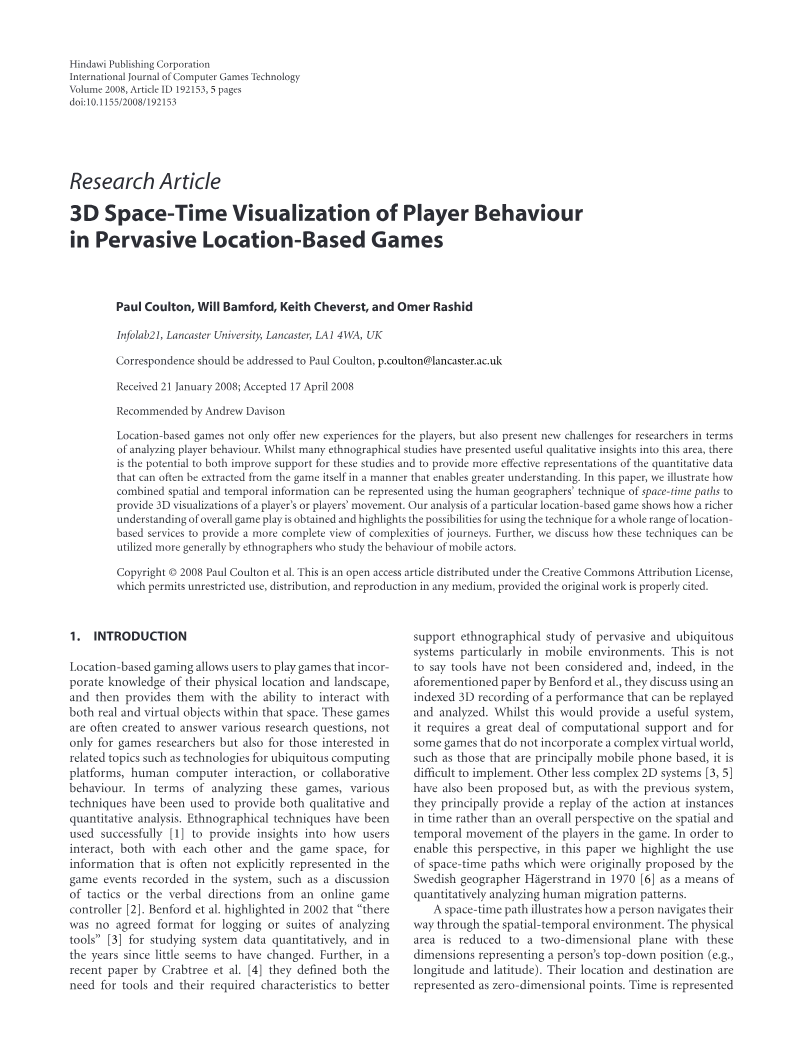
3D Space-Time Visualization of Player Behaviour in Pervasive Location-Based Games
The research explores the application of space-time path visualization as a quantitative method for analyzing player behavior in pervasive, location-based games.
- 3D space-time path visualization offers a superior analytical framework for location-based games by capturing movement, velocity, and pauses that are often obscured in traditional 2D mapping.
- The methodology utilizes high-frequency data collection, tracking player movement at one-second intervals via RFID-enabled mobile devices.
- The research validated its 3D modeling approach through a 16-minute session of the mixed-reality game PAC-LAN involving five participants at Lancaster University.
Who Wants to Terminate the Game?: The Role of Vested Interests and Metaplayers in the ATOLLGAME Experience
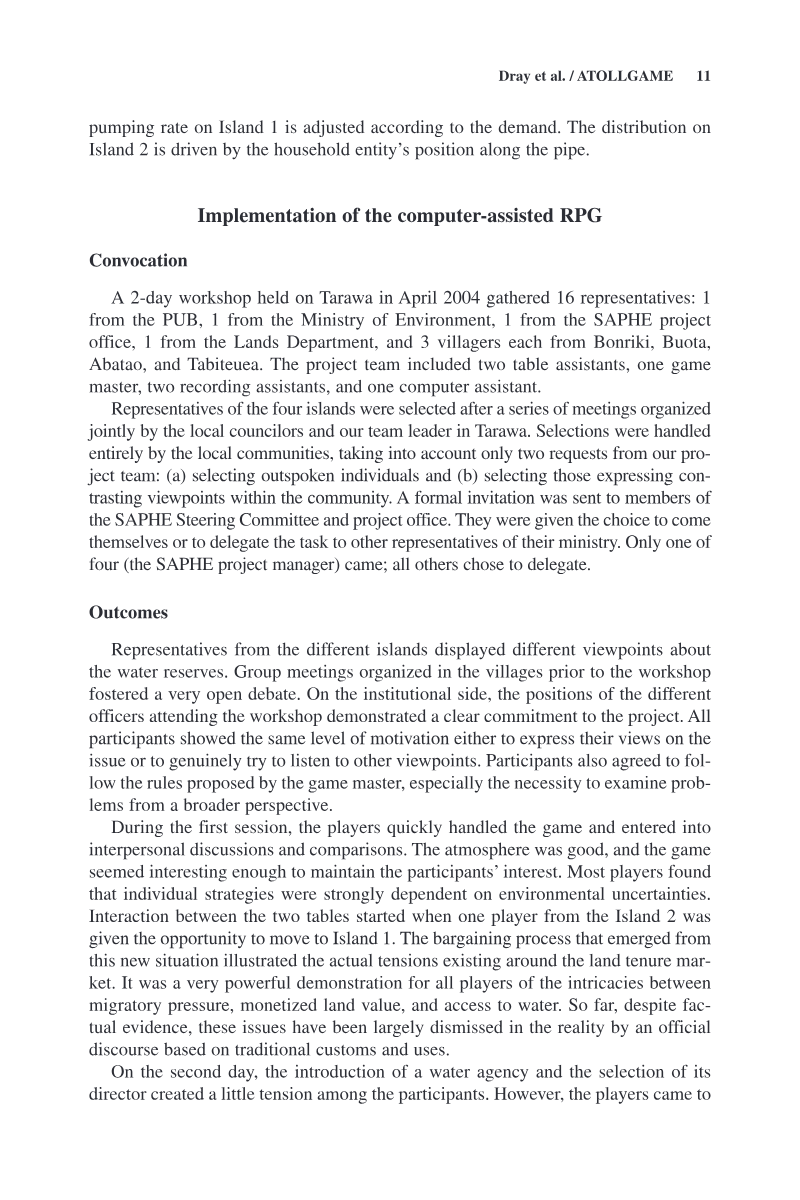
ATOLLGAME functions as a computer-assisted role-playing simulation designed to navigate the complex intersection of hydrogeological modeling and socio-political conflict on the Tarawa atoll in Kiribati.
- ATOLLGAME demonstrates that participatory role-playing simulations can successfully transition stakeholders from bipolar conflict toward collaborative, technical, and social water management strategies.
- The long-term viability of community-led resource management is frequently undermined by 'meta-players'—external political and financial entities that prioritize rigid, top-down institutional agendas.
- Systemic project stagnation and the alienation of local populations occur when institutional goals override the consensus-based road maps developed through participatory gaming.

A Virtual World for Teaching German
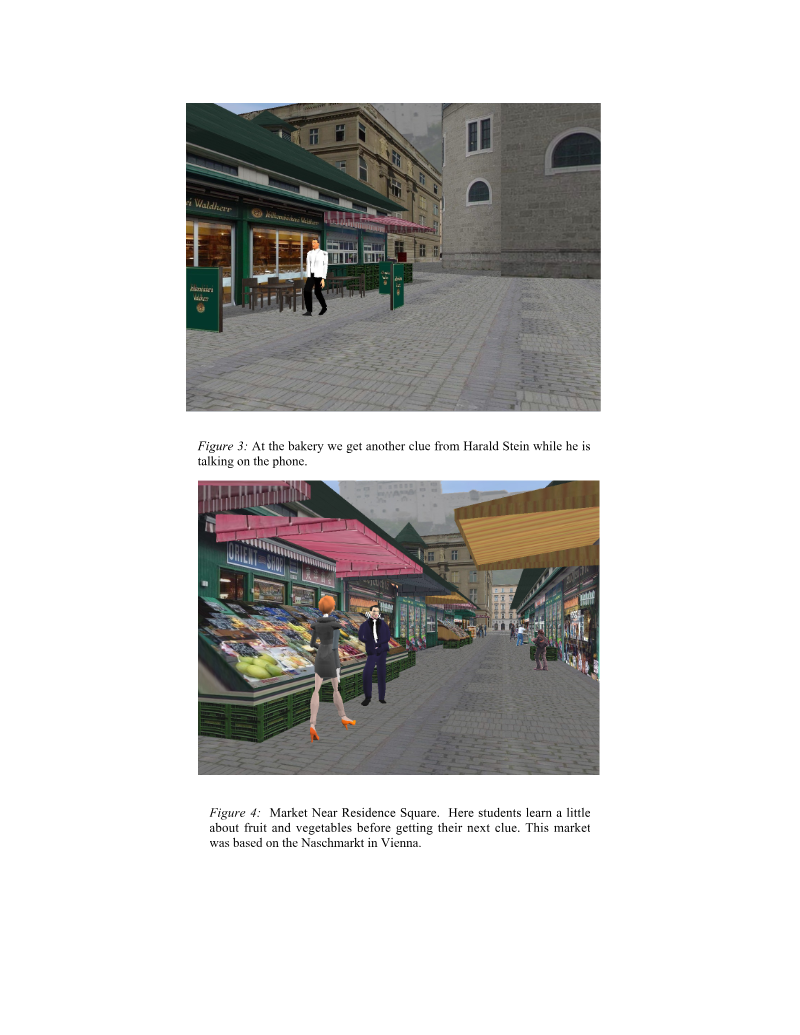
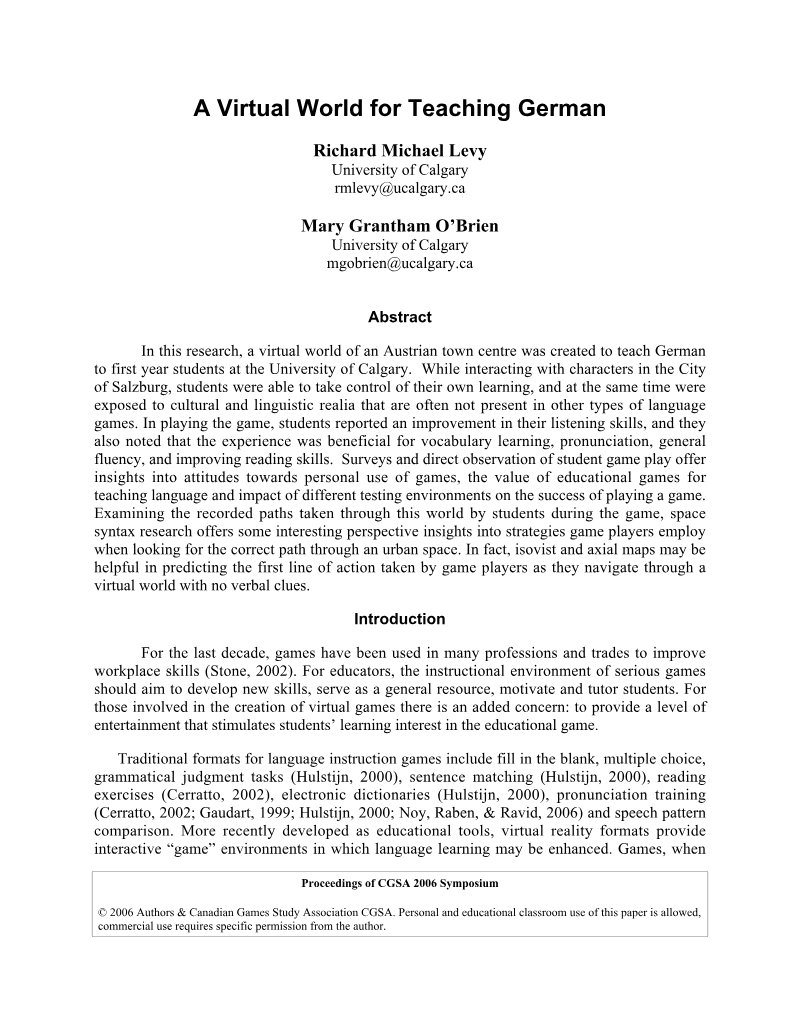
The integration of immersive virtual reality simulations into language pedagogy offers a transformative approach to teaching German, specifically through task-based gameplay set within an architecturally accurate recreation of Salzburg.
- Immersive VR simulations of real-world locations, such as an architecturally accurate Salzburg, significantly improve German language proficiency across listening, vocabulary, pronunciation, and reading.
- Architectural layout is a primary driver of student behavior, as learners prioritize visual axes and sightlines over linguistic prompts when navigating virtual environments.
- Designers can use space syntax analysis, including isovist and axial maps, to predict and influence how students move through and interact with educational virtual spaces.
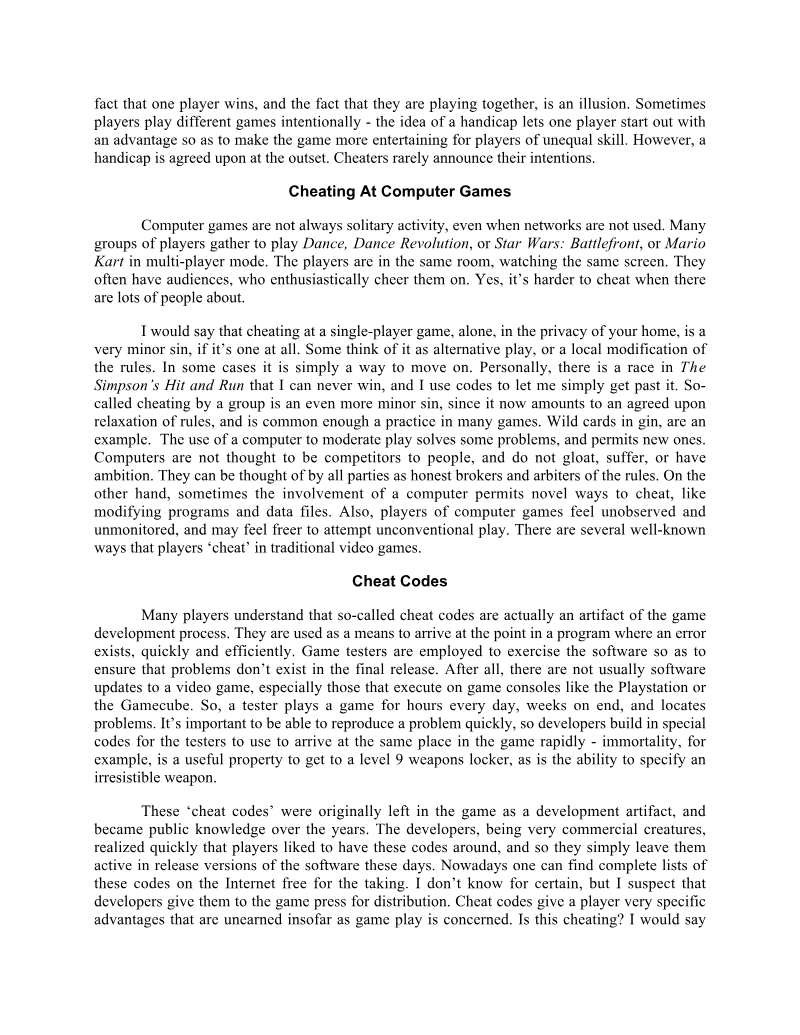
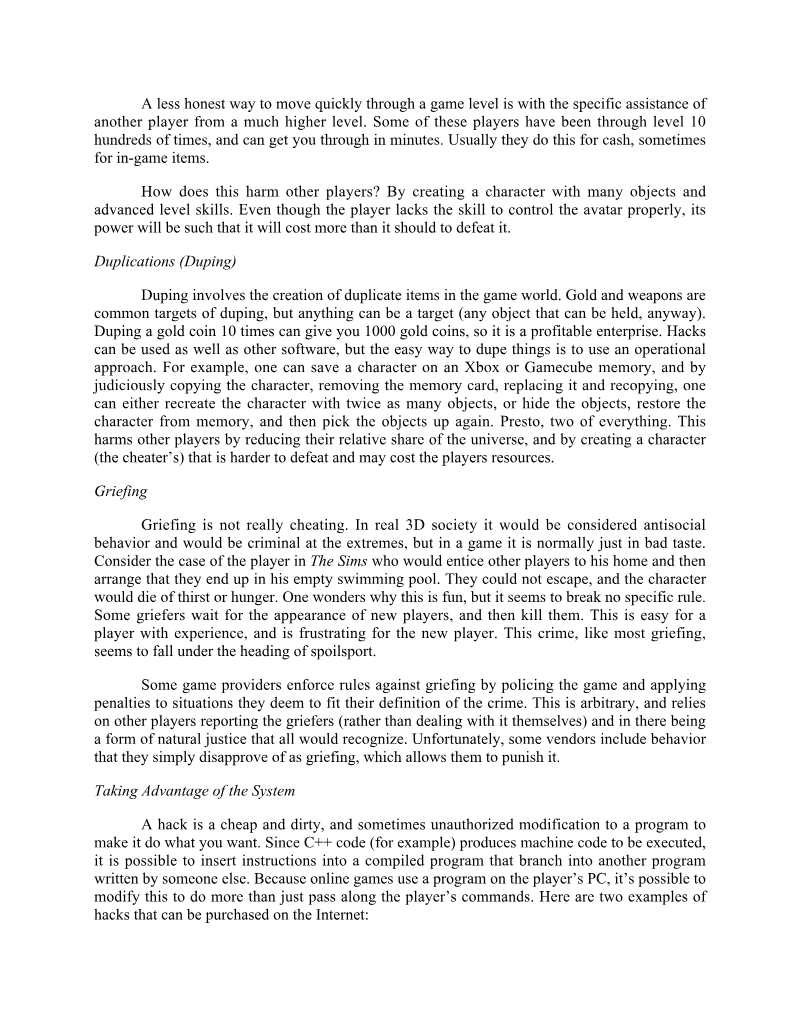
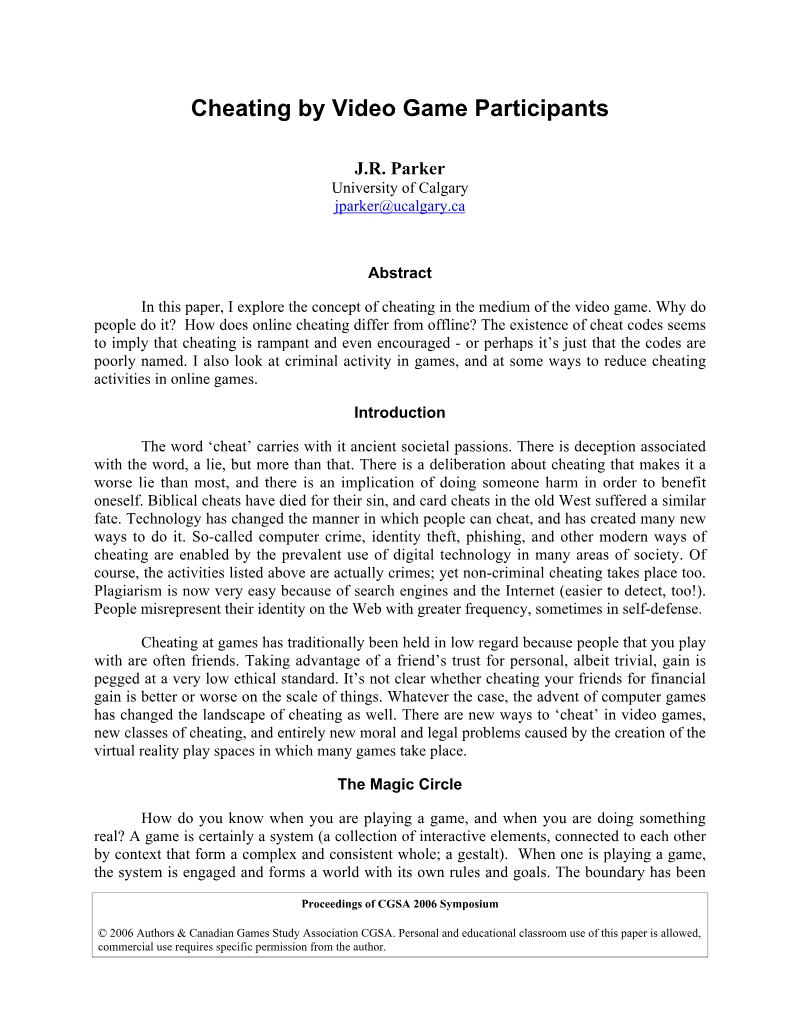
Cheating by Video Game Participants
This analysis explores the multifaceted nature of cheating within video games, examining the motivations behind such behaviors and the evolving moral and legal implications of virtual misconduct.
- Online cheating necessitates robust prevention strategies because it causes genuine financial and social harm, unlike single-player rule-breaking which is often viewed as benign alternative play.
- The rise of virtual economies has elevated certain in-game actions to the level of real-world criminal activity, such as theft, due to the tangible financial value of virtual items.
- Cheating is defined as a violation of the implicit or explicit rules of a game that undermines the 'magic circle,' the conceptual boundary that defines the shared experience of play.