Key insights
4 slides
Outdated approach
Current MMO research relies on an unproductive real-virtual dichotomy.
This framework obscures the material and social contexts that define digital play.
1 / 4
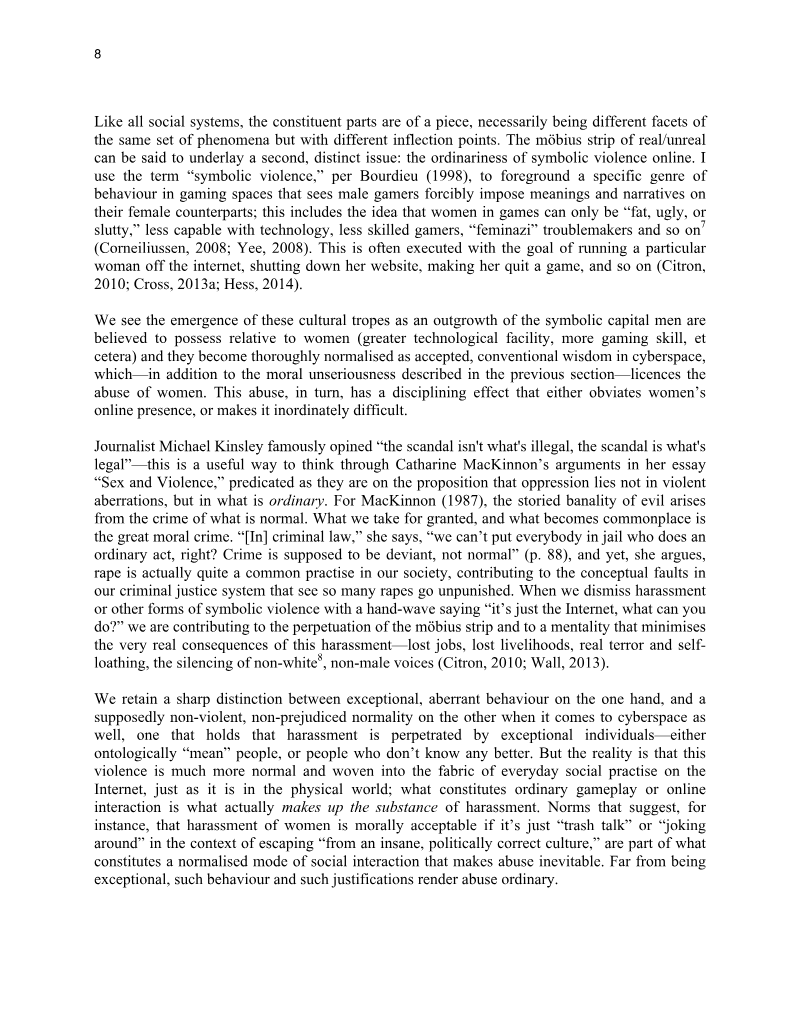
- 01Current MMO research is hindered by an unproductive dichotomy between the real and virtual, which obscures the material and social contexts of digital play.See it on page 9
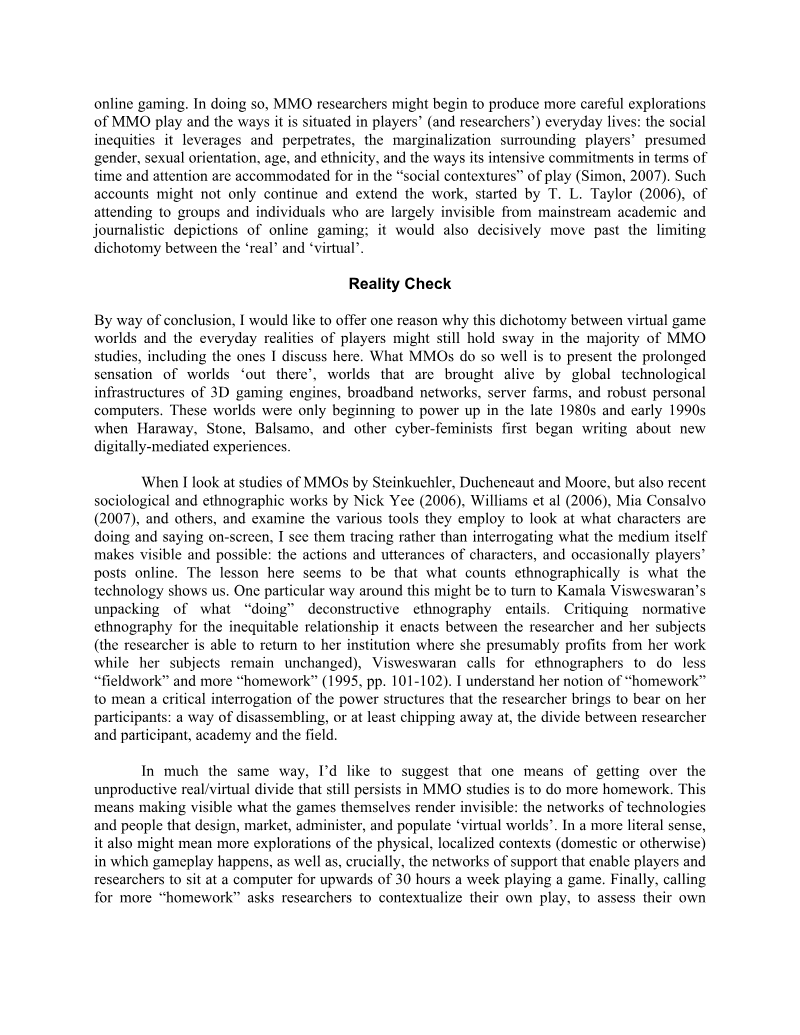
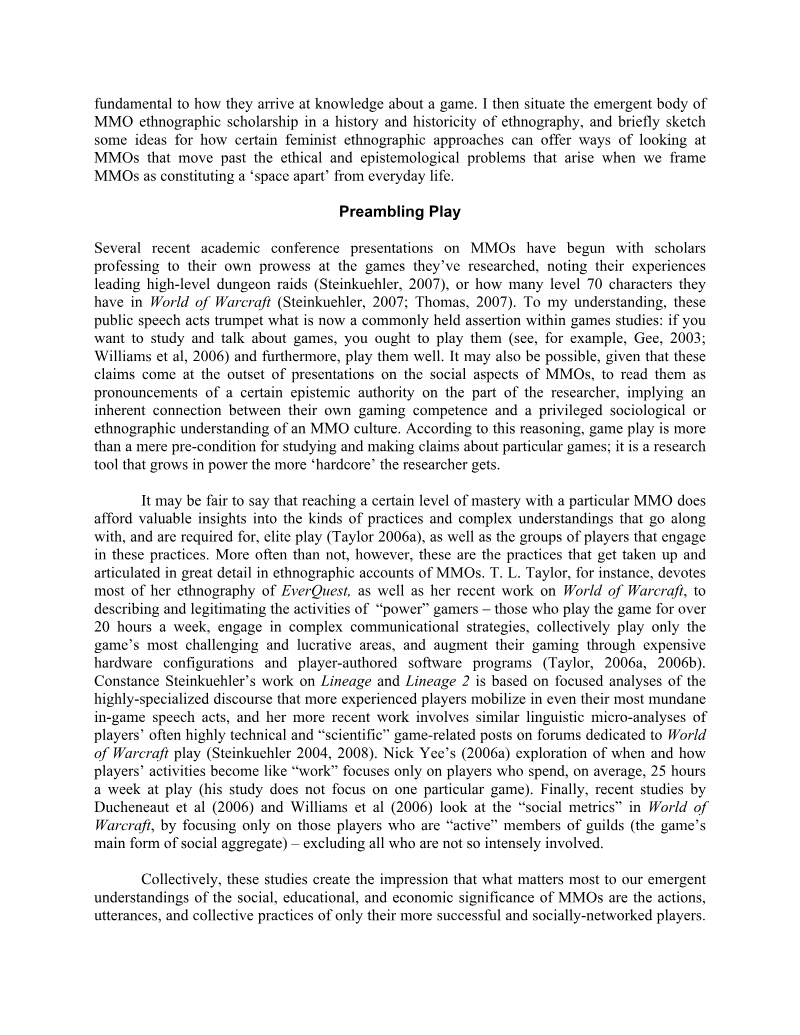
- 02Existing studies frequently overlook broader power structures, labor conditions, and domestic realities by disproportionately focusing on the actions of hardcore players.See it on page 3
- 03Researchers often employ a 'periscopic' approach that falsely presents them as invisible, objective observers while failing to account for their own influence on social dynamics.See it on page 7
- 04Adopting a reflexive, feminist-informed methodology and auto-ethnographic lens is necessary to address identity, social inequity, and the researcher's own complicity in gaming environments.See it on page 1
- 05Future scholarship must transition toward 'homework,' a critical framework that interrogates the physical and technological networks that support virtual interactions.See it on page 9
- 06Moving beyond the real-virtual divide is essential for developing a more rigorous and inclusive understanding of the interplay between human agency, digital interfaces, and the physical world.See it on page 2
Ask AI about this report
Summary
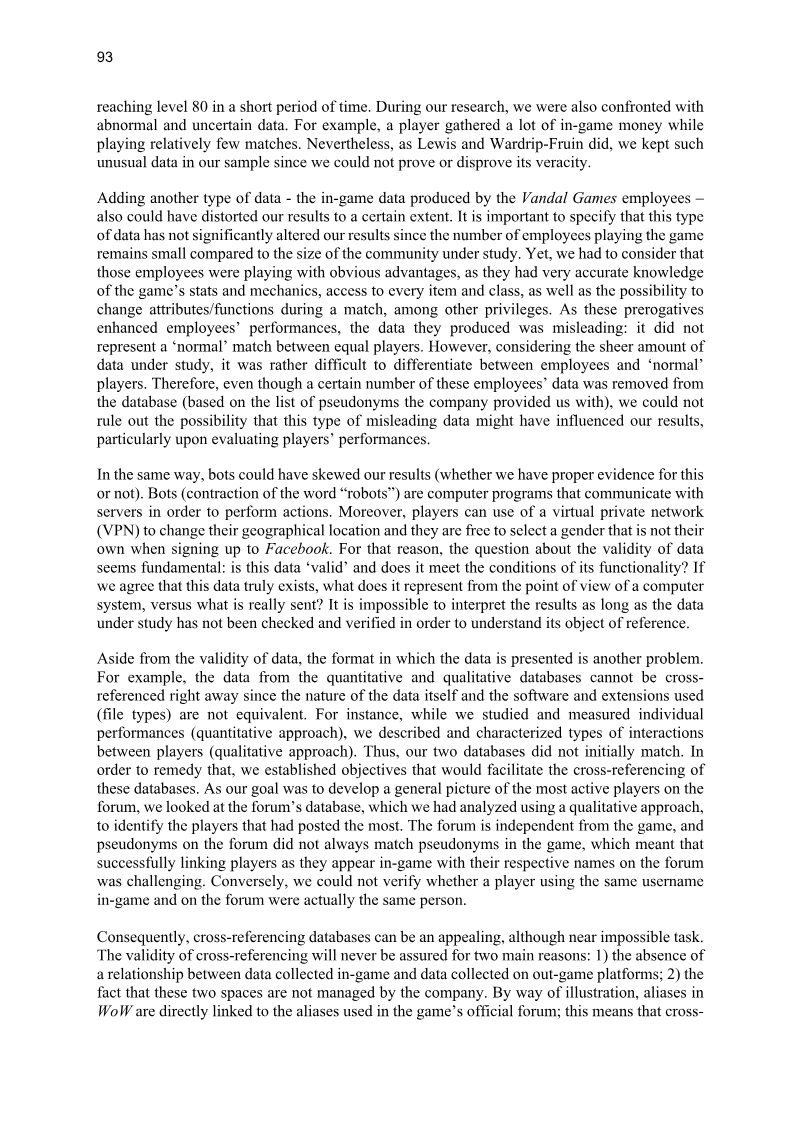
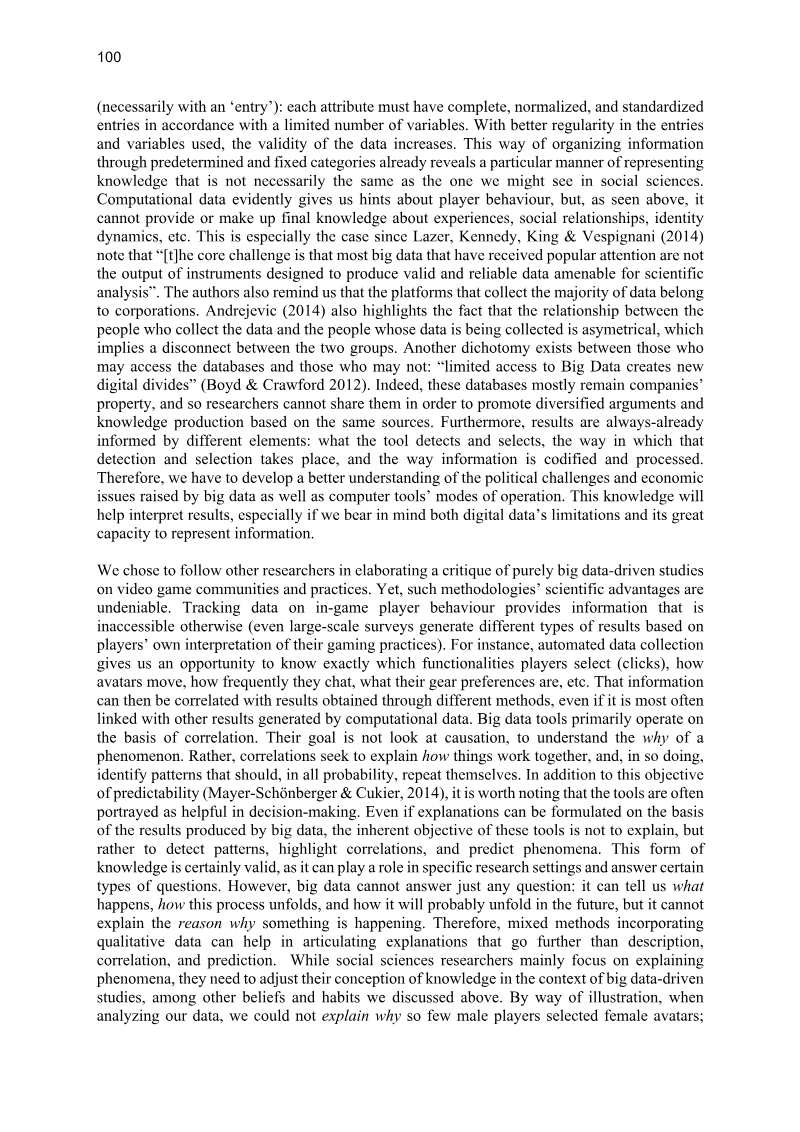
Contemporary research into Massively Multiplayer Online games suffers from a persistent reliance on an unproductive dichotomy between the real and the virtual. This framework frequently obscures the material and social contexts that define digital play, leading to accounts that prioritize the actions of hardcore players while ignoring the broader power structures, labor conditions, and domestic realities that underpin these communities. By failing to account for the researcher’s own embodied participation, existing studies often produce decontextualized findings that mirror outdated, colonial-era anthropological methods.
To rectify these limitations, ethnographic practice must shift toward a reflexive, feminist-informed methodology that embraces accountable positioning. Researchers currently engage in a form of periscopic play, presenting themselves as invisible, objective observers while failing to acknowledge their own influence on the social dynamics they document. This approach renders the researcher’s agency invisible and neglects the lived experiences of marginalized players. Adopting a deconstructive, auto-ethnographic lens allows for a more nuanced understanding of identity and social inequity, moving the field away from generalized claims toward a more honest assessment of the researcher’s complicity within the gaming environment.
Ultimately, the field requires a transition toward what is termed homework, a critical approach that interrogates the physical and technological networks supporting virtual interaction. By contextualizing the researcher’s own situated experience and examining the material foundations of gameplay, scholars can move beyond the limiting real-virtual divide. This shift is essential for developing a more rigorous, transparent, and inclusive understanding of how MMO communities function, ensuring that future studies account for the complex interplay between human agency, digital interfaces, and the physical world.