Game Studies reports and market data
Documents
Serious Games for Education and Training in the Humanitarian Sector: State of the Art
This study by Mukherjee and Guardiola surveys the state of serious games for education and training in the humanitarian sector, a field where adoption has lagged despite the demonstrated value of game-based learning in other domains.
- Of 89 non-commercial serious games on humanitarian topics released between 1990 and 2023, 49 targeted awareness, 9 classroom education, and 31 professional training of humanitarian workers, policymakers, and stakeholders.
- Accessibility is a serious problem: 11 of the 31 professional training games are no longer available and 10 require direct contact with developers or a workshop to access, unlike commercial titles on related themes, which remained almost entirely accessible via archives, resellers, or abandonware sites.
- Analog, multiplayer games dominated professional training, while digital titles were mostly single-player and used largely for awareness and education.
Game Designers’ Experiences with Educational Game Design Elements: From Practice to Conception
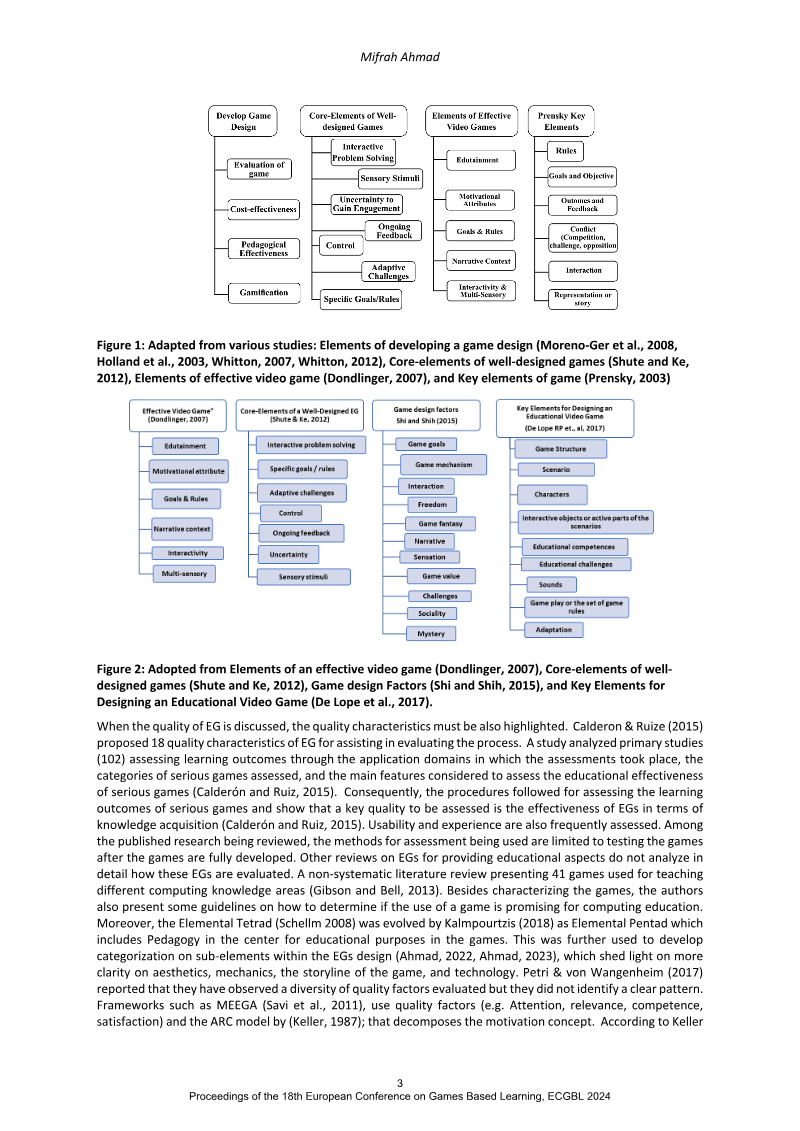
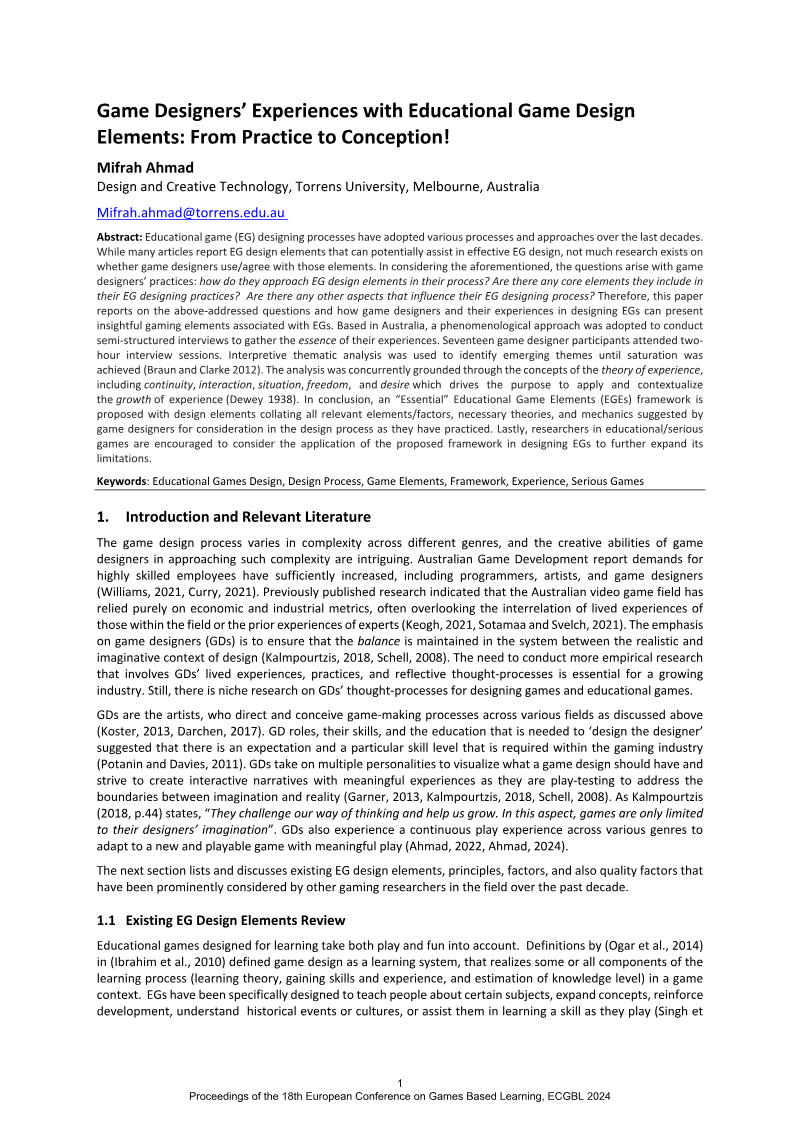
This study examines how game designers in Australia apply educational game design elements in actual practice, rather than relying solely on theoretical frameworks.
- Interviews with 17 Australian game designers (5–15 years' experience) found that most did not substantially change their processes when working on educational projects, with only a small number adapting their approach.
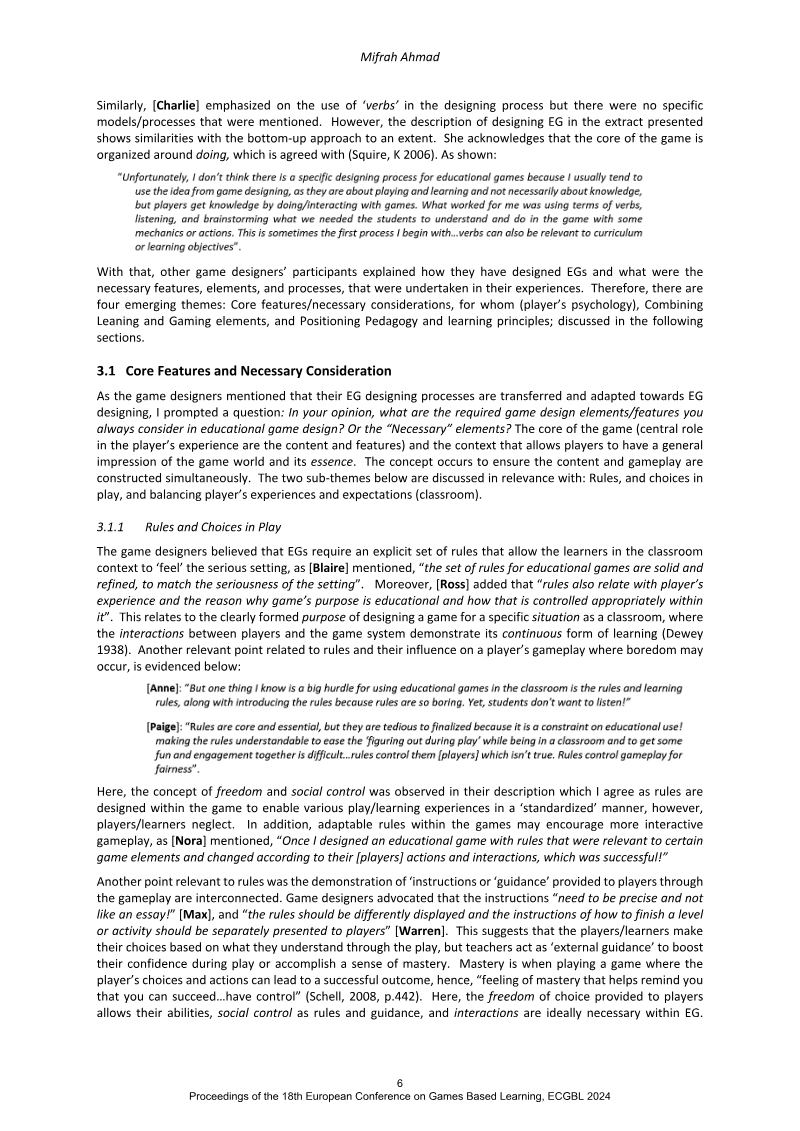
- Two designers stood out: one used a bottom-up design approach, and another structured gameplay around verbs drawn from the curriculum.
- Designers emphasised that educational games need explicit, carefully refined rules, a balance between seriousness and engagement, graduated difficulty, and memorable experiences that support learning.

Impact of LEGO® Based Therapy on Skills Development and Quality of Life in People with Neurodevelopmental Disorders
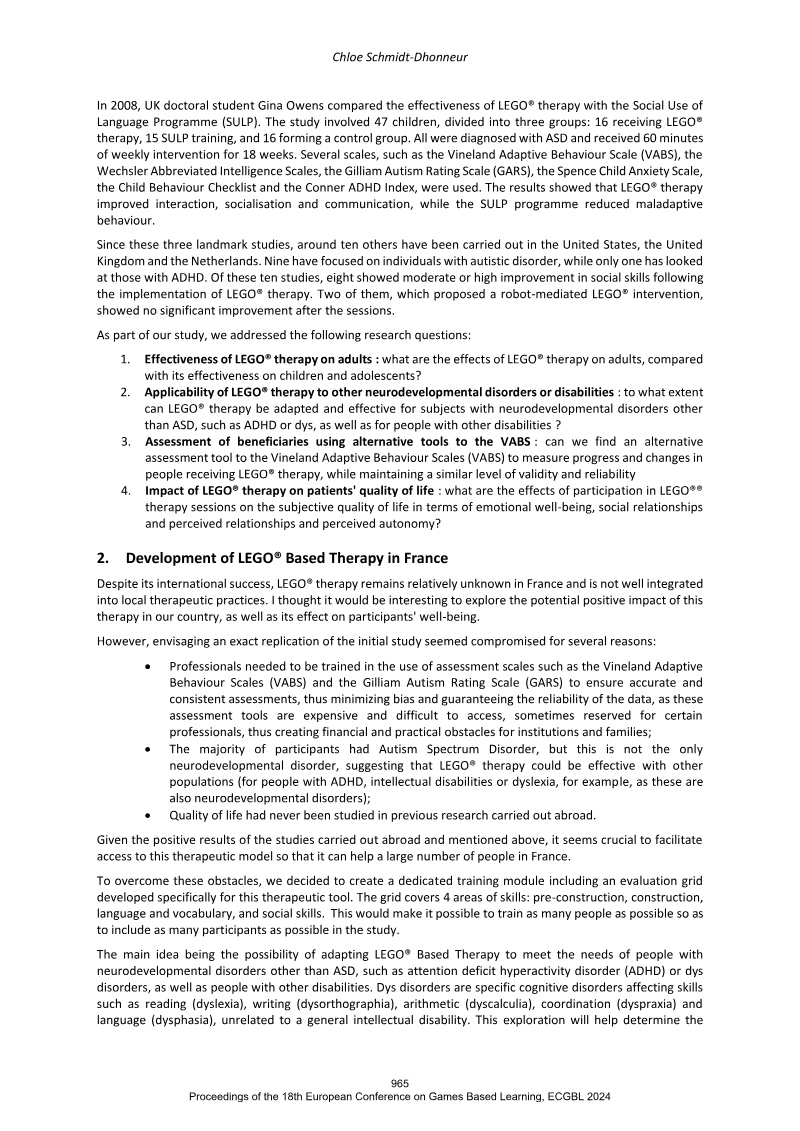
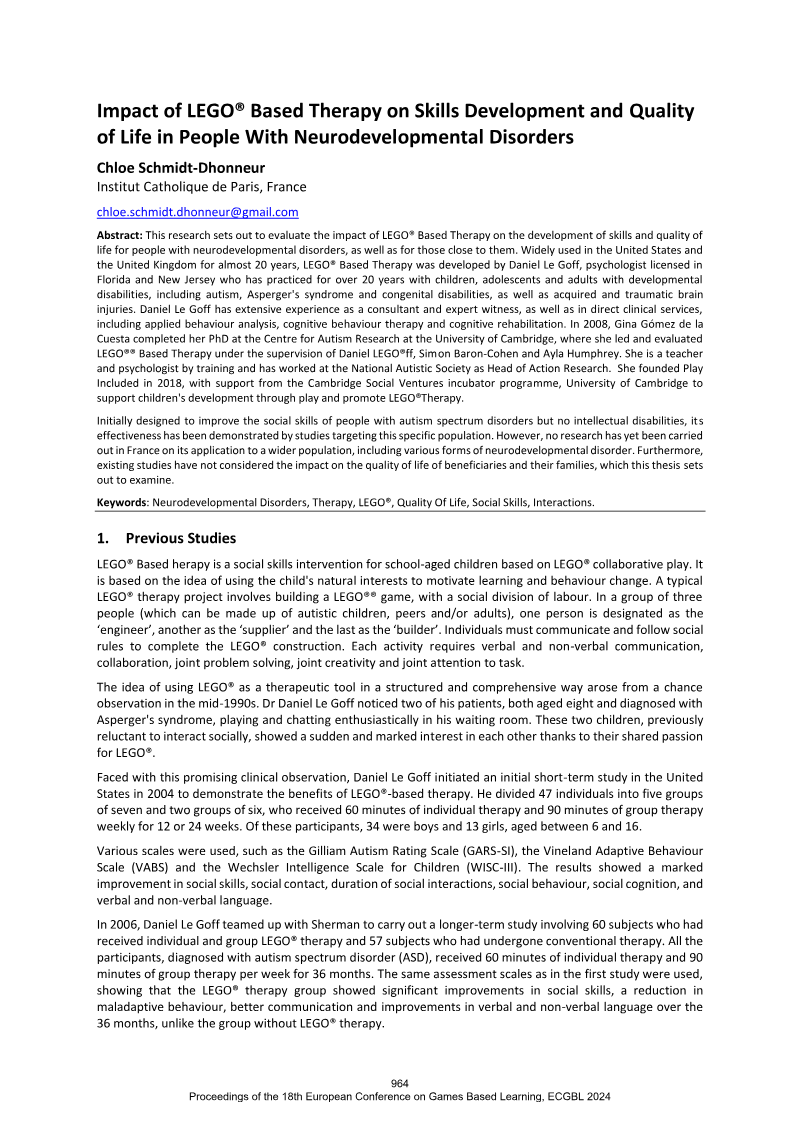
This thesis evaluates whether LEGO® Based Therapy, a structured social-skills intervention that uses collaborative LEGO® construction, can benefit people with neurodevelopmental disorders beyond autism, and whether it improves quality of life for beneficiaries and their families.
- LEGO® Based Therapy was evaluated in France on 108 analysed participants aged roughly 5 to 88 with diverse neurodevelopmental and other diagnoses, after 317 learners were trained to deliver it to 76 practitioners' service users between February 2022 and June 2024.
- Individual sessions appeared more effective for children aged 5 to 7 in language and vocabulary and for young adults aged 18 to 25, while group sessions seemed more beneficial for most other age groups.
- Participants with ADHD showed notable gains across several domains, whereas participants with schizophrenia showed the least change, likely because their baseline scores were already high, suggesting the evaluation grid may not suit that functioning level.
Exploring the Affordances of Vernacular Digital Games in Developing 21st-Century Skills
This paper argues that the boundary between formal and non-formal learning should be bridged rather than dismissed, and it proposes shifting the focus from gamification, which adds game elements to non-game contexts, toward adding an educational layer to entertainment games that were never designed for pedagogy.
- The paper argues for adding an educational layer to entertainment games not designed for pedagogy, rather than gamification, which adds game elements to non-game contexts.
- Vernacular digital games are presented as capable of cultivating 21st-century competencies such as critical thinking, collaboration, multimodal and information literacy, emotional competence, and technology literacy, but no single game or context can develop them alone, so a holistic combination of learning environments is needed.
- Design features shape outcomes: multimodality supports literacy but excessive or purposeless multimedia can impose cognitive load, while adaptivity sustains flow by balancing challenge and skill.


Games in Mathematics Education: Trends and Methodological Approaches in the CERME Review
A systematic review of games in mathematics education examines sixteen studies drawn from twelve CERME conferences held since 1999, selected from an initial pool of thirty-two papers that contained "game" in their titles and were filtered against criteria covering full-text availability, research design, and centrality of the…
- Across 12 CERME conferences since 1999, a systematic review narrowed 32 candidate papers to 16 studies on games in mathematics education, and publication counts peaked in 2020, which the authors link to heightened interest in digital tools during COVID-19.
- The field has shifted from non-digital didactic games in the early 2000s toward digital puzzle games and dynamic geometry environments in recent years.
- Qualitative designs dominate, with 13 of 16 studies using them, most often case studies, and observation combined with interviews is the most common data collection pairing.

The Expert, The Novice, and The Skeptic: Game Literacy and Pedagogical Practice
This qualitative case study examines how teachers' video game literacy shapes their pedagogical use of The Walking Dead in an ethics course at a Norwegian high school.
- Operational literacy, the ability to play and interpret a game's mechanics and structure, strongly shaped how teachers navigated gameplay and identified its moral dilemmas in a Norwegian high school ethics course using The Walking Dead.
- The teacher with low operational literacy (the skeptic) treated the narrative as mere backdrop and struggled to separate pedagogically relevant decision points from routine, incidental actions.
- The skeptic tended to pause only after actions had already occurred and framed discussions around identifying ethical theories rather than exploring alternative choices.

The Genesis of Wuxia Gaming: Adaptation, Nationalism, Rebellion, and the Emergence of Early Gaming Communities in the Sinosphere
This study traces the origins of Wuxia video games in the Sinosphere, spanning mainland China, Hong Kong, and Taiwan, during the late 1980s and 1990s.
- Wuxia gaming in the Sinosphere is traced to Taiwan in 1986 and developed through the late 1980s and 1990s across mainland China, Hong Kong, and Taiwan, shaped heavily by Hong Kong Wuxia literature and martial arts cinema.
- Chinese-speaking developers chose the Wuxia genre deliberately, using localization and nationalism to differentiate their products from global competitors that entered the market earlier.
- The genre's cultural resonance came from the popularity of Wuxia novels and their film adaptations, and its themes of heroic ascension and scholarly ideals matched an early gaming community often viewed as elite and geek-centric.
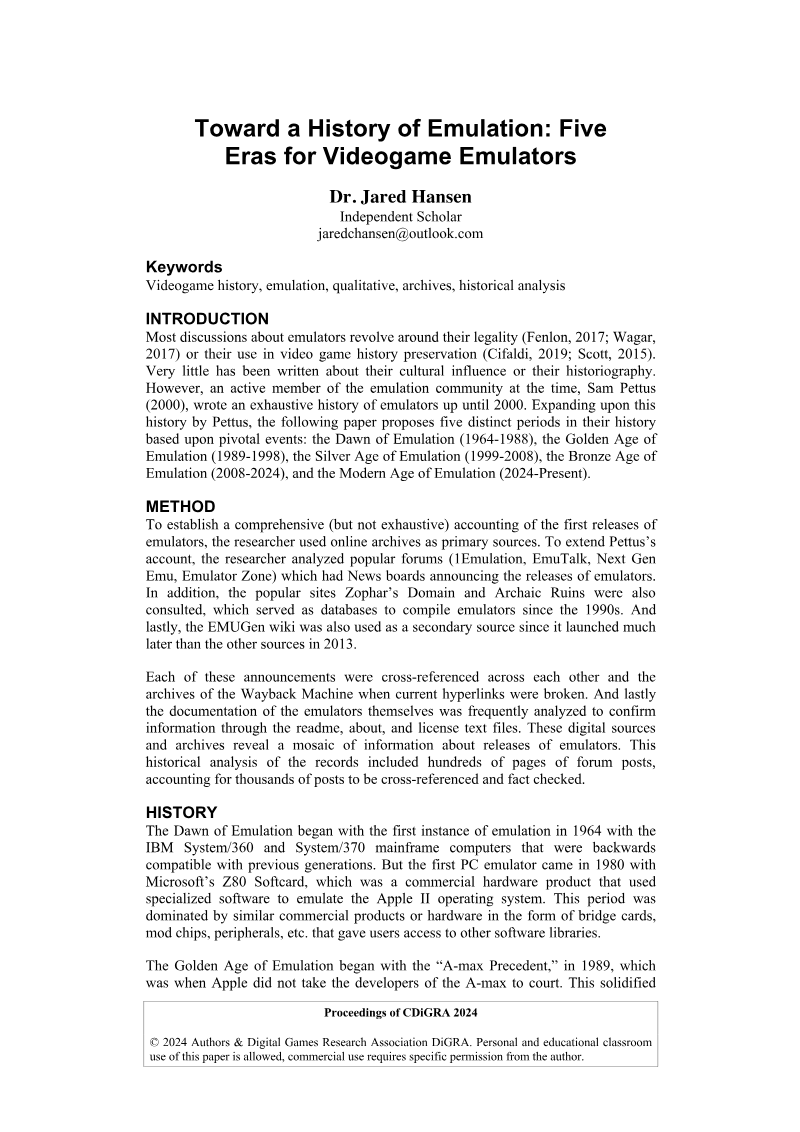
Toward a History of Emulation: Five Eras for Videogame Emulators
This paper proposes a periodization of videogame emulator history, extending Sam Pettus's 2000 account to the present.
- The paper argues that scholarship on emulators has focused overwhelmingly on legality and preservation while neglecting their cultural influence and historiography, and proposes a five-era periodization extending Sam Pettus's 2000 account to the present.
- The five eras are the Dawn of Emulation (1964–1988), Golden Age (1989–1998), Silver Age (1999–2008), Bronze Age (2008–2024), and Modern Age (2024–present), each anchored to a pivotal event such as the 1964 IBM System/360 or the Nintendo vs. Yuzu case.
- Emulator development shifted from commercial hardware and bridge cards in the Dawn era, to a proliferation of short-lived hobbyist projects in the Golden Age, to an underground focus on refining existing emulators after legal takedowns in the Silver Age.

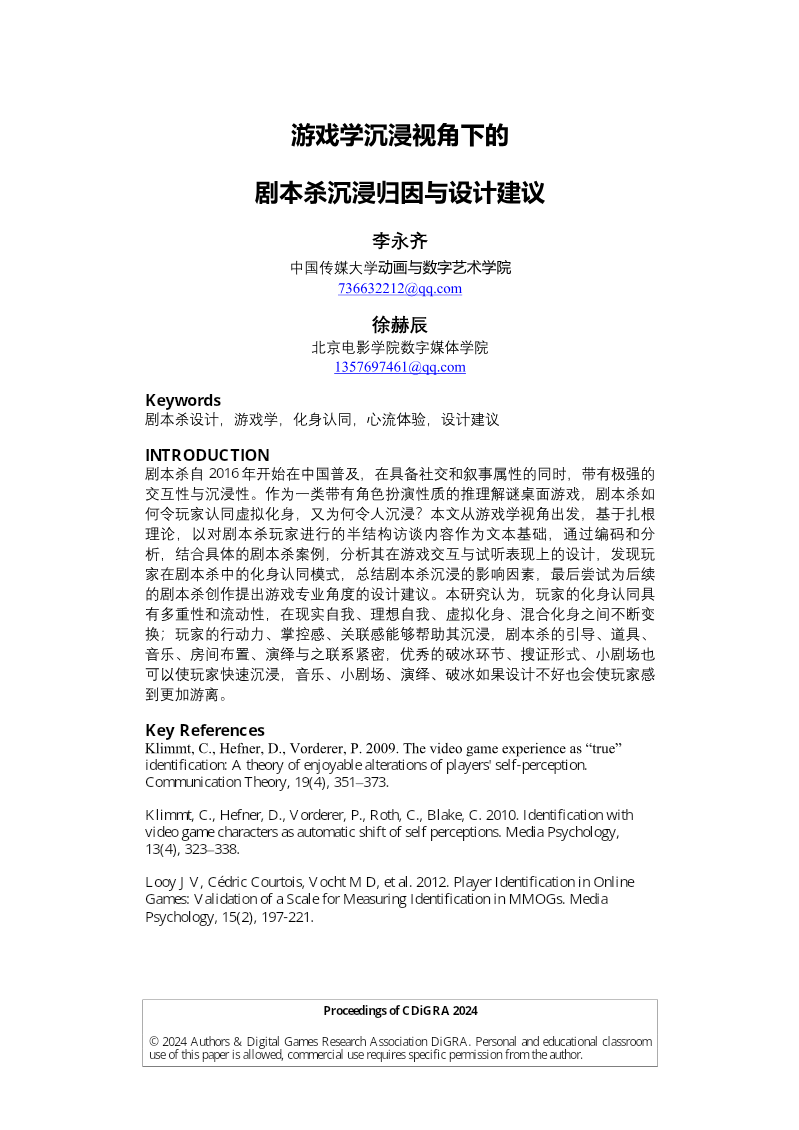
Immersion Attribution and Design Suggestions for Script Murder: A Game Studies Perspective
This paper examines the immersion of script murder (剧本杀), a Chinese tabletop role-playing and deduction game that became popular from around 2016, through the lens of game studies.
- Immersion in script murder (剧本杀) is driven by players' sense of agency, control, and connection, and players' avatar identification is multiple and fluid, shifting among real self, ideal self, virtual avatar, and hybrid avatar.
- The study used a grounded theory approach, coding semi-structured interviews with script murder players alongside analyses of specific game scripts and their interactive and audiovisual design; the sample size is not specified in the excerpt.
- Factors that foster immersion include guidance, props, music, room layout, performance, well-crafted icebreaker sessions, evidence-gathering formats, and short scenes.
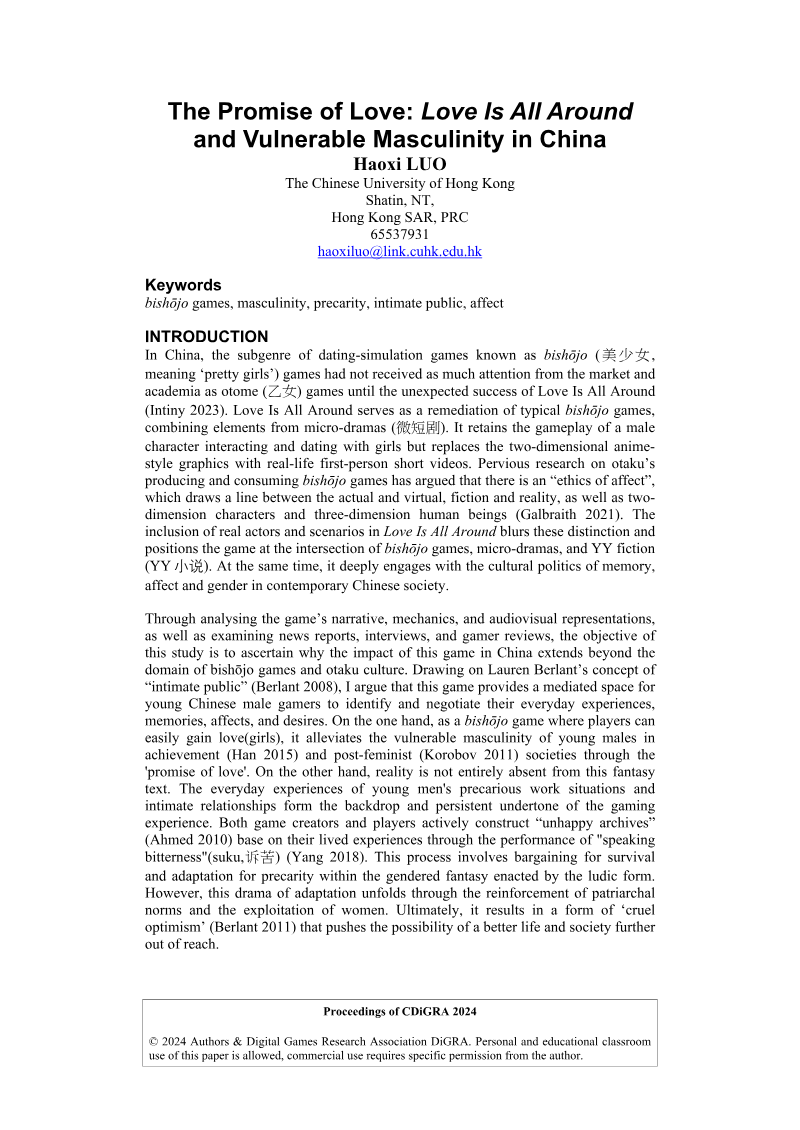
The Promise of Love: Love Is All Around and Vulnerable Masculinity in China
This paper examines Love Is All Around, a 2023 Chinese dating-simulation game by Intiny that remediates the conventions of bishōjo games by replacing anime-style graphics with live-action first-person video and drawing on micro-dramas and YY fiction.
- Love Is All Around (2023), a Chinese dating-simulation game by Intiny, adapts bishōjo game conventions by replacing anime graphics with live-action first-person video and drawing on micro-dramas and YY fiction.
- The paper argues the game's appeal extends beyond bishōjo and otaku fandom, offering young Chinese male players a mediated space to process precarious employment, intimate frustration, and gendered anxiety.
- The author's central concept, the "promise of love," describes how the game eases a sense of vulnerable masculinity shaped by competitive achievement culture and post-feminist social conditions, since players can readily win affection within its fantasy structure.
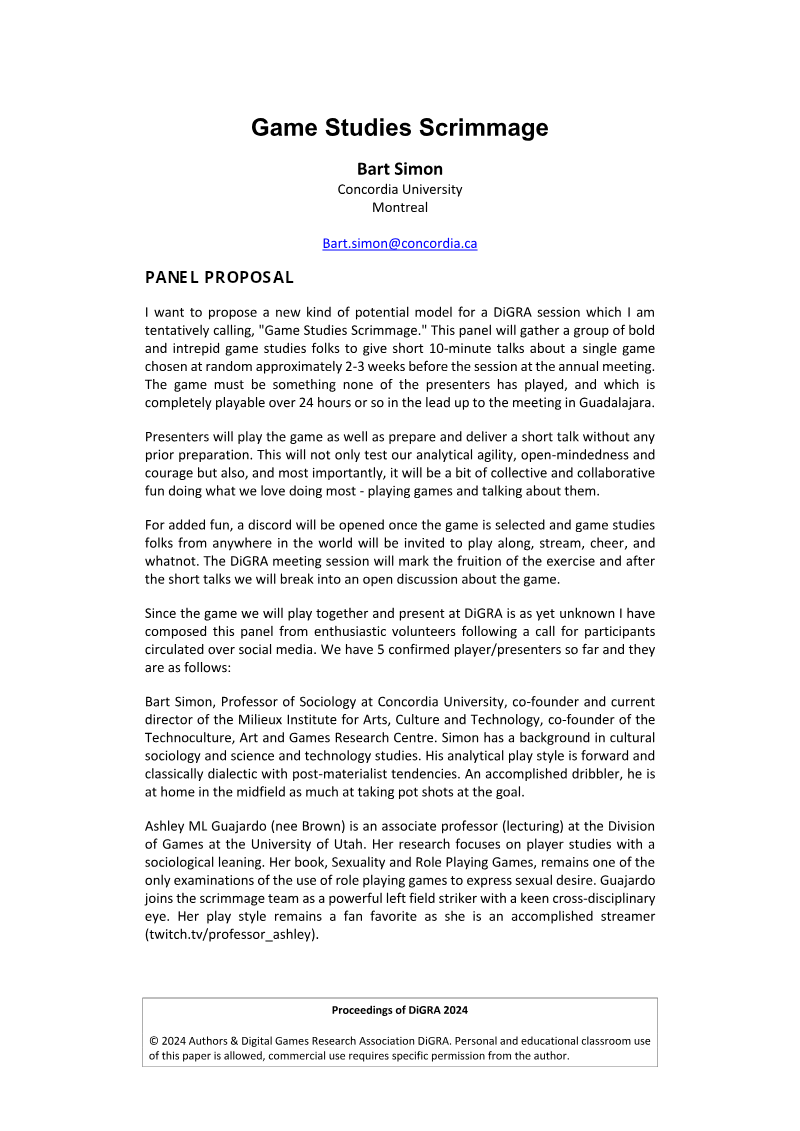
Game Studies Scrimmage
The document is a panel proposal submitted to DiGRA, the Digital Games Research Association, for an experimental session titled "Game Studies Scrimmage."
- The document is a DiGRA panel proposal for an experimental session called "Game Studies Scrimmage," in which scholars play an unfamiliar game and give ten-minute analytical talks, aiming to test analytical agility and foster collaborative enjoyment.
- A randomly selected game would be chosen two to three weeks before the annual meeting in Guadalajara and must be completable within about 24 hours.
- A Discord server would be opened so researchers worldwide can participate, stream, and comment on the session.
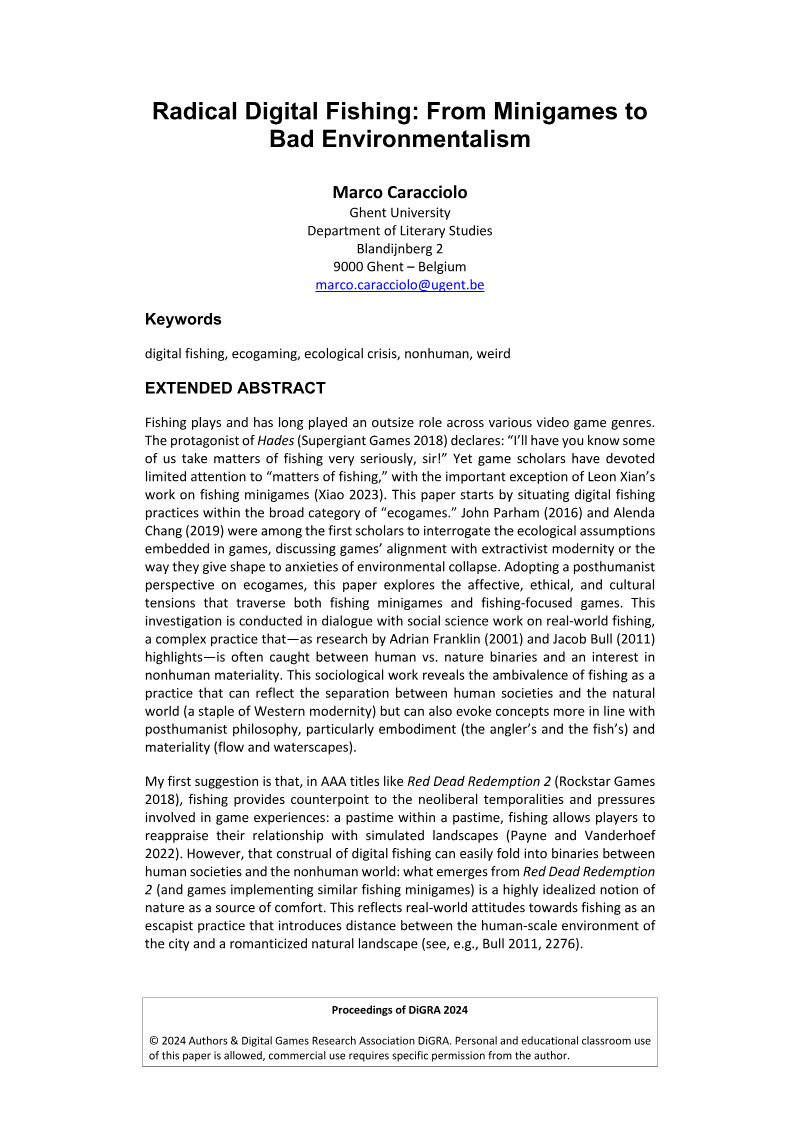
Radical Digital Fishing: From Minigames to Bad Environmentalism
This paper examines digital fishing in video games through a posthumanist and ecocritical lens, arguing that fishing mechanics can expose and complicate the binaries that separate human society from the natural world.
- The paper argues that fishing mechanics in AAA games such as Red Dead Redemption 2 serve as a reflective counterpoint to neoliberal game temporalities, but tend to reproduce an idealized, escapist vision of nature that mirrors real-world angling attitudes.
- Drawing on social science research by Adrian Franklin and Jacob Bull, the paper characterizes angling as ambivalent: it can reinforce the modernist separation of humans and nature while also foregrounding embodiment and the materiality of water and flow.
- The paper proposes "radical digital fishing" as a category, reading Ridiculous Fishing through absurdist humor and irony and Dredge through a grotesque conflation of human subjectivity with the nonhuman waterscape, drawing on Jeff VanderMeer's concept of the new weird.