More on Game Studies
View all
Whitepaper
Motivational Landscapes of ARG Players: A Self-Determination Theory Perspective
DiGRA · 2024

Game Developers Conference
Script Murders: The Form and Design of the Most Popular Tabletop Genre in China
Game Developers Conference · 2023



Whitepaper
Intersectional Pleasures: An Empirical Study of Embodied Emotions in Video Games
DiGRA · 2026
Whitepaper
Absent Pleasures or Pleasurable Absence? Player Engagement in Minimalist Retro Horror Games
DiGRA · 2026



Whitepaper
No Room in the Infinite for the Masculine and Queer: How Do Dress-Up Pleasures in Infinity Nikki Collide with Player Desire and Queer/Masculine Fashion?
DiGRA · 2026
Whitepaper
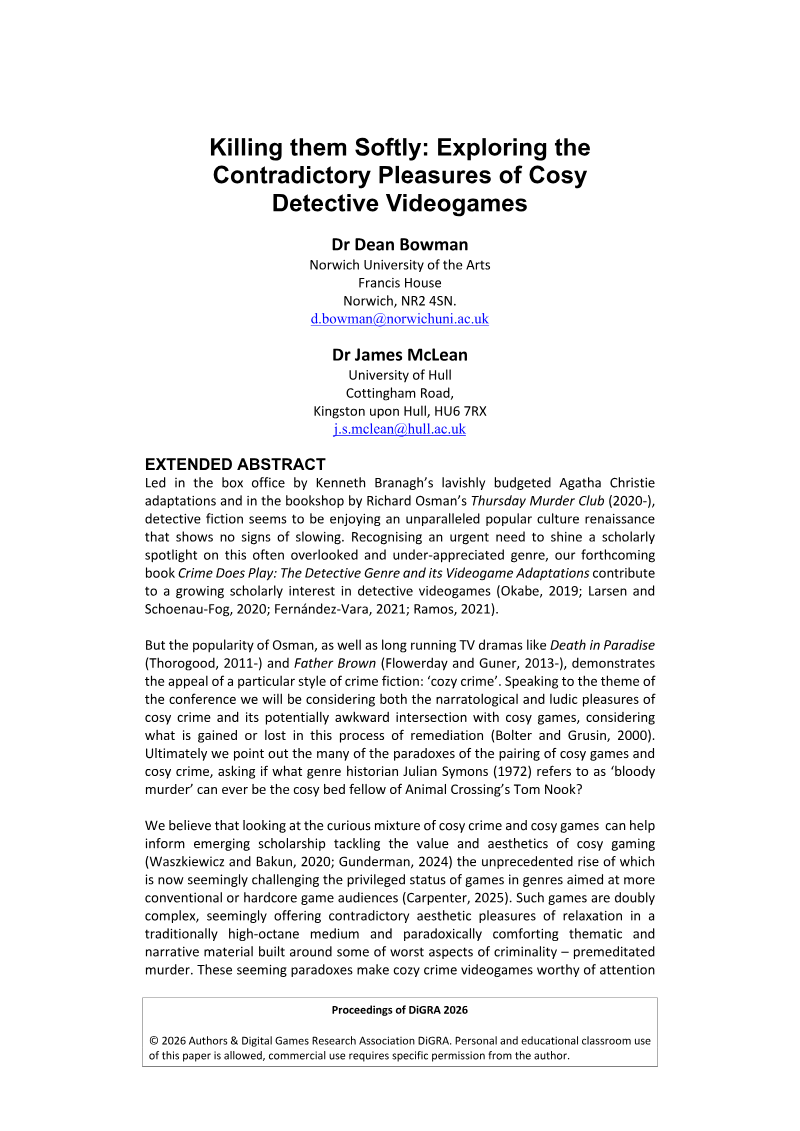
Killing Them Softly: Exploring the Contradictory Pleasures of Cosy Detective Videogames
DiGRA · 2026



Whitepaper
From Restoration to Extinction: Intersectional Pleasures in Ecological Game Reception
DiGRA · 2026
Whitepaper
Unruly Forces and Marginalized Pleasures: Exploring Glitch Aesthetics and Agency in Alternative Control Schemes
DiGRA · 2026
Whitepaper
Genshin Impact: Cultural Hybridisation, Localisation and Contra-Flow of Cultural Production in China's Open-World Role-Playing Game
DiGRA · 2026
Whitepaper
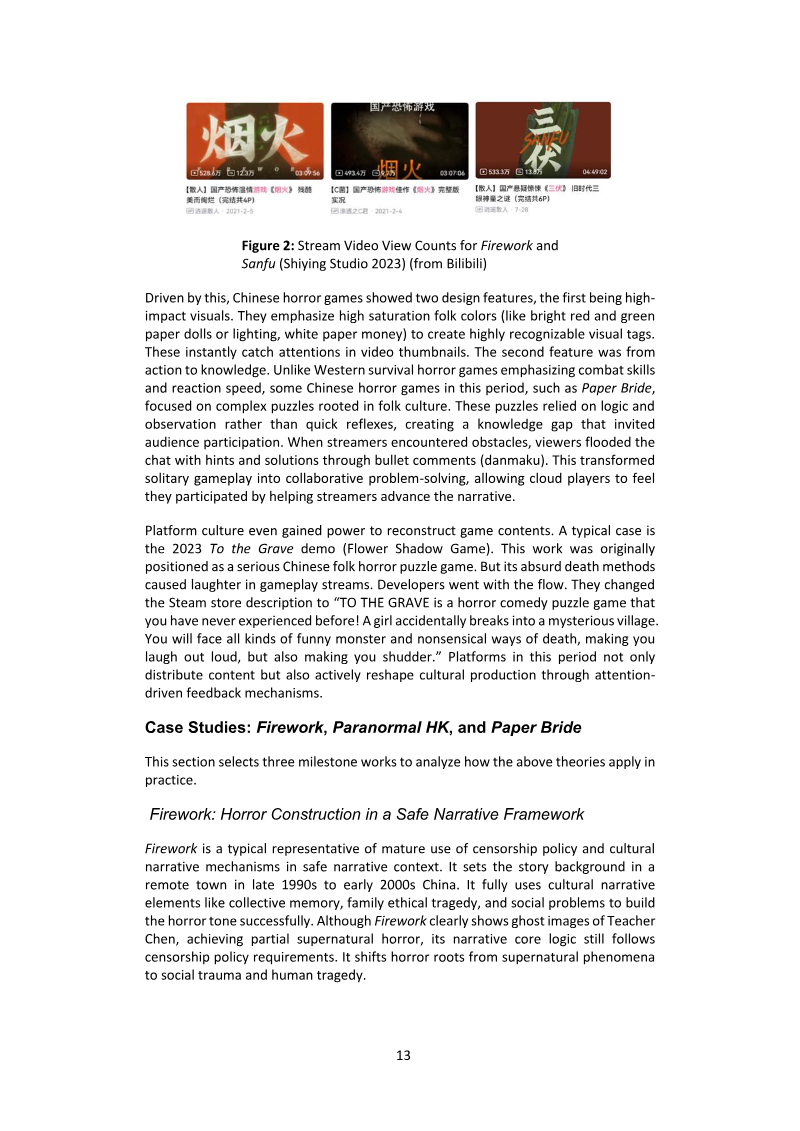
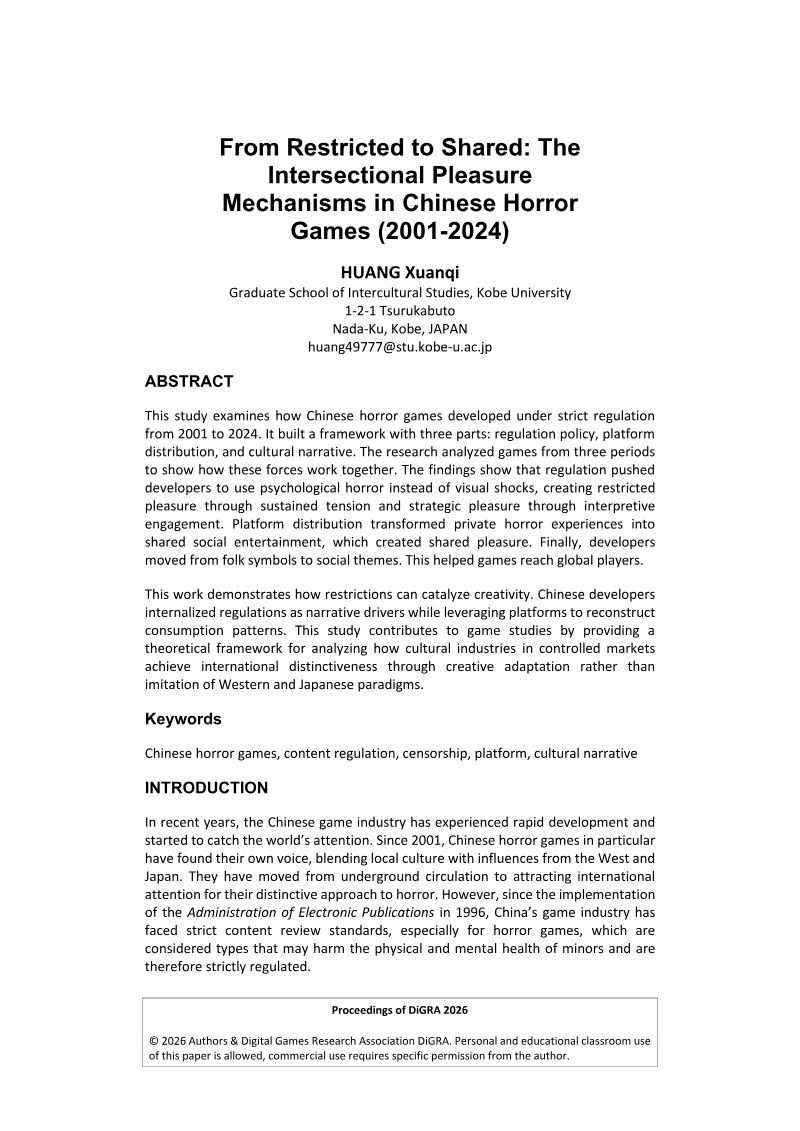
From Restricted to Shared: The Intersectional Pleasure Mechanisms in Chinese Horror Games (2001-2024)
DiGRA · 2026
Whitepaper
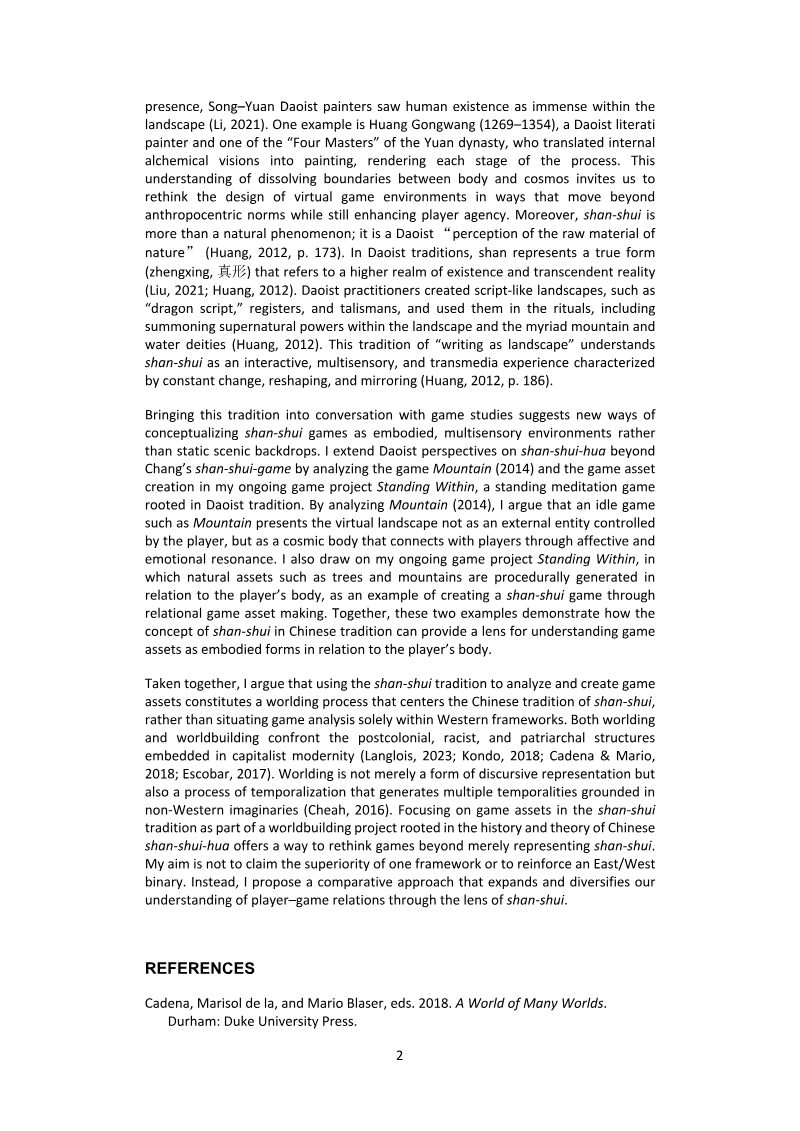
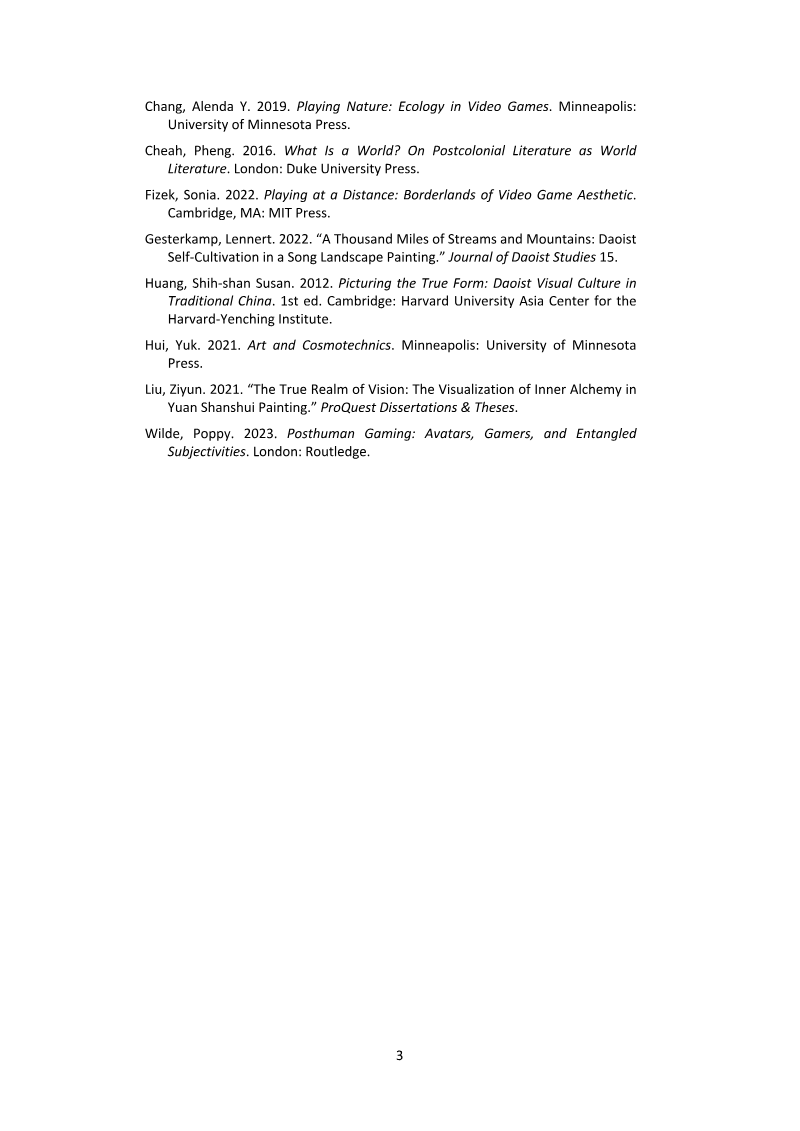
Shan-shui Game: Worldbuilding for a Pluriverse Through Relational Game Assets
DiGRA · 2026
Whitepaper
The Playful Pleasures of the Videogame Detective Board
DiGRA · 2026