Game Publishing reports and market data
Documents
Fragmented Android billing is China's biggest issue
The Chinese mobile gaming market presents significant opportunities for Western developers, provided they navigate the complexities of local distribution and monetization.
- The extreme fragmentation of the Android billing landscape, characterized by hundreds of independent app stores with unique SDK requirements, is the primary barrier to monetization in China.
- Approximately 70% of casual gamers in China prefer offline play, making operator-based SMS billing the most efficient monetization method for that segment.
- Android holds over 80% of the Chinese smartphone market, with hardware manufacturers like Lenovo and Xiaomi driving revenue through preloaded content.
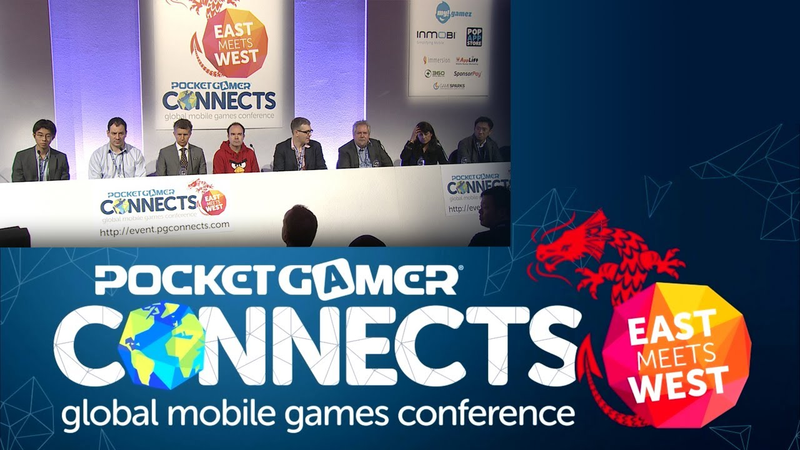
PGC London 2014: The East Meets West Power Panel
Global game development has transitioned from a traditional release-based model to a sustainable live-service framework, necessitating a fundamental shift in how studios approach production and market entry.
- Modern mobile game development requires teams of 10 to 20 professionals and budgets between $1 million and $2 million to sustain the live-service operations necessary for competitiveness.
- Global success is achieved through a strategy of culturalization and territory-specific platform integration rather than uniform global launches.
- Developers should prioritize validating core gameplay loops in familiar markets before attempting to navigate the complex regulatory and distribution environments of China, Japan, and South Korea.
At Tencent, we see ourselves as a platform company
Tencent positions itself as a comprehensive platform company, aiming to facilitate a massive, integrated digital ecosystem for users while serving as a strategic partner for global game developers.
- Tencent operates as a platform company that maintains a neutral, siloed publishing infrastructure to ensure fairness and prevent internal favoritism between its own studios and external partners.
- The company leverages its dominant social platforms, QQ and WeChat, to maintain a 24-hour user engagement cycle within its digital ecosystem.
- Rapid expansion in the Chinese mobile gaming market is primarily driven by the proliferation of affordable Android smartphones priced under $100.
King's Tommy Palm on the growth of global games
The evolution of the mobile gaming industry from a fragmented, niche market to a global powerhouse is defined by the transition from individual developer experimentation to the dominance of large-scale publishers.
- Market power has rapidly consolidated, with the number of companies occupying the top five grossing positions dropping from 26 in 2011 to just 10 by 2013.
- Success in the current mobile landscape requires cultivating direct, long-term relationships with fan bases through social networks and direct communication channels.
- The App Store fundamentally transformed the industry by lowering barriers to entry for developers and simplifying user interfaces, enabling independent creators to achieve massive commercial scale.
Chris James welcomes you to PG Connects London 2014
The mobile gaming industry has undergone a profound transformation over the past decade, evolving from a niche market focused on 2D Java games into a multi-billion dollar global powerhouse.
- The mobile gaming industry has transitioned from a niche market of 2D Java games into a multi-billion dollar global powerhouse.
- Business models have successfully shifted toward free-to-play mechanics, allowing for massive revenue generation despite the absence of upfront costs.
- Mobile hardware capabilities have evolved significantly, now offering performance levels comparable to traditional PCs and consoles.

Net Neutrality - What a Closed Internet Means - Extra Credits
Net neutrality serves as a critical foundation for the modern internet, ensuring that internet service providers (ISPs) cannot discriminate in how they allocate bandwidth to various websites and services.
- Net neutrality prevents internet service providers (ISPs) from discriminating in bandwidth allocation, ensuring that all websites and services remain equally accessible to consumers.
- The January 2014 DC Circuit Court ruling stripped the FCC of its authority to enforce net neutrality, creating a legal vacuum that allows ISPs to explore bandwidth discrimination technologies.
- The absence of net neutrality protections threatens the gaming industry by potentially allowing ISPs to throttle competitor services or charge premiums for high-speed data access.

GDC 2014: Gene Mocsy, Designer, IF Games
The gaming industry is currently undergoing a significant shift toward immersive and augmented reality technologies, with hardware like the Oculus Rift and Google Glass serving as the primary catalysts for future development.
- The gaming industry is pivoting toward immersive and augmented reality, with hardware like the Oculus Rift and Google Glass acting as primary catalysts for mainstream adoption.
- Industry leaders including John Carmack and Gabe Newell have identified virtual reality as a transformative technology that will fundamentally change player interaction with digital environments.
- Developers are increasingly prioritizing real-time, location-based interactions that integrate graphical overlays and augmented elements directly into the physical world.

GDC 2014: Phil Larsen, CMO, Halfbrick
The global game development industry relies heavily on centralized professional gatherings to facilitate international networking, distribution partnerships, and knowledge sharing.
- Studios mitigate financial risk and ensure long-term sustainability by maintaining a diversified portfolio of intellectual property across multiple gameplay styles.
- Industry conferences function as essential hubs for independent studios to condense months of business development, networking, and press outreach into single-week events.
- The emergence of wearable technology and virtual reality is forcing developers to re-evaluate current mobile-centric monetization models in favor of potential subscription or premium paid structures.

Infinite State Games: you don't need a big budget for big success
Small-scale independent game development thrives on resourcefulness, collaboration, and iterative design rather than large financial investments.
- Infinite State Games has operated as a two-person development team since 2008, proving that small-scale independent studios can achieve success through resourcefulness rather than large financial investments.
- The studio utilized a claymation aesthetic as a time-efficient production strategy to rapidly generate character and level assets, demonstrating how necessity-driven innovation can replace traditional, labor-intensive art pipelines.
- Independent developers leverage open knowledge sharing and informal peer review networks to exchange technical components like sound effects and engines, bypassing the siloed environments typical of triple-A studios.

Culturalisation and distribution are the challenges in Asia says Side-kick's Guy Bendov
The mobile gaming landscape requires extreme agility to navigate shifting business models, evolving player preferences, and rapid production cycles.
- Side-kick Games is targeting the release of 5 to 6 free-to-play mobile titles in 2014 through partnerships with publishers such as DeNA West and Majesco.
- Expanding into Asian markets is a primary strategic goal, with the company identifying cultural adaptation and distribution as the two most significant barriers to entry.
- The studio maintains a diversified development focus that includes not only mobile platforms but also emerging hardware trends like Smart TVs, motion control interfaces, and microconsoles such as Ouya.

2014 will be difficult for indies. We need to work together, says Adrian Adamiak
The mobile gaming market is undergoing a significant period of consolidation, creating a challenging environment for independent developers.
- The 2014 mobile gaming market is experiencing significant consolidation, where a small number of dominant publishers control the majority of revenue and consumer attention.
- Visibility has become the primary barrier for independent developers due to the high volume of daily game releases and a lack of resources to compete with major players.
- Independent studios must shift from solitary operations to strategic partnerships, investor backing, or publisher alignment to achieve the scale necessary for survival.

Discovery is a challenge but one we can overcome says QuizTiz's Albert Marshall
The mobile gaming landscape presents significant hurdles for independent developers, particularly regarding user acquisition and game discovery.
- Game discovery remains the primary challenge for mobile developers due to the high volume of new titles entering the market.
- QuizTix is targeting a broad demographic of smartphone users who do not identify as traditional gamers to expand their market reach.
- Successful user acquisition requires a hybrid strategy that balances traditional PR and marketing with data-driven analytics.