Game Publishing reports and market data
Documents

How PG Connects' Indie track can make a real difference
The Pocket Gamer Connects 2014 indie track aims to provide independent developers with actionable insights to navigate an increasingly challenging industry landscape.
- The PG Connects 2014 indie track focuses on three core pillars: maintaining creative integrity, building sustainable business models, and implementing ethical monetization strategies.
- The curriculum is designed to help independent developers scale their concepts into long-term, viable enterprises without compromising their original creative vision.
- The program emphasizes the intersection of game design and revenue, advocating for monetization models that prioritize player experience and delight over simple value extraction.

Game Connection's Pierre Mirlit on how the event is changing
Game Connection is strategically evolving its event model to mirror the shifting dynamics of the global video game industry.
- Game Connection has secured a five-year commitment to manage the Montreal International Game Show, expanding its operational footprint alongside existing conferences in Europe and the United States.
- The event model is shifting to include a dedicated focus on marketing services, broadening its scope beyond traditional developer and publisher networking.
- The console market is projected to undergo a substantial resurgence over the next two to three years, providing a period of stability for industry stakeholders.

2014 will see some interesting second screen experiments
The gaming industry is currently navigating a diverse landscape of publisher investment strategies, characterized by a spectrum of risk tolerance.
- Developers must align their titles with specific publisher risk profiles, ranging from data-driven soft-launch successes to high-risk, high-reward innovation projects.
- The gaming industry is shifting toward deeper integration of second-screen technology for Xbox One and PlayStation 4, moving beyond the Wii U's initial dual-screen model.
- Future second-screen applications in 2014 will focus on complex, immersive gameplay rather than basic utility by leveraging the ubiquity of tablets and smartphones.

Playground Publishing plans for 2014 revealed
Playground Publishing operates as a strategic partner for developers navigating the transition from premium to freemium business models.
- Playground Publishing provides a publishing-as-a-service model backed by MTI to assist developers in transitioning from premium to freemium business structures.
- The firm utilizes a strategy of silent launches and iterative testing to refine game performance and monetization before executing full global releases.
- The 2014 fiscal pipeline includes a major global launch scheduled for the final week of February and an experimental title slated for release in December.

Why 5 million mobile downloads in China per month isn't a big number
The Chinese mobile gaming market represents a unique, high-volume landscape that requires specific strategic considerations for international developers.
- In the Chinese mobile market, 5 million downloads per month is considered a baseline figure rather than a sign of success, with 30 million monthly downloads being the threshold for a truly significant hit.
- Data costs are a major barrier in China, where a 5GB data plan costs 17% of an average monthly salary, compared to 1.5%–1.7% in the US and Korea, necessitating strict game file size optimization.
- Western developers should prioritize finding a local publishing partner for Asian markets, as self-publishing is high-risk and requires the scale of companies like Supercell to succeed independently.

The future of F2P mobile gaming with Kabam's Andrew Sheppard
Kabam is strategically pivoting from its historical focus on strategy-based mobile games toward higher-fidelity, immersive, and interactive experiences to meet evolving consumer demands.
- Kabam is shifting its development focus from strategy-based games to high-fidelity, 3D, and AAA-quality experiences to align with evolving consumer demands.
- The company is diversifying its portfolio beyond traditional strategy titles into genres like tower defense and synchronous multiplayer action, as seen in upcoming releases Dark District and Blast Zone.
- Leveraging intellectual property through partnerships with major studios like Warner Bros. and NBC Universal has proven successful, with the Fast & Furious 6 tie-in achieving 33 million installs.

Iconicfuture explains the extra value of branded virtual items
Iconicfuture serves as a specialized intermediary in the gaming industry, facilitating the integration of licensed intellectual property (IP) into social, mobile, and online games.
- Since its founding in 2011, Iconicfuture has facilitated the sale of nearly four million licensed virtual items by integrating branded IP into social, mobile, and online games.
- The company acts as a specialized intermediary that secures umbrella licensing agreements with major rights holders, including Hasbro, CBS, and Sony Pictures, to simplify the integration process for developers.
- Iconicfuture provides a proprietary marketplace platform that allows developers to search for and license branded content based on specific game genres, target demographics, and keyword relevance.

Five minutes with Ubisoft Mobile MD Jean-Michel Detoc
Ubisoft is positioning itself as a platform-agnostic entertainment company, expanding its focus from traditional PC and console markets to mobile devices.
- Ubisoft is transitioning from a console-centric model to a platform-agnostic strategy, prioritizing the development of standalone, high-quality mobile games over simple companion apps.
- The mobile development strategy rests on three pillars: leveraging existing IPs like Assassin’s Creed and Rayman, creating original mobile-first properties, and developing games based on external licenses.
- Ubisoft is shifting away from its historical reliance on external partners like Gameloft by bringing mobile development and strategic oversight in-house.
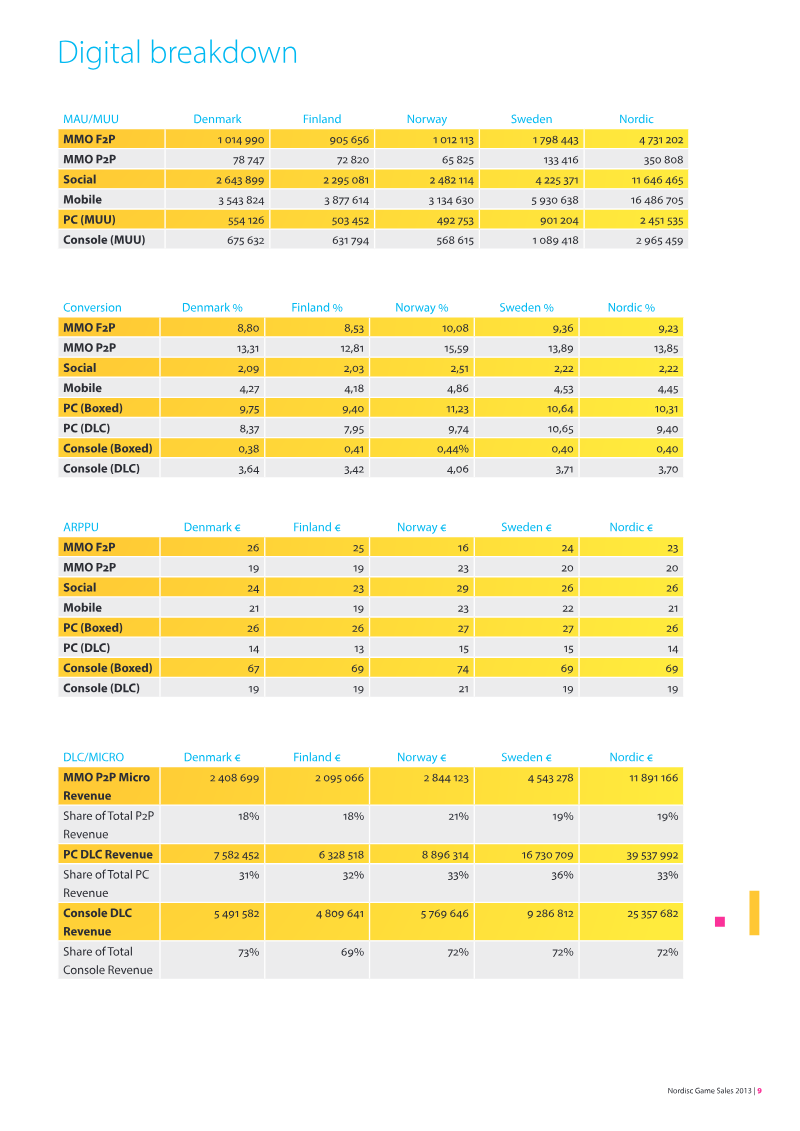
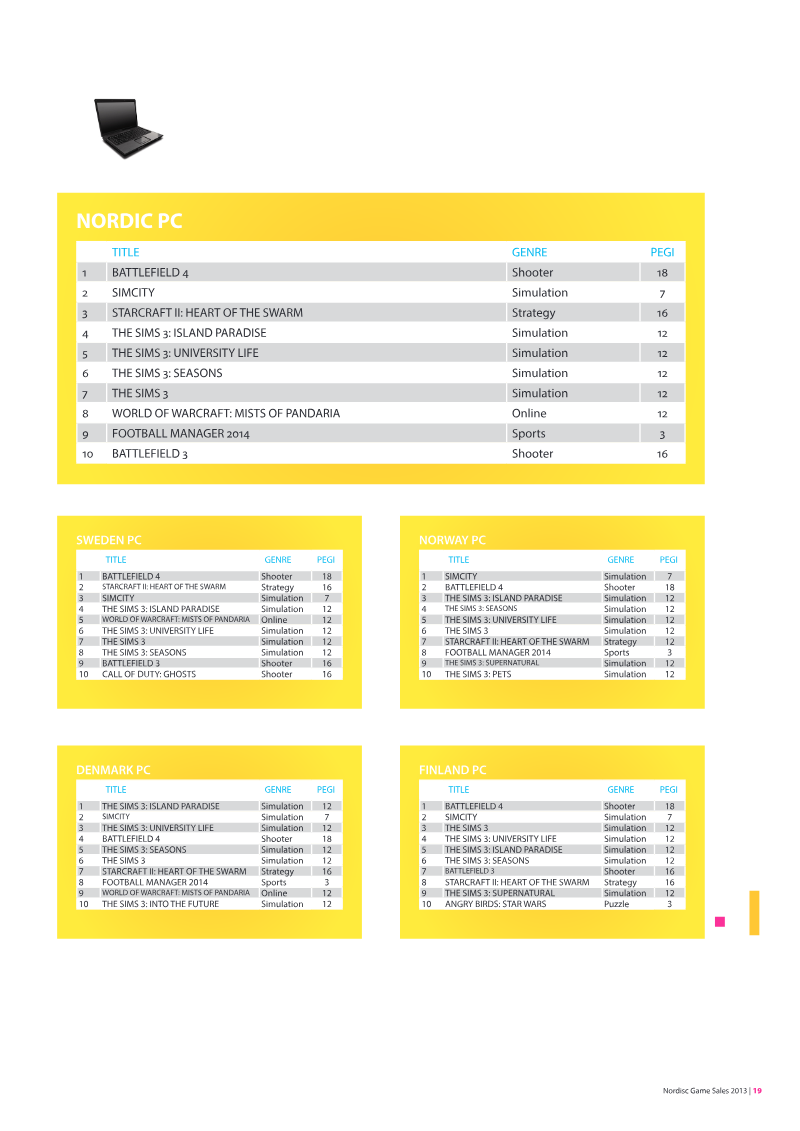
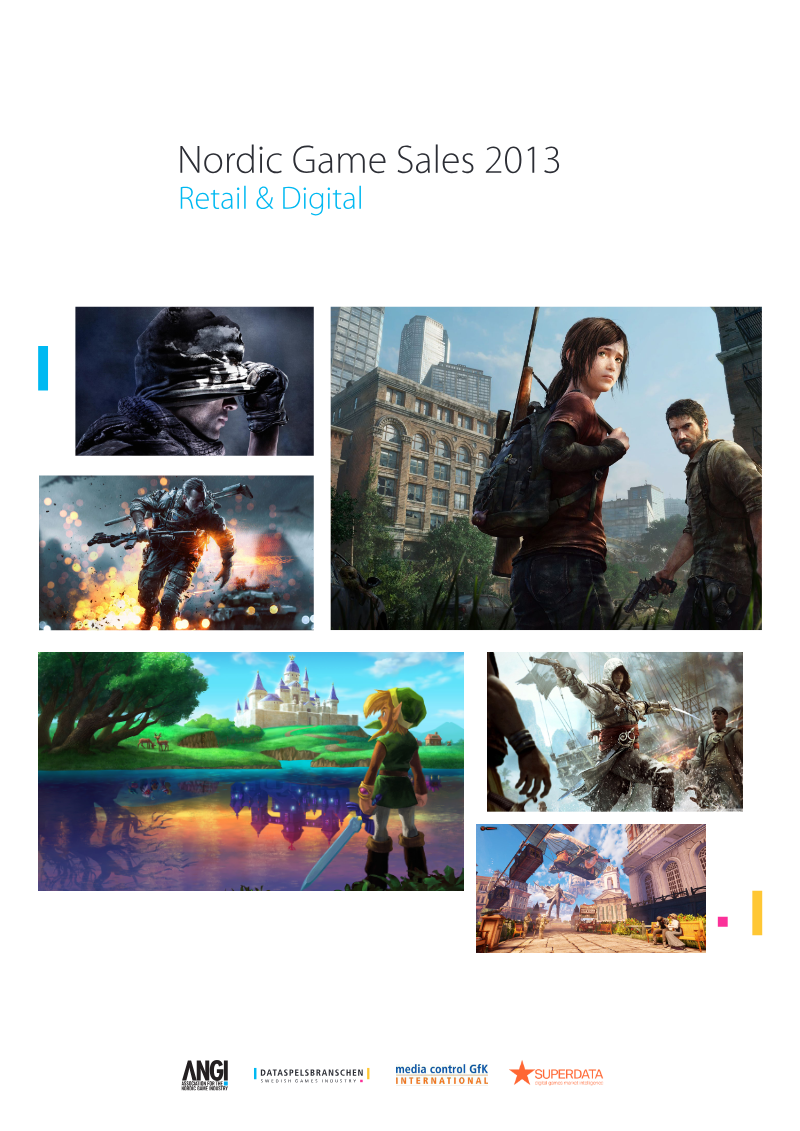
Nordic Game Sales 2013: Retail & Digital
The Nordic gaming market underwent a significant structural transformation in 2013, characterized by a pivotal shift from traditional physical retail toward digital distribution.
- The Nordic gaming market reached a total value of nearly one billion euro in 2013, driven by a structural shift from physical retail to digital distribution.
- The PlayStation 3 dominated the hardware market with a 46.91% share of total value, while the PlayStation 4 launch was constrained by supply issues.
- Action titles were the most popular genre, capturing approximately 30% of total sales, followed by Shooters at 12% and Sports games at 11%.

Mobile games industry news (w/e 30 August 2013)
The mobile games industry in late August 2013 was defined by significant shifts in hardware strategy, developer tool accessibility, and the evolving role of platform holders in publishing.
- Unity Technologies expanded its business model to include game publishing, leveraging its developer base to curate and distribute titles while forming a strategic partnership with Facebook for social integration.
- Nintendo launched the 2DS to address hardware costs, despite the 3DS platform reaching 32 million units sold, highlighting the company's ongoing struggle to adapt its hardware-centric model to the modern mobile market.
- Autodesk released Maya LT, a streamlined and affordable version of its 3D software, signaling a trend toward making professional-grade production tools accessible to independent mobile studios.
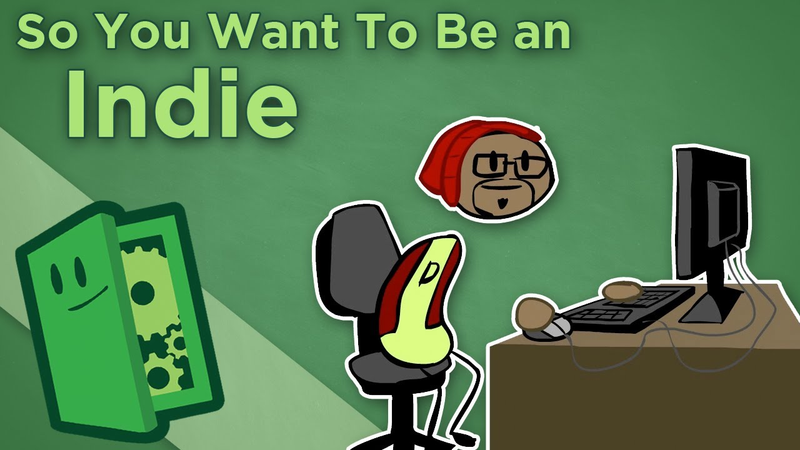
So You Want To Be an Indie - How to Start an Indie Game Studio - Extra Credits
Independent game development requires a strategic approach that prioritizes manageable scope, business acumen, and iterative design over the high-production values typical of AAA studios.
- Prioritize core mechanics over content volume, as creating excessive assets before refining gameplay often leads to wasted effort and rigid design.
- Keep the scope of first-time projects small and achievable to ensure successful completion and market entry.
- Incorporate a 50% buffer into all project budgets and development timelines to account for unforeseen technical and administrative costs.

Mobile games industry news (w/e 2 August 2013)
The mobile games industry as of early August 2013 is characterized by a strategic shift toward platform-led distribution and the maturation of monetization models.
- Facebook’s mobile game distribution initiative generated 25 million downloads in the second quarter of 2013, signaling a move toward high-volume distribution alongside major partners like Gameloft and Gamevil.
- WeChat is leveraging its 330 million user base to enter the mobile gaming market, launching with four titles including international franchises like Fruit Ninja and Plants vs. Zombies 2.
- Puzzle & Dragons reached one million users in the United States, driving global daily revenues to approximately $5 million.