Game Publishing reports and market data
Documents

Cyprus LIVE #7 We Relocated our Studio from Ukraine to Cyprus and This Happened...
The relocation of game development studios to Cyprus serves as a strategic pivot for companies seeking to scale operations within a highly concentrated, collaborative ecosystem.
- Relocating game studios to Cyprus acts as a strategic pivot that trades high initial operational costs and first-year revenue volatility for long-term access to international contracts and an expanded product pipeline.
- The Cypriot gaming sector functions as a concentrated technology cluster where a collaborative culture of knowledge exchange among developers and executives replaces traditional corporate secrecy.
- The region’s professional ecosystem is characterized by a high density of international talent, where English serves as the primary language to facilitate fluid business intelligence and expertise sharing.

Rockstar’s Union Gets Busted, Runescape’s MTX Vote & Amazon Unalives New World | Games For Breakfast
The gaming industry is currently navigating a period of significant structural and strategic volatility, characterized by labor disputes, shifting monetization models, and the failure of high-capital corporate strategies.
- Amazon Games is sunsetting the title New World and canceling its Lord of the Rings MMO, signaling a failure of high-capital corporate strategies that lack a niche-focused, sustainable growth model.
- Rockstar Games faces allegations of union-busting following the termination of dozens of employees, highlighting increasing friction between major studios and labor organizations.
- Jagex is shifting toward player-centric monetization by allowing Runescape players to vote on the removal of controversial microtransactions.

Week in Mobile Games E70 - Squad Busters shuts down and Google Play's transformative changes
The mobile games industry is currently navigating significant shifts in development strategy, platform regulation, and corporate restructuring.
- Supercell is shutting down Squad Busters, which launched in May 2024, after the game failed to meet internal performance expectations despite generating over $100 million in lifetime revenue. In-app purchases will be disabled on October 30, 2024, and the game will receive its final update in December.
- Following an injunction in the Epic Games vs. Google case, Google Play in the US is now required to allow alternative payment methods and permit developers to communicate pricing options outside of the Google Play billing system as of October 29, 2024.
- Amazon is cutting approximately 14,000 corporate jobs, with significant layoffs impacting its games division, specifically in the San Diego and Irvine offices, alongside the closure of the game New World.

How Valve (And Apple) Broke Game Sales | Design Club
The digital distribution landscape has undergone a profound transformation, shifting from a model defined by physical retail to one dominated by centralized storefronts like Steam.
- Steam has fundamentally altered consumer price anchoring by normalizing frequent, deep discounts, training players to wait for sales rather than purchasing games at full price.
- Developers are now forced to build 'sale-proof' pricing models, ensuring that even after significant discounts, the revenue per unit remains profitable after platform fees.
- The frequency and depth of Steam discounts have increased significantly over time, with standard promotions moving from 10–20% to 30–60% or higher to capture consumer attention.
Their Second Game Did Worse, Now What?
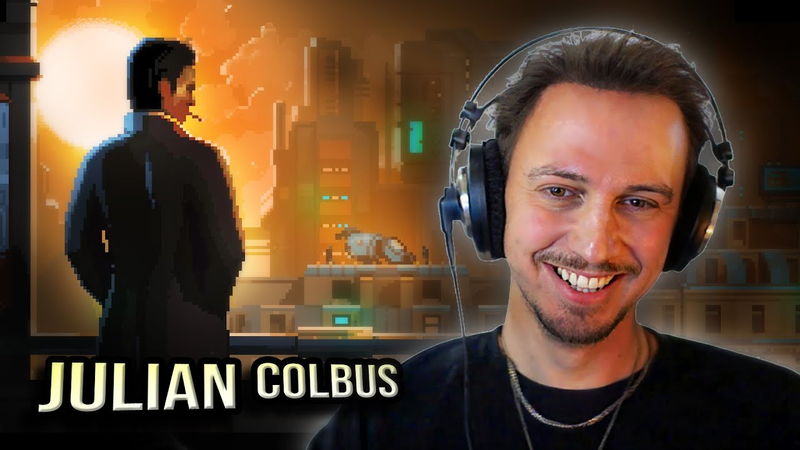
The commercial underperformance of a studio’s second title often stems from the common trap of scaling production complexity at the expense of a clear, marketable core concept.
- Commercial success in indie development is more achievable by keeping budgets low—such as aiming for a 100,000 euro return on a 50,000 euro budget—rather than relying on the high-risk, high-cost model of large-scale sequels.
- Indie developers should avoid the assumption that a successful first game guarantees a sequel's success, as the player base for a title with 1,000 to 2,000 reviews is often not large enough to justify a sequel strategy.
- Detective game design should prioritize player engagement by integrating story into gameplay mechanics, such as requiring players to pass tests based on information gathered during dialogue to avoid the 'click-through' apathy common in RPGs.

Interview with Embark CEO on how Arc Raiders is defying the industry odds
The gaming industry is currently navigating a period of significant contraction, characterized by a post-pandemic correction where studios that over-hired during the sector's boom now face the realities of diminished venture capital and intense market saturation.
- Embark Studios is targeting a 100x increase in content creation efficiency by utilizing proprietary tools, procedural generation, and AI to automate repetitive development tasks.
- The studio shifted the development of Arc Raiders from an AI-centric concept to an engagement-focused design after internal testing indicated the original model lacked core player enjoyment.
- Following the rapid player attrition seen after the launch of The Finals, Embark stabilized its user base and achieved profitability by prioritizing methodical data analysis and consistent content updates over aggressive growth.

The Future of Game Publishing Is Player Ownership
The modern game publishing landscape is undergoing a fundamental shift toward self-publishing, necessitating a transition from traditional marketing models to data-driven player relationship management.
- First Look acts as a CRM for game studios, centralizing player data from platforms like Steam, Discord, and email to streamline playtesting, feedback collection, and community management.
- The platform currently serves over 100 active game studios, helping them manage self-publishing operations that were previously handled by external publishers.
- First Look was acquired by Pragma to unify the backend and frontend of game development, creating a more cohesive infrastructure for studios to manage player relationships and game operations.
Session: Studio Speaks: The Reality of AI Adoption in Games - Ilya Kuznetsov & Tomi Huttula.
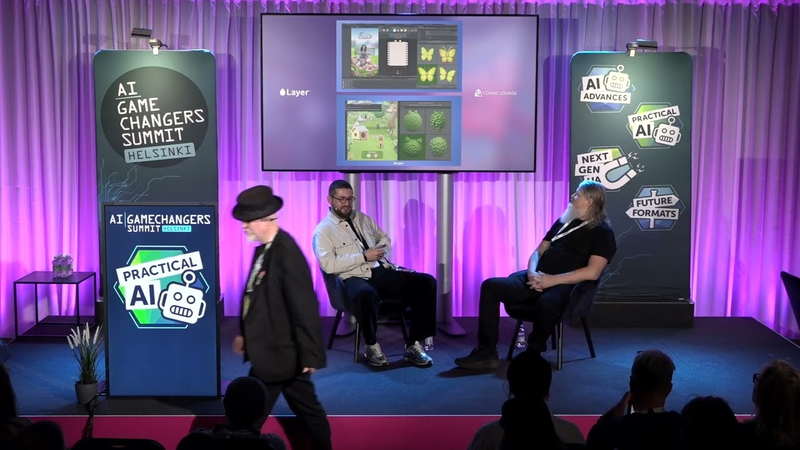
The integration of artificial intelligence into game development serves primarily as a tool to augment human expertise rather than replace it.
- Cosmic Lounge utilizes an internal 'puzzle engine' built on Unity that stores game logic in data formats, allowing designers to rapidly prototype and test new mechanics without manual coding.
- AI is used to scale content production for puzzle games, which can require over 20,000 levels, by automating asset generation while maintaining consistent art styles through custom-trained models (LoRAs).
- AI does not possess creative 'taste' or an understanding of game logic, meaning human experts remain essential for defining artistic vision and ensuring gameplay mechanics function correctly.

Panel: State Of The Union: The Future Of D2C In Mobile Gaming.
The mobile gaming industry is undergoing a fundamental transformation as developers pivot toward direct-to-consumer (D2C) strategies to bypass the traditional gatekeeping of major app stores.
- Recent legal rulings in the United States, such as the court decision against Google, are forcing app stores to allow third-party payment systems and direct-to-consumer (D2C) redirects, fundamentally shifting the mobile distribution landscape.
- Industry experts project that within five years, 50% to 60% of mobile gaming payments will be processed through D2C channels as developers seek to bypass traditional store fees and gain more control over their revenue.
- D2C webshops provide essential access to alternative payment methods in emerging markets like Brazil and India, where traditional app store payment options often fail to accommodate unbanked users.
Fireside Chat: How Crazy Games Streamlined Global Payouts & Boosted Developer Relationships...
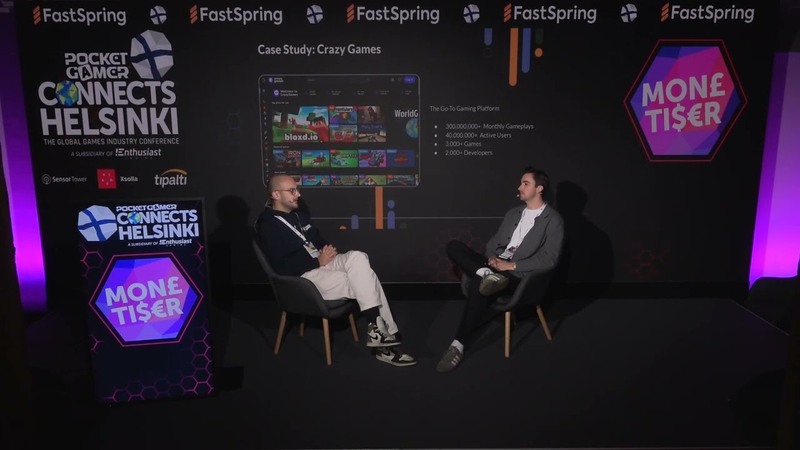
Crazy Games, a global web-based gaming platform hosting approximately 3,000 titles and serving over 40 million monthly unique users, has successfully modernized its financial operations to support its rapid scaling.
- Crazy Games, a platform hosting 3,000 titles for 40 million monthly users, transitioned from manual, spreadsheet-based payouts to an automated accounts payable hub to manage its global revenue-sharing model.
- Automating the payment process reduced the time required for monthly developer payouts from a labor-intensive manual task to just a few hours.
- The implementation of a secure, developer-facing portal shifted the burden of tax compliance and payment data maintenance to the creators, resulting in a near-perfect transaction success rate.

Session: What Processing $500M In Transactions Taught Us About DTC Web Stores - Miikka Luotio.
Direct-to-consumer (DTC) web stores have become a critical component of mobile game monetization, as evidenced by data derived from $500 million in processed transactions.
- Segmentation is the most critical driver of web store performance, with personalized offers yielding a 20% improvement in conversion compared to generic storefronts.
- Web stores demonstrate high repeat-purchase potential, as 50% of first-time buyers make a second purchase within seven days, and 70% of players who reach four transactions continue to a fifth.
- First-time web store visitors show strong retention, with 80% returning to the store within a median of 2.6 days after their initial transaction.

Week in Mobile Games E69 - The big AWS crash and Google delays Android regulation
The mobile gaming industry is currently navigating a period of significant structural and regulatory transformation, characterized by a push toward open ecosystems and a diversification of game genres.
- The mobile gaming industry generates approximately $120 billion in annual in-app purchase revenue, driving intense competition for user engagement.
- Google has been granted a one-week extension regarding a legal injunction that would require the company to permit rival payment options on its platform.
- Studios are increasingly adopting direct-to-consumer strategies and unified commerce dashboards to manage cross-platform operations independently of traditional platform gatekeepers.