VideoPocketGamer.biz
Fireside Chat: How Crazy Games Streamlined Global Payouts & Boosted Developer Relationships...
24 Oct 202519 min video
Transcript
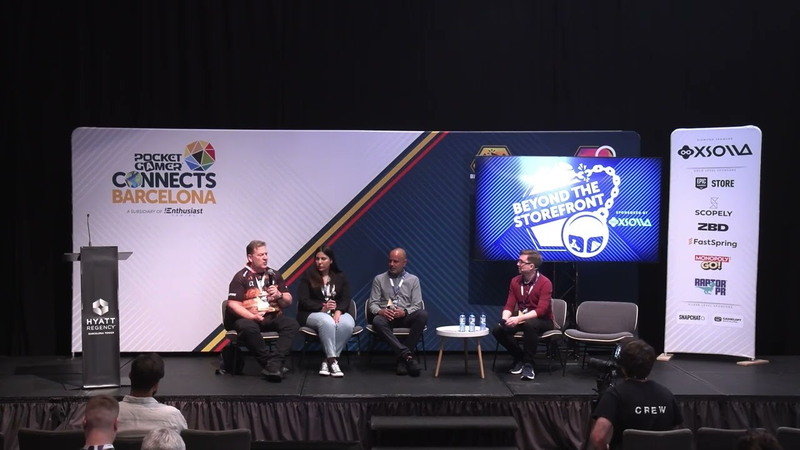
[Music] [Music] Heat. Heat. This is a chat that I'm really excited about because we're hearing from a developer themselves about their own experience um of working with payouts and that is actually much more interesting than you think. So, uh we're going to hear about how crazy games streamlined global payouts and boosted developer relationships with um with Tali. So, please welcome on to the stage Travis Houston from Topali and Christopher Rabbit from uh from Crazy Games.
Morning.
My name is Travis Houston uh one of the
sales leaders from Topalty uh Canadian but based in London. I'm joined by Kristoff.
I'm Kristoff, head of finance and operations of Crazy Games based in Belgium, but uh very happy to be here.
Awesome. So, we thought we'd mix things up a little bit today. As opposed to me talking to you about Talty and trying to sell the product, we'd bring one of our clients along to have a nice casual conversation. So, um, so yeah, I guess just to jump right in it, why don't you, uh, tell us a little bit about Crazy Games?
Okay. Um, so Crazy Games is a a global gaming platform focused on casual games, um, especially known on the web. We have currently around 40 million plus unique users each month. And on Crazy Games, there are around 3,000 games uh, playable. Um so our mission is really to become the the biggest crossplatform gaming platform available. Um and offering the best playing experience on the web on mobile phone or tablet. Um the business model is quite
straightforward. So a developer can upload his game on on crazy games and from that moment there's a revenue sharing model uh currently focused on ad revenue and uh in-game purchasing.
Gotcha. Anyone in the room use crazy games? Hands up. No.
Uh before we jump back into the business model, do you mind telling us how you ended up there?
Yeah. So, uh I started my career in banking. So, totally different sector.
Yeah.
Uh after a few years, I was looking for something more long-term, something more entrepreneurial and and operational. And then I was lucky enough to to meet the team of Crazy Games. Um I was always a gamer myself on younger age. Yeah.
So it was very happy for me to to to get in touch with a company as like crazy games who was based in Lven which was the same as I was.
Um started talking to the team and and they were looking for somebody to to lead finance and and I thought it was a great opportunity and um didn't
hesitate.
Yeah. And then as far as uh like your main priorities as a finance leader at a company like Crazy Games, talk us through the philosophy. So um I think it's more finance and operations role. So I think mainly my time goes to to finance
um from from incoming payments to outgoing payments but also definitely the the developer payouts which is of course crucial for us
to make sure that all the developers get get paid on time and in the right amounts. Um and next to that I always I also uh take care of everything operations uh HR legal related. Uh we're we're scaling pretty hard. Yeah.
So, it's more like helping the teams with with new processes, looking for new tools and and and making sure we can we can follow ourselves.
Yeah. Okay. It's a lot of hats to wear. Um, so we started talking a little bit about the business model in your introduction, but do you mind kind of talking us through, you know, what exactly the strategy is?
Yeah, so basically we work with monthly payouts. So for example, right now we would calculate the revenue of September made by developers.
Yeah.
Uh they get a self-building invoice stating their revenue mates. They can follow up on that on the platform.
Um but of course we try to pay them out as fast as possible. Um in in in terms of the developers, we work really with individual developers like indie developers to the biggest gaming studios.
Yeah.
Um and it's it's it's very global. So it's a lot of international payments each month. We used to do that manual. Um now we don't of course that's
um but for us the speed is is crucial. Uh it's it's important for us to be transparent to our developers so they know immediately how much revenue they have made
um and to get that money to them as fast as possible. Uh which used to be a hassle for us
through through manual payments. Um,
yeah. And that's I'm making an
assumption, but important also for your peace of mind and your sanity, but also for the retention of your developers.
Yeah. Yeah. Yeah. I think uh of course they they made these games, they publish them with us, but they expect to be paid uh fast and and and transparent. So, uh also for me, if I go back to the to the previous approach, it was all done manually. Uh we had a few different files. We had a a file with the monthly revenue that was made. We had a file with all the payment details of the developers.
Uh we had a file with developers that made revenue but didn't want monthly payouts because uh as you can imagine there are some developers earning high amounts but others are also earning smaller amounts.
Yeah.
And you don't want your your monthly revenue to be eaten up by by transaction costs. So for that case we allow people to build up their balance so they get paid out once the amount is high enough. Um, but so that required a lot of manual files, a lot of manual work. Um, I've done my fair share of spreadsheets
already in my career, but um, payment details and and payment information is crucial. Um, and we I didn't have a lot of confidence in in in some of the details that were in the file. So, I was more checking it constantly.
Mhm.
Uh, it took me a few days each month to make sure that everything was correct until I was certain like, okay, this is the file we can process. We can pay this out now.
Got it. Um
that leads me to my next question. It's a natural segue around the challenges but just to make an assumption like was it mostly spent on troubleshooting with the developers themselves looking for payments looking for their money or was it more internal process?
I think first of all as I said we were very global so the international transactions were kind of difficult to follow up on sometimes. Um, sometimes it could take 2 days for a payment to arrive, but sometimes it could take 10 to 15 days.
Yeah.
And when a developer asked us like, "Hey, did you pay out already?" He's like, "Yes, we did 10 days ago." "Oh, I
didn't receive it." And then we needed to start troubleshooting with our bank
uh provide them a swift document for their bank.
Uh you have to wait uh you have to to get supports there. And it it was it was kind of you couldn't give developers the the the quality support they they deserved and you couldn't answer them with enough confidence like your money will arrive in 2 days. Um at the same time uh not only the duration of the transfers was kind of an issue but also the transaction costs.
Um we never really were certain what the transaction costs were. We could of course ask our bank what what does it cost to send money to that country
but then still it was like oh yeah it's v variable it's it's there are there might be different costs so we weren't never really sure and then when you start troubling shooting with a developer it becomes difficult because for example we wired him a thousand euro but he only got 950 and then he's like where's this this 50 gone
and yeah so that was was something that that that bothered me
understood have you noticed a shift in strategy as far as crazy games goes for global expansion cuz you guys are already have quite a global reach but now that we've simplified a lot of those manual chunks
I don't think we've changed our strategy but we've definitely streamlined our process uh the pro the strategy has always been be global
and we never want to exclude anyone on on on country or or region or whatever
um but it was a hassle to make sure that everybody got paid and that all the the rejections we got for payments were followed up on were updated.
Um so I don't think the strategy has changed but it definitely uh the process was was was incre was was uh streamlined
and I think for me in terms of timing and uh and headaches
it's been a lot better. Um I'm pretty confident now when when we do payouts takes me still few hours.
Uh but then everything's done. It's ready. We can follow up on it and
yeah. So remind me you joined Crazy Games how long ago?
Almost two years ago now.
Two years. And if we go back to two years where you come in as finance but wearing multiple hats. At what point in that journey in the last two years did you realize you needed to make a change? I think right when I joined I I noticed like we need to do something here. Um so when I joined we we had a freelancer that was uh taking care of this and it was his his main priority.
Um and right when I joined he uh he found another opportunity and during my first months I thought like it's important that I know how to do this and and how we handle this process.
Yeah. But I noticed like who wa this is so much manual work with different Excel files. You need to match these files. You need to import a lot of data in it like the monthly revenue developers make and then you you would have your sell limit in Excel. So you would need to copy that file, remove part of it and it
wasn't something sustainable not at the base we are growing. Um we we we see a tremendous user growth. We see a tremendous interest from developers and then you know sooner or later the payouts will follow.
Yeah.
So I really knew day one like one of my first goals would be to make an efficient payout process.
Yeah.
Where I'm confident we have this right each month. Uh but also fast, transparent and easy to follow up on.
Yeah.
Um
and yeah, that's when I got in touch with with with you. So natural segue and again trying to keep this about crazy games but can I ask could you just explain to Pauly from your perspective a little bit?
Yeah. Um so what the paly actually does for me is first of all it gives us the the AP hub as it's called uh where developers are able to put in their own payment details. Um it's country specific. So the moment the
developer chooses his country, it could be that an an IBAN number is asked or an account number is asked
um if there's relevant tax information needed from that country or or if it's an entity that's that's registering uh tali asks for all the necessary documents from that region or country. Um and then once compliance went through it the the developer is payable. So that already helps us a lot because we used to have a big file with all the payment details but sometimes developers used to update their payment details. Ah can you please change my bank account to this number
but also the name on their account changed and they forgot to mention that or or we didn't update that and so then you would get rejections. So now that's not possible anymore. Um when a game developer registers on crazy games on our developer portal he has a special top for the billing which is if framed the tip uh AP hub so I'm now I would say
for 95% or maybe 99% sure that all the payment details we have are accurate
and that's if there was a problem and if a payment gets rejected the pay automatically gets blocked in tipalty he gets an email like hey there's something wrong with your payment details please update them
so that makes me confident that each transaction we process
gets% successful.
Um and then the second thing of course is the preparation of the self-building invoices.
So historically as I said we used to have different files. The files needed to be met to be matched. Uh now I get the monthly data out of our developer portal.
I uh I still use the the CSV uploads. We're not connected through the API. That's personal choice from our site. Um but I just do my calculations in the CSV file.
I upload it in Tali and all the bills get prepared.
Yeah.
Um and then the I think the most valuable thing for our developers is that from that moment on they're able to follow up on their on our self-building invoices and on their payment history
from the developer portal.
So they can easily see all their monthly invoices which are just categorized per month. Um, and most of the developers get paid out each month. So they have the payment history that looks exactly the same. But some of them that make less revenue or for a specific reason don't want monthly payouts. They can choose to bundle these payouts. So they can put their payment settings on hold and after a few months they update their payment settings again and all the transactions get processed at the same time. So there's only one transaction fee instead of the amount of invoices times transaction fees.
Understood. Which is a benefit for you and your team. but also a major
benefit. Awesome.
Listen, we've got uh we've got 5 minutes left. Thank you for the insight. Um we're going to do some Q&As's here and give the audience a chance. But before we do so, uh if you had any advice for the business leaders, Games Forms and and Games Form and and um Pocket Gamer, all these game conferences are really unique because it brings businesses along that are in specific journeys or parts of their journey. Uh so some just
starting off in their infancy, some quite mature. Uh but from your perspective, what sort of advice would you give the leaders in the room?
Um my advice I think would be don't underestimate what's what's under the hood. Um I think if I look at crazy games, I would I would describe crazy games for example as as really like technology company as well.
We try to really innovate on on on on every aspect of the platform.
Yeah. But I do have the feeling that in a lot of companies, a lot of different stakeholders from the industry or other finance people in in in different sectors that's some parts of the finance or operations process is still done manual or through spreadsheets and okay, Excel has a great amount of formulas, but if you're doing manual stuff and if you're working with with formulas, it's not it's ever prone. you can you can make errors and I feel that a lot of the work or a lot of lot big parts of the work can be automated
like we did for example with all the payment details and everything that really makes life easier for us but also for the developers and I think that gets underestimated a lot because
it's not there's not 100 people screaming this problem
cuz I'm the only one.
Yeah. And I think so. Yeah, I would just say don't underestimate what's under the hoods because that's still a big part of your car.
Yeah, absolutely. Love the car analogy, too. Thank you very much. Uh, I guess just open up to the audience really quick. Any questions for Kristoff or myself? Don't be shy.
Any questions about payments? I have a question actually.
Yeah, I don't think your mic is on. Oh,
I'm just waiting for them to switch me on. Here we go. Here we go. Yeah, I do have a question. Um, here we have uh a platform for indie developers to come to you um and and build their relationship with you. And that's what I was kind of thinking about cuz when you got as a developer, you have a relationship with
your your games players. Um do you think that that's helped you sort of tighten your relationships with with your customer base? Really?
I think it does. I think we have a great business development team that's really investing in um in our community and I think we we recently also launched basic launch which allows almost all games to to launch for a specific set of users where they get can get first data insights and our business development team is there ready if we get insights we also have a a quality uh content team and that if there are certain questions about KPIs or the first insights we see in your game they're available to help you give you advice on how you should improve your game. Um, what are what our user base likes. So, I think it definitely tightens our relationship with them and and I think that's one of the big powers of of crazy games. That's what I was kind of aiming at and I'm really pleased you said that because there is a lot of data to be gained from
from payments and we don't really think about it um too deeply because it's always seen as an infrastructure play but there's a a lot more behind I mean just getting paid basically whether you're a game whether you're a customer playing a game or and and for money um or whether you're you're a developer trying to make your buck. So I think that sort of that data side of things, those insights. So Travis, what sort of insights does does Top Pali give to a developer just just topline? What sort of what can you take from
uh specifically when companies are looking to expand globally? I think that's the first one. Uh business leaders who are investing in different geographies, if there's money leaving the business to that country, it's a good indication that there's good retention. That's probably the first line. And then as Kristoff rightly said, like don't underestimate what's under the hood.
It might seem like it's, you know, last the watering hole to get finance for automation, but it's compounding to the business's success. Like I won't chalk to PY up as a major reason for Kristoff
and his team success, but it's a very key part of that cog as they go into new markets, as they, you know, build their their expansion. So, uh, yeah, in in it's infinite is
infinite data insights as well cuz we all love some insights into our businesses. It's what fuels us.
Exactly.
Fantastic. Well, [Music]
Auto-generated captions from YouTube — names and numbers may be misheard.
Key insights
Distilling the key insights…
Ask AI about this video
Cite this video
Citation
Generating citation…























Comments