VideoThe Game Business
Interview with Embark CEO on how Arc Raiders is defying the industry odds
28 Oct 202549 min video
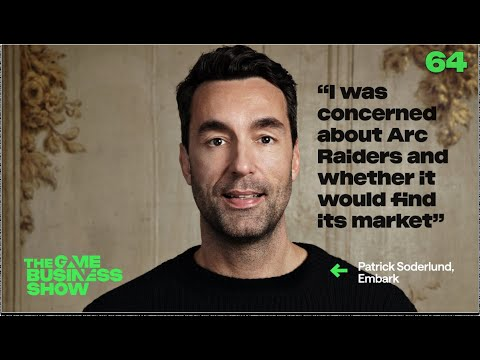
But someone needs to dare to say what I think is uncomfortable. That's my job. That's how I look at myself. I'm the guy that needs to point out the things that are uncomfortable. I can maybe guide people towards a direction, but ultimately they're the ones that going to have to figure it out. Right? If you look at the total amount of time or even money that has been spent on our creators, a game that would have been in development at a larger scale publisher for that amount of time would have cost hundreds and hundreds and hundreds of millions of dollars. You know, we're not even near that. Hello and welcome to the game business show with me, Christopher Drake. Back in 2018, a handful of creators and leaders from Electronic Arts, many of whom have worked on the Battlefield franchise left to form a new studio called Embark, uh, which is now owned by Nexon. This new team would go on to release online free-to-play shooter, The Finals, in 2023, which saw 20 million players in its first month. That game has had its ups and downs and ups again, but now
Embark is about to release its second game, the extraction shooter Arc Raiders, which is generating a lot of pre-release hype. It's very high on the Steam wish list count. It's got hundreds of thousand players in their technical tests. Now, Art Raid has actually started development before the finals and it's had a long journey to release. It was very much a cooperative game to begin with and now it's a sort of player versus player um extraction shooter. Now, to talk about the new game launching in the current market, the fate of the industry, the finals, making video games in in a new way. I am joined by the founder and CEO of Embark, Patrick Sodeland. Hello, Patrick. Welcome to the show.
Thank you. Um, the last time I spoke to you and it would have been a long time ago now, you were still running studios at Electronic Arts and so [clears throat] and it feels strange to me to be speaking to you straight after a Battlefield launch and we're not here and we're not here to talk about Battlefield.
We can [laughter] played a lot of it. So,
have you played a lot of Battlefield 6? I haven't played it yet. I mean, I played a little bit of the the the test in the summer.
I played Yeah, I don't know probably 30
40 hours of it.
Oh, really? Wow. Wow. I you don't have that Stockholm syndrome for the year. Uh
well well yeah no I don't either but no I I just thought it looked good and I wanted to to try it and play it and see um you know my skills may not be what they once were but but I'm okay.
Does it feel funny not to someone else to take over and take away your baby basically?
Well yeah that was that was you know a decision that I made myself.
So from that perspective it's it's fine. Uh, I'm happy for the fact that the game uh is good. I mean, it is [clears throat] it is a good game without a doubt. I think that it's it's a very complete package that they've made. I know a lot of people have worked very hard to um kind of resurrect and and and make this comeback for comeback for the brand. Um so
for me it's of course I'm happy. I'm happy for them. I'm happy for the fact that something that um you know was one
of the key reasons why I started in this industry a very long time ago uh gets to gets to survive and gets to to thrive. There's nothing wrong with that.
No. Well, we obviously talk about your game, but actually before we get to Arc Raiders, um your actual first game was the finals, which is an interesting story because you had this I remember it. You had this huge big reveal and launch sort of at the back end of 2023.
Yeah. Then things fell away quite fast, but you persisted with it. What was the uh did you always believe in it? Was there ever any doubt?
The finals uh was a game that we that I didn't think that we would ever build to be honest. when I and the other founders left EA uh and you know what we previously spoke about the Battlefield um brand and other brands as well,
I think we kind of had a hunger to create something different, something that wasn't, you know, an FPS uh or or um a game where you shoot other people necessarily uh in in the same way. And
we decided that, you know, well just that's when we started building on Arc Raiders and what was then Arc Raiders. But then obviously, you know, there's a reason why we built these types of games for so many years, many of us. And I think we we kind of got an itch to to go and, you know, explore that that segment again. And I remember telling um some of the individuals who were working on it that listen, we won't go into this space unless we can come with something that have that can serve up and have a meaningful innovation and that that brings something new and fresh to the market. Otherwise, why bother? We're not going to go and try and build, you know, um, a game that's already out there and try and do it better or or or our version of it. That makes no sense. We wanted to did build something that brought brought something new. Um, so that's um, and then we had a long, you know, multiple conversations around what could that be, how how would it be executed, everything. And that eventually led to the finals.
We also knew that we wanted to try and maximize um the amount of players playing the game. And being a relatively small studio, we felt like freeto play is is a business model that that that could make sense as long as we try and implement um a version of freeto play that's that's fair, that is um just towards the players and that don't um that we don't take every angle to monetize them. Uh, but it's built on on kind of a a fair um trusting relationship towards our our paying and playing customers. Whether you whether you pay or play or or or just play, uh, it doesn't really matter. Um, and um, yeah, we launched the game. Um, we we were surprised at how many people played it to be honest. um we had over 20 million downloads very quickly and people you know came to play the game. So I think that we
we had obviously created something that
people had an interest in playing that was obvious with you know mission complete on on that aspect. Um but then uh I remember it so well. I was we were all away during Christmas. I remember I was on a trip somewhere and um very addicted to my phone and reading all the data that was basically hourly. We saw revenue numbers, player numbers, we saw everything coming in, you know, on it. So I was watching my my phone constantly during during the break. And then January 7, I remember, was the day when kind of everything started declining and declining rapidly to a large. We were completely fine then and we were we thought that we were, you know, this is, you know, that we've created a monster. And then um it took about a month and then people started um yeah doing something else. They they stopped playing the game to a to a large extent and we lost massive players player the player numbers went down very quickly and um we came back
and started thinking what's happened has something else launched and you know it took us a while to fully understand why that was. I think um we got to a place where it was evident that we had uh there wasn't enough content in the game. We didn't do a good job enough onboarding players. We didn't do a good good enough job explaining the game modes. Um we didn't I mean there were you know we had a problem with our menu and UI pro you know HUD HUD everything.
Um and then I think what was evident also for us was there's no quick fix. There's nothing that we can do. Uh there's not one thing that will that will that is wrong that will make this fix that fix that that that creates the a solution that that then all the players are back. That wasn't the case. We quickly realized that that was the that wasn't the case. So we we had okay so we had to be very methodical about it. we had to go back and um talk to the players as best we could mine all the
data and then um you know data is is is great and it's it's can be can be your best friend but it can also be your worst enemy because it's what you do with the data that dictates the outcome and and everyone talks about data but what people should be talking about is actually how to
what to do with data and and how to analyze data and what decisions you make on something that is inherently creative and and a piece of entertainment, right? So, we had to learn learn how to do that our way. Um, and and it took time, but uh and we tried many things. We we thought that we were we're lacking a game mode and we had to fix that. So, then we added something that we thought were was awesome, the the terminal attack game mode. we loved it and I was thinking this is it you know now everyone's going to come back and everyone you know most people didn't like it no
so so okay now what what do we do now so that was kind of the constant loop that
we had to go through in order to understand uh to get to a place where where we felt like we um made progress and then we did make progress I think we were by the people that that stuck to us and still played which you know there were still a lot of them um they were they could see what we were trying to accomplish. I think they applauded the effort and then we slowly started seeing more and more players kind of either come back or come in and try the game and and then uh our you know retention mechanics were better um and got better over time and now um yeah for the last I would say 6 months we've been on a steady growth trajectory again and we're growing the you know the franchise we're
you know we're seeing and you know the game is is profitable um which is a good thing and and um we feel good about it. So, we're sitting here planning, you know, not months ahead, but years ahead of what this game can become and what to do with it. Um so, I know that that's a
probably a relatively unusual story. Um a lot of, you know, a lot of games we've seen come out and then go through the same thing and unfortunately, um they cease to exist, especially in the free-to-play market. Um, so I'm a little bit surprised that we uh that we managed to make the changes that we did and and and uh that we got to a place that's not now much better. Doesn't mean that it will last forever, but it means that we've done something right.
Well, is there anything from that that you're sort of you're able to take into Arc Raiders that you learn?
No, no, of course a ton. Um, just launching with with more content, more depth. It's not necessarily about having, you know, more than three, four, five or seven. I mean, it doesn't it's not the amount of maps necessarily. It's how you utilize the content. It's the depth. What do people do? You know, the first thing you have to understand is when you play the game, the second to second, you know, if you don't nail
that, there's no game. Uh, you know, then then you talk about, you know, traditionally talk about what happens every minute in the game.
You need to nail that too. those things you can't negotiate. Unless you have those figured out, no one is going to want to play the game.
Um I think that for both our creators and for the finals, those two to a large extent we figured out. um you know then then you go into hour by hour and then you know day by day and then maybe week by week, month by month that's where the problem starts and you need to really make sure that you have uh things for players to do uh things for play pay players to to accomplish things for um that you have an ever evolving game that feels like you know you want to come back to um that that punish you punishes you enough but but not too much right that that is rewarding yet not too rewarding. Um and that that that feels
fair yet sometimes unfair.
[clears throat]
And that's the balance you have to thread, right? And and um and as as a developer um it's it's um I'm not saying that we're going to get it right 100% for our creators, but I think that the learnings that we've had has taught us a lot. And I also know that in the events or cases where we don't get it right, I think that we're going to be much quicker to jump on those problems and and cure them uh or try to cure them.
Well, that's the I mean, I was going to ask this later, but this that's actually the biggest thing of life a live service online game is that you can start with you can do the big numbers at the start. We've seen that happen many times over the last year. I mean, you've also seen games like Concord and other things fall over, but we've seen lots of games start very strongly,
but the hard bit is keeping them. Um, particularly when you're in a massively saturated Yeah.
online space where people want people have come from somewhere. They've come from, I don't know, Hell Divers or Call of Duty, whatever
the game is, have come to you from somewhere else. And now you're going to have to they're going to go back at some point. And it and that's the or potentially go back at some point which I guess is the really difficult thing about this space that you're in.
Yeah, we actually it's funny that man we talk about that we talked about um about respecting players time and the fact that
they've chosen to come to our game to try it and our job is to make sure that they feel like that was worth the time and if they do they may stick around. But but if we talk about respecting players time a lot in the studio and and understanding that there are so many other things out there that are great that they can choose to play instead of what we have unless we do a good enough job.
You've gone with the premium model with art graders. I don't know. I think I think you're planning to be free to play to begin with. What was the thinking behind the shift in business model from the finals to upgraders?
There were many aspects of that. I think other games coming to market with with
success. Um, Hell Divers was one of them. We looked at that. We looked at the construct of Arc Raiders and at the same time, you know, we were faced with with a declining business on on the finals. So many many things I think led to that decision. But the front and center was the type of game that we were trying to build. And and we felt like um if you build a free-to-play game, you have to you have to have an economically viable way to to make that game stay alive. Um as a developer, you know, that is what it is. We can't just make free games that are 100% free because people here need to, you know, get paid and and and and they have families and homes and things. So, we can't.
Um, so for us, we felt like, but it's also a game thing. Uh, it puts it puts pressure on the game to the finals is pretty simple. It was, you know, we we
just, you know, you can choose to pay if you want to and all you pay for are cosmetics and battle passes. Basically, there's no way for you to to get better, you know, paying anything to get better. Um, our job is to make sure that we have a lot of things in there that people feel like they want to spend $1 on or $5 on or $10 on and and and if they do, good for us. If they don't, they can still play the game and have a have a good time. Arc Raiders we felt had a deeper construct than that and doesn't and the kind of cosmetics um a business model based purely on cosmetics and and battle pass we didn't feel suited that game at that point in time. Um, so it was it was a creative decision that then also was was formed, you know, informed by market conditions and what we were trying, you know, and then obviously our own results with the finals. So
it was multiple things that led to that.
We've talked about this before Art Raiders was revealed. Was it in 2021? It was it was the game that was supposed to be before the finals, but
you decided it wasn't right. I think you said it wasn't fun. I mean, how did you come to that realize that that kind of brutal realization I guess it must have been?
Un unfortunately, we we we should have come to that conclusion sooner
or earlier. Uh and and um uh I think I was the one that just said, "Listen guys, it's not working. It's not fun enough." We relied on a game where um the kind of loop, the compulsion loop of the game was so dependent on on uh deep innovations within artificial intelligence both in reinforcement learning, machine learning and other aspects. And we thought that we could build a whole game around that experience. Um you would go in and you would have amazing moments and you would be like, "Yep, we nailed it. High five." And then you played 4 hours straight
that were, you know, just not fun. Uh, and some of them were even painfully bad. Um, because the encounters weren't good, uh, good enough. Um, you had a problem getting players to collaborate properly, etc. and and you'll hear this from from some some of the key individuals here in the studio, but I I personally um was after this PvP idea a couple of months into the development. I just said I believe this game there's a game here that could be more um fun um if it was a PVP PVE game. Uh I I didn't talk about the extraction extraction elements of Arc Raiders that came later. Um but we wanted to let the team run with this idea because there was so much uh innovation in it and and then we we believe that we could we could figure it out. But at some point you come to the you have to make a decision and
it's one thing to try a week, a month, even a year you can try and it wasn't a lack of of trying. you know the the dev team really tried and we wanted to make this work but we we just it wasn't there and and then we we we had the discussion now what what are we going to do we we just I think there was multiple people I think the majority of of the leadership team came to the same conclusion that guys sorry it's not working it's not fun and then what do you do you then you have to make a very difficult decision of if we continue with this what what in what shape or form should we continue. And so we sat down and we had a bunch of conversation and I think we all loved uh the universe that we've created. We felt very good about having created this kind of retro sci-fi um kind of world. Um that that has always felt right to us. Um I know that
it's maybe not for everyone, but we love it. We love the idea of something that feels retro yet, you know, sci-fi, but feels
um and obviously with with um it just feels right to us, right? It's that simple.
And um and then we just said, "Okay, we this world and IP deserves a better game than what we're currently building. How what does that look like?" And at the same time um I remember Alex Grundall who we who came into the project who was the executive producer that I worked with. He was uh on Battlefield before I worked with him many years. We managed to to hire him in and and I remember one of the first days I spoke to him and said listen uh we have a lot of work to do and there's changes that needs to happen. Um, and and I can share with you what I think. Um, but I'll I'll I'll put that aside and I'll let you try and figure out figure this out yourself. Um, and he and
I think the team ran with with that and and came back with a game design that was more in line with what players are playing now. Mhm.
Obviously not not as detailed as we ended up being at the end, but I think that that was uh yeah, I I I for me it's it's you have to make a decision on what to do with something like this. You can put all the data up in the world and you can compare to other games, but at the end of the day,
it's it's a decision that comes from your gut. you know, does it feel right? Does this feel like a game that we can build and pull it off so that we actually cure the problems that we believe the previous version of the game had? And do we believe that there's a big of enough market out there for players, you know, you know, to like this. I remember we played a ton of extraction games and and everything from
Tarov to the hunt. I mean, I played so much of those games and and we thought that, okay, this is fun. There's something here. I I know it's not for everyone, but we believe that maybe um if we make something that's a little bit more accessible than than what's out there and something that's
a little bit lighter in how it feels, maybe that that could be a way to attract players into something like this. And that's kind of how we started.
It's interesting because I know that I I read a comment from you about cuz I know you sort of experimenting with AI tech. You mentioned it there. Um but that feeling of your gut of knowing this isn't right. Yeah. That's not something you can that that requires a human. It requires experience, I guess, and just it's not something you can train.
Yeah. Thank [clears throat] God that we can't replace ourselves with AI just yet. That's good. And again, it's it's not about me to be honest. It's it's obviously a conscious
team effort and and team decision, but someone needs to dare to say um you know
what I think is is uncomfortable and and you know that's my job. That's how I look at myself. I'm the guy that needs to point out the things that are uncomfortable and then I can maybe guide people towards a direction, but ultimately they're the ones that going to have to figure it out, right?
Yeah. I suspect a lot of my audience might want to know this question uh answer to this question because the numbers on Art Raiders, I mean your latest play test is really strong. Your technical test was really strong. The buzz around it is very impressive. You seem to you seem to get people angry with you for not letting them play more, which is a a very very good problem to have. But it's so competitive, you know, not just in the extraction shooter space where there's things like Marathon coming up and stuff. You're coming out in Call of Duty Battlefield and Call of Duty, but you're getting real cut for it. You're getting real attention. What's the secret? Yeah, I mean to be honest um I had this
conversation with with another friend in the industry the other day who who told me that listen I'm surprised that you guys have been able to um make come from you know start a new studio and then make first the finals which is a new IP that I think at least from our perspective is deemed successful. Um, and then you build our traders, which knock on wood, looks like we're going to do at least okay with. Um, and and um, and then he asked the questions, "What? How come? What are you guys doing? It's difficult, right?" And I I I thought about it and I couldn't give him a a good answer. I just said, but I think I think it comes down to just not being complacent enough to try and try and believe that we can build something without making a meaningful um impact or innovation. We have to bring something to the market so that people pay attention. uh we we we just
can't fall under the notion that um building more of what's already out there is the right formula for us. If we build the game, we want to try and bring meaningful change to to that market and and to try and give people again, we spoke about it before, a reason to come and try our game. And if we've done a good enough job, maybe they'll stick around. But in order for them to break away from what they're already playing, um there needs to be a factor of of attraction there for players to come and say, "Listen, I may may go over there." And I think we managed to to get to that with the finals for sure. Um I would if you would have asked me a couple of years ago, I would have said, "Listen, finals is a slam dunk." I mean, love that game. I you know again I've played a lot of it and I and and I I
still play it but um I was more concerned about our creators and whether that would find its market. So when we launched the technical test TT2 we call it which was in in earlier in the spring, we were just blown away by how many people just came and played it and it became we obviously tried our best to market it. Uh but but um it was it became one of these things that that just spread virally. It's like, you know, someone talks to someone and then you have to go try this and and so we were humbled by that and and felt like, wow, this is a surprise. But I think it's testament to the work that the team has done with the IP, the work that the team has done with building something that is complicated yet accessible. Um, something that is easy to play yet has a lot of gameplay depth. Uh, I think um I still get
terrified by the Ark um you know enemies we played yesterday and and I I you know we were screaming uh Alex and I in in in the room as we were being chased by uh one of the robots leaper that um we we we deliberately engaged with and and and later suffered for it
regretted it
but you know I think I I think um yeah, I think that's where it is.
How do you approach I'm interested. Have you sort of approached development any differently to how you did when you were when you were at EA?
Yeah, I mean for sure. I mean, that's I think the foundation of Ambark was um if if we're going to try and build a studio, we have to um we can't we can't compete with the likes of EA and Activision and and other large
um companies because we don't have the same financial means to do that. Um we we then realized that we had to get to a place where um yeah I mean we spoke about it basically we have to go back and take a look at how you develop a video game uh what where do you start um how do you what aspects of development are there whether that's content creation coding uh audio and we kind of try to um be dumb enough to to to um challenge ourselves not only to make things faster, but to completely change the methodology of what it means to be a game developer for us. And and that was the start of Embark. We spent most of our time in the beginning building tools and pipelines and workflows to uh be
able to um you know we had I remember Rob who who runs our development uh or content creation here department him and I had a conversation and and I remember feeling a little bit dumb because I said to him listen I want us to be 10 times faster in in content creation so that we can keep up because we can keep up with these Asian um live game developers who turn out content. We have to be competitive. And uh and um he said, "Okay, I I I I hear you." And and we went away. And then we spoke a couple of days later and and um I said, "Listen, sorry for for telling you for talking. I know that it was probably a little bit offensive. I'm not suggesting that you're inefficient, but I said, "Unfortunately, I think what I told you is incorrect. I think that we need to aim for 100 times faster, not 10 times faster."
And and and and I said to then I said,
"Bear with me. I'll try and explain why." And and I I felt like if if we if our goal is to do it 10 10 times faster, we're going to go into trying to fix conventional development methods and that may lead to us being twice as fast if we do a good enough job. Mhm.
If [clears throat] you ask for a 100 times faster, you have to take what you know and basically throw that throw throw that away and then start really thinking about how can I what type of modifications and transformation do we need to go through in order to completely change the way that we approach this. So that's when we came into procedurally generated content to using uh AI and machine learning to some extent in in in even the content creation pipelines to what types of tools we build to um and and realizing that a lot of these tools that we've been working with for so long um are
they stem from software that's 25 to 30 years old. M
so we may have to build some of these um things that are some of the the the programs that we're using today. We may have to write our own in order to get to where we want to. And you know today I wouldn't say that we're 100 times faster than any any other studio. That would be arrogant. Uh, of course, but I do believe that the what we've done has created a way to build products and and games and update them um that I I I I don't think many others can compete with. And uh it's because we took that approach. So, if you come here, you'll have to learn a bunch of tools that only exist here. You have to go at things in a way that I think we're the only ones doing. Um and and you know this studio is roughly 300 people and we have two relatively large games in development. One is in in in in a live environment. And by the way we've updated the finals
every single week uh since the day of since the the time we launched it and we will continue to update it every single week. Sometimes we have smaller updates, sometimes we're bigger, but the game updates every week. The players know it. Every Wednesday or Thursday the game game the game will have an update. Um, we will use this a similar approach to our creators. We will continuously update the game game and make sure that people get a new experience and better experience on an ongoing basis. We also have other games here um that we are developing that are um other new IPs that we haven't shown yet. And and and I think uh to do that with with a with a medium-sized studio, I would say we're not a small studio by any means.
No. um I think um is due to the fact that we've made these investments early on.
I've got so many things to put up there. Um one of them is Art Raiders though. You talk about going faster, but you've given that game time. You haven't rushed that game out, have you? I mean, I guess
those two things aren't aren't necessarily contradicting each other, but it seems to be that you you want to go faster, but you're not you're not willing to just rush. No, but it to us it's it's not about rushing things or or about time. It's about doing the right thing at the right time. If you look at the total amount of time or even money that we were has been spent on our creators, um it's not a game that's that would have been in development at a larger scale publisher for that amount of time would have cost hundreds and hundreds and hundreds of millions of dollars. You know, we're not even near that. We haven't spent even close to that on our creators. Have we spent more than we wanted to? Probably. [laughter]
That that's always the case. But but
um I don't think people should confuse what we're trying to accomplish for rushing things or doing them quickly necessarily. It's more about efficiency. And also to some extent, we have had
this conversation internally. It's also about building games is an inherently creative um work. It's it's it's like writing a song or painting a picture. It's you know build you know [clears throat]
creating a movie. And what we also spoke earlier about is to try and remove things that are boring and tedious uh and and things that so people can spend more time creating the stuff that's fun and and the things that have uh that are playerf facing really playerf facing instead of
and and to automate uh a lot of tedious boring uh work uh means that you can you can spend time on the creative side of the of building games instead. I think that's to me and to us more what it's about than a game needs to launch at a certain point in time.
Yeah.
Well, I know I know some of those big studios, including the ones that the one you worked at, I guess if your game
needed to come out faster, you would just put more people on it, right? Whereas you've I guess you don't have that capability really. But also, maybe that's not the best way of doing it.
No, no, we can't. But but but again that that's sometimes that can help and that can have a major impact on your velocity and that that could really pay off. Uh but but it is a formula that long term will go against
putting quality games in the market. That's just how it how it works. I mean uh sometimes you need to do it and then you do it but it's it's
longterm it's not a sustainable formula if you want to build high quality products. I don't think I don't think it is.
You did mention there that you know you can't compete with EA you can't compete with Activision yet you are coming out in between Battlefield and Call of Duty. [laughter]
No insanity.
Um but you're holding your own so far.
though it's uh it's it doesn't feel like a Titanfall 2 situation which sort of got squeezed. I mean that was a lot shorter time
spent. I hope not. I mean listen I know that people may look at that and say what the hell are they doing? We have spent a lot of time looking at this from multiple aspects and angles and you know for right or wrong we've decided that we believe that the game um
can launch there. We look at this long term. This is the start of a longterm journey.
Yes. uh it needs to start somewhere. Um and uh we just hope that that um we can get enough players interested and attracted to to the game.
I had one other quick question to uh to the question you asked earlier. You're working on other projects as well. So that's that's are they all online games? Because I'm very mindful of how high risk that market has become. Even
it is. Yeah. That I think is just ingrained in our DNA. That doesn't mean that they're online necessarily games the same way as the finals or
or our creators that they um one of the concepts are is one of the concepts we have is is very has a I would say has a lot more edge to it than the finals or our creators does. Um the other one maybe is a little bit more conventional but yeah
you took this bold step of relieving the relative safety of EA to create embark and this was back in 2018 when things were you know the industry was in a slightly
uh uh happier place than it is now. I'm interested would you take the same risk today looking at where the industry is at the moment? Obviously it's very easy to say um today right at the time um my my journey u at EA you know was done for sure and I would have taken the same decision for sure and it wasn't so much about embark it was more about what I wanted to try and you know what I wanted to do
I will look at the years that I did at
as EA as in incredibly [clears throat] rewarding and fun and I got to work with some incredible people there and work with on some incredible products and um I learned a ton um at EA and and um obviously you you were a far more public person then and and um you know decisions sometimes you made you know you you heard about them online and everything what you know but that's a part of that job and and what people need to understand that just because you work at EA or activism doesn't mean that you you're better or worse. You know these people that work there try as much as you know anyone working at Embark or other place to build incredible products and to a large extent they do.
Um so um from my perspective it was more that you know I'd been there for 12 years. I I um I never envisioned
working at at a large company like that for for such a long time. So that that that says something about EA, I think.
And for me, I just
it was time to do something. I wanted to get back to this to uh work with the teams on software. Um to be that guy that asks those dumb but difficult questions. um that kind of try and do what I can to to point people in in a direction and and like we spoke earlier about um yeah be someone that that is an enabler for these teams to do the things that I believe they have in them and that's where I get my joy and then be involved in software and seeing it in the hands of players there's there's a gratification in that somehow it just feels good and and the
the the the joy of watching a video of people playing your game online and you know they're afraid but yet they're laughing and and screaming because they're having fun.
That's the ultimate reward. Uh, to be honest, more so than anything else, more so than than the monetary aspect of building video games if you do it successfully than anything, it's just seeing that makes me smile and and makes it worth all the work and and and effort that goes into something like this.
You must feel cuz obviously it's tough out there at the moment. You must have some element of responsibility. I'm interested. I would I wanted to get your thoughts on the state of the market. I mean, you've just seen EA get, you know, well, it's not officially bought yet, but going for this $55 billion
acquisition. I mean, I I I I ask this to almost everyone I speak to. I watch what what's your take on all that? How how are you feeling about things? Cuz you've you've you're you're quite a big studio. You're not huge, but
No, no, it's I would say that we're a
mediumsized st No, no. You you have to think about it, right? We're um we are uh blessed with a with an owner in Nexon
that is a relatively unknown company to people in the west. Uh I mean relatively but they're not but but they're not not a company whose games you normally would play I would say if you live in the west but they're a massive player obviously in Asia. um they take a very long-term view um always um they never you know and I think they they can do that because they have kind of games that are to some extent evergreen. They are games they have live games that are online that's constantly in the market. Maple Story Dungeon and Fighter has been out there for 10 plus years and they're still generating substantial revenue to this to the company which um you know every single day which allows for them to anything new to give the time it needs to support um a studio like Embark
in our vision um without having to conform to quarterly reports or a date a specific date. So, we've never ever had the pressure to ship something at a specific date. We've never had that feeling. It's more when the finals weren't, you know, had its problems. They just they were like, "Okay, this was expected. Here's what you need to do. Think about it." Like, they were super supportive and just take your time, fix this, be patient. We were the impatient ones, not them. Um so um that is for Embark a blessing and and um they're very handsoff. They let us do our thing. They believe in us um and incredibly supportive. So that with the fact that we were able to end up in that situation has been a blessing for Ambark and and also created stability and security for us. So that's number one. Number two, the industry at at large. I think I think this problem
is to some extent self-inflicted. We started this during the pandemic. Um where we kind of got high on the idea that uh this will last forever. People will stay home and play video games forever. Uh and they they won't go back to their normal lives. Guess what? U fortunately the pandemic ended and now people are back to doing what they did before. But we've we've hired an incredible amount of people in the industry and and now the industry isn't doing as well as it did during the pandemic. At the same time, you've had a substantial shift in what types of games function in the market and how they how they function. So I think it's it's a kind of a
a problem on two sides. So large game companies had to public rightsize to some extent. And then you also saw because when you have a boom like we had during the pandemic in the video game sector, a lot of capital gets put into
that sector. So we saw a lot of venture capital and a lot of private equity capital come into the gaming market and basically it made it possible for so many new studios to be formed and a lot of these new studios um um you know building a studio is very difficult. Building games is incredibly difficult. So for all of these studios to succeed um is unlikely. Um, and then I think we're seeing that also manifest right now where we're seeing capital is no longer as you know as as attracted by the video game sector. There's not no not more there's no more capital a lot more new capital flowing into it. Um, so these smaller companies are going bankrupt and at the same time these big publishers are right sizing their businesses from a post-pandemic era together with the fact that there are market conditions where competition is is steeper and people are hanging on to
the games that they play more and more and more because games like you know companies like Epic and Microsoft with Minecraft and other companies are so good at servicing these games that they're more platforms than games themselves. Yeah,
I think this is not an easy um it's not an easy problem and it's not a problem that comes from one source. It's a problem that stems from multiple aspects and and that's where we are right now.
Yeah. Well, I do think the live service game sucking up all the hours, although that's often getting a lot of attention, a lot of conversation because I think it's the thing we can control the most. I do always think there's always problems like that in the video game industry. always ch, you know, pre-owned was a challenge for so long, right? There's always something out there that was taking money or in this case time away from the business, but I do think those those those bigger issues which is around the huge amount of investment and and the capital and all that kind of stuff is
is ultimately, you know, led us to this spot. But I mean, I'm really gone over
time, Patrick. I appreciate you hanging on, but I was going to ask one final question, which is I always ask this question, which is,
where do you hope Embark to be in five years? So what's your goal for the I don't like I used to say I used to say ask this question ago what's 10 years in the future but
yeah yeah who knows in 10 years we're all replaced by AI [laughter] uh listen I hope that we are seeing uh I don't envision Embark to being much bigger than it is today that's not a goal for us at all to be a ginormous studio I I hope that people can look at embark and um and view it as a studio that that um that that are you know where there's that stems from curiosity. We talk about being curious all the time. We want to look behind what's behind like the curtain. What would if we did this, what would that mean? uh that we're seen as
as a studio that that is doing something positive for the industry where our obvious goal is to try and treat the players that play our games with the deepest respect to listen to them on a continuous basis and and try and adapt and improve the games as such. and and and in individual comment is difficult for us to to cater for of course but look at clusters of data and information and if enough people are complaining about something you ought to fix something you got to do something about it right and that were seen as as kind of a pioneer pioneers in many aspect um of of uh new IP development of of um how to build games in a different way that's what I hope for us to be seen I know that those are ambitious goals But but you have to be ambitious and maybe we'll get halfway.
Well, it's certainly paying off so far in terms of getting getting that getting attention from players and pleasing
them. Well, thank you, Patrick. I we're out of time. I've gone over time, but it's been an absolute pleasure having you on and I do best of luck with the launch of Art Raiders.
Thank you so much.
That's it for today's episode of the Game Business Show. There is no new show this week. We're taking a short break, but we'll be back with more interviews, news, and analysis next week. Until then, thank you for tuning in. What is one of the first things you do when you get into the office?
I clean up my email.
Outside of the ones you've worked on, what do you think is the best shooter game of all time?
Uh, HalfLife.
Oh, yeah. If you could be the CEO of any other game developer, which would it be?
Probably From Software. No. What book would you recommend to anyone looking to run their own company or set up their own studio? Uh,
to be honest, I don't read any of these management books. It's not a thing for me. I'm boring in the aspect that I read old books and sci-fi [music] novels and stuff like that. I I don't I couldn't answer that question.
Okay. What is your favorite album of all time?
Probably Songs in the Key of Life by
Stevie Wonder.
Oh, wow. It's a great one. What one thing do you wish you'd known before starting up Embark?
To be more patient and to trust the process. People here call me sometimes a pain in the, you know, in their but in in maybe a good way. But sometimes I would benefit from being more patient. [music]
Auto-generated captions from YouTube — names and numbers may be misheard.
The gaming industry is currently navigating a period of significant contraction, characterized by a post-pandemic correction where studios that over-hired during the sector's boom now face the realities of diminished venture capital and intense market saturation. In this environment, the primary challenge for developers is the emergence of dominant live-service titles that effectively monopolize player time and spending. To remain competitive, studios must move beyond rigid, formulaic development cycles and instead prioritize long-term product sustainability, iterative design, and deep respect for player feedback.
Embark Studios serves as a case study in this transition, having learned critical lessons from the rapid player attrition following the initial launch of The Finals. By shifting focus from aggressive growth to methodical data analysis and consistent content updates, the studio successfully stabilized its user base and achieved profitability. This philosophy now informs the development of the extraction shooter Arc Raiders, which underwent a strategic pivot from an AI-centric concept to a more accessible, engagement-focused design after internal testing revealed a lack of core enjoyment.
To maintain a competitive edge against larger publishers, the studio emphasizes radical development efficiency. By leveraging proprietary tools, procedural generation, and AI to automate repetitive tasks, the team aims to accelerate content creation by a factor of 100. This technical infrastructure, combined with a stable partnership that shields the team from the pressures of quarterly earnings and traditional crunch culture, allows for a curiosity-driven approach to game design. Ultimately, the goal is to operate as a sustainable, mid-sized entity that prioritizes innovation and player retention over the unsustainable growth models that have left much of the industry vulnerable.

The Game Business · 2026

The Game Business · 2026

The Game Business · 2026

The Game Business · 2026

The Game Business · 2026

The Game Business · 2026

The Game Business · 2026

The Game Business · 2026

The Game Business · 2026

The Game Business · 2026

The Game Business · 2026

The Game Business · 2026

The Game Business · 2025

The Game Business · 2026
Deconstructor of Fun · 2025
The Game Business · 2025
The Game Business · 2025
Deconstructor of Fun · 2025
Naavik · 2024
Embracer Group
Frontier Developments

Frontier Developments
11 bit studios

11 bit studios
Comments