Game Development reports and market data
Documents
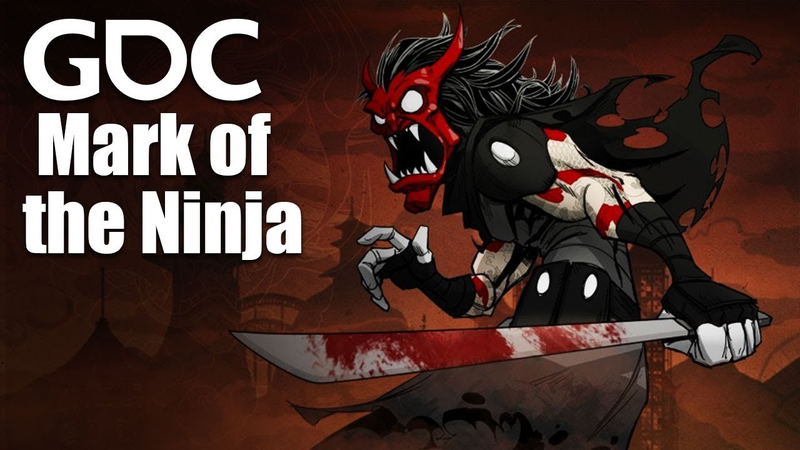
How We Created Mark of the Ninja Without (Totally) Losing Our Minds
This analysis examines the development philosophy of Klei Entertainment, specifically regarding the creation of Mark of the Ninja.
- To avoid burnout and inefficient development, replace vague creative visions with testable hypotheses that allow the team to identify and discard bad assumptions early.
- Klei Entertainment shifted from complex AI systems to 'stupid,' highly manipulatable AI, which saved approximately four to five months of programming time while improving player clarity.
- The team abandoned batch production early in development, recognizing that producing large amounts of content based on unverified assumptions leads to wasted effort.
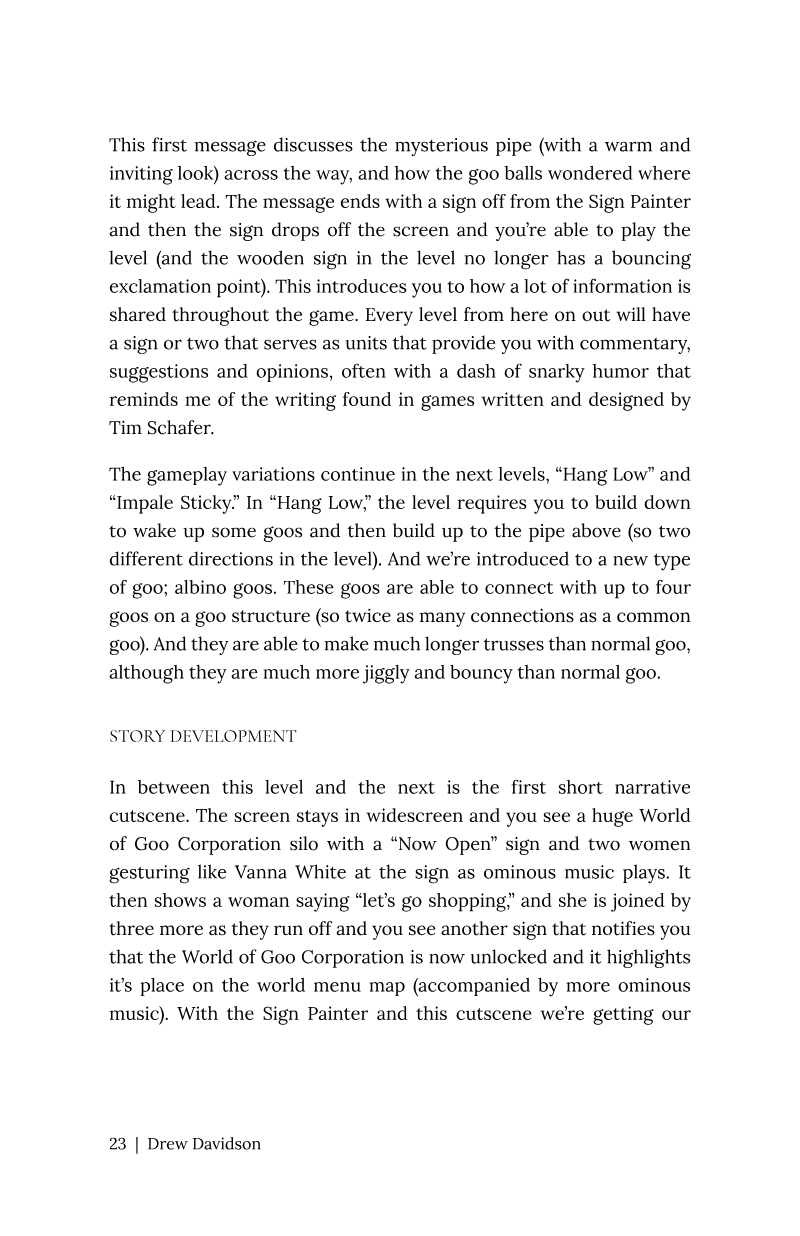
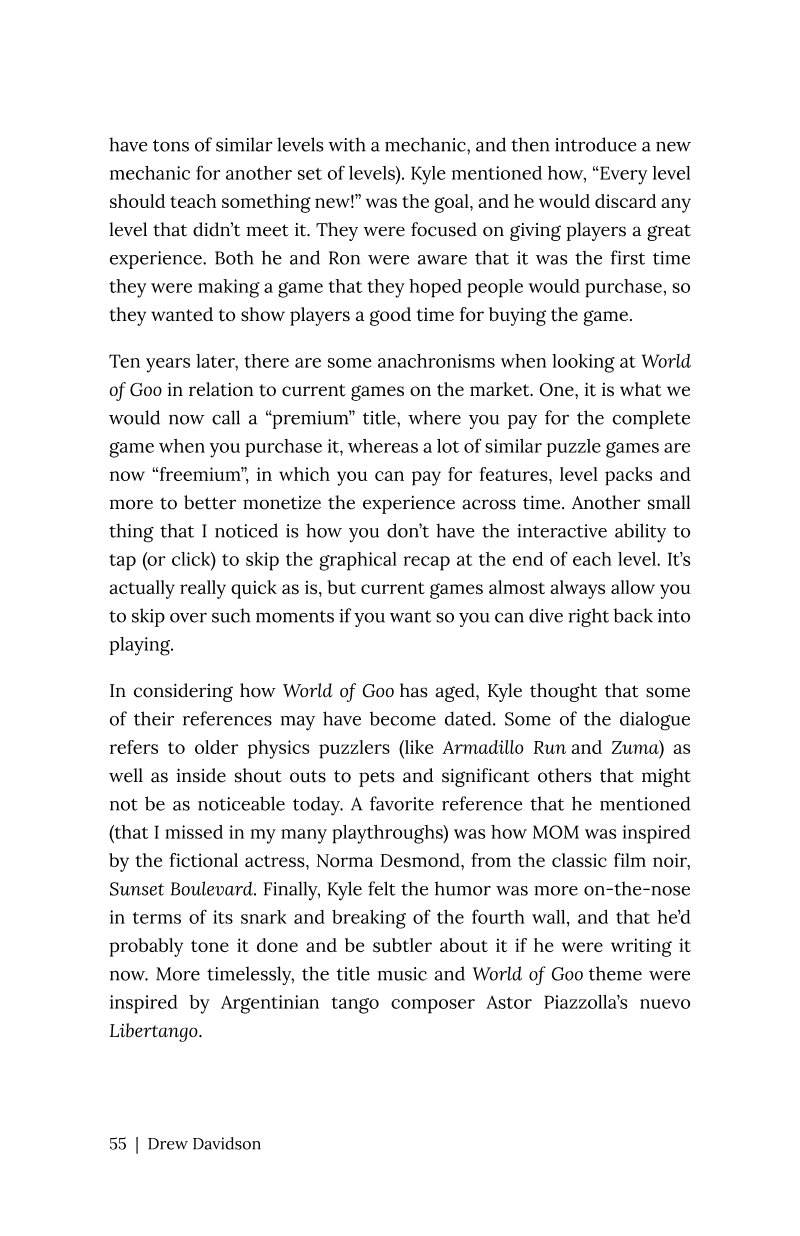
Physics Is Still Your Friend: World of Goo @ 10
"Physics Is Still Your Friend: World of Goo @ 10" offers an in-depth retrospective analysis of the independent video game World of Goo, examining its development, cultural impact, and enduring gameplay mechanics a decade after its release.
- World of Goo originated as the seven-day prototype Tower of Goo at Carnegie Mellon's Entertainment Technology Center, after which creators Kyle Gabler and Ron Carmel left Electronic Arts in 2007 to build the full game over roughly two years.
- Refinement through community beta testing and playtesting with non-gamers produced a smoothed difficulty curve and physics that feel fair to players.
- The game's six islands and 48 levels escalate gradually through new goo types, the whistle, and satirical story beats, with narrative delivered alongside play via the Sign Painter's messages and cutscenes.
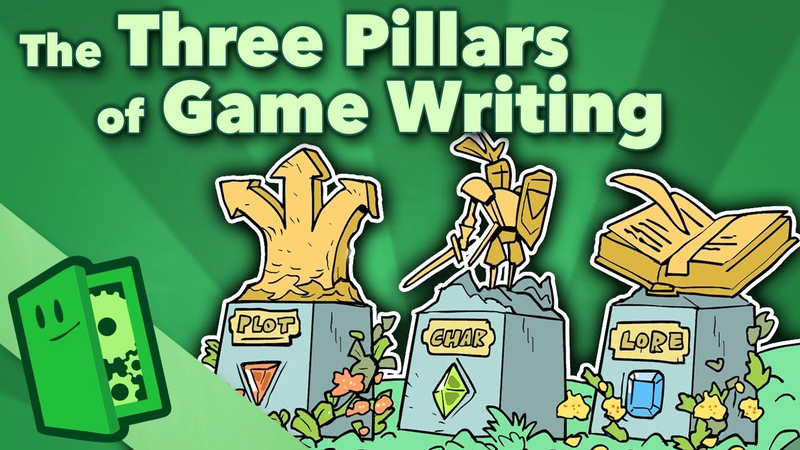
The Three Pillars of Game Writing - Plot, Character, Lore - Extra Credits
Game writing is not a monolithic discipline but rather a composite of three distinct pillars: plot, character, and lore.
- Game narrative should be built around one primary pillar—plot, character, or lore—rather than attempting to prioritize all three, which leads to unfocused storytelling and development inefficiencies.
- Plot functions as the sequence of events and should be tested early through written summaries to ensure the core narrative arc, twists, or messages are effective.
- Character-driven writing requires deep collaboration between writers, artists, and designers, as visual design and mechanical abilities often communicate identity more effectively than dialogue.

Writing Modular Characters for System-Driven Games
System-driven games often struggle to move beyond repetitive, procedurally generated characters that lack depth.
- Prioritize trait orthogonality by ensuring character traits function independently to maximize the variety of combinations and prevent repetitive, generic outcomes.
- Shift from simple data stacking to higher-order meaning by designing systems where disparate traits coalesce into coherent and memorable personalities.
- Broadcast character identity across multiple distinct channels—such as visual posture, UI elements, and dialogue—rather than relying on a single narrative stream.
How to Make Game Art When You CAN'T!
For independent game developers lacking formal artistic training, the challenge of creating high-quality, cohesive game art is a significant hurdle.
- Non-artists should replace traditional design-from-scratch workflows with high-volume, iterative experimentation to achieve professional-looking game art.
- Developers should perform art experiments directly within the game engine rather than relying on static mock-ups in external software.
- Use scripts to procedurally generate variations in color palettes, object placement, and sprite outlines to ensure visual styles are technically feasible within the game architecture.
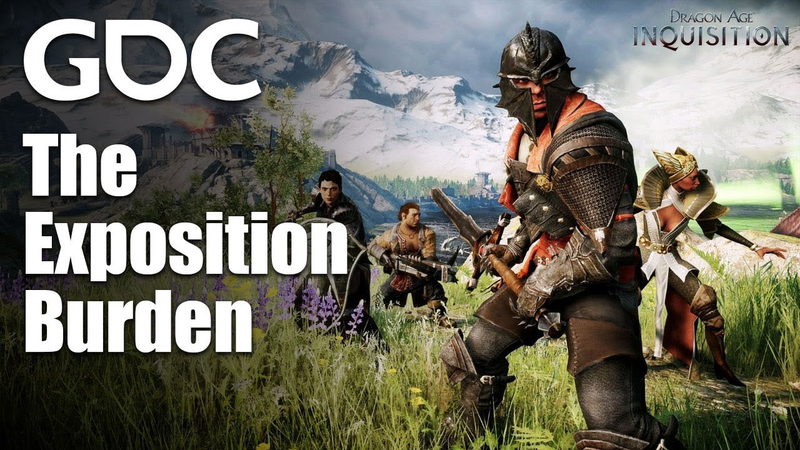
The Exposition Burden
Effective game narrative design requires a strategic approach to exposition, moving away from lengthy, static dialogue blocks that players often ignore.
- Exposition should be framed as a functional tool for solving immediate player problems rather than static information delivery.
- Implement a 'breadcrumb trail' methodology to break complex lore into sequential, bite-sized pieces that align with the player's current progression goals.
- Avoid including red herrings in narrative content, as players perceive all provided information as a promise of future relevance that must be fulfilled.
PlayJob Podcast #2: Zhenghua Yang
The modern independent game development landscape is undergoing a fundamental transformation, moving away from traditional definitions of scale toward a model defined by team culture, funding autonomy, and creative intent.
- Serenity Forge maintains creative autonomy and a horizontal, trust-based organizational structure by eschewing external investors in favor of a hybrid business model that balances client work with independent projects.
- The modern independent game industry is shifting away from the 'starving artist' model toward professional, high-quality operational standards that allow small teams to compete with larger entities in a crowded market.
- Developers are increasingly viewing games as vehicles for social responsibility and emotional communication, prioritizing the creation of meaningful content that shapes the values of future generations.
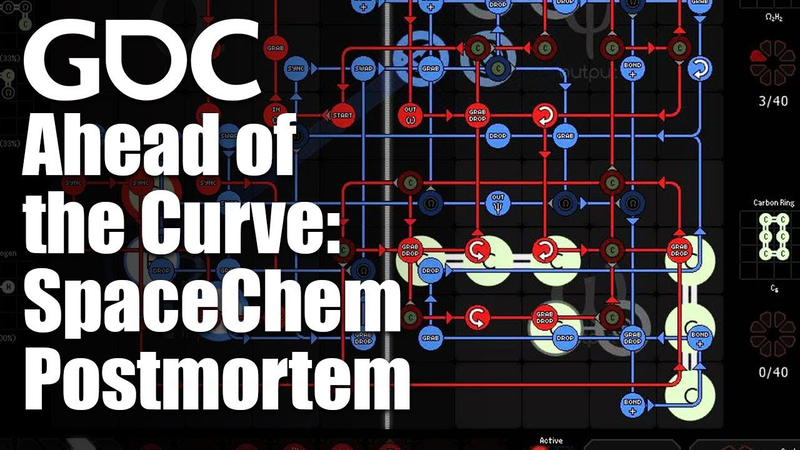
Ahead of the Curve: The SpaceChem Postmortem
The 2013 GDC session on the development of SpaceChem explores the design philosophy behind "design-based puzzle games," a genre characterized by open-ended problem solving rather than a single, fixed solution.
- SpaceChem generated approximately $700,000 in revenue, with Steam serving as the primary driver for its commercial success.
- The game pioneered 'design-based puzzle' mechanics, which prioritize open-ended problem solving and emergent tools over fixed, singular solutions to foster player ownership.
- Implementing performance histograms instead of traditional leaderboards allowed for egalitarian player comparison and optimization without fostering community toxicity.
Game design tactics
The molecular design methodology offers a systematic approach to game development by breaking down complex game mechanics into fundamental, player-centric components.
- The molecular design methodology reduces game development time by at least 50% by replacing subjective, character-based design with a universal language of standardized player skills.
- Game mechanics are broken down into 'molecules'—quantifiable units based on specific player inputs like reaction time, spatial navigation, and decision-making—rather than character skins or animations.
- Designers organize these molecules into blueprints that dictate the temporal and spatial distribution of gameplay, providing a measurable overview of progression and identifying development bottlenecks.
Games company bootstrapping
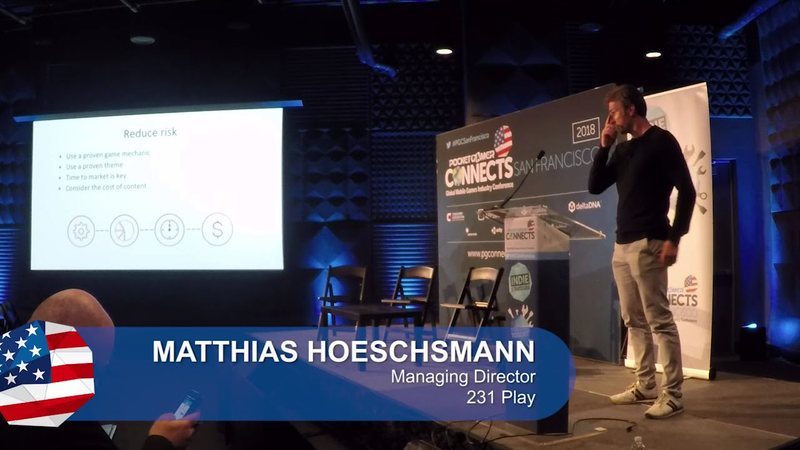
Bootstrapping a successful free-to-play (F2P) games company requires a disciplined, analytical approach that prioritizes operational efficiency and rapid market validation over creative experimentation.
- Prioritize rapid market validation by targeting a 12-week soft-launch cycle to test retention and engagement metrics in low-cost markets like the Philippines.
- Treat game development as a series of hypotheses by using established engines like Unity and proven genres to minimize technical risk and development uncertainty.
- Allocate financial resources primarily toward user acquisition (UA) rather than expensive market research tools, relying instead on public store data and social media metrics for competitive intelligence.
Augmented reality games for kids – Lessons learned from Sky Whale AR
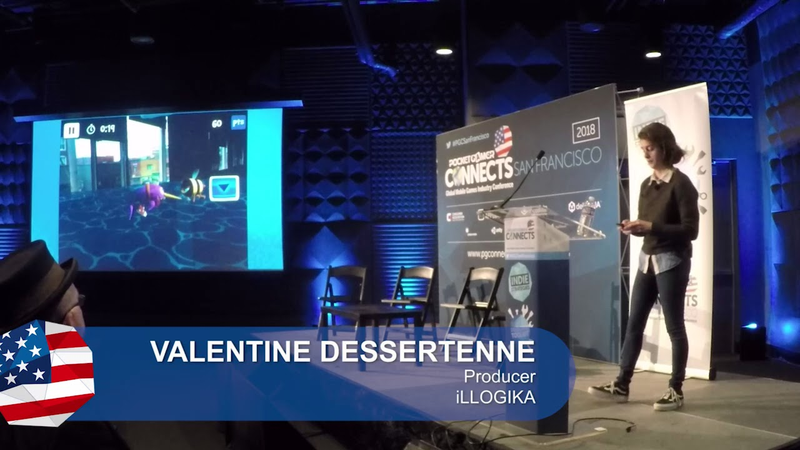
The development of Sky Whale AR, an augmented reality (AR) expansion for a Nickelodeon-branded mobile game, serves as a case study for addressing the technical and ergonomic challenges inherent in creating AR experiences for children.
- To mitigate physical fatigue in children, AR sessions should be limited to approximately one-minute, high-intensity intervals with minimal edge-based screen interactions.
- Developers should adopt a non-gated approach to AR, ensuring it remains an optional feature that does not compromise the core 2D gameplay experience, as seen in the April 2018 launch of Nickelodeon's Sky Whale AR.
- Rather than relying on unreliable surface detection, developers should prioritize device movement as the primary control input to improve tracking consistency.
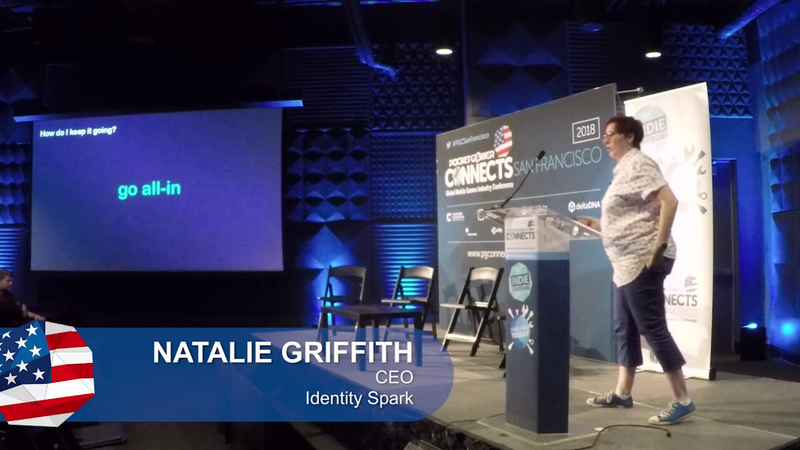
Indie starter guide to brand building
Effective brand building for independent game developers requires moving beyond visual identity to establish a core set of values and an authentic narrative.
- A brand is defined as the collective perception of an organization when its leaders are not present, serving as a critical strategic asset for long-term business growth.
- Developers should define their core values, driving motivations, and desired emotional resonance before beginning development to ensure a consistent foundation.
- Consistency must be maintained across all touchpoints, aligning internal studio ethos, game design, and public communications to ensure authenticity.