1 free read left. Create a free account for unlimited reading + AI research.
Create free account
Games company bootstrapping
Key insights
6 takeaways- 01Prioritize rapid market validation by targeting a 12-week soft-launch cycle to test retention and engagement metrics in low-cost markets like the Philippines.
- 02Treat game development as a series of hypotheses by using established engines like Unity and proven genres to minimize technical risk and development uncertainty.
- 03Avoid basing business strategy on app store featuring, as it provides only a temporary boost and should not delay product release timelines.
- 04Allocate financial resources primarily toward user acquisition (UA) rather than expensive market research tools, relying instead on public store data and social media metrics for competitive intelligence.
- 05Focus the initial title on building foundational infrastructure and live-operations expertise rather than pursuing high-risk creative innovation.
- 06Maintain a disciplined exit strategy by being prepared to pivot or abandon projects quickly if early indicators, specifically day-one retention, show poor performance.
Ask AI about this video
Transcript
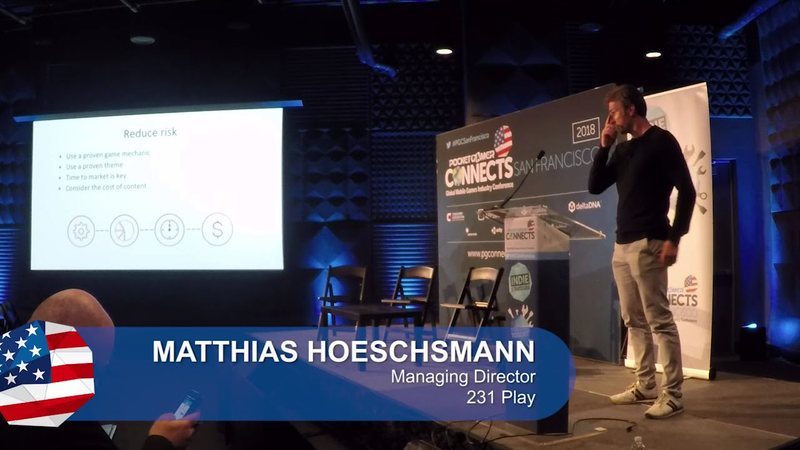
[Music] [Music] so my name is Matias Fixman I am the co-founder and managing director of two three one play berlin-based casual games company making free-to-play games I started my games career like 10 years ago when the very first iPhone was released at that time I was a postdoc at UC Santa Cruz doing genome research and I heard all those what those crazy stories bunch of people or individuals who never did a game create a game who listed on the on the iPhone and were
successful with it and at some point I decided ok that sounds interesting and I founded a company called game doctors our first our debut title was zombie smash which was at that time when they were like 4000 EPS the number one app on the App Store for a few weeks worldwide so there was a good start and in 2011 Zynga acquired game doctors and in tirana was studio director for a few years there then I took a break from gaming and in 2016 I found it within one play so we released two games so far the one game Pepe Paris is a casual game based on memory matching mechanics of the game of memory casualized put on a progression map and then measuring city tours is a
mahjong game also on a progression that both games have like great production values are very polished and well by their equal in this sense Pepe pairs commercially was a complete disaster and my own City to us is a game that we were successful free to play a game that we can operate and grow and I will join the top refer to the one or the other for the do's and don'ts so when you make a free to play game it's really you have to master multiple disciplines it's not sufficient anymore to be able to just make a game no you have to be on top of so many different things and if you are a founding team at least you should cover a very solid game development being able to produce a great product but also have the product management skills and having having some
guy who really knows how free-to-play works and can can can can drive the business side of the game and it would be nice to also have the you a person on board but that's kind of optional already so if you want to have the minimum founding team yeah product manager hour can even be a player that's very very knowledgeable on the market and good development team works [Music] so then if you are one decide what's your first game I think a good way to think about it is you you want to create you want to master all those disciplines do your first game should get you closer to that goal of building a free to click play company where you can run the UA and do your life ops and all that stuff so maybe the first game is not the one that you always wanted to make or that you're most passionate about but it should give you should get you closer to the goal and it makes sense to pick a jar that you understand best something
that you've played a lot or that you've worked on before and another company instead of I don't know just going where your passion is and learning everything from scratch I mean sometimes it goes along no you do something you work on the thing that you're also also that's the game you want to make then great but that that's not always the case then you should have an idea about your overall portfolio strategy are you targeting a certain segment and you want to be relevant in it or do you want to launch hyper casual games and launch another game every four weeks I mean this spread you may change over time but it's good to have a clear idea about what you want to do and then of course it's also important what's your funding situation so this can just prevent doing certain games that have a too long production cycle or where the user acquisition is way too expensive well and it depends on what what your funding situation is so for example if
you have if you can just dedicate your own time and nothing else then maybe it's better to go with a publisher in that case or the only exception could be maybe if you have a highly viral product you can launch it with very low you a course but yeah that's it's diesel but if you have some funds and you can dedicate your time you're in a good position to build your own free-to-play company so one thing that helps you there and how it sounds kind of counterintuitive is that reduce risk and be boring in a way well if you phone a new company you want to make the greatest and coolest games and be on the forefront of innovation and all that that sounds good but maybe it's not the best first step maybe the better first step is something that brings you closer to covering all those disciplines that you need to master so one advice is
use a proven game mechanic the biggest mistake you can make or the biggest risk for mistake the biggest risk you can take is you invent a game mechanic and there are so many questions that will pop up getting the gameplay right you don't know if it works and also it's very difficult to advertise the game people don't have clear expectations what it is now then use a proven theme I don't know if you make amazon game you know the audience they like when a mystery setting travel setting those kind of things and if you don't want to use a car setting for example no but you can identify what this audience like likes and then use a probe theme time to market is key so when you start the company you don't have any revenue stream you're just burning money and you want to be quick and get the first learnings and ideally revenue from your game you should also consider the cost of content so you might have a game
where there's there are all those ideas and you need to come up with them later on as well as so otherwise you there's like a lot of lot of content at the beginning of the game and then it gets really tricky to to keep this pace up so look at the game mechanic and make a check mark if it's easy for you to to to design the game or to produce the content that you need in the long run because it will need lots and lots of content in every free-to-play casual game one of the most the biggest reasons for patreon is that they are at the end of the content so you want to prevent that decisions you should also do a solid market analysis and see like where where is the revenue like what do it kind of categories like what's the competition all that stuff and there are
very expensive tools you can use like a penny and sense or tower if you get on their paid tiers but you can actually get a lot of information for free for example if you need the use or something then you can look at the MA use on Facebook if the fit game is Facebook connected you take a good guess on the sticky factor you know the da you if you can collect the monthly revenue from sensor tower and with this information you can already go down and calculate the apt of such a game so in here I just put example if you for example for us one of the competitors is my own journey and well you can see their significant revenue in the category and there are 1.2 million monthly active users if we assume 25% sticky factor that means they have 300,000 dear--you so what kind of analysis you can do on
your own without using expensive towards you should save that money and put it in user acquisition alright so if you want to look at overlaps between the categories you can just open the Google Play Store our Apple App Store and see what other apps are suggested or even which other apps are advertising this is a good indicator that there's an audience over okay so then you are all set on your game that you want to make it's a good idea to put yourself on a fierce timeline to get it out especially in the beginning so I think a good time and for a casual game is try to bring it into the first soft-launched in 12 weeks it doesn't need to be finished that's not that's not that's not a problem but you can you should have the basic gameplay in there heart doesn't matter that much
I mean if we look at our games the games that I've made if you launch them is really very basic art and then improve it over time to super polish the difference is not big so you can just yeah you should bring it out as soon as you can and then maybe do a soft launch in a country like the Philippines make and very get very cheap in stores but you already can get a good read or get all the backs straighten them out before you before you move on and you can also you also get retention and engagement metrics which are already valid now so the the metrics you get in the Philippines is not going to be dramatically different to the ones you get in the US there have a little bit but it's not it's not changing the game and if you see a retention of say day 1 retention of 25% like we did it in in the Pepe bears game they should just kill the game right away because it's clear you can never rescue it this is completely clear but sometimes you make
those mistakes but that's something when you when you when you're on this timeline you just wasted maybe eight weeks 12 weeks if it's a complete disaster on the metrics then just kill it right there okay after after this is all looking good you can open up other countries and also get all the other metrics that you need pea conversion and all that to predict your ATV get some idea on the cost per installs and so on and at that point you need to add the game content you need to have enough content to to launch it then you could here it's in soft launch regions actually you can even do it worldwide because the reality is as long as you don't acquire users your installs will be zero the game is not there the game is not in that country and then once this is looking good you start spending against your return on investment goals and can slowly grow your business from there
that's the theory but it also it works indeed in practice and after that after you went through this sprint this whole thing becomes a marathon where over years potentially you will improve the game rise to the LTV and be able to buy players at a higher cost per in store [Music] okay so I want to finish with some [Music] recoil game production hex that we that we use to keep us on track so one thing is don't overanalyze I've seen that a lot that I don't know you you run all sorts of constructions and so on and down to single features in other games and at the end it yeah just wasting a lot of time I think what makes sense to analyze a little bit more is the setting cause setting can make a big difference
you can have the completely the same game have it in different settings and it has an impact but yeah otherwise don't overanalyze and then in this it's on the same line competitive analysis piece experimentation so when you start a games company you are here and it's not that you're ahead of the curve know there are you there so you everything is out there and you can look at other games how they're doing it and I would rather invest into a competitive analysis rather than trying to run some experiments to get conclusions [Music] we have our role model games so there are few games in the category but especially outside also outside the category of games that we're doing that I consider best-in-class and I we just monitor them continuously and see what they do and how they improve the game
and how we can learn from it and what it does to our game so that's that's a very good exercise that I can highly recommend so we look for example on making mahjong game but looking at mobile strike a completely different genre but they are very very good with certain certain things that just generally make sense but they are more relevant or maybe they have more pressure and in this regard in the category okay that's already set but you can go down to even in development just the basic stuff is very it's ready get it out nobody's going to steal your idea anyway as long as it's not super successful if you use it an engine like unity then it's very easy for you to cover many platforms and there's a lot of value in it because the additional cost is not that high but the value is here and the value is higher but don't
wait for it so if it if it doesn't align with your timeline the aggressive title that you said we can add the other platforms later on that's not a problem we are featureing don't wait for it you should apply but it's absolute it's irrelevant for the business especially in like they say like in the casual games category that we do of its female casual games you will get a little bump in the installs and but it doesn't do much these are not the players that discover really from this feature maybe it's more the clear vision guys there it can help I assume but it could should never be should never have any business priority for you if you get a featuring or not you shouldn't you should never delay your your releases then we replaced off first the Google Playstore is by far the most powerful store out there where you can have benchmarks and
run experiments or the creatives and all that stuff so I would really start start there and then when you think about user acquisition start with Facebook and Google Ads they provide the best quality users also at scale and also the the current development moving more and more into AI is very interesting because you don't need a campaign manager really anymore for for for user acquisition so yeah I would start there and a slide it's all about starting the engine so the first game should basically start your company and the funny thing is you don't know what you're really driving you might get the instant hit and start the sports car or you you start a mid-sized garbage but will it would still get you to your goal just a little slower just be careful that it's not starting on the junkyard right away so that's the lesson we learned from penny
pears for exam thank you any questions so I'll chuck one in because then I had a word of caution really run the question so would the hurricane that we've been working on we found that it was very easy for us to get people to be interested but of course they would be interested in the fact that it was Rocky Horror and actually he hid a whole bunch of problems in the game design for a wider audience so I mean was really how do you make sure you're getting a unbiased audience when you do your testing I suppose the question partner we don't test we don't test we don't test because I mean it's mahjong people know mahjong but should I test about mahjong that's right yeah but you versatile module how do you tell the difference between your versions attractiveness versus another set coming in how do you tell the the attractiveness of your version of
mahjong versus you care yeah so we try to be very close to the player so you get a lot of information from from reviews you can also use other tools like for example latest cloud which allows you to have video recorded player sessions and you can also get get the audio recordings and get the feedbacks about what they say and so on so yeah that's something that we do and of course we measure the funnel and and like do all the analytics stuff that happens when you're in market doesn't it yes yeah you don't always come from the point of view you still want to test your version before you you know test earlier in fact I'd argue even eight weeks is too long for some games I know some people some games companies which are basically doing two days worth when putting the game live on on the App Store and just seeing what happens with a few Facebook ads which I think is an incredibly interesting way to work yeah not sure it's gonna give you a long-term
retention strategy but it is a a great way to make sure the the cool mechanic works I think that's that's that's a way for a certain kind of games I would say for hyper cacher there's a lot of sense if you have some deeper experiences then thing that's not a realistic production cycle yeah I mean I think it makes sense if you're going to put it into another context so for example if you do quick runs for the unit test 30 a for a game mechanics great now we've picked the mechanics we want how do we check that the context loops that we're making for those work and then you test those I think it's really about magic constant learning and looking at game as our hypothesis question I know I've been talking some time so and we can come and get the mic to you so thank you so you mentioned that release before the development is fully done but there has to be a line drawn somewhere right so it feels releasing a
free-to-play game but you're like payment system is not only people to do really is it no not really I mean this this is this is already included the payment system but it depends what you want if you just want to retention and you are in a country you know where nobody buys it anyway then you could even go without any payment no but I don't think the payment is so complex to implement that it will really be a problem for your timeline and it's so integral that you you need to put it in right away anyway great oh no Matt no thank you very much thank you [Music] [Music]
Summary
Bootstrapping a successful free-to-play (F2P) games company requires a disciplined, analytical approach that prioritizes operational efficiency and rapid market validation over creative experimentation. The primary thesis is that a founding team must master the intersection of game development, product management, and user acquisition (UA) to build a sustainable business. Rather than pursuing high-risk innovation, new studios should focus on proven game mechanics and themes to minimize development uncertainty and ensure a faster time-to-market.
Key strategic recommendations include adopting a lean production cycle, with an initial soft-launch target of approximately 12 weeks. This timeline allows developers to gather essential retention and engagement metrics in lower-cost markets, such as the Philippines, before committing to a wider release. If early data—specifically day-one retention—indicates poor performance, the studio should be prepared to pivot or abandon the project quickly to preserve capital. Financial resources should be prioritized for UA rather than expensive market research tools, as sufficient competitive intelligence can be derived from public store data, social media metrics, and monitoring industry leaders.
The methodology emphasizes treating game development as a series of hypotheses. By utilizing established engines like Unity and focusing on proven genres, studios can reduce technical risk and focus on the long-term "marathon" of live operations. The analysis suggests that while featuring on app stores provides a temporary boost, it should never dictate business strategy or delay product releases. Ultimately, the goal of the first title is not necessarily to create a passion project, but to build the foundational infrastructure and expertise required to scale a F2P business, ensuring the company can eventually transition from initial development to a sustainable, data-driven growth model.















Comments