1 free read left. Create a free account for unlimited reading + AI research.
Create free account
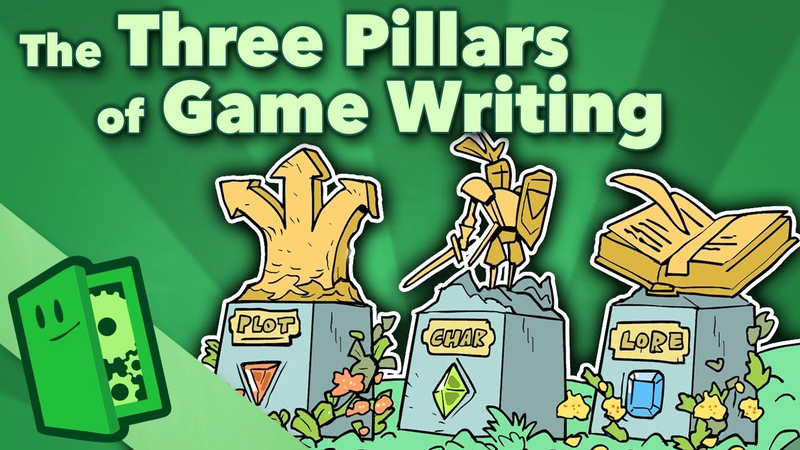
The Three Pillars of Game Writing - Plot, Character, Lore - Extra Credits
Key insights
6 takeaways- 01Plot functions as the sequence of events and should be tested early through written summaries to ensure the core narrative arc, twists, or messages are effective.
- 02Successful games typically anchor the player experience by mastering only one or two of the three narrative pillars to avoid diluting the overall story.
- 03Character-driven writing requires deep collaboration between writers, artists, and designers, as visual design and mechanical abilities often communicate identity more effectively than dialogue.
- 04Lore provides world-building and historical grounding, but it must be managed through a rigorous story bible to ensure consistency across environmental details and item descriptions.
- 05Developers should avoid overwhelming players with excessive backstory by ensuring that environmental and level design elements reflect the world's history organically.
- 06Game narrative should be built around one primary pillar—plot, character, or lore—rather than attempting to prioritize all three, which leads to unfocused storytelling and development inefficiencies.
Ask AI about this video
Transcript
When people talk about game writing, they usually talk about it as if it's one monolithic thing. It is not. It's actually three monolithic things. Real quick up top, say hi to our guest artist for this episode, Extra Sci-Fi Zone, David Weso. Thanks, David. There are three distinct pillars that make up what we offhandedly call game writing. Plot, character, and lore. Not all games need to focus on all of these equally. In fact, some of the best written games come from teams realizing which of these their game should focus on. While some of the most expensive failures in game writing come from teams that never stopped to separate these out and just try to deliver on all three. And even in those rare cases where you knock it out of the park on all of them, it's virtually impossible to do so without breaking your narrative down into these pieces and thinking about which aspects of your game are going to be used to deliver which. So, let's define these three pillars of game writing. Plot is simple. It's the actual storyline of the
piece. It's what you get if you strip away everything but what happens. It's also one of the easiest to confuse. Take Final Fantasy games for instance. People usually talk about Final Fantasy as if they were plot-driven games. But nearly every Final Fantasy game's plot boils down to a big bad threatens to destroy the world and a group of heroes band together to stop it. Some are slightly more complex, like in 10 where a young man gets teleported through time by an ancient portal demon fish that has to be held at bay by religious rituals and sacrifice. But fundamentally, it's big bad, end of the world, hero saves the day, ride chocobos off into the sunset. That's basically the plot to most of them. But the best Final Fantasies are the ones where the writers realized that Final Fantasy games aren't actually about plot. They're about character. Character writing is the aspect of game writing that fleshes out the characters and focuses on their lives and their struggles. It's the part that gives them personality, makes them feel holistic, and that makes them relatable or people you'd want to be. It's the aspect that makes villains not just seem like props and heroes not just be generic
do-gooders. It's moments like when you find out Mordin likes Gilbert and Sullivan or that Kratos had a hard time embracing his son. And as a writer, the interesting truth about these moments is that they often come at the expense of the plot. These sort of tiny touches where characters sit around a campfire and talk about their dreams or their family don't actually move the plot forward, which is completely fine. As whole games can seem amazingly well written even without paper-thin plot if they deliver characters to us we believe in and love. But games do have a finite amount of narrative space and it's important as a writer to understand which pillar is the most essential to the experience you're looking to convey. Which brings us to the third pillar, lore. Lore is everything that makes the world feel vibrant and alive. It's the stuff that makes it feel like the world you're playing in existed long before your characters got there and that it exists outside of whatever your characters are doing. It's the item descriptions in Dark Souls, the books in Skyrim, and the mouse-over text in BattleTech. It's also a lot more than those, but we'll talk about that as we
answer this question. What are the keys to delivering on each of the pillars well? Most importantly, we have to realize that what people call game writing isn't just about the written word. It's everything from level design to combat mechanics to how the characters look. What's usually termed game writing is actually equal parts writing and narrative design. So for each of these pillars, we'll consider both. Let's begin with plot. A game focused on plot has to do one of these things: be a story you haven't seen before, which actually is quite a lot of stories in the game world such as Firewatch or Gone Home, have a twist ala BioShock, or have something to say like This War of Mine. If it doesn't meet any of these criteria, you're probably not making a plot-focused game. Plot, luckily, has the most overlap with traditional writing. So if you are making a plot-centric game, just write a summary of your plot and share it with people. Do they think your twist is amazing or your novel or your tale meaningful? If not, it's back to the drawing board. And while plot is perhaps the most divorced of the three pillars, if you're going to have a twist ending,
and especially if there's something you're trying to say with your game, try to incorporate it into the mechanics as well. Papers, Please would be ineffective as a narrative if it weren't a narrative about knowing when to break the rules told through a game entirely about strictly following rules. To add character to your characters on the other hand, it's essential every part of your team is working closely together from the get-go. A player's first impression of every character is going to be the visuals. What do they look like? A bold warrior? An adept mage? A roguish space pirate? That look will guide your player's first impression of them. Along with that, how your characters move, how they dress, and how they hold themselves will say a lot about who they are. Now, that doesn't mean you shouldn't ever play against type. In fact, you should a lot of the time, but the visuals will still be a big part of defining what type you're playing against. No matter what you're doing, though, your art department can literally save you thousands of words when it comes to giving personality to your characters. So, make sure you're in sync with them. Next, there's mechanics. We've talked about this before, but your
player is going to spend a vast majority of the game not in text boxes or cutscenes. Rather, they're going to be out there doing things. What your character does says a lot about who they are. Imagine if Tracer had Reinhardt's mechanics. The character wouldn't be remotely the same. Along with that, think carefully about your voice stabs, the things your characters call out during gameplay. Those are not throwaway lines. Your players are going to hear those more than anything else in the game. Lastly, but perhaps most importantly, spend time thinking about who these characters really are. Not just what they do or what their role is in your world, but who are they? What are their hopes and dreams? What are their failings? Who was there before they got swept up into all of this? And what do they think about what's going on? Then, think about how they would embody all those things. Do they speak out about their problems or do they bottle things up? Do they act too quickly or do they think about things too long? It's the small details, not the broad strokes, that give characters character. So, you have to find them. Finally, we have lore. If the game is more about being a part of a living
world than actually having a traditional narrative, you simply have to find all the space you can to work lore in. This means not only item descriptions, in-game books, and loading screen text, the very world of your game itself needs to deliver that lore. Have a ruined castle? It can't just be any ruined castle. It has to have a history and a reason for being in ruins. And your level design should reflect that. Have a suit of armor from an old knightly order? Well, it better have their insignia on it. And so better everything else that comes from that group. Everything has to be specific and consistency is key. This is where a story Bible helps. I've found that when delivering plot or character-driven games, writers can, at times, actually get distracted by going too deep into the world and come up with enormous backstories that they'll never be able to deliver in game. But if you can avoid that pitfall and always remember that the player doesn't actually know all the head canon that you've never actually shown them, then story Bibles are very helpful, no matter what type of narrative you're creating. But in lore-driven games, they're essential. Write out everything. Know your world
inside and out. Put in as much detail as you can and, most importantly, put it together in some easily searchable way so that anytime anyone on the project is working on anything, it all remains consistent. So, those are the three pillars of game writing: plot, character, and lore. Almost every game will have some elements of all three, but I'd wager 80% of the games you've played that have great writing really only focused on one or two. See everybody next week. Woohoo!
Summary
Game writing is not a monolithic discipline but rather a composite of three distinct pillars: plot, character, and lore. Effective narrative design requires developers to identify which of these pillars is most essential to their specific project. Attempting to prioritize all three simultaneously often leads to unfocused storytelling and development inefficiencies. By intentionally selecting a primary focus, creators can better allocate their limited narrative space and ensure that the game’s mechanics, visuals, and writing work in concert to deliver a cohesive experience.
Plot serves as the sequence of events, functioning best when it offers a unique story, a compelling twist, or a meaningful message. Because plot is the most closely aligned with traditional writing, it should be tested early through summaries to ensure the core narrative arc is effective. Character-driven writing, by contrast, focuses on the internal lives, struggles, and personalities of the cast. This pillar relies heavily on collaboration between writers, artists, and gameplay designers, as a character’s visual design, movement, and mechanical abilities often communicate more about their identity than dialogue alone.
Lore encompasses the world-building that makes a setting feel vibrant, lived-in, and historically grounded. While lore is essential for immersion, it requires rigorous consistency, often managed through a comprehensive story bible. Developers must ensure that environmental details, such as level design and item descriptions, reflect the world’s history without overwhelming the player with unnecessary backstory. Ultimately, the most successful games typically excel by mastering one or two of these pillars, using them to anchor the player's experience rather than diluting the narrative by attempting to perfect all three.

















Comments