Game Development reports and market data
Documents

Biofeedback in Gameplay: How Valve Measures Physiology to Enhance Gaming Experience
Biofeedback serves as a transformative tool for quantifying player sentiment and enhancing the interactivity of digital environments.
- Valve utilizes real-time biometric data, including heart rate, skin conductance, and eye tracking, to replace estimated intensity levels in dynamic systems like the Left 4 Dead Director.
- Integrating physiological measurements allows developers to calibrate game difficulty and pacing with precision by incorporating a player's internal emotional state directly into the feedback loop.
- Research indicates that while players are highly responsive to in-game avatars that mirror their physiological states, direct visualization of these metrics can inadvertently increase player frustration.
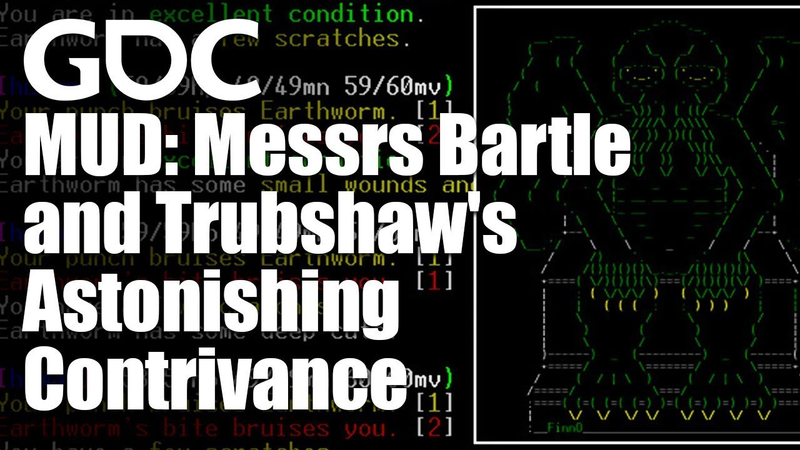
MUD: Messrs Bartle and Trubshaw's Astonishing Contrivance
The original Multi-User Dungeon, developed in 1978 by Richard Bartle and Roy Trubshaw, serves as a foundational case study for the importance of simulation-based design in virtual environments.
- The 1978 Multi-User Dungeon (MUD) by Richard Bartle and Roy Trubshaw demonstrates that immersive virtual worlds are best built on robust, logical mechanical systems rather than imitation of existing game tropes.
- Prioritizing consistent internal physics and environmental causality minimizes cognitive dissonance, allowing players to engage in emergent gameplay through environmental manipulation instead of scripted paths.
- The MUD's ten-level progression system was designed as a meritocratic structure to subvert rigid social hierarchies, illustrating that mechanics should function as a purposeful expression of the creator's vision.
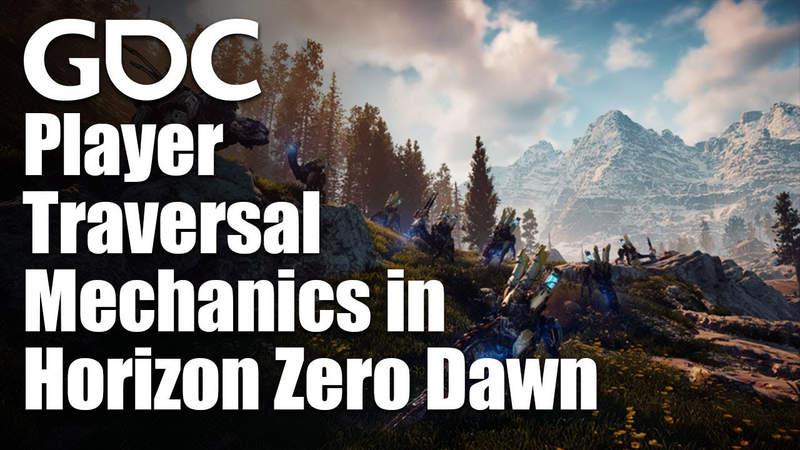
Player Traversal Mechanics in the Vast World of Horizon Zero Dawn
The development of traversal mechanics in Horizon Zero Dawn centers on achieving a balance between fluid, responsive player control and the technical demands of navigating a vast, procedurally generated open world.
- Horizon Zero Dawn prioritizes player agency by utilizing a start-stop movement system that minimizes animation latency, bypassing traditional navigation meshes to ensure high responsiveness.
- The engine employs a physics-based framework with collision probes to calculate stable ground planes, allowing the character to remain grounded on uneven terrain without sacrificing speed.
- Procedural leg adjustments via inverse kinematics and animation warping are used to refine context-aware vaulting animations and prevent visual artifacts across diverse environments.

The GDC 2018 Micro Postmortems
Game development success relies on balancing creative vision with rigorous technical and logistical constraints.
- Successful development requires balancing creative vision with rigorous technical and logistical constraints through iterative prototyping and strategic scoping.
- Technical limitations can be effectively masked to maintain high-fidelity visuals by utilizing specific techniques such as inverse kinematics and depth-mask shaders.
- Adopting film-industry 'previz' practices allows development teams to align stakeholder expectations rapidly and keep complex projects on schedule.

5 Reasons Why Game Development Is SO HARD!
Game development is a demanding professional pursuit that requires navigating significant psychological and operational hurdles.
- Developers must balance diverse, non-creative operational roles—including accounting, marketing, and community management—alongside core development, which frequently disrupts schedules and project deadlines.
- The rapid pace of technological evolution in the gaming industry forces developers into a perpetual cycle of entrepreneurship and continuous learning to maintain professional relevance.
- The iterative nature of skill acquisition often leads developers to view their past work with disdain, resulting in perfectionism that causes project abandonment.
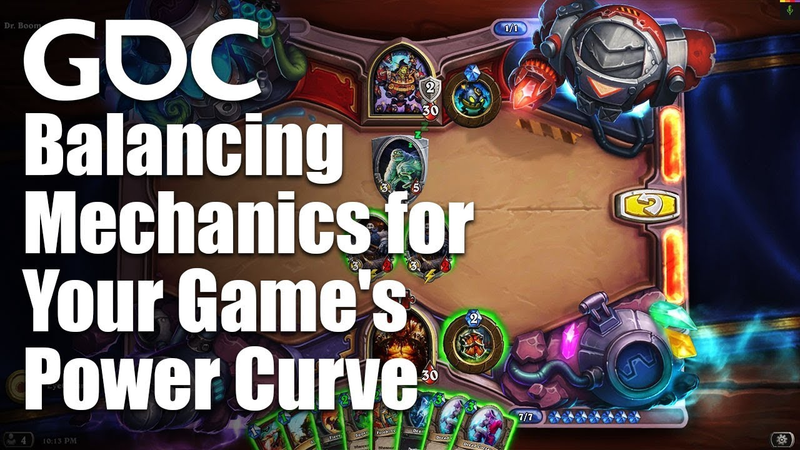
Board Game Design Day: Balancing Mechanics for Your Card Game's Unique Power Curve
Effective card game design relies on the strategic calibration of power curves, which are inherently non-linear due to the trade-offs between card cost, flexibility, and the risk of game termination.
- The power of a card is defined by its ratio of utility to cost, where higher-cost cards must provide significantly greater impact to justify the lack of flexibility and the difficulty of playing them late in a game.
- Games with automatic resource generation, like Hearthstone, require lower power ceilings for high-cost cards because players are guaranteed to reach those mana thresholds, whereas games like Magic: The Gathering must offer massive power payoffs to incentivize players to reach higher costs.
- Granularity in resource systems—such as Magic's ability to use color-specific mana or decimal-like cost adjustments—provides designers with more balancing 'knobs' compared to systems with rigid, chunky cost structures like Pokémon.

Five Tips To Making A Viral Game
Achieving viral success in game development relies on five core principles designed to maximize player engagement and marketability.
- Prioritize 'stickiness' by pairing juxtaposed, high-concept ideas to create an instantly recognizable premise that captures immediate attention.
- Ensure high variability in gameplay so that no two playthroughs are identical, which is essential for maintaining the interest of streamers and their audiences.
- Focus on 'game feel' by utilizing exaggerated animations, screen shake, and high-quality sound design to provide tactile, immersive feedback between player input and on-screen action.
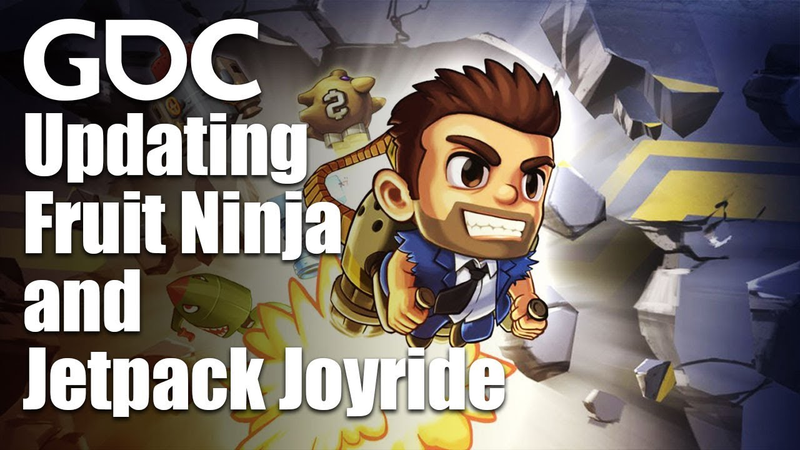
Iterating Design and Fighting Fires: Updating Fruit Ninja and Jetpack Joyride
The mobile gaming landscape demands a delicate balance between rapid iteration and the preservation of a title’s core identity.
- Maintain a design-first philosophy to filter community feedback, ensuring that new features do not compromise the integrity of the core gameplay loop.
- Implement a 'chaser update' model that pairs major content drops with rapid, community-focused patches to stabilize player retention and improve store ratings.
- Transition from simple currency-based shops to achievement-based progression systems to increase long-term player engagement and sense of accomplishment.

GET GAME IDEAS - The Ultimate Guide!
Developing a successful indie game begins with a high-quality concept that balances personal passion with market appeal.
- A successful game concept must balance market familiarity with a unique hook, ensuring the game is both recognizable to players and distinct enough to stand out in a crowded market.
- The development process should follow a three-step methodology: brainstorming familiar genres, innovating through unique mechanics or genre-blending, and simplifying the scope for realistic execution.
- To ensure a manageable project, developers must define clear victory conditions, obstacles, and a core decision-making loop while stripping away all non-essential features.

How To Make A Game ALONE (5 Secrets)!
Solo game development is increasingly viable due to significant advancements in software accessibility and industry shifts toward smaller, high-quality projects.
- Solo game development is now a sustainable career path due to the accessibility of modern engines like Unity and Unreal, which have replaced complex low-level coding with user-friendly interfaces.
- Market demand is shifting toward shorter, narrative-driven experiences that can be completed in one to two hours, favoring the limited production capacity of individual developers.
- Limiting project scope to a development cycle of five months to a year significantly increases the likelihood of project completion and prevents developer burnout.
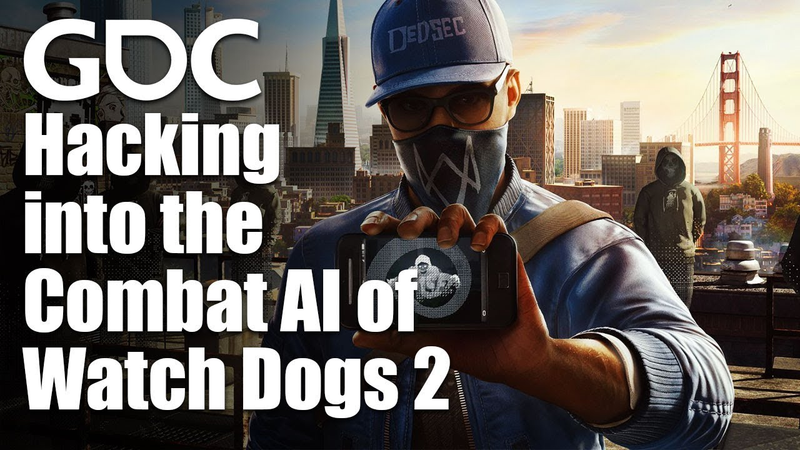
Hacking into the Combat AI of Watch Dogs 2
The combat artificial intelligence in Watch Dogs 2 relies on a multi-layered cover-selection system designed to balance tactical realism with computational efficiency.
- Watch Dogs 2 AI agents evaluate cover selection based on three primary criteria: distance to the target (optimized for weapon range), line of sight (ensuring a valid field of fire), and proximity to other agents (to avoid clumping and vulnerability to area-of-effect damage).
- To mitigate the player's ability to 'cheese' combat using unreachable vantage points like scissor lifts, developers implemented a special 'unreachable' AI mode where agents prioritize survivability and lateral movement toward cover rather than pathing directly toward the player.
- The AI uses three distinct cover-seeking behaviors: 'first cover' for immediate protection, 'neighboring cover' for repositioning during combat, and 'second cover' for tactical flanking or optimizing weapon range.

DON'T QUIT YOUR JOB FOR INDIE GAMES (5 Reasons)!
Transitioning to a full-time career in indie game development requires significant preparation and specific personal traits to ensure long-term viability.
- Establish a proven track record of completing projects before transitioning to full-time development, as successful game cycles often span several years.
- Maintain a stable day job while building a foundation to mitigate the financial volatility inherent in the indie game sector.
- Diversify revenue streams beyond initial game sales by actively exploring crowdfunding platforms like Kickstarter and Patreon, educational content, and publisher partnerships.
Writers
Games and companies
Games