Game Development reports and market data
Documents
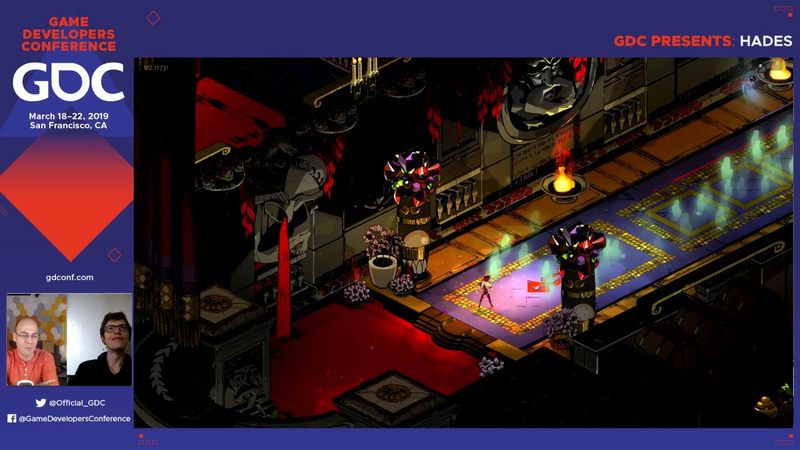
GDC plays Hades with Greg Kasavin
Supergiant Games’ development of Hades represents a strategic pivot toward iterative, community-driven design within the roguelike genre.
- Supergiant Games successfully transitioned from multi-year linear production cycles to an agile, monthly milestone cadence by utilizing the Early Access model on the Epic Games Store.
- The studio maintains high-quality, iterative development with a compact team of approximately 20 people, relying on direct feedback loops via platforms like Discord to refine gameplay and narrative in real time.
- Supergiant Games explicitly rejects industry-standard forced crunch by codifying internal values that prioritize work-life balance and individual responsibility.

Cosmic Top Secret: Do We Really Know Each Other?
The development of the autobiographical adventure game Cosmic Top Secret serves as a case study for integrating documentary storytelling with interactive game mechanics.
- Reality-based narratives can function as a primary design element, allowing developers to treat authentic historical facts with the same structural rigor as film or literature.
- Integrating real-world events into development—such as the creator’s father’s injury—can drive mechanical innovation, leading to unique features like the 'paper doll' aesthetic and paper-plane movement mechanics.
- The development of 'Cosmic Top Secret' utilized an interdependent, iterative process where narrative discoveries directly dictated changes to the game's mechanical systems.
Weaving 13 Prototypes into 1 Game: Lessons from Edith Finch
The development of What Remains of Edith Finch demonstrates that prioritizing emotional resonance and the concept of the sublime over traditional mechanical complexity is a viable strategy for creating cohesive narrative experiences.
- Giant Sparrow developed What Remains of Edith Finch with a team that scaled from 3 to 15 members, utilizing a prototyping-first approach to ensure each mechanic felt unique and intuitive without the need for traditional tutorials.
- To maintain creative alignment across the team, the project was guided by three core pillars—sublime, intimate, and murky—which served as a shorthand for decision-making and artistic direction.
- The team avoided rigid, long-term production maps in favor of iterative, direction-based development, acknowledging that static planning tools often become inaccurate and hinder the discovery of unexpected, high-quality gameplay moments.
3 Lies About Being An Indie Game Dev
The independent game development industry is often romanticized as a glamorous pursuit, but the reality involves significant professional challenges that contradict common misconceptions.
- Indie developers must allocate 40% to 50% of their total working time to marketing, audience building, and content creation to remain competitive in a saturated market.
- Relying exclusively on the sales of a single game after years of development is a high-risk strategy that frequently results in financial instability.
- Sustainable indie development requires transitioning from a hobbyist mindset to a business model that integrates diverse revenue streams throughout the entire development cycle.

My Game Dev Journey! - What a Ride...
This retrospective chronicles the evolution of an independent game developer’s career, tracing the progression from rudimentary childhood experiments to professional-grade projects.
- Success in independent game development relies on the ability to abandon non-viable projects and treat failures as essential learning opportunities for refining design sensibilities.
- Transitioning from solitary development to professional success requires balancing technical proficiency with practical business skills, specifically marketing and community building.
- Technical growth is best achieved through a consistent practice of building, documenting, and archiving projects, moving from simple mechanics to complex systems like custom pathfinding and procedural generation.
The 2011 Game Design Challenge
The 2011 Game Design Challenge examines the intersection of interactive media and metaphysical practice, positing that game design can serve as a framework for creating meaning, legacy, and spiritual connection.
- Game design can function as a framework for creating meaning and spiritual connection, potentially replacing traditional faith structures to address human needs for self-actualization.
- The philosophy of Propagationism posits that the primary purpose of life is the spread of ideas, suggesting digital environments should be redesigned to prioritize active intellectual growth over passive consumption.
- Designers can gamify social dynamics like devotion and conversion to foster community and influence, mirroring the way human cultures establish morality and purpose.
Polishing Uncharted 3
The primary objective of this analysis is to outline the strategies used by Naughty Dog to achieve high-level polish in game development, specifically focusing on the transition from a good product to an exceptional one.
- Naughty Dog allocates 20 to 25 percent of the total development schedule specifically for the alpha and beta polish phases to ensure high-level quality.
- The studio utilizes a rolling deadline system where game sections progress through alpha, beta, and gold stages independently to allow for focused resource allocation.
- Polish is defined as a distinct phase focused on refining presentation and removing imperfections, rather than iterating on core gameplay mechanics which should be finalized earlier.

Are You Wired To Be A Game Dev?
Determining whether one is suited for a career in game development is not contingent upon the commercial success of past projects, as even highly successful developers often experience early failures.
- The core aptitude for game development is a persistent, obsessive drive to construct new worlds, characters, and storylines.
- Successful game developers are defined by their internal motivation to manifest personal meaning through the act of creation rather than relying on external sources of purpose.
- A natural predisposition for game design is often evidenced by a lifelong tendency to gamify reality, such as creating complex systems, puzzles, or imaginative scenarios during childhood.

Episode 400! - Celebration - Extra Credits
The core philosophy behind the sustained production of game-centric educational content is the recognition that passion for the medium is essential to professional and personal well-being.
- Prioritizing the active consumption of games is a vital form of self-care that prevents professional burnout for industry creators and analysts.
- Neglecting to play games causes individuals to lose essential mechanisms for stress management and emotional regulation, leading to a disconnect from the industry's core purpose.
- Intentionally setting aside time to engage with games serves as a necessary reset that balances the labor of production with the appreciation of the final product.

Stop Shouting! Collaboration Through Candid Conversation
Productive collaboration in game development relies on reframing conflict as a vital component of team evolution rather than a threat to be avoided.
- Transform conflict into a tool for team evolution by reframing disagreements as necessary components of the development process rather than threats to be avoided.
- Prioritize psychological safety to ensure team members can express dissenting views without fear of hostility or personal character attacks.
- Address issues directly and privately after seeking permission to initiate the conversation, which minimizes defensiveness and keeps the focus on the problem.
3 People You MUST Know To Be Successful
Achieving professional success in the competitive indie game industry requires a strategic approach to networking and personal development.
- Accelerate professional growth by intentionally curating a network consisting of three specific archetypes: creatively successful mentors, functional adversaries, and energy-giving supporters.
- Engage with creatively successful mentors who have already achieved significant milestones to gain new perspectives and bypass the limitations of your immediate local environment.
- Maintain close proximity to adversaries who provide harsh criticism to build the emotional resilience and thick skin necessary for navigating public-facing community feedback.
3 Game Dev Excuses & Why They Suck
The contemporary landscape for independent game development has reached a point of unprecedented accessibility, rendering common barriers to entry largely obsolete.
- The democratization of development tools, such as Unity for multi-platform deployment and Blender for creative assets, has eliminated the high capital requirements that previously acted as barriers to entry.
- Modern indie game markets are sufficiently diverse to support niche concepts, with even specialized titles capable of securing a base of at least 10,000 dedicated players.
- The primary constraint on development is often the inefficient use of personal time rather than a lack of resources, as many individuals possess significant untapped leisure hours currently spent on passive consumption.
Writers
Games and companies
Games