Game Development reports and market data
Documents
Interview with Troy Baker: Could we see video game actors on Jimmy Fallon?
Video games have solidified their position as a primary medium for sophisticated storytelling, moving beyond their historical status as a secondary industry to become a central pillar of modern entertainment.
- Video games have transitioned from a secondary industry to a primary pillar of modern entertainment, driven by the increasing integration of high-profile Hollywood creators.
- The industry’s capacity for fostering deep empathy and human connection is fueling a cultural shift that makes the future mainstream visibility of game actors on platforms like late-night talk shows inevitable.
- Human-centric performance is the industry’s primary defense against artificial intelligence, as automated tools lack the capacity for the genuine artistic expression that audiences increasingly demand.
How User-Generated Games Are Becoming Hollywood Franchises
The historical narrative surrounding the supposed failure of video game adaptations is largely a byproduct of industry misalignment and a lack of deep integration between Hollywood and gaming culture.
- Successful game-to-screen adaptation requires moving away from 'smash and grab' IP licensing toward inclusive partnerships that prioritize the developer's vision and the community's trust.
- Story Kitchen operates on a producer-first business model, generating revenue only when projects enter active film or television production rather than through upfront consulting or retainer fees.
- Adaptation potential is determined by whether a game's core DNA evokes universal human emotions, such as the need for belonging, rather than relying solely on established lore or genre popularity.

Let's Review Your Games — Ep. 039
Effective indie game development relies on the strategic application of "juice"—the essential polish, sound design, and visual feedback that renders gameplay responsive and satisfying.
- Melee combat requires high-impact sensory feedback, specifically layering punch and crunch sound effects with visual cues like screen flashes, particle effects, and gore to make hits feel satisfying.
- Adding personal stakes or relational motivations, such as a vendetta against a specific antagonist, is more effective at driving player engagement than generic objectives like research or exploration.
- Voice acting is a critical component for indie demos to stand out; developers should utilize resources like voices.com to integrate professional audio early in the development process.

Inside the Hiring Playbook of Top-Performing Startups
Early-stage startups frequently falter by underestimating the time commitment required for recruitment and mistakenly assuming that capital or brand prestige alone will secure top-tier talent.
- Startups must treat hiring with the same analytical rigor as product development, prioritizing speed and consistent standards to maintain a competitive advantage over larger corporations.
- Founders should prioritize candidates with proven hands-on execution skills over those relying on corporate pedigree or management titles, as tactical output is paramount in early-stage environments.
- To compete with tech giants, startups must leverage unique value propositions such as mission-driven work, accelerated career growth, and increased individual autonomy.
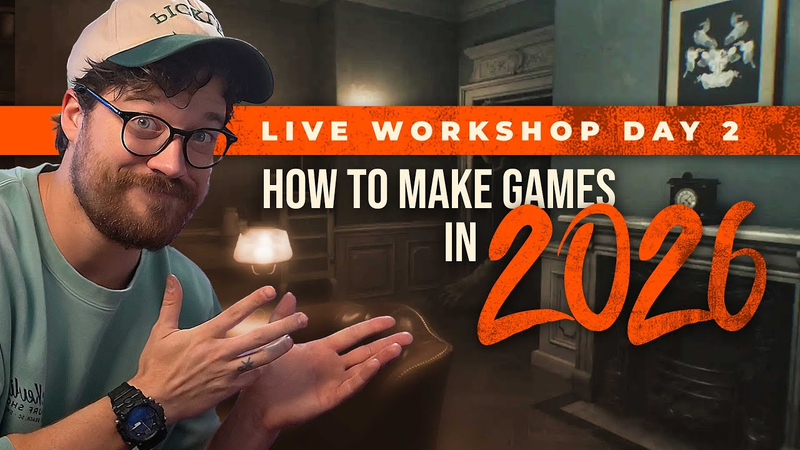
How To Make Games In 2026 (Workshop, Day 2)
Achieving AAA-quality visual fidelity in indie game development is highly feasible through a disciplined, cost-effective workflow centered on custom texture creation and meticulous set dressing.
- Indie developers can achieve AAA-quality visuals by replacing expensive 3D modeling and high-poly baking with original photography and royalty-free assets.
- Custom texture creation using tools like Photoshop and Materialize allows for the generation of normal, height, and smoothness maps to add depth to basic geometry.
- Adhering to Physically Based Rendering (PBR) principles, specifically the precise configuration of alpha channels for roughness and specular highlights, is essential for visual fidelity.

Is It Finally Time To Switch Engines?
The primary thesis of this discussion is that game developers should prioritize consistency and problem-solving over the frequent, unproductive debate surrounding game engine selection.
- Blaming a game engine for development issues or lack of success is a common distraction that rarely reflects the reality of professional game development.
- Successful developers prioritize consistency and problem-solving over engine-hopping, as switching tools is often a form of procrastination that prevents project completion.
- Engine-specific 'out-of-the-box' aesthetics can make games feel generic, so developers must be intentional with design to ensure their project has a unique look and feel.

Want To Make 3D Games? It's Easier Than You Think!
This presentation outlines a streamlined, cost-effective workflow for achieving a stylized, Firewatch-inspired aesthetic in 3D game development using Unity.
- Achieve a stylized, Firewatch-inspired aesthetic by removing specular information from materials and applying image-editing filters like oil paint and smart blurs to textures.
- Maintain consistent environmental scale by using a primitive cube—specifically half the height of the character controller—as a universal reference point for all assets.
- Streamline iteration by converting all external assets into editable formats like PSD and Blender files, eliminating the need for repetitive re-exporting.
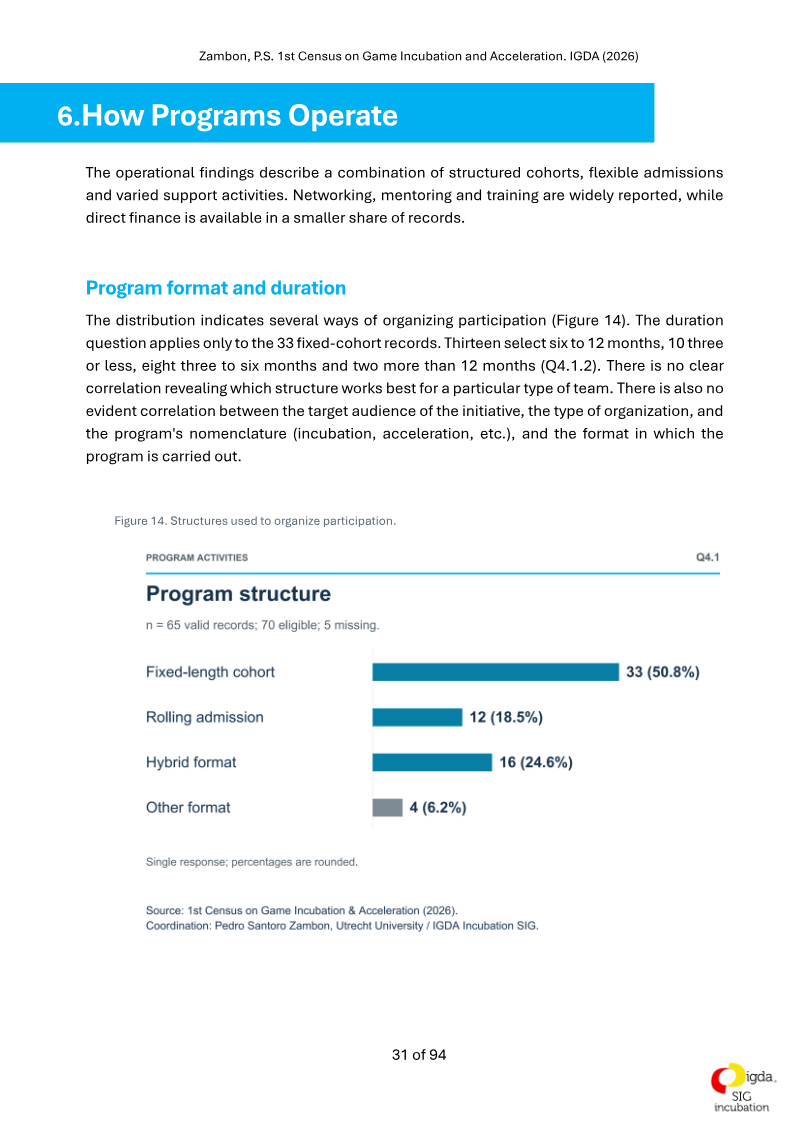
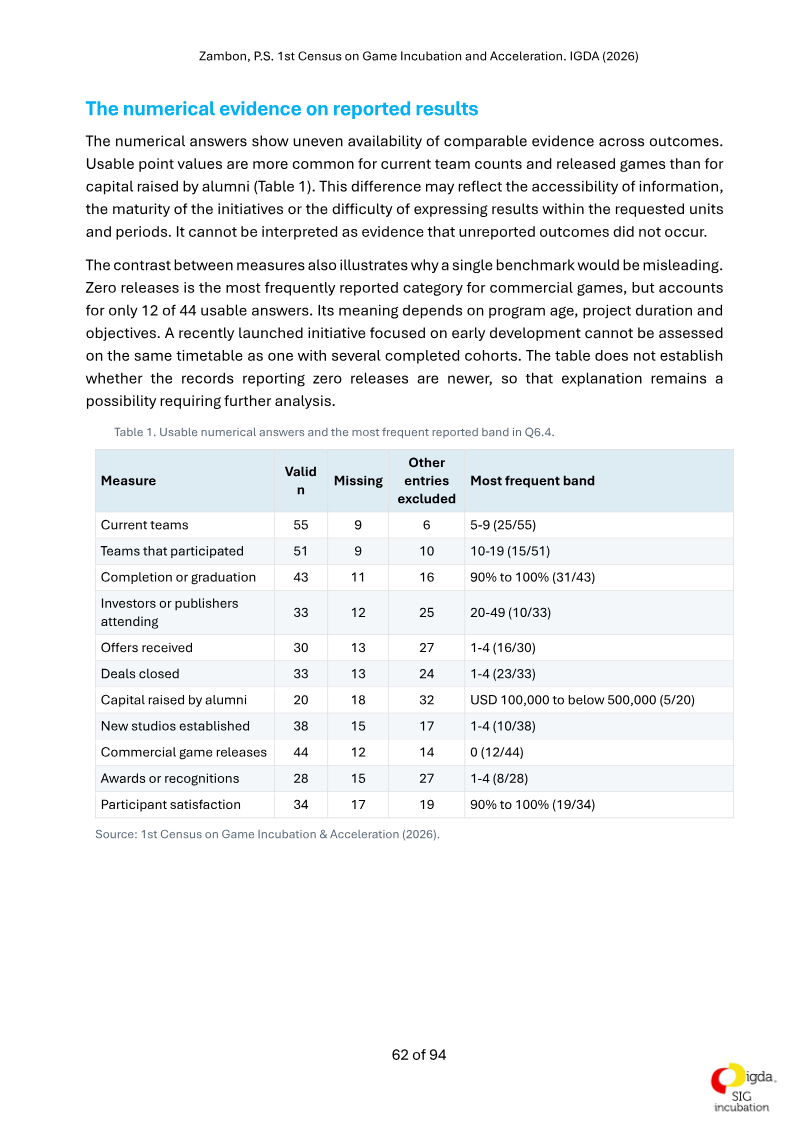

1st Census on Game Incubation and Acceleration
The global landscape of game incubation and acceleration is characterized by rapid expansion and high participant satisfaction, yet it remains structurally fragile.
- The game incubation sector is rapidly expanding, with over 70% of the 82 identified global programs established between 2020 and 2025.
- Alumni studio survival rates drop significantly over time, falling from over 70% at six months to 50% or lower by the five-year mark.
- While 92% of programs identify project funding as a critical challenge for studios, only 40% provide direct financial support, typically capped at under $50,000 per team.


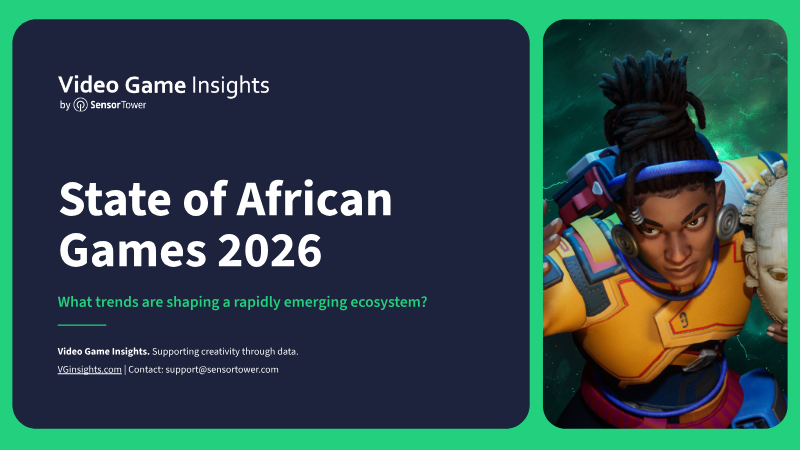
State of African Games 2026
The State of African Games 2026 report from Video Game Insights (Sensor Tower) offers a data-driven snapshot of how African-developed games perform on Steam, PlayStation and Xbox.
- South Africa dominates the African game development sector, accounting for all top-ten selling titles and contributing to a 2% share of global Steam unit sales.
- The industry is shifting from volume-driven growth to longer development cycles, evidenced by a decline in annual Steam releases from a peak of 23 in 2023 to 11 in 2025.
- There is a significant genre mismatch in the market, as action titles dominate release volume while simulation games achieve the highest median sales at approximately 372,000 units.
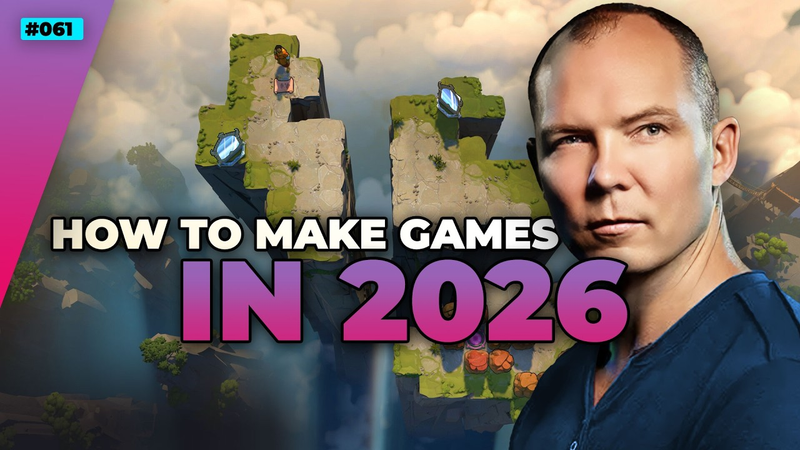
How To Make Indie Games In 2026 w/ Jonathan Blow — Full Time Game Dev Podcast Ep. 061
The modern indie game landscape is defined by intense competition and a precarious pricing environment, necessitating a strategic shift toward long-term discoverability.
- Jonathan Blow’s upcoming game, Order of the Sinking Star, represents a 10-year development cycle that involved building a custom game engine and a custom programming language from scratch.
- Steam remains the most accessible platform for indie developers to reach a large audience, though developers must still navigate the difficulty of standing out in a crowded marketplace.
- Large Language Models (LLMs) are effective for debugging specific issues by scanning multiple controllers and systems, but they struggle to maintain complex, multi-system constraints in larger codebases.

Overview of 2025 Achievements and Events: Dutch Games Association
The Dutch Games Association experienced a year of significant organizational expansion and increased industry influence throughout 2025.
- The Dutch Games Association (DGA) has identified the lack of tangible government policy outcomes as its primary hurdle, making the pursuit of formal policy support its central strategic priority for 2026.
- Membership grew by 20% in 2025, increasing from 150 to 180 entities following a restructured membership model and expanded operational capacity.
- The DGA assumed responsibility for essential industry support services previously managed by Dutch Game Garden to ensure continuity for the domestic sector.

Slipknot's Clown: Building Games Like You Build a Band
The development of Vern Earth, a custom Minecraft realm, represents a shift toward artist-led game design that prioritizes immersive world-building and surrealist expression over traditional commercial metrics.
- The development of the Vern Earth Minecraft realm prioritizes artist-led, surrealist world-building over traditional commercial metrics to foster deeper emotional resonance.
- Successful gaming collaborations require moving away from profit-driven constraints toward a model where artists act as core architects rather than just promotional figures.
- The project draws on three decades of experience in music and early modding culture to recreate the creative autonomy found in early titles like Quake.