Transcript
[music] Welcome to the Navit Gaming Podcast, where it is our mission to explore the business and future of video games. We bring together the industry's brightest builders, investors, and thinkers to keep a pulse on current events, dissect emerging trends and games, share lessons learned, and have a great time. This podcast is also part of Navik's growing ecosystem which ranges from free and premium research to consulting and advisory services. For more information, visit www.navic.co. This episode is brought to you by Lightseed Venture Partners. Lightseed is a globally leading venture capital firm with over $29 billion in capital under management and more than 500 investments across the US, Europe, and Asia. With its dedicated gaming practice, Lightseed Gaming, the firm is investing from over $7 billion in early and growth stage
capital, making it by far the largest fund focused on gaming and interactive technology. Lightseed's team combines deep expertise in gaming with a global multi-stage investment platform and a culture that truly puts founders first. Selected investments include Epic Games, Snap, and Stability AI, as well as game designers and producers who led the creation of titles like Fortnite, Call of Duty, League of Legends, Valerant, Starcraft 2, and many more. For more information, simply go to gaming.lsvp.com or check out the details in the show notes. Today's episode is brought to you by Model AI, a team using the latest breakthroughs in agentic AI to transform how games are tested. Instead of relying on brittle scripts or deep integrations, Model QA Plus uses computer vision and reasoning models so AI agents can actually play your game, finding bugs the same way a human would, only faster. Born from a company pivot earlier this
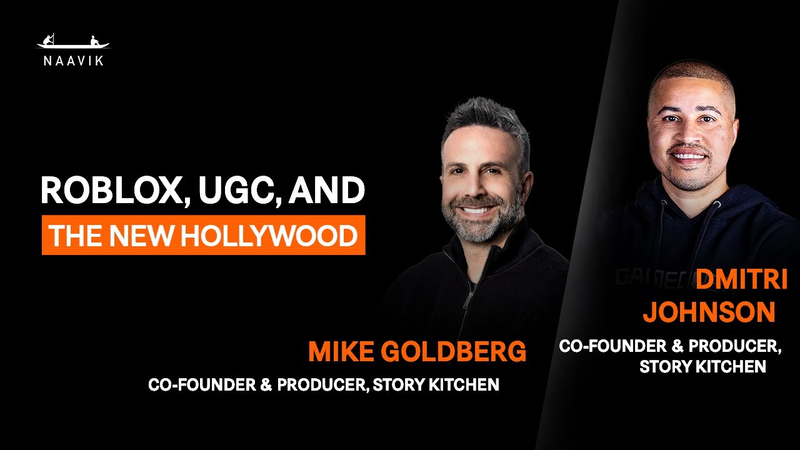
year, Model AI was rebuilt from the ground up to tackle one of gaming's hardest problems, generalizable gameplay without any integration work. The result is a blackbox QA platform that's fast, scalable, and learning with every run. Check them out at model.ai to see how AI is reshaping game QA and learn how your team can benefit. Now, let's go to the episode. Welcome to the Navic Gaming Podcast. I'm your host, Kaylee Moore. Today's episode is about how games are no longer just being adapted into movies and TV. They're becoming the foundation of an entirely new trans media ecosystem, especially in a world shaped by userenerated content. For years, video game adaptations were treated as a risky bet in Hollywood. But today, they're one of the most reliable engines for franchise building. But the rules are changing. We're moving beyond linear adaptations of closed single player games and into a future shaped by open worlds, creator communities, and platforms like Roblox where players
don't consume IP. They actively build it. My guests today are at the center of that shift. Since launching in 2022, Story Kitchen has become one of the most influential studios adapting games for film and television with projects spanning Tomb Raider, Just Cause, Streets of Rage, and Sonic the Hedgehog. And in November, they announced something that signaled where the space is heading next. A film adaptation of the Roblox hit Grow a Garden, a UGC driven game with more than 33 billion plays and at its peak, over 22 million concurrent players, surpassing even Fortnite's all-time high. Story Kitchen was founded by Dmitri Johnson, the producer who helped unlock Sonic the Hedgehog long before game adaptations were mainstream, and Mike Goldberg, formerly one of Hollywood's leading agents for video game IP, who's worked from everyone from Sega to Square Enix to the John Wick franchise. Today we're going to talk about what trans media looks like in a UGC first world, how communities change storytelling, why Roblox worlds are starting to resemble
living franchises, and what it means when the next generation of IP creators grows up creating inside games rather than just playing them. It's my pleasure to welcome Dimmitri and Mike of Story Kitchen to the podcast.
Thank you for having us. Hello. Thank you.
Thank you. All right. to start us off. Can you give us a quick intro into your background and how Story Kitchen came to be? What gap were you seeing that you wanted to fill?
Absolutely. Uh I will do it on behalf of Demetri and I and the team. So we launched Story Kitchen 3 years ago. We specialize in sourcing and adapting non-traditional intellectual property for film and television. Uh 96% of that IP, that intellectual property is video game IP. uh which is why the Neod Arcade Cabinet logo uh over our shoulder is our corporate gang side. We launched the company and we built it primarily off of Dimmitri's prior production company which you just mentioned, DJ2 Entertainment. DJ2 Entertainment uh had
two important differences from Story Kitchen. Difference one, DJ2 Entertainment was 100% focused on video game IP. Difference two, Hollywood didn't give a crap about game adaptations and why that was happening and it was uh very poor form but it thank God has since changed was really three major issues that we saw that Dimmitri sought to get ahead of. Problem one was that the uh journalists until recently loved to write these stories about video game adaptation curses. uh both game journalists as well as Hollywood journalists would print these stories which are very clickbaitable but at the end of the day they weren't true. The truth of the matter is unfortunately let's say 51% of movies and TV shows underperform or at least don't uh meet or exceed expectations and when you had a much smaller data set to pull from uh
what I mean is less games that are being adapted to big or small screen you had a smaller data set and that gave an incorrect correlation and it put together a narrative that didn't really exist. So there was no game adaptation curse. It just was fun talking points until Demetri Sonic. Uh the second problem which was a bigger problem was that until recently the women and men with greenlight power in Hollywood did not gain they did not get high on their own supply. So that would be commiserate to Ted Sarandos of Netflix or Peter Kramer the president of production at Universal Pictures uh being illiterate. Well, how are you gonna greenlight a script, a screenplay or a book if you don't know how to read? Same issue was happening until much more recently on the game side of Hollywood. And then the last issue that was the most concerning that we had to get ahead of was that for a hundred years of Hollywood, the the role of a producer when it came to underlying rights, when it came to intellectual property, the producers had
bad habits. And what they would do is what we would call smash and grab IP. So they would either option your intellectual property or do a shop agreement, but basically secure your rights for a finite amount of time and then run away from you. And maybe that's okay for life rights or for like an old book or for a short story, but you can't do that to video game intellectual property. You can't run away from the developer, from the publisher, from the both uh from both parties is you're abandoning the community. You're abandoning the fandom. And it really was to the detriment every time this happened. It's like you had to win a lotto to not mess it up. So what Dimmitri sought to do with DJ2 and pull it all the way back now to answer your question. What we have sought to do for Story Kitchen is the opposite. We are inclusive. We are all about earning the trust and as Dimmitri likes to say getting elected. We're all about finding men and women in power that uh understand games and below them in business affairs and in legal and
creative that are gamers or their family members or gamers so that we can have a great experience and most importantly being partnered and partners with our creators and for purposes of this pod obviously with our creators and UGC but again we look at our creators as literally part of the village when it comes to building this from soup to nuts and that was a a marquee difference. So at Story Kitchen, that is what we focus on. We are considered best-in-class at adapting games for film and television. We have an Amazon television first look deal that we just renewed to the end of 2028. We have a DreamWorks animated film first look deal uh that we've been servicing. And really, we work with all of the buyers, all of the movie studios, the streamers, the television networks, the streamers to tell stories at the highest level. We look to be that first friendly stop to help games move into LAR which takes us to today and to podcasts and to moving within the UGC space is we believe that the next area
of amazing storytelling has arrived and it it is within the UGC platform.
All right. And I can't wait to wait to dive deeper into the UGC side of things. But before we do, I want to talk about the nostalgic game side of things, too. Because one of the things that I think is really interesting is that you've become known for bringing back beloved IP from Sonic, Streets of Rage, Tomb Raiders, Tomb Raider. Why do the games that we loved decades ago keep finding new life?
So, Demetri, you want to take that?
No. Go, go, go. So there there's magic in it. And what we're always looking for, and we can unpack this further in a second, is how to find a way to tell a story that tickles you, that gets you excited, that scratches that itch that you know it's always been there, uh, but you didn't know what it was or how to get to it. And to that end, a lot of
these properties that you just mentioned have been magical and have evoked emotion at a certain point for enough people that inclusive of us that if we can find a unique and fun way to tell the story or tell the story again or tell that story again and differently, we we want to we want to scratch that itch. And so nostalgia is wildly powerful when done right and when not sold out. And then was I want to just dive a little bit deeper into that because I always love hearing more of your personal backgrounds too. When you look back at the games that you loved as kids, like which ones would you think were cinematic before we were even using that word?
Well, I would I would tie this answer into what Mike just said. And and it's uh it's funny. I was texting with a friend over the last couple of days who's, you know, in our industry and he's just like, "How do you guys keep picking these things and like keep winning and keep and I was like, there's no science to it." Like all like every
single thing we get behind like it selfishly starts with us. Like you know, Mike grew up with siblings. I grew up as an only child. So, you know, when my friends had to go home or if I had to leave a friend's house, it was just me and like my imagination. So, like a lot of the things that, you know, we are working on now are things that take us back to a certain, you know, point in time in our own lives. Like Teddy Ruxin, you know, we we're doing that as a hybrid film right now. Well, when I was, you know, in my room, everyone gone, it was me and Teddy in like, you know, those adventures. So, like being able to look at that in the same way you look at like a Sonic and it's like, okay, how do you take this and translate, you know, those feelings that we had, you know, in that moment in time to a new generation? And that's kind of like our approach with when we look at anything, like, you know, a is it fine just the way it is?
like like we I don't know if it was ever publicly, but we would have loved to have uh thrown our hat into the chase for the never- ending story.
Oh, yeah.
But but there's also a part of you that says, "Do you really need to touch that?" Like that was a masterpiece. So like, you know, you do have to like really ask yourself, you know, does it does it need to be does it need to be touched? Um, going back to your direct question, um, I I know it's funny, Mike's heard this story a few times. My mom for the first time, like a year or two ago, walks into my office, makes a joke about how it looks like my childhood bedroom, and then she asked me something that I had never been asked, which was, "When did you decide that, you know, video games could work for movies and TV shows?" And I had to think about it. I'm like, I never I've never been asked that. But then I actually knew the immediate answer and it's going to be the answer to your question. Uh it
was Streets of Rage. I remember playing Streets of Rage, Streets of Rage 2 specifically, and just being like this this is the greatest soundtrack of all time. Like this action like like this is a very true story. From the moment that I played Street of Rage 2, it was my mission to make that a movie one day. And our friends at Sega will tell you even before Sonic 1 was ever released, we were asking about Streets of Rage and mostly being told go make that work first. So like I I like to say that Sonic was like the test to get to Streets of Rage, which was the one like like if I never got anything made in this industry, had to get Streets of Rage made. And then what was the process like after Sonic was the success? Did they give you the green light immediately or was there in between time?
So Mike help me with with timeline here.
But I believe the next issue was not all rights that needed were were immediately available. I feel like there had been like animation rights or something had been given out. So we had to like kind of wait for all the rights to come back to Seiya and then just you know figuring out how do we translate this you know into it start an action franchise and you know at that time Mike was my agent and I was very fortunate that I happened to have the agent who put together one of the biggest action franchises of all time and John Wick so you know like I had a nice sounding board as we started trying to figure out how we could make Streets of Rage into the next action franchise. Oh, that's so cool. All right, I want to shift a little bit into what actually makes games adaptable. Are there certain genres or design philosophies that consistently translate better when it comes to film or TV?
I mean, again, like it's um this this sounds I guess a little corny
um but it typically starts with does it make you feel something? And this is where I would say it it's not genre exclusive. It's not like it it's does it make you feel something? Does it take you on a journey? Like I'm playing I I haven't told Mike yet, but I'm playing uh this indie game right now that it it's it's it's so far emotional. It's like it's forcing you to live through your own life and analyzing how you were as a human. And like I love that. Like I love that games can get into these deep philosophical like conversations and people especially those who don't play games are like wait that's that's a that's a game. Um, so if you look at our slate and like yes, there are the Tomb Raiders and like we love those things too, but like we have a lot of indie stuff on there and part of that is like a lot of these indie storytellers will
go there. Like they'll tell stories that you wouldn't normally look at as you know being something that would be, you know, a quote unquote game. Um, so we typically start there. in that, you know, then you look at the data and analyze the industry, you know, what are people looking for, what's working. Um, you know, we we meet with writers, directors, actors all day, every day. So, we kind of have an idea of like who's looking for what. And then you just start putting your village together, you know. Um, and we we're very upfront with everyone like it is very difficult to get film and TV made. So like anything that we do together um you know do as as a team at Story Kitchen we have to love we have to care. You have to go to bed and wake up thinking about this thing. Um because it could be a decade plus before you actually get to go make it. Um so long-winded way of saying we have to care has to make us feel something. Uh Mike please add on anything that I miss.
Well, I would add uh not every game should be adapted as Demetria mentioned a few moments ago. Some are just perfect as they are and shouldn't be touched. And then not every game should be adapted right now. So, it could be a game that makes
wild sense to adapt, but the ideal version. Let's say it's a liveaction TV show and it should be anthol anthological. And right now is not a great time for anthology. Far Cry aside, like it took two FX heavyweights to do that. um a showrunner and a huge actor that have had great FX success to do that. Um but short of that, if that's if if a liveaction anthological series is ideal and Hollywood is not making those, we would never recommend trying to do it and setting yourself up for failure. Uh so it it depends on timing as well as the the creative and the engine. And then there there are times where there isn't a creative engine uh nearly as
clean and as obvious as games like Tomb Raider or like Life is Strange that we have a series order at Amazon and we start shooting this summer. And those are the games where it's more of a sandbox. And if one gets really excited, if we get really excited, we work to figure that out. and a great example.
Well, let's let's so so jumping in there, this is going to tie in our conversation later with UGC because a question we get all the time is how do you adapt that? This this all ties in.
Yeah. So, a great example would be Vampire Survivors when that launched and they're very little creative. There's been more that's been given to players and then hinted beyond, but when that launched, uh we loved the tone. We loved the sarcasm and Stark and we loved the game. And the only way we could come up with was animated TV that this could be a comedic version of Castlevania, if you will, the Castlevania Netflix TV show. And we started to put together the village to go that route. We partnered
with animation company uh out of Austin, Texas, Powerhouse Animation, who uh did beautiful work for our Tomb Raider show on Netflix. Uh Tomb Raider the legend Laura Croft. They also designed our company logo. So we have a great affinity for them uh regardless, but we started to work towards that direction. And then we got a call from our talent agency to view a new Lionsgate movie that was about to come out. A movie called Boy Kills World. We saw this crazy movie in the William Morris Endeavor screening room and lost our minds because it's bonkers, it's Zombie Land, it's Deadpool, like it's so clever and it's genre. And we're like, wait a minute, that's how you could do Vampire Survivors as a movie. And we need that guy or girl, but it was a guy. And we got that filmmaker. and we started to rebuild Vampire Survivors from an animated series to a live action movie. So when there's a sandbox that excites us, we will work and be flexible to figure out the version that makes the most sense for the game, for Hollywood,
and then most importantly for the players, for the fans.
It's amazing. I do want to have like one kind of follow-up question to that. Was there ever a project that you had to pass on for whatever reason, maybe a timing reason, that you deeply regret?
Probably not for this uh for this record.
Fair. Fair. We'll take that one offline.
I I I certainly had an answer.
I know you did.
All right.
Oh, you know what? It's interesting. Demetri, are you gonna say what uh our our our friend uh then Five Nights?
Yeah, that's the one.
And it wasn't uh there was a you'll say that you'll say nice you'll say nicer than me.
A DJ2 colleague uh when Five Nights hit not the movie like the game shipped. Dimmitri lost his mind. uh a very well-educated like three decade deep um in the game
space colleague uh deterred Demetri's determination and they respectfully passed on engaging and obviously Five Nights is incredible. Both movies had done extraordinary and uh it's it's like it's my paranormal activity. Like I brought in Paranormal Activity when I was a junior executive and my boss not only passed on it, she hated it and told me to stop doing turning in projects for weekend read for a month. Weekend read is every week you read or watch something and then you bring it to the company that Monday morning to talk about it if it's a a great sample or b it's available. It's something you should go after. And I was at Joel Silver's company, Silver Pictures Dark Castle. And I got it slipped to me by Screamfest. It was it was just a DVD that was made in San Diego for $14,000. And the CEO of Fatter Screamfest, Rachel Bowski, gave it to me. He was like, "You have to watch this." And I watched it. I lost my mind. Put on Weekend Reed and uh it was not wellreceived. Criminal Activity is like his five nights where it's like, "Man,
they should have listened. That would have been infectious.
I will I will say the the folks who did end up making uh Paranormal uh they they gave me a copy of the original VHS mic on my side and uh it was better. It was better than what actually hit the theater.
How about this? Same producer got both our projects. Jason Blum.
Oh my god, that is true.
He got Paranormal and he got Five Nights. We both saw it first.
Here's what I would say. Five Nights was definitely the moment where I stopped uh listening to other people. And if if that and so I'm I'm I I I tend to see moving pictures with music and it was the music in Five Nights the the the the theme song like that that hooked first and then it was like oh yeah totally see this and yeah was was talked out of it. That would be the last time. Here's what I will say. one of our best friends in the business, Russell Binder, uh is behind it and if
not us, you could not have a better human, you know, uh rooting for your brand. So, so at least it's in good hands.
Yeah, both have done very well.
Thank you guys for sharing. Uh that would be I think it's really important that those moments in your career when you stop listening to other people. Um so yeah, thank you for sharing. I'm going to totally switch gears now. You know, this isn't an Avid Gaming podcast. A lot of the people listening are in the gaming world, maybe know a little bit about the entertainment world, but are definitely not as entrenched as you guys. And I want to ground this in reality for a second. So for the people who listening who might not understand this side of the industry, can you just tell us like what's your business model? How does Story Kitchen make money
other than getting paid for this podcast?
Of course.
Just kidding. So, so, so we actually love this question because this question is one of our advantages. Uh, which is we make money by never charging our partners and we want to emphasize that. Um,
and Mike, I know you you highlighted this.
Yes, that is true. One, uh, there's many ways to make money. They're not all like fair and rational and correct, but the to iterate on what Demetri said a second ago, there have been uh men and women in Hollywood who run around and they ask you to pay them. And whether they ask you to pay them a fee, which is wild, or even worse, some type of monthly consulting fee to help you unpack and figure out Hollywood, uh, also not okay. That's not how it's supposed to work. how it's supposed to work and we do it in a very hands above board altruistic way because again we want to earn your trust and keep it as Hollywood like games is a very reputationbased industry it's a very small industry it feels massive and at times the reach is global but it's it is a community it's a village is we only make money uh generate revenue for story kitchen when we are producing something so when we are actually in production in film or
television we get paid per uh produced or per per episode of TV show produced. Which means if we are unsuccessful at adapting your game, we have failed and we're not getting paid or we've done a bad job, we're not going to get a chance to make a second movie, a sequel, a prequel, a remake. We're not going to get a chance of a second or third season of television. So we are incentivized to successfully adapt your project and to do a great enough job that we get to make more of them like more Sonics, more Tomb Raiders. So for us, it's it's when we actually get to be boots on the ground producing. So what that means is all of the work between start of our conversation with you and producing is speculative. We could spend a hundred or a thousand man hours and not actually get the green light and get to move into production and that's it. Like we have unfortunately part of friends and we got the opportunity to try and get it adapted but that is the clean way it's supposed to uh operate.
Okay. In what percentage, just roughly ballpark, what percentage of those, let's say more than initial conversations where you're actively working on something, what percentage of those turn into like films or TV shows that you actually get to produce?
It's hard to say because we're still a young company and also the entertainment industry in linear is constantly evolving. So, our batting average like we can give a much better assessment when we're at the 10-year mark of how it looked.
I I I would I would take that a different way. It's hard to say because we we don't quit. So, one of the best and current examples is Life is Strange, you know, like we were very fortunate to um partner on that, you know, before uh the the first game came out. And you know, Mike and I together, I think have you know, what sold it three times and
you know, like it it was just it was one of those that was too special to just let fade away in like development hell or just like h couldn't get it done and we just kept going back, going back, going back. And you know, being a believer that the universe does stuff when it's supposed to, when the timing is right, we could not have a more incredible team than we do right now. Uh it's, you know, as someone who has lived with this IP for so long, like the the approach to the adaptation feels fresh and new even to us and exciting and, you know, it's one of those that'll be worth, you know, the 10year u you know, struggle to get this to the screen. So, like it's hard to say like batting average cuz like it's very rare that we walk away from something and be like, h couldn't get it done.
Like, and it goes back to to the earlier point. We only get behind these things because we care. And if we care, we pretty much have to have someone break up with us to move on from it. Because
if we care, we're going to keep dry. And and you know, the running joke is a lot of these things, you know, the first movie or the first season, we we we make a I mean, it's a depressing joke, but that we probably lost money on those first projects if you factor in all the years of not being paid to try to get these things to screen. So So yeah, you have to care.
I like that. And and you know what, that that's right. And and I'm gonna go off that. It it it's all the appetite. Like if there is the willingness to continue pushing it forward. Um, so for example, Sleeping Dogs from Scranics that has hasn't been out a new game in so many years and there's been a lot of press over the last few days over this winter break about Simulu uh having uh still starring which is true that a director off Nobody 2 is coming on to direct Teemo can't confirm or deny that sounds pretty accurate to me and that has been
if you go if you if you if you go to his Instagram I think he did confirm
and then they talk about the history of Sleeping Dogs with Donna Yen. That is true. That was the the part that was missing in the last few days of those articles was Dimmitri and DJ2 as part of it. Like we have been in it with Squaredex on unpacking that amazing game franchise into a movie for many years now and we've never been closer and we've been given the runway to do this by Square and that's all we need like Demetri's Point passion and we need the runway and eventually these things coales and funny enough uh when I was an agent I actually sold the Nobody franchise so to see the Nobody to filmmaker move to sleeping dogs I'm like there we go and The Nobody Too writer we have announced is Honor Screen's Just Cause adaptation at Universal, Aaron uh Rubin. And it's just it's runway passion and runway. And honestly, the odds and the percentages get better every year because of that.
Yeah. And I'm sure the timing component that you also talked about earlier too
comes into effect. You know, 10 years from now, you'll be able to have projects that wouldn't have been green lit even two years ago. that depending on on trends and what's hot in Hollywood will likely be green lit in the future.
And now we have more men and women in green light power. So for example, you know, depending on the day and the press cycle, David Ellison, did David Ellison is a massive gamer. He personally called us earlier this year as he was part of the split fiction bidding war when we were out with that uh feature film adaptation package with Hazite with John Chu directing and Sydney Sweeney co-starring and Rhett Ree and Paul Warick adapting and it was tough like David is a passionate gamer and it's awesome to know that a passionate gamer is now in charge of Paramount possibly in charge of Warner Brothers has Skyance Paramount and is one of the leaders of the industry as he's a bonafide gamer. That's amazing. I didn't know that.
Let me see. Yeah. Do you know what what his favorite game is by any chance? Uh
I think I think he think he just got the
rights for that.
He's pretty big in Call of Duty. Pretty big in a COD, but not just I mean he I I believe he's a PlayStation 5 first player, but he's a big gamer.
Very cool. Okay, guys. I'm going to shift gears into my favorite topic, which is one of the main reasons I wanted to have you on the podcast, which is UGC is the new frontier of trans media. So, I want to just zoom out for a second. Last year on this podcast, uh, the Navic podcast, they did a trans media focused episode and Shahara Sarak, who's the CMO from Overwolf, laid out a really, I think a really compelling framework that stuck with me. He said game one was single player, game two was multiplayer, game three is UGC first platforms like the Roblox, the Minecraft, the Overwolf, the Fortnites of the world. And it really changes not just how gamers game, but how gamers create? And so I want to talk to you guys about when gamers are creating, how does that shift change what IP even means?
I I have such big thoughts around the these types of questions. For me, I I I grew up in a certain era, the big camcorder era, then the smaller camcorder era where I was constantly creating content. difference is we uh and I speak for the royal we and myself uh you know we were of the dial up AOL era where the idea of putting an entire short film or any kind of real content online was not a possibility. So to see and I and I liken UDC to what was the beginning of YouTube where you have these people who have stories and and things they need to get out into the world who may not have access to Hollywood per se, but because you have these tools that allow you to go from human to human, you can get your stories out there. And I feel like in the same way YouTube was largely ignored until it
became a monster and now everyone's trying to get on that train. Um, UGC feels like that is where this next generation of storytellers is is kind of coming from. And it it's very easy to just go and dismiss as like these silly, you know, uh, lowfi games. And sure, a lot of Hollywood will do that until again it's too late and it's a monster that they can't get, you know, to be part of. Um, for us, we look at all IP and it could be from a one two person team out of Australia. Uh, like Mike said, you know, we had our final Zim of the year with a team who came on a Saturday from Vietnam. Um, who are just, you know, telling stories with the tools available to them. We don't care if it's uh a mobile a a a sketch. Like great storytelling is great storytelling. And you know, you have to look where audiences are responding. And Mike uh he
lives with a great test uh cycle for us, which are his two twin boys who think he is a lord right now because of the UGC uh activities we are currently involved in. And and you can't I mean you can ignore it, but it would be foolish and it would be in the same way studio execs ignored us back in the 2010s, you know, when we were saying uh traditional, you know, boxed, you know, games that you go to Best Buy to get, you know, could work as movie and TV. That's UDC right now. Like there is storytelling happening there. there are creators who are speaking to an entire generation that may be a little younger than us, but you cannot ignore that. Um, so we we try to keep our ears open. We try to see consume uh you know like if we're not on our Steam deck, Mike's, you know, playing Roblox, you know, I'm on my PS5, like we try to take in and consume everything and just find those stories
that that connect with us first and pull us in first and then feels like something that we need to help get out to a larger audience.
And that's a perfect segue into our conversation about Roblox specifically grow a garden. So, as I mentioned earlier in the intro, in November, you announced that you're producing the Grow a Garden movie in Roblox. And I have a couple questions related to that. So, first of all, what what made the moment feel right is going to be question number one. But as a followup, like obviously incredible numbers, right? But as everyone knows, for movies it takes quite a lot of time. So, I'm not even sure when this movie will come out. Maybe two years. Does that sound accurate? Or is there any
We had a We had a major attachment just before break that uh might speed that up a little.
Major major attachment. A+.
Great. Well, fingers crossed. But let's say even if it's a year from now, are you concerned that grow a garden won't be as popular as it is right now? Do you
are you concerned about staying power with UGC titles is my question.
No. And and it's funny because even the people from that world who live that world every day, they they're very honest about that same question. It's it's why we uh often say we don't chase heat. Like we don't chase something because of sales numbers. We don't chase something because of how many people are playing it cuz that's a fool's mission. Um if that if the strength of why you're trying to do something adapt something is because it's sold a lot, you're you're in a fool's errand. So this is Grow a Garden is an interesting story. So we have really good friends of the Story Kitchen family. uh both named John's over in Moonrock who had been flagging Grow a Garden for us pretty much top of the year and we we kind of respectfully was like h we're probably not the best ones for that don't get it and then we we finally took some time with it and said okay we get it now and
they're like you you get it now like we think so we think we have a way in like let's just talk to the team over there and we'll share our thoughts and if they like it they like it and if they you know, we totally respect that. And what we found was a story that we think works regardless of if it's, you know, the most concurrent played game tomorrow or not. Um, and for us, that's that's the key the key part like it it the story has to stand on its own. The the reason for it being adapt has to stand in its own. And yeah, if the the fans are still there, then fantastic.
Oh, wait. But I kind of want to dive deeper in that because obviously it's not a traditional narrative game with lore defined characters or like generations of fans like why does something like that still make sense to adapt?
We tried to so specifically in Grow Garden we try to work backwards like we were trying to look at what was it in the DNA of that IP that that made people
want to go back to it and play it. And like sure, some of it's like you'll get like just casual gamers. You want to just jump in, jump out, but there's like this sense of community. Okay, how do we how do we translate that? Um the actual like act of like you're growing a garden. Okay, how do we take that and make this make sense for a film? Um, you know, we we we really broke down in our opinion what we think are the are the pillars that are like people are responding to
and it's like and then how do we do this in a way where we bring this to a screen and now it works for my mom, now it works for my grandmother. Like like that's that's our process. Um, you know, like how do Mike's 10-year-old boys still love this when they go to see dad's movie and and not have them say, "This isn't what we love about the game,
Dad. Like, you suck." Like, we we we have to look at all those things and then do it in a way that that honors honors the original audience. You know, we obviously want to honor, you know, what the creators went into it for. Um, but it still has to work. s to work as a film, sust. Um I don't I don't know, Mike, if you want to add to that.
Yeah. Um first off, uh going back a couple seconds, Sonic was not on fire video game franchise when that first movie came out in February 2020, but it but it became a box office and critical success. And since then, Sonic is, I think, a $13 billion brand, but it was not when we got started. When Dimmitri got started. Also, when I was an agent, I sold Violent Night, which is now two movies, Nobody, which is two movies. John Wick, which is a lot of movies. Those had no pre-existing awareness because they were original ideas. Uh, but they were wellexecuted original ideas. So going
back to Dimmitri's point about this, whether the numbers are extraordinary or non-existent, if we're fired up about the area, about the idea, about the world, about the tone, if it feels magical to us and we think we can translate that to others, that is our north star. And then for for Goen specifically, the game is magical. And the idea like in a dark divisive moment both in the US as well as global like that is not this this is bright. This is fun. This is vibrant. This is having a green thumb. I mean I've grown and unfortunately uh accidentally killed so many fruits and vegetables and flowers with my kids. Like there is something universal about the idea of growing things of growing a garden. And then what the game franchise has done so well is letting players tell their own stories. And for us, that's a sandbox build. So to Demetri's uh point a moment
ago about those pillars of what we look for, the DNA, there are so many things that are magical about Grow Garden literally and figuratively. For us, it's not to replace playing the game, but it's to enhance those that are fans and bring in people who don't yet know about it or haven't played it to understand there's something great we can do as a two-hour movie. And if you like the movie, maybe you take a take a crack at the game, too. And just and and going back to what Mike said, um, you know, about about these things. So, like using Sonic, like you know, my mom sitting next to me at the premiere, like other than passing me, seeing me play the game, she's not a Sonic expert, but when you have that scene where he's sitting on the counter and you see the holes in his shoes, and you realize this is ultimately an orphan who just wants a family, wants a community, wants to belong. Like, I don't care if you ever play a game. Like, those are real grounded feelings that are going to
smack you. And that's what we try to do with any of these things. It's like what are those real human emotions that we can bring to, you know, our projects that is relatable no matter what.
Yeah. I want to go back to one thing you just said, Mike, about, you know, for the people who maybe have never played the game, watch the movie, maybe it will make them want to play the game. It's like really the trans media ecosystem, right? And it feels like we're moving more into that than just oneoff adaptations. Like do you see it that way? Like how do you see the ecosystem as a whole changing?
So we try to be very organic about it because what we're not trying to do is be a commercial. We're not licensing executives. We're not business development. Like we are storytellers and we are storytellers narratively and linear. So for us, our primary objective is finding a way to tell a story that could stand on its own. Uh like is it can we make it a great movie? Can we make it a great season of television?
Beyond that, if we've done our jobs right, hopefully you will want to come back and rewatch the movie or rewatch the TV show, see more movies and more TV shows. And this is that exciting moment of trans media. If you love it and you want to be a part of it, you want to continue to participate whether that's and how people show and share their participation like my kids like wearing the t-shirts, wearing the ball caps, playing the games, um really finding it where it is, whether it's native or it grows into that space. Pun not intended, but it kind of works here. So for us it is in Grow Garden specifically we want to make a great movie and if we make a great movie it will most likely it should bring in people across the Grow Garden ecosystem which means everybody wins because holistically if we are doing this correctly it's supposed to fire in all cylinders but for us we don't own Grow Garden. We are not backend participants in Grow Garden. We are movie makers here. So, we're here to
make a great movie and to ensure that the men and women that are involved in the Grow Garden franchise on the game side are happy, are supportive, and are enjoying this so that we can all win together. So, you know, we've talked obviously about Grow Garden Sonic or IP that it's existed and then is made into a movie, but I'm wondering if you're seeing uh new games that are coming out that want to partner for TV shows or for movies timed more at launch. Is that a trend that you're seeing? Is that even possible to to plan out timeline wise?
We just announced one uh a few weeks ago uh in King Makers. You know, that's that's a game that we were uh very fortunate to get to play a build of last year. And like look, everything that Hollywood school teaches you is runaway. It's period. It's expensive. Like
everything about that game should have been a hard pass just because the rules tell you like you're going to get a pass. Game's on out. hasn't sold a single copy, but we couldn't we couldn't stop going back to it like this idea. And one of the things that the devs did is like they really spent time grounding what could just easily be a batched crazy idea in real history. And that that hooked us and and you know, we were very fortunate to have a partner in Netflix who preempted the town, came in, could not be more excited about a game that's not even out yet. It's amazing. How does collaborating with major studios, game publishing studios differ from working with UGC creators or indie developers?
Uh kind of examples would be what? Square, Bandai, Namco, Sega, for example.
Yes, for example.
Um it's a different process. Uh uh
working with UGC creators is typically more streamlined. It's similar to working with an indie game developer with a indie or even the smaller doublea's where there's less red tape and corporate to understand and get through they all come with their unique challenges but I will say at least for efficacy to get to the people that can approve that can say yes that could be a signatory it's cleaner and you can move faster in that regard so um tube raider which we are doing twice over. We have animated Tomb Raider where our season 2 premiere on Netflix earlier this year, this month rather. And we have live action Tomb Raider at Amazon that start shooting next month. That was an interesting process where the first deal uh adaptation deal was done under Square and the second adaptation deal was done under Embracer Group cuz in the middle Square sold the game studio Crystal Dynamics to Embracer Group. It always took like a year each time to like work
through the process and the deal making and the long form agreements, but we got there both times. Um, that is it's really time. It it will take longer uh to have the right people sign off at the right time with the right needs met, but we're flexible. We're if we're given enough time to do something and we could keep our passion uh at that high level we always want it to be, it just it stretches out the time horizon, but we're still going to get it done. Got it. And then so a lot of people listening to this, especially the UGC creators, might be thinking, I'd love to take my IP across mediums someday. For someone who's building inside Roblox or on Curse Forge uh or in UFN, what advice would you give them if they're already thinking about IP expansion?
I would tell them don't. And by that I mean so there's a [laughter] Mike Mike's heard me go on about this. There's a game out of Australia that
started with just seeing great So full disclosure Mike and I uh we we are realtors for the BAFTA game awards and one of the perks is you get everything you get every game that exists on the planet for that year. And just this cover art got my attention. I'm like, take this for a spin. Very like 8bit bitty kind of look. Nothing that screams like massive Hollywood tinpole movie and the story pulled me in. The music pulled me in. We didn't know them. We didn't know anything about them. Two person team. Tracked them down. And the conversation we had, and this is a long way to get to your to your question, they they couldn't believe that Hollywood producers thought that their game could be a movie or TV show. And I find that majority of the time that's the reaction we get when we track someone down. Going back to your I think two questions ago about going after a game before it's released. We right
before the holiday secured uh the rights to a game that I think comes out uh two years from now. Uh again, another uh new great indie studio out of Germany uh who were kind enough to give us a full build of the game. Story blew us away. same response like oh my gosh like you think this like like we just came out of film school and and like so I find when people aren't thinking about like oh I'm gonna do a movie and a comic and a this and a that it almost organically works better as opposed to cuz like Mike said like even from our side we can't go into like oh we're going to do a Tomb Raider animated and a movie and a TV show and and and Sonic we're going to do like spin-offs like you just can't do that like you have to focus on making that first thing Great. And then hopefully it's success. And if again the story is warranted, there's more to say, more to do in that world, like you know, then then let's do that.
Yeah. Cream rises to the top. So you make you build an amazing game and you
keep uh updating it and you make it enjoyable for the players. Us linear men and women will hear about it, find out, and come find you. But if you're building it just to be adapted, like look,
I mean, look at I mean, Mike can tell you about that experience of getting Wick to the screen, like I assure you that team was not thinking about spin-off movies and spin-off TV shows. Like, you know, it was how do we go make this first movie?
Okay. And I have one final question for you guys. I don't know if you both want to answer it, though. Without picking a current favorite child, I want to hear about a game you loved growing up that shaped how you think about storytelling today.
Uh, so many so many so many. I I'll tell you one that and this is so weird and random, but one that always comes back to me probably because it was such an early part of my game playing and it was one of the earlier games with the story with Carmen San Diego. Like I remember playing
Corman San Diego and like by the way you talk about one that I guess kind of got away. Um Corman San Diego was always one that as like a four or fiveyear-old playing on Apple uh computer just I always thought there was an incredible story to be done there. And I I guess that was probably like the first time you saw like the possibilities. And then, you know, obviously when Sega came along and just started pushing, you know, everything forward with their incredible soundtrack, Shinobi, Altered Beast, like just like you you saw the future of storytelling in games. And I would say for me, it's funny because now this is gonna this dates us both because we're of an era of the NES, Nintendo Entertainment System, the first and the first Sega. Atari is for the the men and women that were slightly older than us, but we're like the first set of major consoles or gun trail like playing that game. And that wasn't on Nintendo
or Sega. I played it on my Apple 2G, my dad's Apple 2GS computer, but playing
the carbon San Diego era.
Yeah. Yeah. That's where I played it all. like immersed in it like no I don't want to lose my oxen like no I don't want to get bit by a rattlesnake but like you followed along and it was more dynamic than mind sweeper or when and this was on Nintendo on Tetris all had fun gameplay game loop mechanics but from a storytelling perspective that's narrative inside of the game play and obviously it only got better since then but the Oregon Trail is a fantastic game carbon San Diego is a fantastic So games that have stories, but you're still playing a game. You're still it it's active versus passive. And we always have to plan for that as movie and TV makers where we know we're going to be providing a passive experience. So it has to be that much more delightful, that much more entertaining because we're now asking you to lean back. And that's after you've leaned forward to play the game. So that takes a different
type of thinking and and and creativity to unpack to make it feel rewarding. as we also want you to enjoy a different story than you may have already played. But yeah, same era as Demetri.
Yeah, I love that you can tell pretty much everyone's age within I would say three years just based on the games they play. Also Carmen San Diego and big Oregon Trail fan. Dimmitri Mike, thank you so much for joining us on the Navic podcast. I really appreciate it. All right, thanks everyone and have a happy new year.
Thank you. If you enjoyed today's episode, whether on YouTube or your favorite podcast app, make sure to like, subscribe, comment, or give a five-star review. And if you want to reach out, or provide feedback, shoot us a note at [music] [email protected], or find us on Twitter and LinkedIn. Plus, if you want to learn more about what Navic has to offer, make sure to check out our website, www.navic.co. There you can sign up for the number one
games industry newsletter, Navic Digest, or contact us to learn about our wide-ranging consulting and advisory services. Again, that is www.navic.co. Thanks for listening and we'll catch you in the next episode.
Auto-generated captions from YouTube — names and numbers may be misheard.

















Comments