VideoThe Game Business
Interview with Troy Baker: Could we see video game actors on Jimmy Fallon?
6 Jan 202633 min video
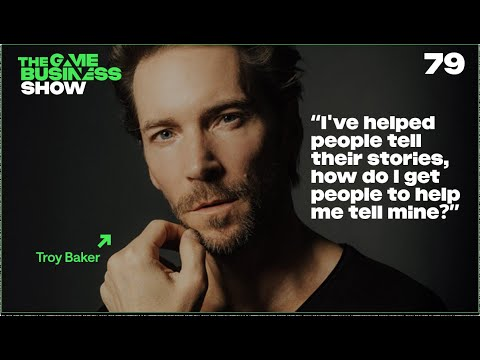
There's a fundamental premise to making art that people are not [music] remembering right now
and it's that it requires artists. The thing that's on the horizon for me now is so how do I tell my own stories? I've helped people tell theirs. How do I get people to [music] help me tell mine? Hello and welcome to the Game Business Show, our first edition of 2026. To ease us into the year and before we dive into some of those deeper topics that everyone's talking about, we've got a slightly different show for you today. Just a few weeks ago, I interviewed Troy Baker, who's probably one of the best known actors operating in the video game space. Baker had a big year and a bit with a major critically acclaimed roles in Hideia Kajjima's Death Stranding to On the Beach and of course playing the iconic lead in Machine Games's Indiana Jones and the Great Circle. So, I had a chat with Troy all about those roles, what keeps him motivated, but also the challenges facing video game actors in the profession today and the chances of
seeing video game performers on shows such as Jimmy Fallon. I think that would be cool. He's an interesting guy. It's a fun chat and I hope you enjoy it. Hello and welcome to the show.
Thank you very much for having me.
You must have been happy with how Indiana Jones and Death Stranding 2 has uh gone down,
man. Have you gone and watched yourself back? How do you feel? You know, I don't I don't understand I I guess I I to somewhat of an extent I understand why certain actors, you know, famously don't watch their their own material. And I actually struggled with this when I when I first started out on The Last of Us, as a matter of fact. Um I had this very bad practice of um we would do a scene Neil would call cut and I would say, "Can I see playback please?" And the team that was there was, you know, it's actors. We got to oblige him. And so they would play back the scene and I would be able to watch it on a screen and go, "Got it. That's what I I
see something I want to change. Can I go one more time?" And Neil, for the longest time, was very kind and he was, "Sure, we'll do it again."
Um, and we actually just talked about this, but he he remembers it differently than I do, which is funny. Um, he called me on the phone and he was like, "Hey, great job. Uh, I need to ask a favor of you. And I was like, what you got? And he says, um, playback. I was like, yeah. He goes, I need you to stop doing that. [laughter] And I said, okay, I know you're new here. Um, I need that in order to understand what I need to change. It helps me to see that's my process. It's how I work. He goes, okay, what you need to do is trust me, and it's your job to be viewed. It's not your job two of you. That's my job. So, if you'll trust me, I'm not going to let it be bad. And if we've got it, we can move on.
I see.
And from that moment to this, I don't
watch playback.
It really left uh an impression on me. I was like, man, I I am doing that a lot. I I need to I'm not trusting. And also, especially when you're working with a character like Indiana Jones, in my mind, I'm indie. Like, you know, I'm I'm I I envision myself in the hat and the leather jacket with the whip. And it's it's there is a part of me that's still that kid that's playing in his backyard and the the world is like almost like Calvin and Hobbs just becomes this whole other thing.
Um, and the second that I actually see what I look like, it's pretty ridiculous. So, I actually have found benefit in in not watching. And with Death Stranding, you know, it's something that Hideio really loves to do is he loves when we do this take cuz we we talk about it so much beforehand. There's a lot of like information that goes in. You need to understand this is what's happening. Um, and they have so
much information for us. And then he goes over to you and he lets Norman and Leia and Tommy and all of us just like do our thing and that's what he believes is the partnership and it works. But they would finish a take and everybody would gather around and watch playback and I would be off to the side not [laughter] not watching. I was like I should probably let him know cuz it could come across aloof. But now that the game is done, once it's shipped and once it's, you know, on the, you know, the PlayStation store, the Xbox store,
you know, for me, there's a whole new level of enjoyment that I get because I get to actually see what it is that we've been making all these years. And it's every time is like Christmas.
Oh, nice. Oh, good. Well, I'm glad you like it when you see it back. I um Some people don't. Um, but I found I found Indiana Jones a fascinating project because we had um Axel Tovenius on on stage recently and he was talking about how
it's a it's a very modern game.
Yeah.
Designed to look like a film from the 1980s,
but it self set in the 1930s.
Um, is that something that
you have to get your head around? Is that something you thought about in your performance?
I mean, this was something that was I mean, I'm so familiar with the character in the franchise. Um,
but specifically to the aesthetic. Yeah, we had a very we had the eye of the needle that we had to thread and it was we want this to feel as if it could slot in right between Raiders and Last Crusade. So, we know exactly we're 1937, we're a year after the events in Raiders. We know exactly where we're going to be. And in order to do that, this has to have the same look and feel as if Douglas Locom and Spielberg went from the set of Raiders and now we're we're picking up at Marshall College a year a year later. Um and so in order to do that, it was um Euro and Axel um really made this choice to go, hey,
let's let's have our cameras be represented on the day as much as it is to have our performance and our our performers are there and capture their performances. The performance of the camera is also a really big part of this. So we need to capture that as well. So Kyle Clutz, who was our DP, we had two ARS, we had dollies, um, we laid track. I mean, we were shooting the movie and all of that lens data that Kyle was getting was then being transferred to
our motion capture system and they were translating that into the game. And I even, you know, after the game was shipped, I asked Axel, I was like, "How much of the cameras did you actually use?" He goes, "Those are our cameras." So, what you see in the game is what we shot on the day.
Oh, wow.
Yeah.
And it's Well, it's interesting. Obviously, Indiana Jones is an iconic character. Some of your other characters are are um uh you know, new or or unique. I' I've
always been interested. Do you think someone like yourself helps sell video games? Do you think people go, "Oh, I need to get this. It's the latest. It's the latest Troy Baker." Um, I think people are very kind and they come up to me and they go, "Hey, I bought that game because you're in it." Or, um, if I don't think that the traditional Hollywood model of there's a formula attached to Tom Cruz's name, right? We know we can predict with within a certain percentage plus minus that Tom Cruz in a movie equals X amount foreign, X amount in theaters, X amount in, you know, secondary windows like streaming or whatever. Um, I don't think that that applies to to video games and I'm kind of grateful for it because if I'm responsible for the success, that means I'm also responsible for the failure. Um, what I and I can't think about those kind of factors and components. My job is to go in and if I'm thinking and I I struggle with this on the last of us
part two um which was you know you come in now under the opaces of massive success but at the end of the day Joel or Indie or Higs doesn't realize they're in a video game.
Mhm.
They're in a real moment in a real life. And the more that I focus on that, the more that I'm I I find that my my performance is better, that my um my process is lighter. So I I try to think about um hey, am I going to what's the marketing of this going to be? There will come a time when that is is relevant. But for the most part, I'm just trying to focus on the scene that's in front of me. But I do think about um what helps this game be successful. But to be honest with you, the main reason why I do like to be part of that conversation is because I really like what I do and I really like the projects that I've been a part of and I want to
see them be successful because the team works so hard on them and I want to see them make more stuff too.
You do go around promoting it though. You
sometimes ad nauseium. I'm wondering how long it will be before you're on Jimmy Fallon promoting the next Kajjima production.
It's funny, man. Like um my my buddy's the producer with Conan O'Brien and Conan was very cool to have the Clueless Gamer and um it was an opportunity. I remember when Neil and Bruce uh were on uh Conan O'Brien. There's still this delineation somehow with Hollywood where they look at video games as not necessarily a lesser art form. Um cuz most of the people that are making TV and film are gamers themselves, right?
Um but I do think that there's certain things right now where they go,
we don't understand it and so we're just going to kind of keep it over here. It's it's somehow sequestered into its own thing
still shrouded in mystery and there's still this perception of who those people are that play games. Um,
I would love to be as a as seated guest on Fallon, but I if that happens, great. I'm honestly more grateful and and and I've been fortunate enough to get those moments and Sam and I were talking about this last night when somebody comes up to me like at uh Comic- Con or whatever and they're like, "Hey, can I tell you what this game meant to me?" That in and of itself, there's no award for that. When someone goes, "Hey, this inspired me to become an actor. This inspired me to I'd never played games before, but after playing this, I'm saying I'm like, "Oh my gosh, I can't wait. You have such a great catalog waiting for you." Or if they go, "This helped, you know, me heal the relationship with my dad." like those kind of things to me are if there's accolades or awards to be received, those those are those are pretty good ones for me as a sort of he who writes about um trying to grow the industry and
make it bigger and particularly the sort of games that you make mostly. I think getting it on a big mainstream TV show watched by a broad audience is I think really important from the industry point of view and and I think of someone like yourself or or any of the people that you mentioned Sam Lake sort of people being on those shows they're charming charming people you've got loads of stories to tell um I just think it would be a cool thing to happen so I it's whether you know it's um
I agree that would be fun and and I would love to see who that who that first person would be like who's who's the person that obviously Norman was, you know, Norman was on, uh, they did all all the talk shows and stuff, but it was like, and you're also doing Death Stranding, you know, it's like, we're here to talk to you about Walking Dead or talking about Daryl Dixon. Um, but also, what's this game thing that you're doing, too? Um, and we've seen that happen. But to have it be, you know, someone who like maybe Hulki would be a a great, you know, that's that's a
a clear person where you're like, "Oh, yeah, we know you from this thing. Come talk to us about that. you're here to
talk about this game that you're in. That that would be cool. Um I just love to see Rahul squirm on Jimmy Fallon. That'd be funny. [laughter]
Well, well, there does seem to be a you talk about the relationship between Hollywood and and and games. It does seem to have changing a little bit. I mean, we just saw a Kill Bill lost scene in in Fortnite, which is wild toy. Directed by Tarantino, McFurman in it.
I don't understand. Like, I was there at that event.
Oh, wow. And boy, Tarantino, that that's a that's a hot topic right now, isn't it? Here's what I think. People are starting to realize, oh, wait, a, I'm a gamer and I didn't know it. Or two, the truly innovative storytellers are finding this whole new landscape within games to be able to tell stories.
And I think that you've always had people that are on they're the vanguard. They're they're the bleeding edge, the tip of the spear of how we tell stories.
Not what stories we tell, but how we tell them. David Fincher, um I've been an apologist for the BMW films. I don't know if you're familiar with these. Uh Clive Owen,
um headed up these shorts. um that BMW in the early odds I think it was 2000 maybe 2001 um created this series of of of shorts uh called the BMW films or the driver and it was basically it wasn't selling a car it was selling this idea and they just used BMW as a platform for it but they had movies that were produced by Tony Scott John Woo John Frankenheimer and they're incredible
and I I I didn't realize this until for like 25 years I've been talking about this, but I didn't realize it until just recently I watched it again. It was like created by David Fincher and I'm like, man, this is a guy who understood people are going to go to their computer and it wasn't on TV. You had to go to your
computer, log into the BMW website on a certain day and the countdown would start and once a month or once every other month they would drop a new one of these videos. That's the only place you could watch it. And it's someone like David Fincher who goes, "I see something happening here in this space. I don't know when it's going to happen, but I want to be the first one that's there." And I think Tarantino is one of those people, too. Like, I see what's happening, what's possible in this space, and I want to be one of the first ones there.
Wow. I just I do kind of hope though it's not the last thing he directs is a [laughter] short in Fortnite. But can you imagine
if his swan song was Fortnite?
Wow. Um, obviously we talked about some of your big games because obviously, you know, big AAA mega titles are up for awards and stuff, but you do do indie projects, do more unusual projects. What draws you to something like Date Everything and
Screamer, I saw you in
Date Everything is is a unique one because it's buddies that are making a game and, you know, you have Max and Robbie and Ray that, you know, are are
three guys that are able to parlay the success in one thing into another. And they everybody wanted to see them succeed. They were the homeboys that made good. Hometown boys that made good. Not homeboys. Hometown boys that made good. There you go. Um and they had this great concept and it was like it was an opportunity to work with friends and they made something that was truly truly good. And I think that especially on the slate this year for those titles, I mean, you look and the the leading games are essentially indie games, right? You've got Expedition 33, you've got Hades, you've got um Dispatch, you know, these are these are all small studio games that show that it's not just they can they can swim with the big boys.
Yeah.
And um they're up against some fierce competition this year. Like it's this is what I loved about this year is is that year after year we're seeing especially
after co how resilient and how buoyant this industry is and how it's unstoppable like this [clears throat] is and the reason why it's unstoppable is because it's the evolution of storytelling. It's it's the these are the kind of stories that we've been trying to tell since we first came out of the cave. And I believe that the reason for that is because it's one of the most sympathetic, if not empathetic, ways of communicating and conveying an experience is here, play it. Just just what that character is doing. There's this connection between the character and the player. And that's something you can't get in a book or a show or a film. Um, so I I I look at indie projects and I go, I want to see you succeed. I want to be a part of that. And there's some great titles that are are coming out next year. You've got Screamer, that's a small studio that is really really being
ambitious and trying to do some Yeah. Milestone. And these guys are doing an incredible thing with racing games. It's like not a lot of story driven racing games, right? Um, and they've got a really the mechanics are cool and the story is cool. And you also have mouse pi for hire, which is I mean
I'm over the moon about this game. Talk about an incredible studio. These guys are crushing it. They they know exactly what kind of experience they want and they're open as partners and collaborators.
Well, that's what going to ask cuz some of these studios I imagine [clears throat] they don't have the experience or the maybe not even the talent of a of a Kajima or whatever. So when you go into when you're going into this space, is there an element of collaboration where you're going to put your arm around and help them or am I is that am I being patronizing actually? Have they have they got this?
No, I mean I I'm always surprised and and specifically like the mouse team I'm like man you guys really know what it is you want and they by the time that I came into the project I was aware of the project well before and I was like this
the Cuphead style and I was like if it's a first-p person shoot it's really got to grab my attention, right? and they did a good job with that. I was like, "This is interesting." Like, "This is this is novel." And the animation style specifically really spoke to me. And then once I started talking to them about what the tone of it was going to be, I'm like, "Please please let me do this." Um, because it's it's really hard to do comedy in video games. Uh, I was talking to Nick Herman last night who's the the creative director and lead writer on on Dispatch and we worked together on Tales of the Borderlands and that was one of the biggest challenges they had is like how do you do comedy in a video game? It's really really hard to do. Um, and they did a great job and I think that we also did a great job because these teams are doing something they're like this is the kind of game that I want to play and that's the kind of game that they're trying to make.
H so I've got a broad question for you. What would you say are the biggest pain points in your in your part of the
industry, your part of the business right now?
Pain?
Yeah. Things that are, you know,
the edges that need smoothing.
Yeah. The prof parts your profession that is that's that's the hardest things to deal with at the moment.
Um, I think if I had to drill down to it, the biggest problem that we have right now, and this is not just in video games, this is across the board, is fear. We are not wanting for sources of fear and we are anemic with sources of faith. There is so little trust. And I think we're starting to see that in the kind of material that's being presented to us is because it it's got to be a known commodity. It's got to be something that, you know, well, let's just keep reiterating on this thing. let's just keep cranking out sequels or let's reboot this as opposed to trusting that a new idea is really what we want. Um even if it's something that we've
seen before like the great circle is not rehashing anything. It's a new idea
and it is being presented within the framework of something that's familiar but there's a huge amount of risk. Will people accept someone besides Harrison Ford as Harrison Ford? Will you accept this story as canon, as something that feels like it fits into this world? Huge amounts of trust from not only Bethesda, but also Lucas, Machine Games, and me. It's like it there's an incredible amount of trust. And where there is trust, there is invariably going to be a higher product. There is going to be greatness that come no greatness comes from fear. Oppression comes from fear. A diminished version of something comes from fear. But when there is an abundance of trust, that's when we are inspired. And that's where
we are like, "Oh my gosh, what a great thing." But you have to have trust.
It's there's an element. I was going to I wasn't quite sure cuz I was going to ask about AI
and I think there's I think there's an element I don't know I'm not as worried about it as some other people and part of the reason for that is I trust that when it comes to the the things that we we should don't really need to use AI for we won't use it because the people I mean maybe some bad actors will but in terms of the people that you work with why would you replace the things that we can do for enjoyment with a machine? Yeah, man. There's there's a there's a fundamental premise to making art that people are not remembering right now,
and it's that it requires artists. And people go, well, look what AI can do. It's like, yeah, okay, I see what it's capable of doing. It doesn't matter. It is the fact that and we don't need to diminish it and we don't need to denigrate it and we don't need to um demonize it. we need to just go okay
it's there but it still doesn't remove the choice for me as a performer as a producer to go but I choose to do this and what I can look and go is well for the last 2500 years since we first set foot out onto a stage humans have been doing this so maybe we trust that maybe we trust that this will be part of the process now I think the people that are afraid are the people that are, you know, deal in the business of content. There is no doubt that AI can make content way better than humans by far. It can crank it out no problem. The videos that we're seeing of like, hey, you want to see what it looked like to be at the Gettysburg address? Sora can do that in a matter of minutes, seconds.
It can create content, but it cannot create art. And the reason why is
because that invariably requires the human experience and it can simply synthesize that. And what I see happening is that this birth of AI and this burgeoning industry of it is actually going to drive people to the authentic and we're going to see opportunities of like I want to go and watch this person sing this song live.
Yeah.
I want to see theater. I want to read books. cuz I want to have this firsthand experience as opposed to the grl that gets distilled to me through a black mirror. And I think that it's a good thing. It's a revolution. Absolutely. And I think again the industry is going to the pendulum will swing back to the other side and there will be this versioning. If you want to go watch your AI procedurals just like we had with soaps and you know all all the the serals that happened in the ' 50s and the '60s and the the Law and Orders and and everything else that kept people employed by the way. Those will continue to be there. But then there will also be
what we really are driven to and what we really want to make which are these artful stories. Does all of this is a great answer. Um the um does all of this you got live service games, you got AI, you've got everything's living forever and ongoing and
um obviously you got an indie game perhaps nice and simple.
How long are your contracts these days when you're having to
look I I think that having a certain amount of business acumen is always something that an actor needs to understand. If you want to operate in an industry,
if you want to operate in the business,
be business savvy. Don't go blaming your agent or your manager, your lawyer.
Have a sense of what it is that you're I mean, our industry is is wrought with stories of I never knew I signed that. I never knew that that's what was actually happening.
It's incumbent upon you. It's my business. I need to understand it better than anybody else. Now, I put people in specific positions because I entrust
them with authority or I entrust them with their expertise to handle this part so that I can focus on a specific thing. But ultimately, if the ship goes down, I'm captain. I'm going down with it. Everyone else is getting off on the lifeboat and seeking other shelters somewhere else. For me, I need to understand the business that I'm in. But I still have to look at myself in the mirror and go, why are you doing this? Mhm.
If I'm here to make content, if I'm here to make money, if I'm here to win awards, I'm screwed because none of those things are guaranteed.
No.
But if I'm here to learn, I will always win. And every project that I sign on for, what am I going to learn on this? Am I going to learn how to be a better performer? Am I going to learn how to make a better game? Am I going to learn how to be a better partner? If I'm focused on learning, I will always win. And that's also I can now be in service to it and that's the only thing that is in service to me.
It's actually it's interesting focus on
learning always win. It's actually my entire career strategy. Every time I move on from whatever I was before, it's because I was I'm always learning. But if I'm starting to learn slowly. Yeah.
If I'm doing the same things all the time, here's my 15th awards event that I've run or the this is my I think I did 450 magazines on one title. I wasn't that's weekly. Um, and um, and at the end of it, I moved on to something complet and I've got so I'm doing this. I've never used videos and cameras and I never done any of that. I'm a writer and suddenly here I am doing all of this and with with the help from Jeff Keley and it's just been I'm I don't Is it going to work? I don't know. But I'm learn I'm learning. I'm learning.
I saw this great video of this guy and he goes, "How to make um how to be a musician with no label and no team." And he walked people through. He was like, "I'm in my garage. This is my camera. This is my lighting." And he's he's telling me, he's like, "I want you to know that when you see this video on Instagram that looks like I had a huge
team. This was just me." And I'm like, man, the authenticity and the music's good, too, by the way.
But I think that, yeah, we're in the age right now where what we're doing would have required
10 people in a location. It's it's insane. and we're able to go hold on and pull something out of our pocket and be able to go, "Yeah, this is good for TV. We could we can put this up anywhere." And I think that that's great. Like never before has it been easier for a musician or a writer or a filmmaker or an animator or an actor to just make something Yeah.
and put it out to where people can experience it. Like just being able to do that before. Oh my god. And now we can do that.
It's I always there's a mate of mine who's a musician and um he wanted to be a rock star and the moment [clears throat] it became apparent he wasn't going to be a rock star. He stopped being a musician. I thought you never really wanted to be a musician then did you? Right. And
but first of all if that man
should have had a flood [snorts] of music coming out of him after becoming a parent. like my entire perspective of making art changed fundamentally when I became a dad. And so you're right, you wanted to be a rock star, but you never were a musician. And I don't know a single musician that became a rock star that ever said, "I want to be a rock star."
Yeah. You got
He became one. Like Bruce Springsteen was like, "Wow, I don't know, man." I just like I just kept writing these songs.
I mean, when I was a kid, I wanted to be in the World Cup final, but did I want to get up at 5:00 a.m. on a Sunday? I wanted to play football. No, I didn't. So, I
You wanted to be a famous footballer.
That's and that's and that's a different thing. Totally.
Well, I've only got one more question, but it's um what is still left for you to maybe you've answered this question. It doesn't seem like achievements the thing
at all, but what is left for you to achieve? What keeps you motivated? Um I have had the wonderfully um auspicious opportunity to work with with without any exaggeration the best in the business
and the best writers, the best directors, the best creators, the best animators, the I mean I've I've worked with the best man and that those experiences have left me inspired and and have presented the gauntlet of of opportunity to go and make something that's my own. And people say this all the time and it's become like bumper sticker philosophy, but I'm a storyteller. At the end of the day, that's all that I am. If I'm limited to being an actor, then at some point that train's going to pull into the station and it's been a hell of a ride and I have no complaints. there's if tomorrow they go that's enough of
you. What what have I not done? I mean, I've I've played more iconic characters and have have had more deeply fulfilling roles and accolades and and everything else. I I have zero complaints. Um but the thing that's on the horizon for me now is so how do I tell my own stories? I've helped people tell theirs. How do I get people to help me tell mine? And there's great conversations that I'm having now about what that could potentially look like. And I I would be I' I've never looked at video games as a stepping stone. I think that they are the endpoint. And so there's definitely stories that I want to tell inside this medium. Um but we'll see what happens. But that's that's the hope and the challenge on the horizon.
Directed by Troy Baker. I'd love to see that. [clears throat] Well, thank you so much for your time and um yeah, I look forward to all the screamer and nice PI and all the things coming up.
Me too, man.
Thank you.
That's it for today's episode of the Game Business Show. We'll be back in just a few days looking back on some of the key stories from the past few weeks and analyzing just where the game space is as we move into this new year. To make sure you don't miss it, head to the gamebus.com, put in your email, hit that subscribe button, and you will be alerted the moment that show is ready to view. Until then, thank you for tuning in.
If you could play one role from video game history,
yeah,
what would that role be?
Daredevil.
Really?
I want to do Daredevil so bad. It's it's the comic book that I grew up with the most. Everybody knows Billman. I bugged him for years about it. Uh, I love what Charlie Cox did with Daredevil, but I want I want my shot.
In your view, who is the greatest actor across any medium?
I look at Rufus Su and I think that he's one of the greatest [music] actors cuz he's so incredibly transparent. Hackman was was someone that to me was the same. Dustin Kaufman. God, I don't know.
This one is also I suspect you'll skip as well. PlayStation, Xbox, Nintendo or PC?
Yes, absolutely. [music] All concurrently.
What is the greatest album of all [music] time or the most influential album of all time?
You two, Joshua Tree, Jeff Buckley, Grace,
Wilco, Sky Blue Sky, a compendium of symphonic music. Everything from Beethoven to Mozart to Bach. But then I would say that [music] none of us would really be here without Revolver over Soul. But it's a real tight line between those two for me.
What one piece of advice would you give to young [music] actors looking to break into the video game space?
Express don't impress. And if your goal can be to learn, you make [music] art for art's sake. Not try to make art so that it can fulfill you or service you in any way. You service your art.
Auto-generated captions from YouTube — names and numbers may be misheard.
Video games have solidified their position as a primary medium for sophisticated storytelling, moving beyond their historical status as a secondary industry to become a central pillar of modern entertainment. This evolution is evidenced by the increasing involvement of high-profile Hollywood creators in gaming projects, signaling a broader cultural shift where the medium is finally receiving recognition for its capacity to foster deep empathy and human connection. While the industry has not yet reached a point where game actors are standard fixtures on mainstream talk shows, the growing prestige of interactive narratives suggests that such visibility is an inevitable next step in the medium’s maturation.
Central to this creative landscape is the necessity of maintaining artistic integrity over the pursuit of fame or industry accolades. Performance in this space requires a commitment to immersion, where actors must prioritize the director’s vision and the authenticity of the character over self-conscious review. This human-centric approach remains the industry’s greatest defense against the rise of artificial intelligence. While automated tools may generate vast amounts of content, they lack the capacity for true artistic expression, which will ultimately drive audiences to seek out more authentic, human-led creative experiences.
For those navigating the industry, success is best defined by business literacy and a dedication to continuous learning. By shifting the focus from seeking validation to prioritizing the act of expression, creators can better serve the audience and ensure the longevity of their work. As the industry continues to professionalize, the transition from performance to direction represents a natural progression for seasoned talent, reinforcing the idea that the most meaningful impact of gaming lies in the direct, positive connection established between the storyteller and the player.

The Game Business · 2026

The Game Business · 2026

The Game Business · 2026

The Game Business · 2026

The Game Business · 2026

The Game Business · 2026

The Game Business · 2026

The Game Business · 2026

The Game Business · 2026

The Game Business · 2026

The Game Business · 2026

The Game Business · 2026
Naavik · 2025
Naavik · 2023

Deconstructor of Fun · 2026

Naavik · 2026

The Game Business · 2026

Naavik · 2026

Deconstructor of Fun · 2026

Naavik · 2026

The Game Business · 2026

Deconstructor of Fun · 2026

Deconstructor of Fun · 2026
Two & a Half Gamers · 2026
Comments