Game Development reports and market data
Documents

Let's Review Your Games — Ep. 041
Indie game development requires a rigorous focus on user interface design, narrative clarity, and player onboarding to ensure market viability.
- Game developers should prioritize the first 10 minutes of gameplay, as this initial experience is the primary driver for user reviews and overall reception.
- UI design should adhere to strict alignment principles, using clean padding, consistent font usage (limited to 2–3 typefaces), and logical placement to avoid a 'cheap' aesthetic.
- In horror games, removing skyboxes and matching the environment to the fog color can significantly enhance atmosphere and tension by creating a more gloomy, immersive aesthetic.
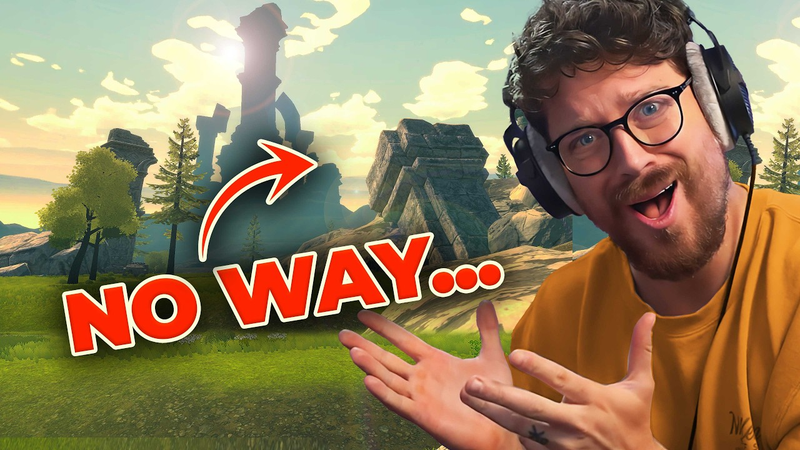
Making Beautiful 3D Games Is Easier Than You Think
Creating a high-quality, stylized 3D adventure game—modeled after the aesthetic of titles like The Legend of Zelda: Breath of the Wild—is achievable for independent developers using free assets and a disciplined approach to visual design.
- Achieving a stylized, Breath of the Wild-inspired aesthetic relies on a limited terrain palette of three to four textures, using hue shifting and saturation adjustments to ensure all environmental elements, such as grass, dirt, and stone, remain color-coordinated.
- To avoid visual repetition in terrain, use noise spreads for grass billboards and maintain a consistent tiling scale across all terrain layers to create a unified look.
- High-fidelity assets should be placed strategically to anchor the scene, as the human brain interprets the presence of a few high-resolution objects as an indicator of overall high-quality visual fidelity.

Split Fiction’s Josef Fares on Clair Obscur success, AI fears and EA’s reputation
Josef Fares, the creative director of Hazelight Studios, emphasizes a philosophy of prioritizing creative vision over market data to drive game development.
- Hazelight Studios has achieved significant commercial success by prioritizing creative vision over market data, resulting in 27 million units sold for 'It Takes Two' and 12 million for 'A Way Out'.
- Josef Fares explicitly rejects taking Hazelight public, arguing that the pressure to satisfy stock market stakeholders forces companies to prioritize short-term financial gains over long-term creative quality.
- The studio maintains a staff of approximately 80 employees and operates under a co-op-only design philosophy that intentionally avoids risk-averse, data-driven decision-making.

Larian Loses the AI High Ground, Farewell to Anthem, and Minecraft Goes Mini! | Games For Breakfast
The gaming industry is currently navigating a period of intense friction between corporate efficiency mandates and a deeply skeptical player base.
- The gaming industry is experiencing a widening divide between AAA studios prioritizing shareholder-driven cost-cutting and indie developers who maintain a focus on human-led creative innovation.
- Generative AI integration in game development is facing significant player backlash, with critics arguing that reliance on AI tools leads to a regression in emotional resonance and craftsmanship.
- Labor instability remains a critical issue, highlighted by the closure of Ubisoft Halifax following unionization efforts and ongoing allegations of union-busting at Nintendo.

Let's Review Your Games — Ep. 040
Independent game development requires a delicate balance between creative vision and technical accessibility.
- Indie developers frequently fail to bridge the gap between creative visual identity and fundamental user experience, leading to disoriented players.
- Common technical failures include inconsistent control schemes, such as conflicting button mapping, and unreliable audio or UI cues.
- Poorly paced onboarding sequences and the premature introduction of complex mechanics often prevent players from engaging with the core narrative.
Video Game Difficulty is Hard (But It Doesn't Have To Be) | Extra Credits Gaming
Traditional difficulty settings in video games often fail to serve players effectively because they require users to commit to a specific challenge level before they have experienced the game’s mechanics.
- Traditional difficulty settings often fail because they force players to make a permanent choice before they have experienced the game's mechanics or pacing.
- Player ego frequently prevents users from lowering difficulty settings; developers report that many players would rather quit a game entirely than switch to 'easy' mode.
- Adaptive difficulty systems, such as the 'game rank' feature in Resident Evil 4 or 'automatic challenge tuning' in Ratchet & Clank, secretly adjust mechanics like enemy health and item drops based on real-time player performance.
How To Make "Zelda: Breath Of The Wild" Workshop: Day 2 (Part 2)
Creating a high-fidelity, open-world environment reminiscent of The Legend of Zelda: Breath of the Wild requires a disciplined approach to asset integration, terrain sculpting, and atmospheric post-processing.
- Effective terrain sculpting relies on using specialized brushes for large-scale mountain creation rather than manual, single-brush detailing.
- Fog is a critical tool for managing visual depth and environmental cohesion, helping to blend distant terrain and improve the overall aesthetic of the game world.
- Manual painting of environmental details like snow and grass requires balancing artistic intuition with logical placement based on mountain topography to avoid a 'mappy' or unnatural appearance.
How To Make "Zelda: Breath Of The Wild" Workshop: Day 1
Replicating the distinct visual aesthetic of The Legend of Zelda: Breath of the Wild within the Unity engine requires a disciplined approach to asset management and color theory.
- Establish a consistent color scheme for environments and biomes early in the development process to create a cohesive visual foundation, even if deviations occur later.
- Implement Level of Detail (LOD) groups for all exterior assets to manage poly counts and texture sizes, preventing performance issues when rendering large-scale environments.
- Maintain strict folder organization for all imported assets to ensure project scalability and prevent workflow bottlenecks during development.
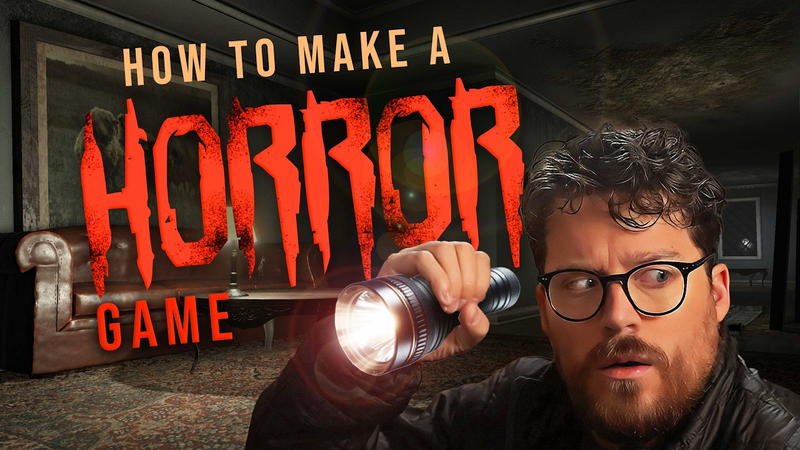
How To Make A Horror Game (Fast, No Modeling)
The process of developing a 3D horror game without traditional 3D modeling skills relies on leveraging modular design, grid-based layout tools, and royalty-free assets.
- Use Unity’s ProBuilder package to construct environments through modular block-outs, ensuring consistent scale by adhering to a strict one-meter grid system.
- Maintain visual consistency across disparate royalty-free assets by applying a unified color palette and standardized lighting throughout the environment.
- Generate professional-grade material maps—including normal, height, and roughness—from flat photographic references using tools like Materialize.
Roblox brainrot explained, Ustwo’s strategy switch, Ubi closes mobile studio, 2026 predictions, more
This analysis examines the current state of the mobile gaming industry as of early 2026, focusing on shifting development strategies, platform trends, and market performance.
- Mobile gaming remains the industry's largest sector, accounting for 55% of total gaming revenue in 2025, according to Newzoo.
- Ustwo Games is pivoting to a 'PC-first' development strategy, signaling a decline in the viability of subscription-based mobile platforms like Apple Arcade and Netflix Games for premium indie developers.
- Ubisoft is closing its mobile-focused studio in Halifax, Canada, resulting in 71 layoffs and the cessation of live operations for Assassin's Creed Rebellion.
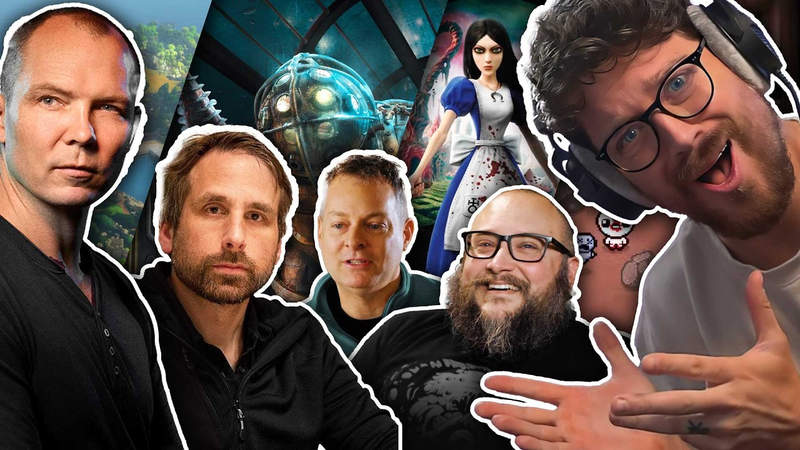
I Interviewed 50 Famous Game Devs, And They All Do These 5 Things...
Successful independent game development is defined by five core traits identified through an analysis of 60 interviews with industry professionals.
- Successful developers prioritize intrinsic motivation by building games they personally want to play rather than chasing market trends or viral potential.
- Treating development as an investment requires managing project scope and starting with smaller, manageable releases to ensure financial sustainability before scaling.
- High-performing developers maintain a disciplined, relentless work ethic to push through the inevitable burnout and stagnation phases of long development cycles.
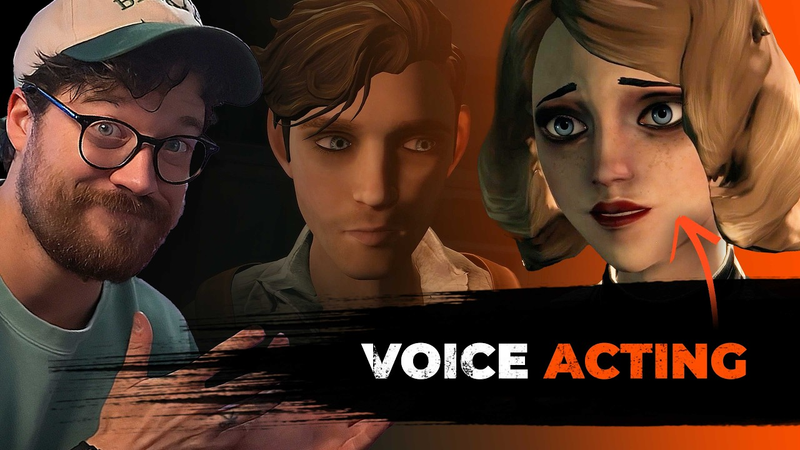
Twisted Tower Devlog (Adding Voice Acting!)
In the context of an increasingly crowded 2026 game development landscape, professional voice acting serves as a critical differentiator against the proliferation of AI-generated content.
- Prioritize human voice acting over AI-generated audio to differentiate your game in the 2026 market, as human performances provide a level of authenticity that AI currently lacks.
- Direct voice actors to focus on acting rather than just reading lines by encouraging them to use physical movement and facial expressions during recording sessions.
- Provide clear emotional context for every line of dialogue by using a shared document to specify the intended feeling or tone for each segment.