Game Design reports and market data
Documents

S07, E16: AI and video games (with Julian Togelius)
Video games function as critical model organisms for artificial intelligence research, serving as sophisticated pedagogical environments that force agents to learn, adapt, and navigate complex, non-stationary action spaces.
- Generative AI tools will fundamentally shift game development by enabling shorter production cycles and lower costs, potentially making billion-dollar projects like GTA 6 the last of the pre-AI era.
- Video games serve as essential sandboxes for AI research because they provide structured environments for testing reinforcement learning and algorithmic theories, moving beyond simple win-loss mechanics to understanding player style and content generation.
- Consumer backlash against AI-generated assets, such as the reaction to placeholder textures in Crimson Desert, is often a proxy for broader societal anxiety regarding AI's impact on creative professions rather than a critique of the technical utility of the assets.

Nintendo’s “New” Star Fox, $80 GTA6 says BoA & Mixtape is a Masterpiece | Games For Breakfast
The gaming industry is currently navigating a period of significant structural and economic transition, characterized by shifting pricing models and evolving development strategies.
- Grand Theft Auto VI is expected to spearhead a shift toward an $80 price point for AAA software, potentially establishing a new industry-wide standard.
- Sony reported a $766 million impairment loss related to Bungie, signaling a strategic pivot away from high-risk extraction shooters toward focused, single-player experiences.
- Nintendo is planning a $50 price increase for the upcoming Switch 2 hardware to offset rising manufacturing costs and maintain profitability.
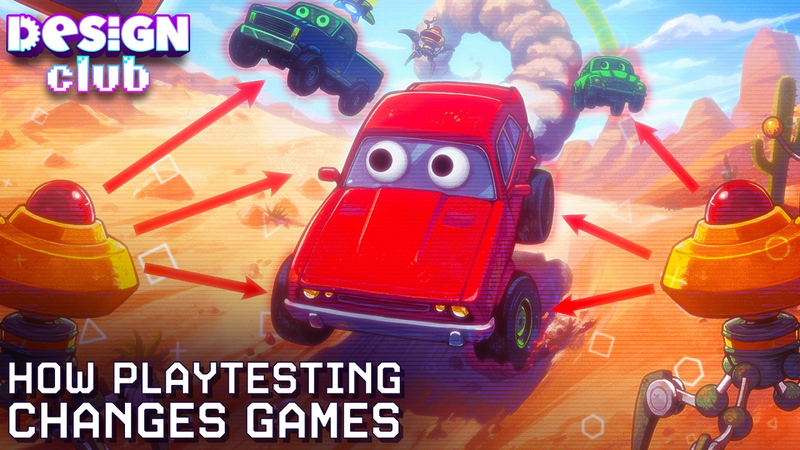
How Playtesting Changes Games | Design Club
The development of the game Without a Hitch demonstrates that successful game design relies on a rigorous, iterative playtesting strategy that prioritizes player agency and emergent behavior over rigid adherence to initial design concepts.
- Successful game design requires an iterative playtesting strategy that prioritizes player agency and emergent behavior over rigid adherence to initial design concepts.
- Developers should be prepared to discard non-essential work, regardless of the effort already invested, to maintain a cohesive and engaging final product.
- Unconventional player strategies, such as wall-climbing or complex jumping, should be embraced and transformed into core mechanics rather than treated as bugs.

How to Make Anything Fun
Fun functions as a biological reward mechanism, signaling that the brain is effectively building and refining its internal model of the world.
- Fun is a biological prompt for learning, functioning similarly to hunger or thirst, and is best achieved by creating an optimal learning environment.
- The 'Flow' state—the core of fun—requires a balance between challenge and skill, frequent and fast feedback, clear goals, and a high signal-to-noise ratio.
- Game design should prioritize a smooth difficulty curve that keeps players within the 'flow channel,' utilizing emergent and combinatorial complexity to provide layers of depth.

The Attention Budget Rule: why tutorials should teach maximum 3 things at a time
The attention budget rule serves as a critical framework for game design, positing that players can effectively process no more than three new mechanics at a time.
- Players can effectively process a maximum of three new mechanics at a time, making this the upper limit for effective tutorial onboarding.
- Chaining passive experiences like loading screens, victory sequences, and dialogue dumps creates a 'boredom trap' that significantly degrades player retention.
- Effective onboarding requires a rhythmic oscillation between high-tension gameplay and brief periods of relaxation to maintain player momentum.
S07, E15: The modern mobile gaming economy (with Phil Black)
The mobile gaming industry is undergoing a structural transformation characterized by market consolidation and a pivot away from the unsustainable hyper-casual model.
- Direct-to-consumer (DDC) web shops are becoming a standard strategy for midcore games, particularly in the 4X genre, to bypass platform fees and increase LTV, with some third-party providers now offering fees as low as 5%.
- The competitive advantage in user acquisition (UA) has shifted away from creative output—which is easily cloned—toward sophisticated predictive infrastructure, such as cohort-level modeling and signal engineering.
- The mobile gaming market is experiencing a consolidation of revenue into puzzle and 4X genres, with hyper-casual games serving as a 'minor league' farm for testing mechanics that are later integrated into more complex, high-revenue core loops.

Inside Dorian's No-Code UGC Platform
Dorian functions as a no-code user-generated content platform designed to democratize interactive storytelling by bridging the gap between narrative-driven experiences and the micro-drama market.
- Dorian is a no-code UGC platform that prioritizes narrative-driven interactive storytelling over mechanic-centric design, specifically targeting female-first fandoms where 90% of its creators are women.
- The platform utilizes free-to-play monetization mechanics, specifically 'patronage,' which allows creators to generate sustainable income by letting fans vote with their dollars for specific storylines or character developments.
- Solo creators on Dorian often outperform venture-backed studios in profitability because they maintain total control over their vision, avoiding the diluted creative output and siloed information common in larger professional teams.
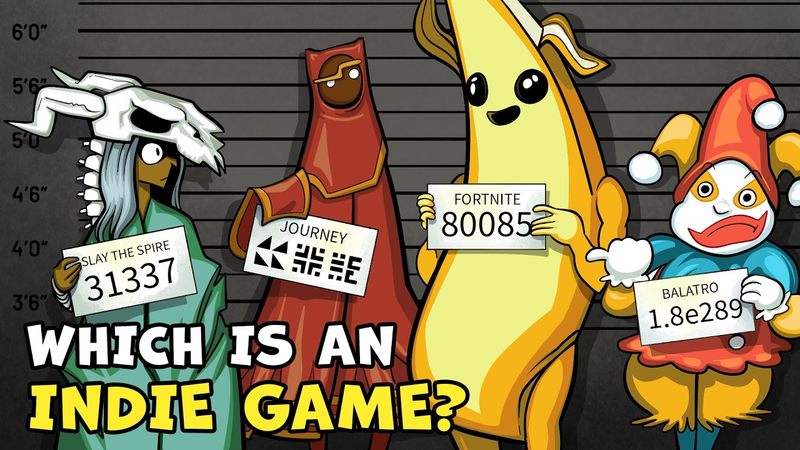
Defining "Indie" in 2026 | Extra Credits Gaming
The term indie in the video game industry has evolved from a clear descriptor of independent production into a complex, contested, and often contradictory label.
- The term 'indie' has evolved from a descriptor of self-funded, hobbyist-led development in the 1980s to a nebulous marketing label that no longer reliably distinguishes between studio size, funding models, or creative independence.
- Modern industry giants like Epic Games, which was founded in 1991 and maintains self-publishing status for Fortnite despite a 40% ownership stake by Tencent, demonstrate that self-publishing does not inherently equate to the 'indie' identity.
- The historical distinction between AAA and indie games—defined by 3D hyperrealism versus unique art styles and corporate versus 'punk rock' culture—has blurred as AAA studios increasingly adopt stylized aesthetics and indie developers rely on external publishers like Devolver Digital or Humble Bundle.

I Have Some News About My Indie Game "Twisted Tower"
The development of the indie game Twisted Tower, a project five years in the making, is currently in its final, high-intensity phase.
- Beta testing is a critical, painful process that requires gathering honest feedback from a representative audience to overcome developer ego and identify objective flaws.
- Effective beta testing involves analyzing specific metrics such as game difficulty, completion time, worst-case experiences, and pricing expectations to inform final development decisions.
- Game development requires a strict sequential workflow where tasks like localization and cutscene finalization cannot occur until core gameplay and story elements are validated through testing.
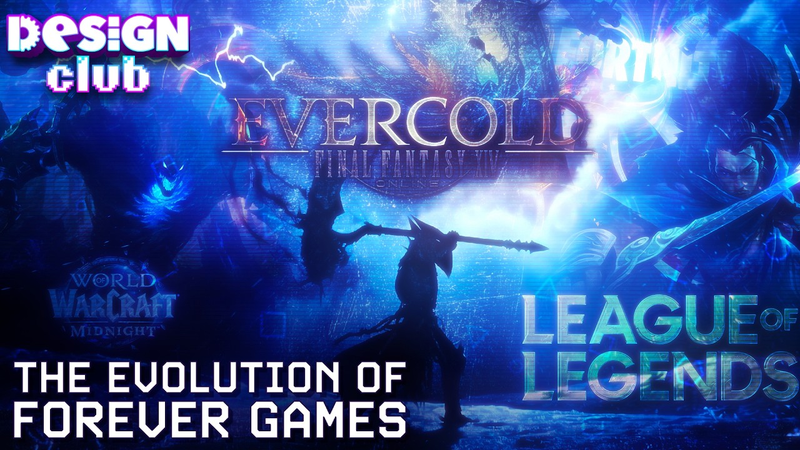
The Evolution of Forever Games | Design Club
Lifestyle games, often categorized as forever games, function as a player’s primary hobby by providing effectively unlimited, repeatable content that transcends the finite nature of traditional narrative-driven titles.
- Long-term viability for 'forever games' requires prioritizing technical debt, such as engine modernization and server architecture upgrades, over purely cosmetic content updates.
- To prevent player burnout and accommodate aging demographics, developers must transition from rigid daily requirements to flexible weekly progression systems.
- Successful live-service titles mitigate onboarding barriers for new players by implementing level-syncing and accelerated progression paths that allow them to integrate with veteran communities.

💀 Review Radar #11: 80% of the games we covered are already dead!
The mobile gaming landscape is currently defined by extreme volatility, with approximately 80% of new titles failing to maintain long-term momentum following their initial release.
- Approximately 80% of new mobile game titles fail to maintain long-term momentum, experiencing sharp declines in downloads and revenue shortly after their initial release.
- The industry is shifting away from brute-force user acquisition strategies, which often mask poor design stability and fail to sustain a consistent player base.
- Niche-focused titles with innovative mechanics, such as Sunday City, are demonstrating superior resilience, with the game currently generating $100,000 in daily revenue.
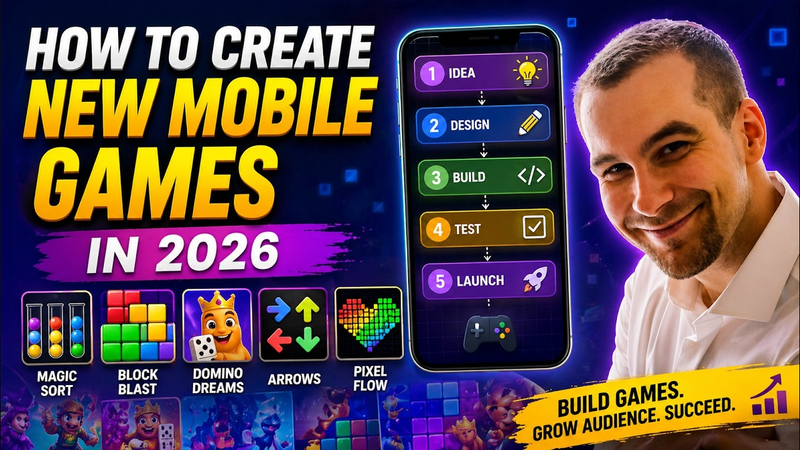
💡 How to create new mobile games 101, 2026 edition 😎
The current mobile puzzle game market favors a methodical, template-driven approach over the invention of original core mechanics.
- Successful studios like Grand Games and Spyke prioritize a template-driven approach by pairing proven, high-download puzzle mechanics with robust metagame engines rather than inventing original core gameplay.
- The strategy focuses on converting ad-driven audiences into IAP players by applying sophisticated level design, blockers, and live-ops to familiar mechanics.
- Developers should iterate on existing cores by approximately 20% to differentiate their product while maintaining the core appeal that already demonstrates high market demand.