Game Design reports and market data
Documents

Fandoms, Writing Moats, and the Future of Interactive Fiction (FIX)
Fusebox Games has established a robust business model within the interactive fiction sector by pivoting from annual release cycles to a high-frequency content strategy.
- Fusebox Games has built a $30M+ business by focusing on interactive fiction games based on licensed IP, such as Love Island, Big Brother, and The Traitors.
- The studio transitioned from a one-season-per-year content cycle to a high-frequency model, now delivering three seasons annually with a smaller headcount through internal tooling and operational efficiency.
- Writing is the company's primary competitive moat, with the writing team growing from nine to 21 members, representing over one-third of the total business.
💰🚜 How Playrix turned a 17-Year-Old Tycoon into a $45M/Month UA & Match-3 engine
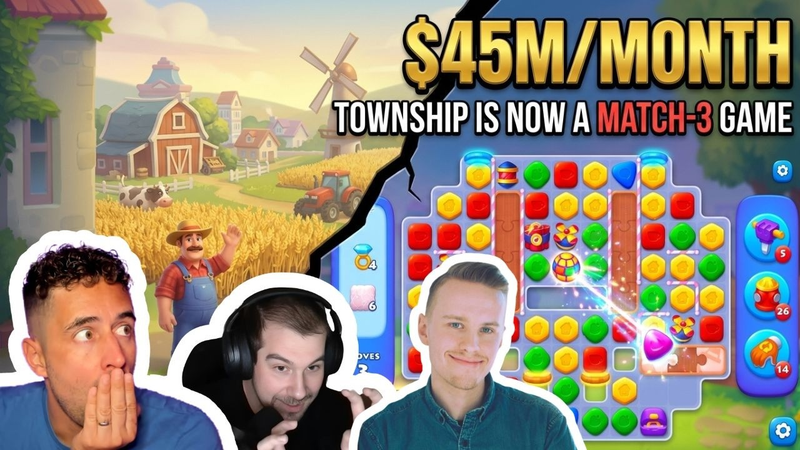
The longevity and financial success of the mobile title Township demonstrate the effectiveness of evolving legacy tycoon games into sophisticated, multi-core revenue engines.
- Playrix generates $45 million in monthly revenue from Township by evolving the 17-year-old title from a traditional farming simulator into a complex, match-three-driven monetization engine.
- The studio successfully repurposed legacy gameplay loops as onboarding funnels for high-LTV (lifetime value) monetization models, prioritizing energy-driven exploration and merge mechanics over lower-monetizing mini-games.
- To maintain long-term profitability, the studio overhauled the game's economy to tighten currency inflation, ensuring player progression remains strictly tied to the match-three core.

🎲Dicero: Habby’s biggest bet (And biggest risk?)
Habby is undergoing a fundamental strategic transition, moving away from the hypercasual-adjacent success of titles like Survivor.io toward a more complex, midcore model exemplified by its latest release, Dicero.
- Habby is pivoting from hypercasual-adjacent titles like Survivor.io to a midcore model with Dicero, characterized by complex gacha mechanics, tiered evolution, and a slower-paced merging economy.
- The studio has abandoned rewarded advertisements in favor of a direct-to-consumer web store and high-intent monetization, marking a fundamental shift in its revenue strategy.
- Habby is currently facing its lowest revenue and download figures in recent history, casting doubt on whether its new, more complex gameplay can achieve the same market penetration as previous hits.
TWIG JR: Gen Alpha's Honest Take on Roblox, Brain Rot & Growing Up as a Gamer
Generation Alpha gamers are undergoing a significant shift in platform preference, moving away from traditional mobile-centric ecosystems like Roblox and Fortnite toward PC-based titles on Steam.
- Gen Alpha gamers are shifting platform preference from mobile-centric ecosystems like Roblox and Fortnite toward PC-based titles on Steam due to dissatisfaction with aggressive microtransactions.
- Younger players increasingly reject monetization-heavy, low-effort experiences labeled as 'brain rot' in favor of 'friend slop,' which prioritizes accessible, social-focused co-op gameplay.
- Discord and iMessage have replaced native in-game communication tools as the primary hubs for coordinating play, driven by concerns over the security and effectiveness of platform-embedded chat systems.
Designing Third Spaces | Design Club
Third spaces—social environments distinct from home and work—are undergoing a fundamental transition from physical locations like pubs and coffee shops to immersive digital realms.
- Effective digital 'third spaces' require a core activity to facilitate socialization, preventing the aimlessness often found in general VR or metaverse environments.
- Social interaction in multiplayer games is significantly enhanced by proximity voice chat, emotes, and movement mechanics, which provide essential layers of presence.
- Successful social hubs like Animal Crossing or Flock Around utilize progression systems, such as cosmetic rewards, to keep players engaged while they socialize.

7 Tools Every Indie Game Developer Needs in 2026 (And ONE That Actually Matters Most)
This analysis outlines a streamlined toolkit for independent game developers in 2026, aiming to reduce the analysis paralysis that often leads to project abandonment.
- Success in the 2026 indie market depends less on tool variety and more on aligning a technical stack with a developer's unique creative 'gifting' to establish a distinct voice.
- The recommended core technical stack for 2026 consists of Unity for engine development, paired with Visual Studio and C# for programming.
- Visual production workflows should prioritize Blender for 3D modeling, Photoshop for 2D assets and texturing, and Substance for advanced material creation.

Butcher Hero Review: The Next Alien Invasion? Not quite yet!
Butcher Hero, an idle RPG developed by Multicast, currently occupies a precarious position in the mobile gaming market.
- Multicast’s 'Butcher Hero' generates 20,000 to 30,000 daily downloads but suffers from high churn rates due to a repetitive, shallow gameplay loop.
- The title currently generates approximately $5,000 in daily ad revenue, a figure that highlights the limitations of its current design and monetization model.
- There is a significant disconnect between the game's effective marketing creatives and the actual user experience, which lacks the depth and variety of the developer's previous hit, 'Alien Invasion'.

🤑 Top 5 Advanced Ad Placements by Jakub Remiar
This analysis outlines five advanced ad placement strategies designed to optimize revenue and user engagement in mobile gaming, alongside a supplemental system for long-term scaling.
- Implement a 'rewarded ads hub' that tracks cumulative ad views to grant permanent character or gameplay stat increases, creating a compounding engagement loop.
- Avoid direct resource handouts in ad placements to prevent the cannibalization of in-app purchase economies, focusing instead on mechanics that provide increased chances of success.
- Utilize before-level boosters to offer players a higher probability of winning without granting direct power, maintaining the integrity of the game's core economy.

Let's Review Your Games — Ep. 050 (Part 2)
The indie title Time to Wake Up demonstrates significant potential through its strong artistic direction and atmospheric world-building, yet it currently struggles with fundamental design flaws that hinder player engagement.
- The game's core engagement is severely hindered by a five-minute unskippable introductory sequence that delays the introduction of the central time-shifting mechanic.
- The current on-rails structure limits player agency and creates a disconnect between the player and the narrative, necessitating a more immediate emotional through-line.
- Technical issues with the character controller, specifically slippery physics and improper height scaling, must be addressed to improve immersion.

Shooter Monthly #6: RADICAL Marathon Solutions, Deadlock’s Secret Design, & Fortnite Extraction Mode
The modern shooter landscape is undergoing a significant transition as established titles struggle to balance core gameplay integrity with the demands of platform-based growth.
- Valve is prioritizing long-term polish for Deadlock by treating it as an iterative platform rather than a static product, leveraging expertise in both MOBA and shooter design.
- Bungie’s Marathon is currently underperforming in mass-market acquisition compared to competitors like Arc Raiders, despite possessing high-quality mechanics that drive strong player retention.
- Epic Games is facing competitive pressure from platforms like Roblox, forcing a strategic shift toward refining core monetization and gameplay quality rather than pursuing unfocused expansion in Fortnite.

Let's Review Your Games — Ep. 049
Successful indie game development relies on a delicate balance between high-fidelity visuals, intuitive user interface design, and immersive audio feedback.
- Game design should prioritize 'wish fulfillment' as a core foundation, as seen in the successful premise of cleaning up a personal island.
- UI and game mechanics must be intuitive; players should not be confused by basic systems like energy bars or resource management.
- Audio design is critical for immersion; developers should use sound effects for repetitive actions like picking up trash and employ EQ filters to make in-game music feel diegetic.
The Unintended Consequences of MTG's Universes Beyond | Extra Credits Gaming
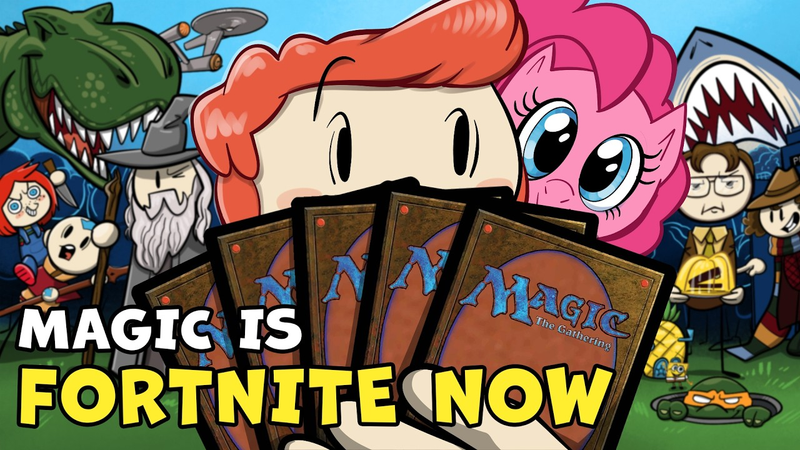
The expansion of Magic: The Gathering through the Universes Beyond initiative represents a significant strategic shift for Wizards of the Coast, characterized by the integration of external intellectual properties into the game’s established multiverse.
- Wizards of the Coast's 'Universes Beyond' strategy has driven significant financial growth, with Magic: The Gathering becoming Hasbro's first brand to exceed $1 billion in annual revenue in 2022.
- The 2025 Final Fantasy set generated $200 million in revenue in a single day, a milestone that took the Lord of the Rings set six months to achieve, contributing to a 23% revenue growth for the tabletop division.
- Organized play for Magic: The Gathering saw a 40% increase in unique players during the first half of 2025, signaling strong engagement with the crossover-heavy release schedule.