
Transcript
[music]
Welcome to the Naavik Gaming Podcast, where it is our mission to explore the business and future of video games. We bring together the industry's brightest builders, investors, and thinkers to keep a pulse on current events, dissect emerging trends in games, share lessons learned, and have a great time. This podcast is also part of Naavik's growing ecosystem, which ranges from free and premium research to consulting and advisory services. For more information, visit www.naavik.co. This episode is brought to you by metal.tv. Built by gamers, for gamers, and used by over 15 million gamers per month. Metal is the fastest way to clip, save, and share gameplay on PC. Millions of clips get shared every week, turning your games moments into word-of-mouth at internet scale. With discovery being one of the biggest challenges in the games
industry today, Metal is building a platform where publishers, studios, marketers, or anyone looking to reach gamers can find the right players across multiple genres and geographies. For more information, head to metal.tv or check out the link in the show notes. Now, let's jump into the episode. Welcome to the Naavik Gaming Podcast. I'm your host, Kaylee Moore. Today's episode sits at the intersection of two of some of the most interesting shifts that are happening in entertainment right now, which are the rise of UGC platforms and the explosion of female-first serialized content. Last week, The New Yorker estimated that over a tenth of humanity has now watched a micro genre. The global market outside of China is on track to hit 9.5 billion by 2030, with the US alone projected at 3.8 billion. And this is driven overwhelmingly by women aged 30 to 60 who are binge-watching romance, CEO arcs, and revenge stories from their
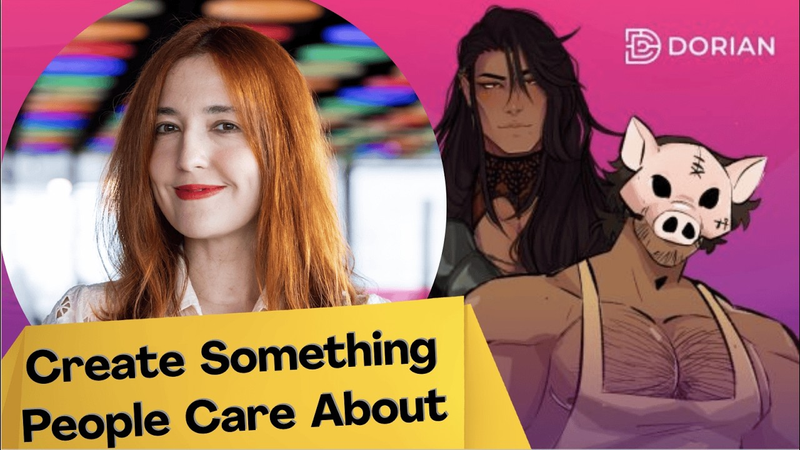
phone. But what's missing in almost all of these conversations is that games layer, and that's where Dorian comes in. Dorian is a no-code UGC platform built for an audience that the games industry has spent decades misunderstanding. Gen Z women, romantic C readers, dating sim fans, solo cosplayers, two-person art teams, and web comic creators are turning hobbies into real business on the platform. One solo cosplayer's title, Sharkbait, which is a dating sim where players romance humanoid sharks, has more than a million fans. And another game called a slashfic has earned more than $3 million in its first year. My guest today is Julia Palatova, who's the founder and CEO of Dorian. Julia has a really fascinating background. She started in games at G5 Games in Eastern Europe. She took the company through an IPO, and she spent years as a VC at London Venture Partners. And now she's building the platform she might have one day had invested in. She's making some deliberately
contrarian set of bets, prioritizing storytelling over mechanics in that mechanic-obsessed industry, leaning into human-made art, and building bottom-up with creators who in some cases earn more on Dorian than most venture-backed game studios ever will. Today, we're going to talk about what it actually takes to build a UGC games platform, what the micro drama boom is missing, and what male-led studios consistently get wrong about women gamers. It's my pleasure to welcome Julia, founder and CEO of Dorian, to the podcast. Hi. Um happy to be here. I'm a big fan of Naavik, uh so I'm very excited to chat with you today. Well, I have a ton of questions for you, so let's go ahead and dive in. I want to start first with your background. So you started in games at G5 Games, and I think you spent nearly 7 years there, and you helped take the company to a public listing in Stockholm. You come from Eastern Europe where this kind of outcome isn't the norm. What did
that experience teach you about what's possible when an industry is at the right phase of growth and how does that shape how you think about Dorian today? This experience basically inspired me to start Dorian because my background is very unlikely. First of all because in Eastern Europe we are traditionally uh detached from uh capital markets so something like funding venture capital doing IPO is not the common um dinner uh conversation topic and um it's still like you know there's turbulent uh political environment. It has always been for my entire life in Eastern Europe. And then uh capital markets are not really available. It's getting a little better but it's not great. Um most of the companies from this region are typically bootstrapped. Uh which is
which is not bad. It's mighty great but um I definitely benefited from um my quite unusual journey from joining this uh games company that uh was extremely successful especially considering the uh origins and then joining UBC Fund and then being able to move to San Francisco that's the whole center of uh finding an opportunity and start my uh own company. But basically Dorian was inspired by this experience because I feel that even though I should take credit for my own drive and ambition I think that I benefited a lot from the growth of the games industry and learning how to succeed in this market, how you can um become financially successful and profitable as uh G5 was and then how
this can be translated to people from unusual backgrounds just like myself um that are now thriving on Dorian. It was not a straightforward journey, but I want to make it more straightforward for more people. And then drilling in, one of the things that you mentioned to me when we had a prep call was that free-to-play monetization is something you really excelled at coming out of G5. Can you tell me a little bit about how that operator background, particularly when it comes to free-to-play, kind of shaped what you're building today? I think that free-to-play monetization is um sort of the magic behind what we're doing for creators because we uh made the game creation accessible, but also made uh monetization and understanding your funds more accessible for creators who do not have technical backgrounds. Uh on
Dorian, they get uh free analytics tools, they can understand how to um launch and then improve their games for free-to-play monetization. Obviously, free-to-play monetization has been carrying the games industry um and its growth for like at least um my lifespan. And um it's um been exciting to see how people can tap into this um for their games and this basically, I think, makes games more inclusive. Uh as an example you um do not have to be very famous or have millions of of followers to be successful with free-to-play game monetization. If you want to sell as a creator, if you want to sell a ticket or a book or anything, you really need to put a lot in the marketing and some people do succeed at this or have um
good luck and get publishers that promote them. This definitely serves mostly like top 1% and then everyone else really struggles to sell something up front, like a book or even a chapter online. Whereas with free-to-play monetization, you can get uh your fans to try uh the experience for free and decide when they want to support you. We call this patronage on Dorian. So, basically, when when they want to become patrons and this also kind of feeds into the inclusivity of the medium where different people can become patrons at different points of the same experience, of the same game and vote with their dollar for whatever storyline, whatever character they want to consume more of, uh which definitely proves to work for us in the
past. It's great. We're going to dive a lot deeper into monetization, but I have one last background question uh for you. You came from venture capital side at London Venture Partner. What made you decide to leave VC to take a chance to build your own company? Um I think that I'm very much of a builder and I'm really entrepreneurial at heart. Um that's probably a story for a different podcast, but I started my first company when I was 16. It was also in games, but educational games. It was with my childhood friend. And that was a lot of fun. We actually became a sustainable business for a couple of years. But um I think that I was when I was with LVP, I had a chance to look at and work with fantastic startups.
Um I think this because uh LVP was one of the first game-focused investors with a very smart founding team. Uh we had an advantage of getting to see everyone who wanted to raise money in games. And I was first of all constantly inspired. Second of all, I did work with uh LVP portfolio companies, and I always felt I was the happiest when I was working with the teams. Often times, as an early-stage VC with operations background, you kind of plug in yourself into some some of the teams where you have um a good fit um professionally and also can like basically fill some holes in their operations. And I always was like, "Oh my god, I want to be with you guys working together." So, this is when I was the happiest.
And I realized I was itching to go back into building. And then another part of it um the VC job is fantastic and very respectable. And of course, uh VC investors are some of the smartest people in the industry. Uh but at the same time, the job is judging people and companies. You kind of like you sit back and you judge everyone else. And I think that at some point I was like, well, I I want to be building because um I think that this kind of gets into this territory when you um get detached from the reality of building and you're judging too much, if that makes sense. Uh so, um I think that I prefer uh building to judging, even though judging, of course, is an important part
of um anyone's job. Yeah. I I Trust me, I get it, too. Let's Let's shift to what it actually takes to build a UGC platform. So, on our prep call, you shared to me really interesting with me that most UGC platforms fail because they never graduate from optimizing for volume to optimizing for commercial success. Can you walk us through that distinction, and what does that actually mean operationally? It's um I think that there are a lot of misconceptions and misunderstandings of what it takes to build a UGC games platform because there are so few of us. Um and even fewer that are showing real traction. Roblox is obviously the pioneer of this, and they have had tremendous success um in this space. Dorian has learned a ton
from Roblox. But then, um of course, there are quite a few Roblox followers that wanted to compete with them. Quite a few um either haven't got anywhere or outright failed. I think that we're definitely enjoying this advantage of building in a very different vertical that our team deeply understands and has a lot of demand because if you think about it, there are millions of artists who are posting on Instagram and webcomics. This group alone is huge enough if if even small percentage of artists become game creators, that's a huge category. But we also have writers, cosplayers, voice actors, and all of these people are fantastic at storytelling, but
usually struggle to monetize um across these whole groups, and then I'm looking at game monetization for them is where the magic happens. And another part of it is replay value and player agency. Uh but back to your question about uh platforms, every platform that is building for UGC creation starts with volume. Um our first metric was we I obsessively checked how many episodes were released every day, and this is what we discussed at every team meeting. And then we we were uh onboarding more and more creators from different groups that I described. Um it was a huge shift when we um enabled very cool uh art management system in our back end, and in addition to writers, we could onboard
uh artists. That was a big a difference because art sells much better than a wall of text. So, that's that automatically unlocked them uh a big market for us. But then we were onboarding different groups of uh creators searching for some things that really um helps us unlock growth uh commercial success. So, not just with engagement and creation. And once we saw great unit economics for some of the games, which happened throughout several waves of creators, um thousands and thousands of uh game episode episode series, and then also um tools that were all created without
no-code philosophy. Basically, we would try different things with small group of creators helping some, and then we would um democratize those tools for anyone to use independently. Once we saw unit economic working, this is when uh real growth started, and then we stopped looking at the number of episode series, and started looking at commercial success of the games, because this is obviously important for any business to become commercially successful. But then, um in most cases for other platforms, you you would see that they optimize they still report the number of games, but it never translates into commercial success, apart from like Roblox and maybe
I think YouTube is reporting growth of revenue as well. So, is it fair to say that you kind of went from looking at number of creators, number of episodes to what is a commercially viable metric here? So, it does that mean is revenue your North Star now? Revenue is definitely very important and it is so for our creators because majority we have of course people who just want to try the platform and express themselves creatively. There are quite a few of those but lots of people obviously are looking to become sustainable as content creators and this is very hard increasingly so now. Even if you are very popular you often times really cannot generate revenue. And as Dorian is unlocking so this at very
different level with our patterns. Supporting creators and making creation successful and sustainable. I think that this is where what creators are looking for. They are looking for sustainable income because you can create beautiful art for so long as a passion project but if you constantly have to struggle and cannot really focus on this you cannot grow and improve your craft. And when we see creators not worrying about what they're going to eat tomorrow they definitely can become much better and much more professional as game creators. And this is what the industry needs. We need profitable games right now.
I love what you said about improving your craft and we touched on this data-driven perspective when we talked briefly about your background in free-to-play games. So I know that you've said before that in some cases there are in an Ador in a game there is up to 100 versions of one episode. And I believe that's based on the data that you provide creators. I'd love to talk a little bit more about what that iteration loop looks like for the creator and what do you have to do as a platform to make that possible? So, that was by design um in order to democratize free-to-play game creation, you've got to figure out how to mimic a professional studio process. So, the idea from the very beginning between uh me and Jordan, our CTO, my co-founder,
was okay, how can we democratize creation of free-to-play games, not any games because his background is also mostly in mobile free-to-play. Um usually it would be it's team of multiple people, right? You've got uh apart from writer and artist, you've got engineers, you've got designers, you've got analysts, and then you would usually A/B test the hell out of your free-to-play game to figure out uh where to um monetize, uh what is the pricing, uh what should be um different uh like what is the level design, what is the economy. And we um made it so that our creators can see their data in a very accessible format uh and for free. Once your game is out, you're going to
see how many players start playing your episode, how many finished, so basically completion rate. you will be able to see where players uh spend money, what is the conversion rate at those monetization points, of what is approximate revenues that you generate from those, how many people um landed on each monetization point. When and you can definitely learn a lot out of this, both business-wise and creatively. As an example, if you, for example, um create multiple character storylines where you can level up multiple characters. This uh adds to a lot of writing and writing content is obviously time-consuming. So, for example, if certain storyline doesn't get any traction, you might decide, as an example, to kill off this character.
Um and this can be an interesting creative outcome, right? Uh but then you definitely, as you look at all this data, you definitely become better. And that's the reason why early episodes in every successful game usually have um dozens, if not over a hundred, of the versions of the first episode, so that you can retain as many players as early as possible, uh because obviously first second episode really matter for your entire performance. And as creators do this, they become so much better. They can upload new versions and they be test them without uh having to do a new build. Sometimes early ones they do this every day. Imagine how much faster you, as a solo person controlling the whole process,
how much faster you become good at your craft compared to even uh optimized professional team process where some information is still siloed. I like to say that a control freaks do make some of the best games on Dorian because they can control the entire process and if they hold the division really close to heart and they can understand the whole process that I described solo those make some of the strongest games because the vision is not diluted by the team. Yeah. And I want to talk about the makeup of the players and then also creators. I know that you your platform is majority women. Do you have stats that you could share? Absolutely. So, on the creator side we have uh 90% female
and queer creators um and then on the um fandom side, it's very similar. It's close to 90% women. And uh about 60% are Gen Z women. So, it would be the sweet spot is 18 to 25. And that's a fantastic audience to work with because they um are usually in northern uh um kids games anymore. Um and then they're not served very well by the industry because while um there are quite a few games for women, especially on mobile those tend the most successful ones usually tend to skew a little older. Whereas this audience is one of the least served in games. And then at I
so they explore their fantasies and their sexuality, they are also looking for more agency because um this uh age group is very fluid in how they perceive uh sexuality and um fantasies around this. And this is where games serves them better than linear and narratives where you are locked with one storyline, one love interest, whatever this is. So they're a very underserved market, which in some ways feel crazy because they're also very engaged market. And I know we had a lots of conversations in our prep call of how the games industry is isn't doing themselves any favors reaching this audience. You shared a story with me about uh about I'll I'll I'll let you tell it if you're open to it about a conversation you had regarding are women gamers
mainstream. Yeah, so the story was that um someone told me that they're currently serving uh games audience sorry uh someone told me that they're currently serving a female uh audience but uh they want to go mainstream. And I found it very um peculiar because women are half of the population and uh that was a mobile um game and app developer. So especially on mobile um gamers are 50 at least 50% women, right? So I think that first of all, you need to know who your target audience is. Of course, there are great examples of generalist um apps and games and entertainment, but
generally speaking, still um you serve certain group better than others. And then um women being like there's this perception that female audience is smaller than it actually is. But it's massive. It's underserved. There are so many opportunities, and when you know who your target audience is, you're likely going to get more engaged audience, and um you're likely to serve them better. And especially considering that most of the games industry is dominated by male developers working from skewing male games for male gaze. I think that um saying that women are not uh like niche is still a
huge misconception. Absolutely. I also want to talk about uh niche fandoms that aren't so niche. So, I think a perfect example of this is Shark Bait, which I mentioned at the top. So, it's a dating sim about a humanoid rob- a humanoid shark, and it's built by a solo developer, and it has more than a million fans. I want to hear from your perspective why that game works, and what kind of the sweet spot is between niche communities and mainstream. I think that as internet is getting more rather than less fragmented, right? We've got fandoms leaving everywhere, and there is definitely your is there is a sweet spot where like it's um big enough to be a great market, but in the same not big enough to be like
disengaged and diluted. Um and this is fantastic for generally for UGC acquisition and for UGC games because obviously the advantage of a platform like Dorian is that you can make something faster with smaller budget. You can experiment faster and you do not have to fundraise for this. Um and this means that you can reach fandoms that um a bigger studio that is working with a big budget just can not know how to first of all they would consider this too niche and second of all they often wouldn't have this genuine connection. So, I think that a good example would be Tik Tok where if you are using Tik Tok
your feed is going to be very different from my feed even when we are relatively close demographic. Uh if we're totally different demographic it's going to be even more different, but whenever I look at uh our feeds with my close friends friends I would always see a huge difference. So, this is similar uh that you are going to have um different um people wanting different things and then they would have different advantages. So, there is dual benefit here. First of all, you can get a fan become a great game creator. Rose McPie, Shark Bait Creators, fantastic example. They understood this hyper obsession. They understand the fantasy. They created world building. They're also cosplayers.
They're fantastic at the character design. Um and they really hit the spot for this fandom that nobody else could um because they're so connected to this fandom. And then the second benefit is agency and choice within the game. I did mention that maybe if it's like too niche of a storyline, you might want to kill off the character. But at the same time, sometimes we see that the le- least um mainstream character out of a selection of characters might get fewer players, but the most engaged players and the the highest paying players because they appreciate feeling seen and represented. And they might basically the um patronage per player would be the
highest out of all especially compared to mainstream. So again, you can serve um smaller fandom, smaller group pretty well and make them feel seen and understood like nowhere else. That's a great answer. I also feel like gaming, and I'd love to hear your take on this, too. I feel like gaming's missing the mark even when it comes to more mainstream cultural touch points. Like so, romanticism is exploding and like book talk on TikTok, right? Um I I I know everyone's algorithm is different, but like I'm getting fed and actually everyone I know in the demographic of women in their 30s is getting fed book talk content. Why do you think the games industry has been so slow to jump on these moments when I really think the cultural demand is obvious? I think
it possibly is because um, most of the studios just do not understand the audience that well. Um, and of course there are some companies uh, or small like solo developers that are working in this direction. I have connected in the last year, uh, I have connected to a few women working on uh, their games uh, inspired very inspired by Love and Sex Space and its success. But it's definitely still very much a minority and then there's a problem of getting funding so that's something that Dorian is solving. Then generally speaking uh, funding is drying out in games and then this particular uh, direction again is very much misunderstood because checks are usually
signed by uh, male VCs male investors male VCs. And again, this is not to say that there's anything wrong with uh, male investors. It's more that we need more women investors uh, understanding the space. But it's very unlikely to happen. It's just I guess wishful thinking in current market. So I think that is just lack of understanding and lack of uh in the industry, but that's something that I'm very, very passionate about and uh I'm working to solve because we're building an ecosystem where people can build successful games without fundraising, uh build a profitable real profitable businesses. And I think that um this can solve um bigger problems in the industry, hopefully by bringing
um but our returns uh these studios growing organically and growing quite fast, bringing new voices to the industry and hopefully bringing new fundums because as I mentioned we're as we're trying to convert uh web comic creators into game creators, we are also seeing increasing interest uh from web comic fans following these creators into game, appreciating what games can give them as a medium. Are you seeing the industry and by that I maybe mean a games VC, do you see people being more open to investing in these kind of studios because the micro drama space is heated up so much? Have Have you seen kind of the crossover between investor interest in micro drama space overall kind of bleeding into games VC? I think that we are
definitely going to see a lot of shift in how anything gets funded. Uh we are at at the point when a lot of changes are happening, different ways to fund your work are emerging, but we have to prove is this works for everyone's benefit because as an industry, we need to demonstrate returns so that there are different ways to fund your work. Um but uh I think that um as we are seeing success cases and what I'm seeing happening right now in particular in in Roblox, I think that Roblox is actually generating success cases
and returns beyond any expectation when it would be similar situation but for a more mature platform. It's a solo developer demonstrating phenomenal profitability and in some cases um M&A um outcomes that are fantastic. Uh investors are definitely paying more attention. Still catching up because as someone who is building a huge seating platform, I can definitely say that whatever the audience, whatever the space, it doesn't have to be um female. For most people, for most grown-ups, it's hard to understand how you utilize this but as we are uh your Roblox and Dorian generating the successful case status, people are paying attention and catching up and
there are more and more conversations. Um we connected because of World Builder Summit that happened last week. That was one of the best events I attended in a while because of the energy uh and um people uh who are new to the industry, who understands their niche, who have real engagement, and they're they're unaware about what is going on in the rest of the industry. Very optimistic, um, fast learners. It's it's fantastic to see this, and I can I could see some total newbies in the industry, and also very experienced and professional people, um, building let's say on Roblox, uh, and some Mondorian as well. Uh, the presentation was actually great at the One Voice Summit.
They, um, learn so fast because of what UGC games platforms can offer. And that's truly exciting. Uh, compared to the rest of the industry, where the growth has slowed down. Uh, UGC games is definitely one of the bright spots and pockets of growth happening right now. I completely agree. At GDC, same thing. The The The only bright One of very few bright spots was all about UGC. So, this is I think a perfect way to dive deeper into the creators and the creator economy and your platform strategy. So, can you start by walking us through the economics from a creator's perspective? So, someone shows up tomorrow, maybe as a web comic artist with a few thousand followers, what does the path actually look like from first sketch to a profitable game, and how long does that typically take?
Um, it's still it still depends on a creator, um, but I think that So, we have, uh, uh, a lot of templates shared with creators. We have, um, a a of materials. We have benchmarks that creators get, and we are obviously trying to help them streamline their journey from the first experiment to success. Um so I would say that people who take this seriously, which is a lot of our creators, do get to um meaningful numbers in their first year, meaning like from the day when they register their account to the end of the first 12 months, often times they can generate uh they can build games that generate um let's say a low six figures uh in this time frame,
which I think is very fast. Um and then um I find that usually it's great to build more than one game and have a portfolio of games because if someone likes your uh games, likes your art style, or likes your storytelling style, they will likely check out uh multiple of your games, and they will play many of your games. So the discovery works quite well if you have a profile and multiple games in there, and it definitely helps you grow significantly if you build a portfolio. And then uh the beauty of the medium is that you can try multiple what we call pilots. Uh early on, you will be able to see your data very quickly. We recommend experimenting with multiple pilots, and then uh once you see something working
um and getting good engagement data, um people can continue. So the beauty is that pilot will take you a few days. We recommend to just ship things as fast as possible and learn as you go as opposed to trying to polish for months and months and then not learn throughout. I want to jump in here cuz I think this is really interesting. You have very much the startup mentality, move fast, break things, iterate, but in my experience when I work with creators they're they're artists and it's a very different mindset. It's like they have a vision in mind, they want to create it and they want it to be perfect before shipping. Have you noticed that and how do you how do you coach creators through that mindset shift? They
it it does happen. People are all different, obviously. People are different and everyone has their own style. It's it can be both extremes, very experimental mindset and very polished um perfectionist mindset and everything in between. But I think that for creators to see first of all, they want to see their data. That's exciting. They can ship something quickly, so that's like low barrier to ship. They would usually see that top creators did have quite a few experiments. Like pilots that they shipped before their big break. So this helps with the culture of trying things out. People who are shipping a lot of Tik Tik Tok or Instagram posts tend to be better
at this. And then I think majority of the people, once they understand that compared to a book or comic, they need to let go of control and give control to players. People really appreciate this once they make the switch. We had a fantastic discussion recently with one of the potential IP licensing partners where their team is used to protect big productions with very big budgets and they were fascinated to hear that actually in the game you have to really go with your fans and see what
your fans are doing and you do not have to have this like one perfect vision where you tell player, user, consumer how it's going to go. You can have branching story telling, especially traditional writers, traditional media writers, right? They're like, I have to have this like perfect vision that I know from the beginning to end how it's going to go. In the case of game, it's going to go differently for different players if you design well. And as you work with your players and you look at engagement data, your vision is definitely going to change. 100% guarantee it. It's going to change and the more you lean into this, the more liberating it this mindset is because games are um non-linear medium and because games give
agency to your players. And this is actually easier to write for game than to write for, say, a show. Okay, absolutely. I do think one other difference between shows or micro dramas than games that I'd like to touch on briefly is how accepting the community is when it comes to AI. So, I I know I cited the New Yorker article at the top of this episode, but in it Real Short has said it plans to replace 75% of human actors with AI for its Chinese titles. Meanwhile, I know your community feels the exact opposite of that. What do you make of that divergence and what does it say about who's on your platform? I think that the beauty of UGC content um is on a new platform. I would like to bring
TikTok again. People uh connect to creators. Even though on Dorian creators are building the worlds that are the worlds that are independent from the creator personality often times, you can very much see creator's voice and style and humanity through Dorian games more so than let's say studio produced games uh that do not have a one distinct voice as a creator, which sometimes um still happens at studio games, but less so than on Dorian. And because of this fans appreciate human art um very much so compared to AI.
Now, as a platform, it's our goal to give creators everything that they need to succeed, and they can also decide which tools they would use outside of Dorian. Uh, but we did see that when it's recognizable human art style, people connect with this much more than something that is AI-made. And again, you cannot be sure, but sometimes fans, like you can there's still something about AI art in many cases that you can recognize even if you cannot prove, right? So, fans react the worst to this because they feel that the reason why they are on Dorian is because they want to connect with creators because they want this true, authentic creative voice and style
that they love. And, um, they, um, do not care for too much polish. They do not necessarily care for this like studio production level, but they care about um, the creator. And I do like to compare this to, uh, in fashion, to fast fashion versus true artisans and, um, brands that, um, craft their, um, items much more. Um, it's, uh, very different economics, and fast fashion companies can be phenomenally successful, but I see Dorian becoming more of a place where, um people see themselves as artisan um artists and uh they see themselves as
through like they they take a lot of pride in their craft and they have this very human element versus fast fashion of AI. Um and I think that since fans recognize it and appreciate it that's great. Um artists uh love making art. They do this anyway. Uh they would um produce um their art whether or not they're paid for this, but when they can turn this into a sustainable income on Dory and and it's compulsion for them to create uh it's great that they uh do so um from scratch. There's definitely some magic in it. I think the analogy between fast fashion and artisan fashion is a perfect example here.
Uh we only have about 10 minutes left, so I want to get into some quick questions. What has been your hardest scaling challenge? I think that um it's a four platform uh we're building a marketplace and this is very different from building a game studio. It's very different problem and very few examples apart from Roblox of how to do this. Um and with Roblox we know how many years it took uh to get anywhere and it's not uncommon for any UGC especially games platform. So balancing out two sides fans and uh creators, so basically demand and supply is a challenge because uh you have to take care of both. You have to provide to us creators with something that um they can use to build a success. You have to constantly This goal is
constantly shifting. What is a success? What fans want? What are the trends? And then making sure that fans also are there for creators uh for for for creators to be motivated to create their new fans. So, balancing this out is not um not of for faint of heart, for sure. Uh and this catch-22 is a constant challenge for um a platform, especially with this level of complexity, when it's not making just videos, for example, it's making full-fledged games. So, now I want to talk a little bit about what's next for Dorian. So, you've said that your hope is that the next billion-dollar IP for Gen Z women gets built on Dorian. What would have to be true for that to happen, and how close are you to that goal?
We are um very excited to see um more and more complex games on the platform. The platform now supports no-coding creation of very sophisticated games. We are approaching feature parity of what you can build in Dorian with love and deep space. We're not quite there yet, but it's a billion-dollar game. Um and then, of course, as uh the tool set is so sophisticated, creators can make a lot of variations of that. I'm not suggesting that you just should try to copy Love and Deep Space uh because I don't think that straight copying is going to work. You need to find your angle as a creator. But as we are supporting more complexity,
we're also seeing interest from more and more exciting creators. Uh first of all there is a huge community of fans of Love and Deep Space amongst artists who are making fan art, amongst cosplayers. And this are some of the best people to tap into the fandoms, whether making fan art of Love and Deep Space or cosplay Love and Deep Space and just have their own vision built on those experiences with those fandoms. We work uh with uh quite a few new uh creators coming from this fandoms with um millions of followers joining Dorian um to build um games with a deeper RPG elements with
uh more um interesting um relationship uh systems. You can build some things that would be very similar to complexity of Baldur's Gate 3 relationships on Dorian. And um there are a few projects working in this direction. There is nothing yet that fully adopts all of the features that we have built in the last year. But you can build complex relationship systems. You can Um, add very interesting um, mechanics. You can um build deep level leveling systems. You can combine and now uh idle animations, a video of just static art.
Um, you can make fully animated game, fully video uh game. You can build something like Bander Snatch, for example, or but with more mechanics. So, you can combine so many mediums and elements on the platform that um, I'm hoping to see uh more in this direction. RPG is definitely something that I'm super excited about. We've got a person like, for example, Ryan Kaufman who used to be um, narrative director at Telltale for many years working on Dorian. So, we have really exciting creators coming from uh all walks of life um and different experience levels. And as usual with UGC, you do not know who is going to be the next big uh hitmaker. They can be someone who is a cosplayer with million
millions of followers. They can be someone who is no name, totally uh homegrown. They can be some someone coming from the industry who doesn't see uh opportunities in the industry elsewhere and just wants to bet on themselves and build their own IP uh based on previous experience, uh but definitely more and more creators are joining. And as a result, you can do and I hope that we will see um the next big hits for especially for this demographic coming from Dorian. That's really exciting. Is it with the new mechanics like the RPG mechanics, are you also actively targeting different types of fandom, you know, outside the romance here or the dating sims, or are you still staying true to those categories? We definitely see that
one of the biggest motivations for the audience is developing relationships with characters. It's um we tend to see very character-centric motivation and your fictional relationships being centered to this. That's true across the whole book talk and romance space, right? And Dorian just adds more depth and interactivity to this. And then if we look at uh say Love and Deep Space, this is still true that the main motivation, despite this being quite a core game, the main motivation is storytelling. So, I think I'm big believer that uh if you want to build an iconic world, um iconic characters, like let's say Baldur's Gate 3 and the stadium
that drives so much fantasies, fan art, attention for years, you need to make sure that storyline is central and it's important for building such an iconic IP versus um mechanic-centric first and then slapping storyline onto this like many mobile games are doing. Don't get me wrong, they're fantastic businesses, but if you want iconic IT, iconic storyline, uh it needs to be the center of your attention. And Dorian is perfect uh platform for us this because you can also learn how to build iconic characters, iconic storylines so much quicker and understand your fans deeper than anywhere else. So, I think that
this is still going to be a center of the player attention for the foreseeable future, but of course, um dabs and mechanics um adds to this. And as in any great game design, you need to start more casual and go more core as your players make progress in the game. And I have one final question for you. When you imagine Dorian in 10 years, what does the platform look like? And what do you hope it's meant to the creators and the fans who built it with you? We would like to be um known as the biggest uh female first uh fandoms platform out there, especially for interactive experiences. I think that this market is so big and so
misunderstood that there is a huge opportunity to grow. I would like everyone who identifies as a storyteller to be on Dorian and to tap into our no-coding ecosystem. I would like us uh to make sure that creators have everything that they need to build fantastic experiences and to also make it sustainable, become great at this, and be able to focus on creating and us trying to solve the entire ecosystem around this. Like, for example, we just announced a partnership with Creator Access Network led by Ave Gandhi, who's been
a creator economy voice for many years. He started at WME. She was head of creators Patreon. And now she created this membership network where for a tiny fee, annual fee, you can access a lot of deals and offerings from creator forward accounting services, legal services, even health insurance, which is a huge problem for creators in the US. So, basically, thousands and thousands of dollars in potential savings and deals. Dorian just joined this with our own offer. So, if you want to start on Dorian today, join CAN for it's $100 per year. That's it, and you will get access to our special offer to earn 100% of your first uh $10,000 in the first 120 days since joining. So, it's a potentially significant upside
for new creators. Um that's just one example of us trying to solve problems for the creative ecosystem. But my goal is to make sure that creators can create successfully, and Dorian is the platform for this female first vertical, whatever they want to do. And our commitment is to always add more creative tools and opportunities for them. Well, Juliet, thank you so much for sharing your vision and your learnings with us at the Navic Gaming Podcast. I look forward to continuing to watch your journey. Thank you. Thank you so much for having me. It was a lot of fun. If you enjoyed today's episode, whether on YouTube or your favorite podcast app, make sure to like, subscribe, comment, or give a five-star review. And if you want to reach out or provide feedback, shoot us a note at [email protected] or find us on Twitter and LinkedIn.
Plus, if you want to learn more about what Navic has to offer, make sure to check out our website www.navic.co. There, you can sign up for the number one games industry newsletter, Navic Digest, or contact us to learn about our wide-ranging consulting and advisory services. Again, that is www.navic.co. Thanks for listening, and we'll catch you in the next episode.
Auto-generated captions from YouTube — names and numbers may be misheard.

















Comments