VideoMobile Dev Memo
S07, E15: The modern mobile gaming economy (with Phil Black)
6 May 202668 min video
Transcript
You know those channels your colleagues keep bragging about, the ones [music] getting all the credit? Yeah, they might be doing squat. Attribution makes every channel look like a hero, even when it's a zero. Incremental tells you who's [music] actually doing the work. It's like a lie detector for your marketing budget. Start using Incremental today. Get your demo at incremental.com. That's [music] n cmnt a l.com. Mention that you [music] came through the mobile dev memo podcast for a special 15% discount for the first 6 months. The problem is that the distinction needs to be [music] drawn between the competence of the economists and the correctness of their analysis.
Hello and welcome to the mobile dev memo podcast. I'm your host Eric Seford and I'm joined today by Philip Black. Philip, welcome to the podcast.
Happy to be here. Thank you for finally having me, Eric. We've traded podcasts
now a couple times.
Yeah, we have. So, I was on the Game Economist cast. What was that? That was earlier this I always think of in terms of academic years now. So, it was earlier in the academic year. So, it was like September or October or something.
Sounds about right.
Yeah. But, yeah. No, it's it's it's great to have you on. For the benefit of of anyone who who maybe doesn't know of you from the Game Economist cast or Twig, please introduce yourself.
Yes. Hi, I'm Phil. I'm a Game Economist. And if you don't know what that means, neither do I is what I like to say. I am a consultant, or at least I have been for the last couple years. I used to work at Scopi as an analytics games manager. I went over to DICE. That's how I moved to Europe and to Sweden. I worked on Battlefront and Battlefield as well as some other EA titles there. They just had a lot of interest in game economies. You know, some of their games had like very traditional game economies too when you think about FIFA as a marketplace. So, there was a lot of questions that they were interested in across a variety of products. And then I
worked at Amazon games spinning up European operations, whatever that was. We could spend a lot of time talking about that. And now I do consulting which is about like one-third mobile, one third PC and then I would say like one third one third other weird stuff you know whether it be apps or theme parks whatever may be kind of thinking about strategy thinking about economics thinking about building models for a lot of these things and a lot of experimentation as well.
What what are theme parks? Fill me in.
Yeah. Yeah. So, well, I mean, look, it if you were to go to Disney with your friends, one question you might have is like, why is this not a co-op adventure? It seems to have all the pieces that you would need if someone could just figure out how to connect it digitally or just add that metal layer on top. So, like, hey, how could we reimagine that as kind of an economy?
And that's that's a project that you've undertaken. Yes. Not maybe for Disney, but for some theme park operator.
Yeah. Look, if you go to Dubai, there's this one theme park and you will experience Apex Legends' banner system
if you go into that theme park. There's like stat trackers. There's different cosmetics you can get.
Oh, wow. Okay. Well, very cool. Maybe just just kind of give us a little bit of the lore here. How did you get how did you move into gaming? What brought you into into game economy design? Because I feel like a lot of people when I you know, I don't work in gaming per se now. I mean, I used to I don't have a full-time job now, but but when I did, you know, you'd get introduced to some student or something by like a friend and like, "Hey, this is my cousin or whatever, my nephew, and they they really want to work in gaming." And I'd be like, "Why do you want to work in gaming?" And they're like, "Well, I love to play video games." And I I I say like, "You're going to destroy the one joy you have in life if you work in gaming." Like like I like video games, too, but but working in gaming, it takes a little bit of the of the veneer of mystery off. How did how did you make the jump into into gaming? What what brought you to gaming?
Well, if you remember Jiannis Verafakus, the Greek finance minister who ends up becoming the game economist for Valve. And I say that loosely. He did like two blog post.
Yeah, he worked at Valve for like what? It was like a It wasn't like a freelance thing or something. It wasn't even a full-time job.
It was a contract. Gabe had read one of his books and said, "Can you come on and just like figure out something?" And then he does like two blog posts about Valve. One, is Valve a spontaneous order itself? and then whether or not like the TF2 economy you could like solve for equilibrium with keys and that was pretty much it. That's all I remember him doing ever. And he's like talked about it for like 20 years.
Yeah, he's been dining out on that contract for some time.
Respect, by the way. Respect as a consultant. Let him take the W.
But that's what that's what made you interested in gaming.
Well, look, that was one of the things at least told me like this is a thing you can do. Previously, I had just been into economics, like just an econ nerd, polysai, history, like everything I could possibly eat on the social sciences side. And I never really thought about doing games at all. That wasn't something I had an interest in. I mean, I was a gamer myself, but I hadn't really thought about combining these two things. But now that I'm like, oh my god, this is an opportunity. Like, where do you start? And one of the things I
read was your book. I remember it was like, how could I get my hands on anything that's written just to validate that this is what I think it is? Like, is there someone who's speaking my language? And when I started to get like more encouragement that there are people who are doing this, that this is everything that you imagined. I started spending more time playing these games and you're like, "Holy like what could you do as an economist in this playground?" You have this digital this weird digital product which is some combination of like art and science. You can run experiments on it. I mean it feels it feels like a fairy tale and then you just kind of get addicted to it. You definitely enter through analytics. That's where there seems to be the most demand. And now there's just more demand for more of the holistic, hey, I know what an economist does and I know what they can do for me.
Yeah. You know what's weird is I was kind of like contemplating this the other day. So my book is 12 years old and
it there's not much else like not much else has been written in that space. Russell Oans has an excellent book which was funny. I had him on the podcast but I bought his book before I knew him. So he offered to give me a copy when he came on the podcast. I already have one.
But yeah, he wrote a fantastic book. But I think other than that I can't really think of anything else that hits the sort of the analytical framing and that that sort of scope of content you know from like a economy design analytics design instrumentation standpoint. I don't think anything else really exists and and you know I don't know that mine was the the first one per se but I think it was the first one covering premium which is strange because gaming is it's as we'll discuss it's a massive industry. you'd think there'd be more interest in in the sort of the the underlying analytical infrastructure, but there just doesn't seem to be.
Yeah. I would say one of the things I've ended up pivoting on myself is to ask not what can games do for economics, but what can economics do for games. That's something I like to lead with a lot more. Like I think we have it just backwards. I think we've been trying the wrong quest. Don't me wrong. I mean, we share mutual friends in academia who study this field and are interested in like what you can infer out of it. But I think everyone else who looks into it always ends up disappointed that it doesn't have like all this external validity, which I'm totally fine with
because I think it's interesting in and of itself. It demands its own its own study and its own questions.
Yeah. No. Well, just just demonstrabably so. Look at the size of the market.
Yeah.
You know what I mean? Like demonstrabably so, right? I mean, it's but but like I mean, if you I I imagine and I haven't validated this, maybe I'm wrong, but like if you went to go find books on strategy for the film industry, there's probably a lot. I would guess. I haven't I haven't looked. I could have just done that just now, but I didn't. But I would maybe I'm totally wrong and there are none and there so there are vastly more in gaming than there are in film because there are none in film. But I would guess that there probably are some. And it's it's just it is very odd. And you know, like it comes back to that, you know, getting introduced to the the nephew or whatever. And then they'll flip the question, well, why did you want to get in games? And I'll say, well, because mobile gaming gives you access to a massive audience that emits an enormous volume of data. It gives you the opportunity to do scaled experimentation in a in an environment
that that is not possible in sort of like any other context. It gives you all of these really interesting challenges around causal effects and measuring causal effects and it's it brings together a bunch of disciplines in a market that is huge, right? So, it's doing really interesting, challenging work, but in a market where you can make real money. And so, that's what that's what brought me to gaming. And then that's that's usually not very satisfying for them to hear because, you know, then then they're like, well, I could just go work at a bank or something, you know, like that. That's in a kind of in some ways the actual job day in and day out is not that much different except that, you know, you're wearing shorts and there's like a cardboard cutout of like a a character next to your desk or something. I mean, I I think the thing I've written about a while ago is that to me, it's the only we say it combines art and science. And I think that's certainly true. I think that's one thing games does really well. And even when you look at the P&L, it's it's always somewhere in between. The fundamental economics always sits somewhere in between those
different fields, which I think is interesting. But it has this commerce piece, which I don't know if anyone's really respected. Like, you can really express yourself in commerce through mobile games in a way that I think people underappreciate.
Yeah. No, I I agree completely. I'm I'm in the middle of this series that I'm I'm publishing called the prosperous society. And that was the whole point of the second installment. It was like that's part of human expression is commerce. And so if you expect AI to actually fulfill that for you, you're taking away a big piece of the human identity. And it's really dystopian. And I don't think that will come to you know materialize as a scaled application of AI. And I think I think it's it's a dead end that people are chasing because the process of buying things is a process of self-expression. And doing that in gaming gives you the infinite canvas, right? Like it's an infinite canvas. And and funnily enough, I got the biggest ever royalty check for Fremium Economics last month. Ever.
Whoa.
But I think it's because like and I don't want We're going to move on to the actual questions I have for you. like
this is this was a pit stop that turned up to be the entire road trip. But I think it's because like a lot of the stuff that I was talking about there was was it was speculative around the ability to do fremium with total personalization
which was at that point it was just this this it was a very theoretical proposition right like you can't do that it would be prohibitively expensive you can't build a content catalog that gets to that level of specificity now you can right now you can because you have gen you just generate it right it's generated and I think there's like a newfound relevance I won't say necessarily for my book but for for the premium because that's the promise of AI is personalization. It's the most finely grained personalization. And I and I think it's for that reason that that I think people get led astray with AI and they focus on the outputs and and the and the visual representation of of these models like like in terms of like what they produce. But I don't think that's actually the core value proposition. It's the ability to do user level, person level, consumer level personalization at scale that just provides a much more fulfilling
experience and then allows you to monetize commenurate with that, right? Which is the whole which is the whole idea of fremium. That's the whole prospect of fremium. And that's where fremium fails is when people don't when they don't respect that and they don't allow the monetization to actually match that. They don't actually capture this consumer surplus. That's the whole point. you give it all away, right? And you don't actually match the economy to that. But we're gonna talk about that. I want to I'm gonna jump to the questions. Okay. So, what I wanted to bring you on to talk about was you wrote a tweet on Friday. Was it Friday or they It's Friday, right? Thursday. Friday.
That's about right. Gets hazy.
You you wrote that mobile gaming has evolved into essentially two genres. Puzzle and Forex. Walk me through how you got there.
Well, I would say there's always three recurring actors in a mobile story in my opinion. And one of those is UI Dynamics, which I mean you you've made me more aware of than than I think everyone and maybe you really respect it. I think the market has disciplined anyone who doesn't respect UI Dynamics. That plays into the story. I think you've got East versus West, which is
another like really interesting paradigm in mobile that doesn't get respected enough. That's a part of the story. And then I would say there's this process I call like the Coonian genre evolution if we were to get academic about it. But there's this process in which there are paradigm shifts inside of genres. There are these crisises these genres go through. They try to subsume one another. It's very close to a lot of those. You might call it like biology models of game theory. When different organisms interact in an ecosystem, what is the payoff? How do these different games survive? And I would say this process we've seen has resulted in what is now 43% of US iOS revenue according to sensor tower coming from Forex and Puzzle, which to me is pretty remarkable. And then I think the other thing you want to pair it with is the recent revelation that Gossip Harbor, a game by a Chinese firm, has now outgrossed Candy Crush Saga, which is like wow. You know, it's it's finally happening. It's been going on for a couple weeks now. That game has scaled to an enormous enormous amount. And so,
you know, just thinking about where we are with UA Dynamics, I'd really go back to one of the first pieces you published, which was talking about where AT actually reached majority iOS distribution when that period was based on the adoption of the software that had actually activated AT or I think you got the prompt. And then we kind of look at what's happened since then to puzzle and Forex versus other genres. And this is like one of the few places that are actually growing in mobile games is these two genres. And when we think about 4X, like what is happening in 4X? Well, I think just to keep it brief, like they've figured out how to do a bunch of things. They've figured out how to absorb RPGs. They've figured out how to casualize the art style. And they've also figured out how to build fake ad funnels that I thought would never work. And again, we call them fake, but they're integrated into the core loop now. It's like part of an increasing part of a an early onboarding experience is playing something that ultimately
isn't representative of the Forex loops. And so at the end of the day, they've been able to scale to these massive levels built on the Forex game economy engine, which is something that we could spend a lot of time talking about, but it allows for almost unlimited LTVs. It's almost like an auction that happens inside of a Forex shard. And that has really interesting dynamics when we think about like bidding on UA. And so you have forex which is driven by these Chinese firms doing all these things. They're eating this other genre. They're doing fake ads. And then you have the Chinese firms being the ones that have been the best at this. They're just absolutely killing us when it comes to live ops. They're making content at a rate that we can't seem to keep up. They're moving faster on AI and they're crushing it when it comes to ad creative volume. Just totally outpacing everything that we have to offer. And then we think about the other side of the coin here, which is what's happening with merge. The expansion of merge, this new game type. And again, what is merge, right? You're just you move one object on top of another, Eric. That's all you
do. And then the object levels up and then you complete an order. It actually is combining a lot of old mechanics. This feels like something organic and is a natural coonian genre evolution of things we've been playing with in other parts of sub puzzle subg genres. There's been a ton of experimentation, I would say, in puzzle. And actually, I would give credit to Hyper Casual, right? They produce a lot of volume. They actually are a great, I would say, minor league farm for game mechanics. And I think you might be able to trace some of the merge stuff back to that. That I think is a legitimate part of the market that's expanding. And again, people want to on mobile gaming being the end of the world, but I think again that's a really bright sign. It is led by the Chinese. It's something that's been given up again by the West, which feeds back into that east versus west story. And so that's where I think this leaves us. A long a long intro, but I think those are always our three recurring characters. Just to point out that Phil came prepared with slides and so he's now presenting to me but I've I've informed him that this is audio only.
It's okay.
Maybe maybe we get a link or something after the show. I'll put in the show notes. Yeah. Okay. There's a lot there. Yes. So I think merges and genre is really interesting. So I I was an interim CMO at at Graham Games. So I was
living in London. I I was building my my product my company Agamemnon. I knew the founders and and they had reached out and asked like hey if you're in London we just bought a game. We're going to launch it. you think it's going to be a hit and can you come in and be our CMO? And I I was like, yeah, okay, but you know, I'm building this thing on the side, so like I'll be part-time and and you know, there's a fixed, you know, and and then I sold it, so I had to leave, but they just bought merged dragons and remember Graham started as a hyper casual studio. That was that was the DNA of the company, right? So they were based in Turkey and I had gone out to visit their studio early on and it was it was just a like it was like a lab essentially. They just they all Fridays were reserved for prototyping. Just make a game make a a prototype and then we'll do like a it was a game jam basically and then they would you know play them and then I think they had some process for like elevating the ones that you know got some number of votes into production. and Merge Dragons. It wasn't
like the first non-hyper casual game, but I think it was the first game that had a lot more of a core loop to it. And it and it was also like because they had done a merge game before that, but this was the economy that they were bringing to this game was what was unique. And it was really like I I felt like that was quite innovative. What and you know, again, they bought it, but they they did a lot of work, you know, sort of professionalizing it from what they bought into the the actual game that was launched. I mean it was like another 6 months or a year or something until they launched it but that was 2016 right and I think what happened was the total collapse of hyper casual which then forced that UA discipline which UA discipline really is monetization discipline it's building enough of a nexus of of monetization to be able to deploy UA against right and then that that had enough of scaffolding to support an economy do you agree with that like that's hyper the the floor came out on the casual side and so did so both tales disintegrated right and that was my point with the move to the middle is like both of those tales are
going to disintegrate and a lot of hyper casual game developers were very angry with me by the way they you know there were people writing articles saying I don't know what I'm talking about and there were articles you can find them now people saying you know this guy doesn't know what he's talking about hyper casual is not going anywhere well look what happened I mean but you know both tales essentially became unsustainable now the hyper casual piece because that is entirely dependent on just buying new users every A right. It kind of reminds me of, you know, the like Lehman or whatever going into, you know, summer 08. I mean, they were turning over 30% of their expenses with in the repo market every day. That short, they were financing 30% of their expenses every day in the repo market. That's kind of like hyper casual that just went away. Now, the the other tail, the very core piece, Social Casino, that remains because they had players that were actually, you know, valuable and had retention. And so like those companies you see it
I think we can simplify it's Monopoly Go right I mean you add or subtract that to casino it changes the whole picture.
Well sort of but you know you could look
at huge I mean they're publicly traded right so you can look at their financials. I mean they they they're printing more EBIT than they ever have because they're not really investing in UA anymore right and that's what had to happen because you can't do UA anymore. And so that was that was kind of that merge in the middle. But just kind of go back to my question. Do you think it is that what supports merge? Is that what makes merge such a powerful category now? because it does have that scaffolding just to support the monetization while still providing this kind of casual experience.
So I mean it definitely has deeper monetization than you had in match 3. I think that's one thing it has to its benefit. Like one of the unique parts of a match three economy is that engagement is always tied to monetization. Like the basic model of match 3 is how many times you get to level ends and then how many times you end up converting on level ends. What's the average price of that conversion? And so we've tried experimenting with the price that doesn't really seem to do anything. And ultimately we kind of settled on okay how many times can we get you to level ends and then what can we do with your conversion rate like do we add streaks do we not? Merge is a completely new economy paradigm that I think is really important that I think draws a lot from
social casino because you have like this energy multiplier and you can drain it down and so they're able to compress time in a way that I don't think match has been able to and that takes a lot of plays I would say from social casino maybe more of coin master.
Yeah.
While combining it with a casual core. So again, like they got that casualization on the UA side, but I still think they were able to build a deeper economy. And who knows, like it's still early innings for the sub genre. Like it hasn't had its royal match moment is something that I argued recently. Like there's still going to be a refinement to the core engine that I think is coming. It hasn't had its UA moment. I think it'd have even more aggressive UA discoveries. I mean, who who knows? The sky's is the limit.
Let's just hover there for a second. So So you talk about the energy mechanic being part of the economy. I think a lot of people would find that really interesting because I think when people outside of the space, but but even actually within the space think about a game economy, they think about the price of gems or something, the price of hard currency, soft currency. Talk to me about why the energy mechanic actually is fundamentally the bedrock of the
economy or or these these not just energy specifically, but like these mechanisms that moderate sessions and playtime and retention essentially. Talk to me about that. So, I would say one of the things you start to learn about in most, but not all, free-to-play economies is that ultimately you're selling time. Like, there's always opportunity cost, which is your own labor that you could have used to get to whatever point in progression you want to get to. And so, you can basically choose the allocation, I would say, in a very econ way, of labor and capital that you want to mix together to get to any point in a progression curve. And so, free-to-play games, I think, have always tried to figure out how we correlate price with whatever that point is. Like, do we make sure that it's monotonically increasing? And so the thing that you start learning about is that sometimes what I was talking about earlier, these monetization curves can be tied to engagement. Like you literally the velocity we could say of like match three limits how much spend you could really have per day based on how many levels that you're playing. Like that's a fundamental fixed ceiling almost on how much money you can spend. If you go
into like let's say a social casino game, you can spend or even Monopoly Go, you can spend $300 in 30 minutes. They're able to compress time in a very different way that I think unlocks a lot on the monetization front. And power score economies like 4x where really you're in some sort of combat is one of the core resolution mechanics and you just want the most attack. Again, you could just sit there and basically speed through being able to get to the power score you want just by by paying. And that's a much more direct relationship than we've had in in a lot of puzzle games beforehand,
right? And also what is fundamentally different about merge here is that if you look like so Candy Crush, let's call let's call that the OG Mash 3. Let's just anchor that. I mean you could argue if it is or not. Let's just anchor to that. You know, when they went public, I mean I remember the stat because it was such a good rebuttal to the people that said, "Oh, fremium is corrosive. It's psychologically manipulative. It impoverishes people. They can't control themselves." And it was something like 95.
No, it was 90% of the people who were on the highest level that was available in the game and never paid a scent. And so this is not, you know, in my book I talk about the 5% rule and you can only expect like up to 5% of people to pay anything. But this is not just a random sample from the distribution. This is the people that are the most engaged. This is the people that are the most fanatical about the game. They're at the last level. They're waiting for the update that week that gives them 15 more levels and they have never paid. 90% of them never paid a scent, right? And that talks to you about this that skewess of the monetization curve, right? And like I think the reality is though what you want to do is and and this is kind of just just highlighting what you just talked about is is you need to find a way. It's not necessarily about capturing that monetization. It's about moderating the content consumption because if you just get on like in Candy Crush again like let's call it the OG match 3, it was kind of a primitive, you know, game design, right? And so, you know, notwithstanding the the kind of conspiracies about they, you know, the
AI optimized difficulty at the at the pain points, right, which may or may not exist, but I I don't think they they certainly didn't when they launched that game.
I know enough people that could say there was no funny business going on,
right? I I I feel like I do too, but I I wouldn't be surprised if like in the last year they I'm sure they experimented with this, but putting that aside, you know, it was just all you can eat, right? You want to play and eat all the levels, you can do it. And and that's actually like a very bad way to run a game to your point, right? You need to actually control for that because ultimately like the sort of value that you need to trade for is is retention.
That that's true. But here's what I point out like the way match 3 ended up abandoning. So they've basically abandoned energy in match 3, right? This idea that you're I would call it the token arcade model, right? Insert 25 cents, go play play around. It's basically not become a what you might call binding constraint anymore. You're almost never coming up against it. It's very easy to get new lives because we figured out you can just make more money per level end. And so let's just give you more level ends. And what we'll do
is we'll use difficulty as the rationing mechanic. Like that's one way we figured out how to ration people is like, oh, if we just increase difficulty, it takes you more attempts per success. And so that's one way we can ration people is like literally just challenge.
Yeah. Well, and another way though is to give them access, but they don't they're not rewarded for the content consumption past some past some threshold, right? And that was I give full credit and this they may have, you know, borrowed this mechanic from somebody, but I give full credit to Supercell for that with Clash Royale on the chess. It's like, well, your chest is full. You can keep playing. You're not going to gain anything from playing.
Yeah, I I think that's fair. I I mean, like I I'm not the biggest fan of wage limits. I don't know. It just I don't know if it just sends a shiver down your spine, Eric, but it's just I don't I have the heebie-jeebies. Maybe too much time in econ classes.
Yeah. Well, I mean, sure, as as applied to like a labor market, but I don't I I mean, yeah, it's interesting to think about that as like a wage, right? Because I suppose it is, but there's a secondary benefit which is just like the satisfaction of playing, right? But like that's the point because you could
deplete that or you that that is a deteriorating effect and and but that's again
I look at progression as a wage,
right? Okay, then that's fair. And then yeah, you're okay then then fine. If you do, you know, conceive of it that way, then sure, there's like a wage limit, right? But it's like like a time based wage limit. So it's it's capped beyond any sort of realistic level because there are people that like set a timer and then they'll come back to the game when that the chests are, you know, openable. But I I still feel like for most people it's still capped beyond like any sort of practical limit, right? Or or is that not is that not the case?
Well, I mean to give you one example like of ways we've also solved for this like in match three now you do level looping. So basically you you feed in early parts of the levels or you seed them in in some way so you can basically like recreate sequences so that there is there's no there's no such thing as end of content like you keep going. So I think there's been there's been clever solutions to this. I mean don't me wrong we definitely do things like increase the marginal price per unit of power score like in most of these games too. So as you get to the end of the curve like it becomes increasingly or prohibitively expensive to get to
whatever the maximum point is in most games. Plenty of mobile growth strategies are still built on broken journeys and incomplete data, and it's costing brands big time. [music] Branch fixes that. It's your AI powered MMP that unifies your links, measurement, and user experience across every channel to successfully acquire, retain, [music] and engage your app users without wasting spend. Learn more [music] at branch.io. And while you're there, check out Branch's AI search and discovery [music] report covering insights from more than 300 marketing, growth, and digital leaders on how they're responding to the rise of AI search. Okay, I want to move on to downloads, right? Because I think that was everyone I I saw a lot of articles about this going into 2026 about how yeah, mobile gaming is growing again, but it's a little deceptive because, you know, downloads have basically fallen off a cliff, right? And so really it's just these big players that are better at
they've gotten better at monetizing and they've got these big franchises, but downloads are, you know, they're shrinking. You know, they're negative growth year-over-year. And so just because the market's growing doesn't mean there's like a lot of opportunity because it's all sort of being captured by the the big companies. And you know, look, I think that is the case. I mean, I'm not arguing with that. I think the issue is a little bit more nuanced than that. And and let me lay out a hypothesis and you can tell me what you think, but I also want to get your thoughts here. So first of all I mean I wrote about the mobile gaming have and have nots like two years ago right like if you looked at that point like the top grossing games yeah there were new entrance right but it was Scopian dream and it was Royal Match and Monopoly Go and they were performing better than you know any other game right so I mean like these were new games at that time that were out you know making more money than these established legacy games and so yeah they're obviously and my point was like yeah it's feast or famine But like a well capitalized and experienced dense team can feast even if
it's new right and at that point Dream was you know still startup and you know Scopi is not but you know that was it was a new game nonetheless monopoly go at the time and what I think people are maybe mistaking here in this analysis of the just the install number being down is that Android instituted a much stricter gate for new game publishing that is like AI empowered, right? So, it's still a fully automated process. It's not the human review that Apple does, but it's much stricter. And my sense is, and this is just a I mean, I haven't like validated this, but it's impossible to validate. And I don't think a lot of the tools are, you know, are good at this anymore, but we'll get to that maybe later, but all you really did was cut a big chunk of the tail off for games that weren't monetizing at all anyway. And if you look at the differential between new game upload or new app uploads on the app store versus Android, I think that validates that because the app store was up 84% year-on-year in Q1. Android was not up
at all. And so a lot of that AI stuff is not being caught in the filter in the app store, but it is on Android. And so my s but but apps the app store drives a lot fewer downloads on an absolute basis. My sense is that this new filter just excised a lot of installs that were essentially zero value. And so, yeah, there's fewer installs, but those were there fewer zero dollar installs or fewer installs that were driving no value. And so, you're just you're just you are reducing the denominator, but you're not changing the numerator at all.
That seems like a reasonable hypothesis to me. Look at I can never get anything out of looking at downloads. I feel like there's always some sort of fraud or weird thing. Whenever I look at app store rankings, I always have to filter out hyper casual. I I feel like it's really hard to get signal out of downloads. Feel feel free to if I'm telling me if I'm wrong on this one, but I've never found it to be trustworthy. Like how how am I supposed to separate saturation from just it just feels like there's a million different effects. And not only that, there are effects within each country too that I struggle with.
Well, no, but that's my point, right? And that's my point. That's why just looking at these numbers Yeah.
like broadly market level, people are drawing the wrong conclusion. They're drawing this conclusion that like UA is impossible, you know? It's it's like it's all legacy games and they're just getting better at live ops because they they've reinvested money there. And I just don't think that's true. And and so I, you know, pulled the the numbers before we we started recording, but like if you look at the top 10 games in the US app store most downloaded, all but three were launched 2024 or later. So tell me about a crisis in installs. Tell me about it. It's impossible to do UA. No, it seems like it's actually U. UA is maybe more accessible. I think that that's actually a lot of turnover, right? In the top downloaded chart. I mean, I wrote about this years and years ago. Like you looked at the top downloaded chart yearon year and it was just the same seven studios, right? And now there's like a lot of turnover. Like all but three of these games were launched, top 10 downloaded in the US app store were launched 2024 or later. And so that doesn't to me sound like it's impossible to launch a new game. It
sounds like it's very difficult to launch a new game and it takes a lot of density of expertise. You talk to anybody that's worked with Dream Games, what are they really good at? They're really good at monetization and they're really good at UA. And those two things, by the way, are are essentially like, you know, work in concert, right? So, you can you can only be really good at UA if you're really good at monetization. But I I think what's happened is that a lot of the talent in the US market got absorbed into like the bigger companies that you know they have publishing regimes but like they're also they operate across you know platforms and and mobile maybe is not the primary focus right what happened in Europe was that like the new studio formation just fell off a cliff because venture capital stopped investing in in games and in Turkey you had this density of talents a lot of which came out of Pete games they went on to form numerous studios that are doing very well. And then China in China they just they have a lot of people that they can throw at your at this problem. To your point, they can produce thousands of creative variations every week and it's not AI slop. It's
you know in a lot of cases it's it's artists making the original variations and then they'll they'll obviously create variations from those with AI tools. But but so I think like that's that to me is is what's happening. It's a totally new operating paradigm. It to it absolutely is possible to launch a new game into the top 10 downloaded this year if you wanted to. But you need this density of talent that doesn't exist in the US and you need infrastructure that a lot of the big publishers in the US don't have and you need the ability to adapt and to upgrade your infrastructure which a lot of the big studios in the US don't have. In Europe that was always kind of driven by like startups turning over and so by definition they had a lot a lot of new and innovative approaches but that's just not happening anymore. And then you know in Israel it was mostly social casino and then in Turkey it's there's this explosive growth in China there's this explosive growth because there is more turnover there is more sort of you know willingness to to update sort of operating principles and in China they have a lot of manpower and also like the very very innovative creative economy there and and so they are adapting to the new operating norms
and so I I do think this idea that like it's impossible to launch a new game UA because UA is dead is a misread of these numbers because it's a misread of what caused I I think that's fair. I would say it's also interesting that every time a game scales, usually in this category recently, it's always like clouded by accusations of like scaling unprofitably or like negative rorowaz or something. There's always some sort of like air of suspicion around whether or not this is feasible. But don't you think there's at least something to the idea that like I've always thought about mobile gaming in particular as closer to a perfectly competitive market where things basically I don't want to say get they don't get bid down to the cost of production, but they move in that direction, right? There's very little modes. Everyone copies from one another. You can't really hold on to any intellectual property. I mean, UA moves at the light of speed, even more so with UA. Do you think the United States has lost its comparative advantage in content?
Yeah, and I think it's worse than that. I think the United States has more or less lost its advantage in machine learning. And that's a bigger problem. You know, we don't produce nearly enough
machine learning engineers, people that are fluent in that space. And and that is the modern, you know, industrial tech economy. That is it. And it's it's actually very scary. But putting that aside, yes, I do think I do think that like look, you talk to these legacy publishers and they're operating in the stone age. So I saw and I I don't want to like denigrate what people are doing, right? you know, and but the thing is like I'll see these decks or whatever that get made and I I saw there was a a someone had a a picture of like a slide that they gave at a you know some UA conference or whatever and I just sent it to a buddy of mine and I was like this could have been a photo from 2014 it like this like what people are stuck in thinking from like 12 13 years ago like it just hasn't evolved and that's not true like you go and talk to people that work at Dream Games and they're they're operating on the frontier. You talk to these Chinese studios, they're operating on the frontier and maybe they're not sharing and maybe that's just one of the things that's happened. And so I do think yes, anything that you
push out in Facebook ads library is going to be copied mercilessly within a day. Right? I had mate Lancerick on a while back and you know he was talking about I asked him like what's the life cycle? How how long do I get? How much lead time do I get with a winning creative? and he said a week I think if I remember correctly [snorts] and but that number is is on the decline right it's just in decline and you know in some cases he was saying that like it's not it won't be a clone of your creative it will be your creative the creative will be the exact same thing it's just the end card gets swapped out and so it's not it's not cloning it's it's just stealing but that's not actually where the value is derived in UA it's not at the output layer it's in the underlying PLTV model. It's in the mechanism for doing signal engineering and passing back the most relevant and and sort of information dense signal to the platform, right? It's in you know kind of cohort level prediction and it's it's in all of that sort of predictive infrastructure which just ties back to
my ML comment like all this is ML now and that's where a lot of the studios in the US certainly have fallen behind and so yeah all this stuff gets it gets copied it gets cloned but that's not the actual power of the product. It's not the things that you can see. It's not it's not the sort of like these visual artifacts. It's everything that empowers those being served to you in the game or at the sort of first contact which is the ad.
Do you think the United States is like behind in like efficiency of buying UA traffic? If we made these optimizations that the Turks and the Chinese have, then we'd be in a better place. You think if if the Swedes had made this optimization for Candy Crush, they would have been able to what I guess counteract against Gossip Harbor. I mean, Gus Harbor is on its own trajectory,
right? But is is that what the west is missing?
Yeah, I think I so and look I mean I have like more limited exposure now. I don't like actively and I do consulting like selectively so I see but like big companies right and it's at like maybe a higher altitude than than I would you know than I would need to get like really specific in answering this question but yes I do believe so I do believe so because I think I think we
don't do in the west you know western studios are not really doing scientific UA and like a lot of that my insight that that is the input to that assessment comes from places like LinkedIn which are biased towards slop right so maybe it's not maybe it's not the best you know that maybe I've got just just a sort of biased sample here, but but my sense is yes and and this this also comes though from talking to a lot of people and doing selective consulting. I I do think the approaches haven't evolved since like that maybe 2014 to 2017 era and that's a real operational and competitive disadvantage. And I do think that explains a lot of the bifurcation that you're seeing in the market. But what you're not seeing is an inability to launch a new game to be a hit. You're not seeing that. It's that's that's just incontrovertible. Look at the dates of launch for the top 10 most downloaded games in the US App Store. You're not seeing an inability to launch a new game in the year 2026 to be a hit. You just are not seeing that. Mobile game developers no longer need to pay up to 30% in major app store fees.
With Exolo Web Shop, you can create a [music] direct storefront, cut fees down to as low as 5%, and keep players engaged with bundles, rewards, and analytics. Start today at exola.com. [music] That's xsol.com. Or use the link in the episode show notes. So, we're seeing mobile games M&A pick up again. Does this result in further genre concentration or could we see diversification as a result of this?
Look, I mean, is it really picking up? I It's always hard to tell. These are like rare events. Like outliers can really drive a lot of this analysis, so I'm scared about that as always. But I guess it is picking up again, but it doesn't feel like valuations are up. Like I mean what it feels like it's more like it's residing. It's shrugging towards being back again. Something of that nature. I don't know. Tell me more if my my read is off here, but I don't know if there's anything really exciting again in M&A.
Well, we had, you know, we've had a number of big blockbuster deals. You know, Moonin being, you know, the
biggest, but and that that obviously
But that's like a Chinese sell-off. That's like a bad
Well, okay. Yes. But but that's but that that is captured in the the headline number. But we've seen a lot more studio acquisitions, right? So like I mean I just just know this from my friends at ARM. I mean they're posting a tombstone, you know, once a month and these are not billion plus stuff that makes the Wall Street Journal, but still it seems like there's more of a cadence of M&A now.
I mean look, Pixel Flow I think was really exciting, but like that game has underperformed since it was per purchased. Moon, which you just talked about, was selling from a position of extreme weakness, I would argue, rather than strength. like action RPG is way down. Their portfolio is way down. I guess Dream is kind of interesting, but I don't know what is what does that acquisition do? I guess it returns money to people. That's interesting. But does it like enable them to do anything that they couldn't have otherwise done? I just doesn't seem exciting. I guess I guess Scoply seems the most exciting here. Like they have an integ. But a lot of their other acquisitions have also gone by the wayside. Like you remember Tag Games? What happened to them? Digits kind of fallen by the
wayside. Pixel Flow doesn't look like it's going anywhere. There's been some huge misses mini clip easy brain and like I don't know has that been explosive growth I don't know I it just feels like the outs should be bigger here and that would also help valuations
okay but but let's say that it does pick up do you think that just results in more concentration or is that you know is is that going to lead to category expansion and adjacency exploration because that was the outcome of like the 2017ish boom you remember of of M&A
I would say like look at I go back I go back to the perfect competition model like if there are economic profits to be had new firms enter the market and compete for those profits. Like I think this market responds very well to incentives and I think it responds pretty quickly. So like if companies get sold on one end then there's going to be new companies coming in on on the other end.
What about AI generated games? Are we seeing any traction there? Any any games being launched with AI that are worth talking about?
No. no. Complete waste of time. Complete waste of time.
Complet waste of time.
Complete waste of time. No one's doing this It's really disappointing. Like look, you wrote a piece a while ago
about the stages of UA Creative.
Yeah. which I thought was like really apt. I definitely see it there. I mean, I literally see it in my Instagram feed. Just click on all these things. You can see the AI ads. You can see the move into this like Pixar style art, which had already been happening beforehand. Again, Chinese Turks mastering this But AI games have been disappointing. Like I had a piece coming out on this, but I think we've really abandoned the engineer founder. I think they're completely by the wayside. I think you look at the founders in games, they're not the original engineer. They're not the Tim Sweenies who had some technical background. It's not the Carmax of the world. It's not Will writes. And I think we're losing we're losing our connection to the actual technology, which is the driving force in video games. Like we talked about art and commerce, but technology is the most important. It's the thing that makes it video games. And I think we've lost sight of that. So, we're not seeing it through the funnel. We're not seeing the ideas. Mobile studios don't take risks like this. This will happen in indie steam. That's this is where this will start. We've seen so many trends in mobile gaming start in indie steam. You know, we talked about hyper casual. I would go even one step earlier on the
farm system. It'd be indie Steam. I mean, this is where like you can so many of Haby's games have come from. This is where the UA for Kingshot came from. Yeah, it is an incredible Farm League in and of itself, but it's not going to happen in mobile in my opinion.
What did you make of the Crimson Desert Fur with the like AI generated placeholder art and people are up in arms about it because they didn't disclose it? I mean, so there there's always going to be the Reddit agenda represents a certain voice in the internet and then particularly in HD gaming. And so does this voice matter? Well, I would tell you for mobile gaming, it never does. I mean, there were there's a subreddit I remember dedicated to The Walking Dead. It was just like hate Scoply Tuesdays or something along those lines. There's always been, look at this has always been the case. There's allowed further against free-to-play games by some consumers. And on Reddit, it's worse for PC console games. It's just not a large share of DAU. So they've aligned on an agenda which is anti-AII assets. It won't matter for mobile gaming and no one will talk about it. They don't want to make the issue more salient in PC
console which I think is a smart strategy. It's the same thing we played for monetization when there was loot box controversy. Reduce the salience.
Yeah. Yeah. I I can't imagine that there would be that same intense inherent hostility to it in mobile gaming but just just because mobile gamers are not fanatical in that way. But I I agree with you. I think it's just so first of all, I think the impact of AI is invisible. I mean, there there has been a tremendous impact on studio operations in terms of certain certainly in the UA space and I'm not just talking about art creation. Actually, I think art creation is like the lowest value part of that, but I've seen a lot of really interesting things being done that bridge monetization and like player life cycle management with AI.
When does that hit a GDP number? This is what I don't understand. So, I agree with you. I feel like I've seen magic, but when does that hit a topline number that we can observe if it's so magical, right? I mean, I feel like this is where it should land is some topline number that the AI has lifted. Like, why aren't downloads back up if we got better at
discovery process through all this UA creative that AI can generate.
But that's my point. Like, so first of all, I think it has it has the UA layer certainly. But again, keep in mind like who's investing in this stuff? It's the big companies. It's not small studios that can do this right now. And so I do think that there's a deck going around in some big company that shows like hey we instituted this system and it drove like 4% 5% incremental conversions right and like that's important you know and you look at Meta's earnings and it's like they drove 10% improvement in Instagram reels engagement from an optimization to their their recommendation system and those are important boosts right and that trickles down to every other aspect of monetization.
I do think I do. So, you're asking like when is it apparent in
revenue numbers like broadly? Well, no, I think but my point is I think it is. I think it is. You won't be able to parse apart the impacts at the individual company level layer because no one's going to explain that to you. No one's going to tell you how they're using it or what they're what the out outcome is
because this right now this is secret sauce stuff. This is not something that you explain in a in a GDC presentation or a blog post. It isn't. This is very very sensitive competitive intelligence or advantage and so you wouldn't just give it away but I I do think studios are applying this to like great effect now. Now when does it trickle when does it become so impactful that you see it in the topline numbers? I think probably when we look back at 2026 revenue we'll see we'll see effects of that but again it's the biggest companies that can implement it and when does it become available to the small startups it becomes available when the biggest companies make it available and that'll be like ask yourself has Axon increased revenue broadly for mobile gaming yes it has it has so that's a GDP number and that's AI that's an impact of AI right and so like I do think but it's going to be the biggest companies that make the stuff available and it won't be you I don't think it'll be SAS tools I think it'll be the biggest companies making these available mostly at the UA lever But but also maybe with production, but then all you know and then it'll be like smaller studios that build this stuff as
part of the game development process and they get gobbled up, they get acquired. So if if this is the case and this is the same question we talk about like DTOC do you really think like I call it like the marginal propensity to ad networks like when you see these increases we could call it increases what in LTV from like better matching from ads or if more more efficient matching from the different volume of ad creative it just the algorithm can act on a bigger supply confines yada yada yada do all these gains go to the ad network or do you think some of them also go to the game provider right and it's the same thing with DDC right are all the DTC just getting bid because once LTV is higher Then you just bid higher in the ad port, right?% you bid more. So, so, so you got to think about like what's the marginal propensity
for the ad network when you get gains like this? Do you do you think it's 100%. And now, now you get to turn the tables a little bit because I wanted to ask you for this for a little bit.
Like 95%. But where's the value
or two between 95 and 100?
Wow.
Or more. Or it's 110 if the, you know, if the studios aren't good at doing PLTV.
So that speaks to the that's a perfect
competition result though, I would argue. Like that's that falls straight out of the model.
And but you can see that why that's frustrating though when people learn that like all my gains basically get bit away.
But where does the value come from in the first place? It comes from UA. It comes from these platforms. If they didn't exist, you'd have zero. So thank them.
No, I completely agree with you. I completely agree with you. I think but I mean like what what you want to do is you for want to form a cartel. That's what they're looking for to restrict supply and raise price. I think that's the only way out of this. But this is the mobile this is the mobile gaming nature though.
Yeah. But keep in mind like
it's it's always going to be brutal,
right? Yeah. Sure. But like you drive, you know, you drive your revenue up, you drive the value of your studio up. So it's like, yeah, the cash just gets recycled back into UA, but my studio is worth more because the top line's worth more.
Yep. That's fair. I agree with that.
That's always been the case. I mean, that's always been the operating model. I mean, these margins are like they're thin. It's just the volume is is high. Yeah.
Right. When you when you account for UA spend,
but I think that goes back to M&A and like why private equity is interested in it. I think it goes back into like what
what you see as mobile gaming as a piece of software or as a piece of entertainment like it has a very unique profile.
Yeah.
Economics.
Yeah. But a large one.
Mhm. you know, like a huge footprint in terms of TAM and and and like so I think like it's it's that's you know and maybe that needs like so look this is like a maybe this is like a short-term dynamic because you know the point that you're sort of you're shadow boxing is like at some point like if I just keep recycling this extra money that I'm making as a result of these tools I'm only enriching the ad networks really and there are massive margins and if my margin on acquired users is 2% or something or 3% % like if if my unless my EBIT multiple is expanding as my topline goes up, I'm not really, you know, getting much. But that's the whole point like that's why these investments are being made by the ad platforms because they benefit the most. It's just the incentive structure unless you truly are you're operating at such an LTV frontier that like you're just there's no one that's competing with you,
right? And in that case, I'll bank the
[snorts] last six months of this extended life cycle of the, you know, average cohort as pure profit, right? And in if you're there, then you could just bank that maybe as as extra ebit. But that's not what people are doing. I I see it. I mean, you know, it's they are recycling the money into UA and it's all goes back and a lot of it goes to Apple, too, for ASA.
Little velocity attacks.
Yeah. Yeah. Talk to me about DTOC and how that's how that's impacted the ability to do the kind of analysis that we're talking about looking at revenue, looking at revenue per download. How is how is that changing things?
Well, it's it's always similar to like what we talked about with ad networks, right? I mean, you never had ad revenue and sensor tower. So, it always felt like a hole and you were underounting hyper casual. You weren't really getting the full picture. And again, you still aren't in many games. Like, oh my god, we could be off by like 30 to 40%. Which is why sometimes you got to look at downloads too, right? Because usually downloads again they're the result of that process you just talked about that cycle and so if those are scaling or decreasing usually gives you a hint. So you have the same problem where you're
not observing the data anywhere but I can tell you it's very much real. It's very much real. I can tell you almost every single one of my clients has it. It again is driven by games in which there is a sociocompetitive benefit to optimizing on spend. This is why almost every Forex game has it is that if I can get a cheaper price per unit of hard currency, that means I can actually progress faster than my clan mates. And so that's why you see this huge adoption of DDC in a lot of midcore games, while casual sometimes sits around 30%. And again, you you're you're seeing this like this kind of war between some of these payment processors, different platforms. Everyone's competing for this space. I think margins are basically getting bid down to zero on DDC transactions or they're really getting squeezed on how much a third party provider can take versus you just doing it inhouse. But that is certainly something real and again if it ends up increasing LTVs because you're taking more home than if you're a studio you're going to bid more on UA traffic and what does that mean at equilibrium CPI goes up and ad network gets to like reap the
gains. What's the like across the companies you've worked with that are doing this, which I guess it sounds like it's most to all, what what's the what's the largest percentage of revenue you've seen be generated from DTOC?
50%.
50
50%. I I would say the other thing you just got to keep in mind is that there are time series effects. So like one of the things you talked about at the top of the hour was the fact that like oh my god only, you know, 10% of people at the end of Candy Crush were payers. If you examine that over time, the share of your DAOU who are customers or people who have made a payment at any one point [sighs] will increase just by survival bias because people who tend to make payments have longer retentive life cycles and so they stack over time. And so like by some some games can have 80% of their DA be payers. And so like you can have these survival bias effects. So DTOC revenue can also increase over time, but I've seen I personally have observed as much as 60% in a Forex title. And how are they implementing that? Was that just moving the existing catalog into a web shop or was that were they applying some science there?
Always incentives, always paying people. Now I would say again science was not done in an effective way and that there was a controlled AB test where we know you know the causal uplift of all these effects versus people just like naturally discovering it. But usually there's always some sort of VIP program straight out of like the Eastern playbook from like 10 years ago they were running. There's usually easy Apple Pay checkout. That's extremely important. Like this is one of the things that like, oh god, why do you keep hitting yourself? Is that when you get to the checkout for many of these DTOC platforms, you can use Apple Pay, right?
You don't have to pay them. It's Apple Pay on the web. So you can basically guarantee that if you're on iOS, you're going to be able to solve this. And the aggress the linking out is becoming far more aggressive. So now Clash Royale has a link out where you claim a free daily reward by going to the web store, which loads very quickly. Scopi has something similar with the Tycoon Club, but you can get far more aggressive at getting people to the web stores than you ever could, but usually again loyalty programs, discounts, sometimes a special skew again just to get you into the habit of getting into the web store, but they're definitely subsidizing it.
Talk to me about those incentives though because you still have So like this whole fake fur over Apple kicking out what was the app? I'm blanking on the name that that Calai the calorie tracker app that got bought by my fitness pal for like 50 million and they got kicked out like two
like this was Apple's overstepping and it's violating the the Ivonne Rogers is enjoying like no it wasn't they were doing all of this unscrupulous stuff first of all at the checkout and second like you still have like there are still rules this isn't like we haven't been thrust into anarchy here as a result of the epic trial there's still rules and the reality is what actually and and David Barard made this point on Twitter like the fact that Apple couldn't implement the pricing on the link out stuff was actually a benefit now that they can they're going to start taking a cut of the the linked out transactions but like that whole idea that like oh Apple's violating they're you know
people are going to go to I saw people on Twitter like it's driven to hysterics over this like people at Apple are going to go to jail because they violated no they're not like this app was blatantly violating the rules and and also like they were doing it in an inapp browser which you you can't do if you link out and then you have to offer the AP. You can't just have exclusively these alternative payments processes but talk to me about how how people so that's too far right but how like what where where are people getting right up to the line there if you're talking about they're getting more aggressive with the linkout. So, I mean I mean you can just straight up you press one button and then boom, I'm in the web store. My information is usually already saved or linked out beforehand and then I'm in checkout in a couple taps. Like it never used to be this aggressive beforehand. It never was pushed in my face. I never was made aware of the web store. It's not it's not the original Project Liberty screenshot. Like if you remember Tim Sweeney and the original screenshot, it was the crossed out price, right? Like that to me was always the vision he was fighting for. And I haven't seen that. But what I have seen is just
straight up links to the web store inside of the traditional hard currency store in many games or where the hard currency SKS sit.
Interesting. And have you seen people do any sort of you know like with any kind of sophistication do kind of content optimization there?
I would say CRM still exists like you'll still get emails that might push you to the web store again. So they can they can get you they can get you outside of like you just clicking the app icon or being in the app experience to get you the web store. That's that's pretty much been the extent of it. I mean, if you remember, you can use WhatsApp numbers, too. AFK Journey used to do that for me to push me towards the web store. It sent me a WhatsApp text message and then it linked me into the Lilith store.
Well, the emails were the original tactic.
Yep.
Because that just totally sidestepped any sort of limitations in the app. You just send emails and then that that was actually what got allowed in the first place. Remember there's that class action lawsuit from customers and they said, you know, Apple we can't get, you know, Apple had to allow the No, sorry. It was small developers that had sued Apple in the class. But Apple had to allow apps to collect the email address
early on in the onboarding and then you could just you they had allow people to be able to communicate with the users that way and that was how a lot of people managed that. They just did the web store via email discovery. All right. I want I want to I got two more questions. So talk to me about GDC. So I haven't been to GDC. This is the second year I didn't go.
I I don't know how to trust how well how well the LinkedIn chatter was was rep have represented the actual boots on the ground experience. Tell tell me about GDC and and talk to me about what you perceive as the prospects of GDC going forward.
Do are you using it as a bellweather to like evaluate the whole industry or just like what's the mood
mood? And I I think people are more dower than they need to be. And I think that if you had a better representation of studios there, you would probably be more optimistic. But I don't want to lead the witness here.
I I did not find that to be the case. And maybe it's survival bias and all the marginal people got removed. So now it's only like the excited people who are happy to be there. I I found the mood to be high. I I thought it was great. I mean, look at I always have a great experience. It certainly shrunk. There's
no doubt about it. There's no doubt about it. I mean, you can look at the numbers. GDC reported it. I think it was down like 10,000. Don't don't quote me on that, though. The hotel lobbies were not as packed as they normally are. I I I had a great time. I think everyone else who went usually has a great time. I didn't think there was any dow moods or sour moods. I think there's always news about what is the I think the unemployment news has become a vicious cycle. And the thing I always like to point out is that we don't know what hiring is like. Don't be wrong. I don't think hiring is outpacing the closure of studios. I actually I'm certain there's been a net loss. Like again, demand fell out the floor. We we overestimated demand and labor markets are going to correct. They're slow, right? We know they're sticky, so they take longer and this has been a slow process and I think people want to juggle. But we don't know what hiring is, right? It's not zero. I can tell you that. So I think until that until that ends though, that's going to be like basically torture, water torture for developers. And so that was always in the mood. But besides that, like AI was was more affirmatively on the menu than I expected. Again, it's not what
you're you're reading about. More people are curious. They're AI curious.
What like talk to me about like what what did you see that that you thought was inspiring or or you know, insightful related to AI?
So they had a AI session. They have these open sessions where everyone just kind of basically gathers in a room and then they throw a cube with a microphone around if you want to know what really happens behind those doors and it ends up being I think a pretty well moderated discussion. So I sat in on two days worth of that. Again, not for the whole session but for subsections of them and of course you have people who self- selected into a conversation about AI but almost all of it was super productive conversations. It was trying to think through whether or not there was any legal exposure which remains on a lot of people's minds. I can tell you that like, oh my god, am I violating? Do I have copyright over the assets that AI produces was like a hot topic that was of debate. Trying to figure out like where you hand things off between a model and actually hiring someone to do the work, I think, was another interesting conversation. Integration with the 15 million different tools. But
it was mostly about trying to unlock this as a productivity tool than anything else.
Yeah. Okay. But so that's but that's not unique to gaming. No, that's the problem that I haven't seen is no one is thinking about what are the AI first game designs. How do you use AI to create new experiences that you couldn't otherwise have? Like this is the only way I see us growing our TAM at the moment. I don't think it's going to come through making a faster horse that doesn't seem seem viable to me.
Does TAM need to grow? Isn't it already kind of saturated? Look, I think Roblox hit a fundamental limit. No, when you look at how many kids they have the first decrease in DAOU, what in forever and they were sitting at one in four kids in the United States. I forget the age range, but I mean it was some even half I think depending on the cut of kids. I always looked at that as a positive demographic signal for us because how many of those people can we retain going forward? Like think about it like a life cycle. Like this to me is us basically stacking highly interested gamers. And that to me, if you just multiply this out, if we stack this this
wave of Roblox players, even if it decreases, that means total TAM will increase over time. So I think does it need to expand? No. But like look, I mean, I'll take anything that can help us win. And I think this is one thing that's positive.
So I here's what I think we'll get from AI. I don't think it's TAM expansion. I think it's engagement expansion. And I think a lot of the analysis that points to like sports betting and you know [snorts] more participation in stock markets as as as sort of taking away engagement from mobile gaming. I I I think that's a misread. I think the reality is those things are not mutually exclusive. You know these are bite-sized, you know, sessions, right? So like there's no reason why you can't have those existing in a day, coexisting in a day. My sense is like I I like we talked about for you know 20 minutes. Look at the top 10 downloaded chart. Seven out of 10 launched since 2024. But it's like a lot of that it's not that it's impossible to launch a a hit new
game. It's impossible for the people who don't know how to do it. And so my sense is like we had this very disruptive exogenous shock with AT. We're five years past that and you're still hearing people talk about how to market in a post at world and it's like no the companies that are successful learned that four years ago. like if you're still asking that question or going to talks with that title and look again I don't want to denigrate anybody in what they're doing and you know again the resources aren't evenly allocated here but if you're even asking that question it's like you lost the plot like you're so far behind it's going to be really difficult to catch up right that was 5 years ago like if you're still talking about that as an operational challenge it's not just that you're behind it's that you're impossibly behind right and I think it would just make a lot of sense to look at the companies that are doing that well and try to reverse engineer what they're doing. But yeah, Roblox is down 20% after their after their earnings. I mean, they they had weak
2026 uh guide, too.
Let's see. There's a lot writing on them.
Well, yeah, but I think, you know, that also felt like it wasn't the right bell weather for gaming. I think a lot of people repackaged their metaverse enthusiasm
into Roblox as a story. And if that crumbles too, then well, maybe that whole project just never had any merit, which I don't think it did, but okay, we we don't need to go there. All right, I I know we're we're way over. I want to ask you one last question. What's the most interesting thing you're seeing in economy design?
I would say I'm going to be personally biased here. War bonds, I think, are really interesting. If you've ever played Hell Divers 2, it's their version of the battle pass and it solves a lot of fundamental problems with battle pass, which is I would argue probably the biggest innovation in monetization design in what a decade was battle pass. I mean, not you know, in the last 10 years, but it basically gets popularized in Dota 2, I would argue, and then Fortnite takes it, and you sure you could point to examples before it, but you know, your traditional battle pass, right? It usually every 3 months you
charge $10. Usually there was 100 tiers worth of content that you could upgrade as you go along the pass. You could choose at any time to pay $10 and get the premium lane and you would earn all the rewards that you had gotten up until the level that you had progressed to. And remember, you only had a certain amount of time to be to earn the rewards. You only had usually 3 months new battle pass would come. That ended up forming, I would say, the delusion of many mid-pric premium studios is what you could use as a revenue stream. people figured out was more of like an engagement driver than a monetization driver. And how do you solve for this? I wrote a piece about this a while ago. Just build a model. What's $10 divided by 30 days or excuse me, 90 days on a 3-month cycle. That's your average daily monetization cap per day. And that's going to be far less than a dollar just dividing by 90. And so that's very low for a freetoplay game. You can't support the LTVs you need. And so the war bond system I would argue is an iteration a kind of coonian evolution of trying to solve some of those problems which is that oh what will happen is that we'll
stack battle passes. So if you remember battle pass was only available for players who would play in those 3-month periods. And I also I always like to point out like you know people if if the Disney vault was the revenue maximizing strategy would HBO make more money if they only had Game of Thrones available for 30 days in a month? Of course they wouldn't. We think that's an absolute farce. But yet we believe this is the right strategy for content and we've started to move away from this. We start to have more permanent stores. War bonds falls in this same mechanic where you can buy as many of you as you want of them. They stack over time. So you could go into the game day one, maybe it's been a year since development and you can buy four war bonds at once. So that's one piece is just stacking the war bonds so you don't have to be pressured into them at any one time. And then you also have the ability to choose which items you want in a war bond. So rather than this lane we were talking about, you choose from a page and then when you're reached a certain amount within a page, you can flip to the next page. So you have some level of autonomy. And so this to me has been a huge innovation and monetization design for a lot of HD games. It solves a lot
of problems. You can stack content. You can stack monetization. I think it's a big winner and I think you're seeing more games do it.
Anything else that's like more mobile specific?
Oh, I would say absolutely. We've seen more event box design. I think this really comes out of the east where you basically have a fixed pool of items and then what's happening is you're sampling without replacement. So you're going in, you're removing an item from the pool, you're getting rewarded and then the drop weights or the drop rates are getting recalculated now that it's been removed from the pool. And sometimes what the eastern games will do is they'll increase price proportionally with that. So the game also becomes more expensive to play. But you're seeing a lot more of I would argue kind of like eastern RNG or gambling design come into live ops and those games be popular in the west. Phil, this was great. Tell people where they can interact with you online, where they can consume your your insights online.
Yes, I am on LinkedIn, unfortunately or fortunately. I have my own blog, game economist consulting.com/blog, where I subscribe. I don't know, John don't drop a like. There's no commenting feature. And I'm also on the game economist cast, which is my own podcast.
And then there's also this week in games on deconstructor fun.
Thank you so much.
Thank you for having me.
Auto-generated captions from YouTube — names and numbers may be misheard.
Key insights
6 takeaways · ~2 min read- 01Direct-to-consumer (DDC) web shops are becoming a standard strategy for midcore games, particularly in the 4X genre, to bypass platform fees and increase LTV, with some third-party providers now offering fees as low as 5%.
- 02The competitive advantage in user acquisition (UA) has shifted away from creative output—which is easily cloned—toward sophisticated predictive infrastructure, such as cohort-level modeling and signal engineering.
- 03The mobile gaming market is experiencing a consolidation of revenue into puzzle and 4X genres, with hyper-casual games serving as a 'minor league' farm for testing mechanics that are later integrated into more complex, high-revenue core loops.
- 04AI's current impact on mobile gaming is primarily focused on backend UA optimization and data-driven revenue growth rather than the creation of entirely new AI-generated game titles, which have yet to show significant market traction.
- 05The divergence in installation gates between Android and iOS has effectively filtered out low-value, zero-dollar installs, leading to a reduction in total download volume without necessarily impacting the actual revenue numerator.
- 06Monetization strategies are evolving away from traditional battle passes toward sampling-based models and warbonds, while energy mechanics remain a critical, under-discussed bedrock for rationing content and managing game economies.
Ask AI about this video
Cite this video
Citation
Generating citation…


















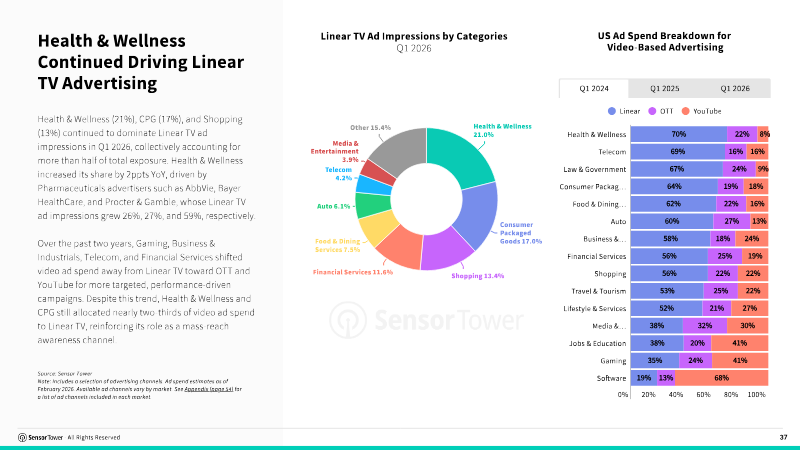



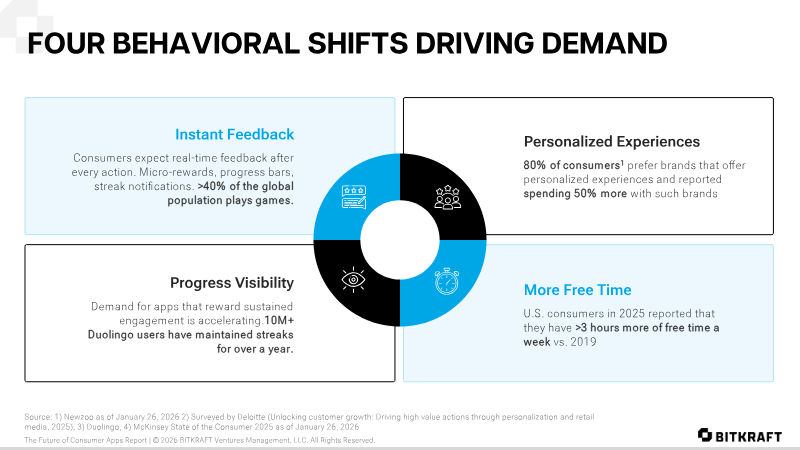
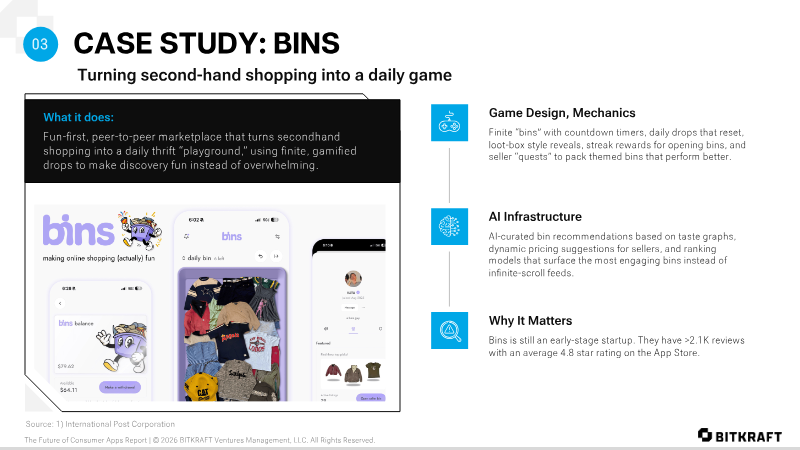


Comments