Transcript
None of these games that you see on their portfolio, like if you look at here, aren't like completely original. Like this is the key with the market. Like you don't need to go and reinvent the wheel. You don't need to go and completely change something and like you know
it's 4 a.m. Check up designs worlds chasing the sky. We're the two and a half gamers the midnight crew talking UA adverts and game design too bringing the insight. We're rocking those vibes till the early day master on the prize. Tracking data through the cyerspace. Felix like a wizard in disguise lift us to the high and smack slows are beautiful. Like the way click it fast, don't delay. Uhhuh.
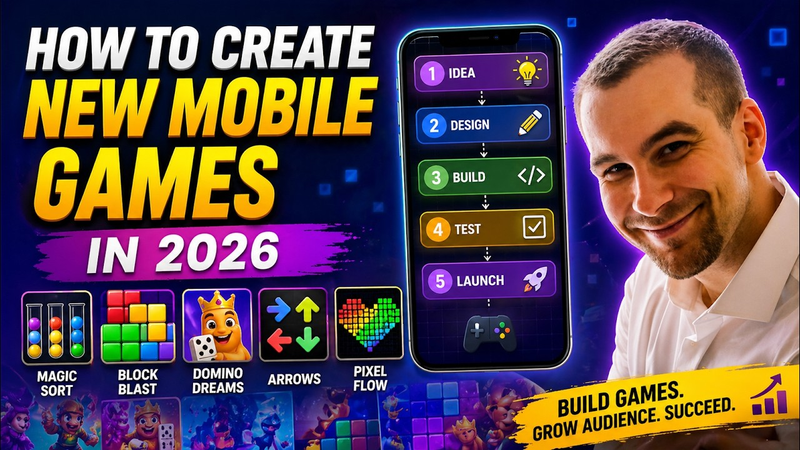
Hello. Hello. This is Two and a Half Gamers again, one of the solo episodes. And uh in this time we're going to talk about uh how new games are created because it's been like a topic for you know many times as I we've been working out as I'm going around studios or going around conferences and people like yaku what should I build what should I go which category which genre where is like there's still space to kind of go and stuff like that and um when you look at what we've been covering on the channel you could see that for instance we like to talk about templatization a lot of times with stuff like for instance what hobby is doing stuff like what u guys from Century Games or River Game are doing where you know you have predominantly pretty much finished forex core forex like LTV metag game engine
and you just add like a new CPI front end uh CPI lowering front end like kingshot or like last Z survival or dark war or whatever. Um, but how do you actually select one of these cores to kind of put into your template? How do you pick the right one? Where do you pick the right one? What's the what's the ideology here? So, today I want to just briefly talk about some examples that I think are worth mentioning. Uh, and uh, yeah, I definitely want to have one of those videos saved on our channel. So, next time somebody askked me, I'm just pointing to this video. So, we'll do it. You know, two two birds with one stone. Anyway, uh let's start and let's go through some examples which I think are really really good. Again, I'll be pointing people to this video. So, let's do it. So, if you look at one of my favorite examples here, I think this game really deserves to be studied and pretty much this is what you should
do is Domino Dreams. Uh Domino Dreams for those who don't know is this very very cute uh Domino style game which is not domino at all from Playa. uh to be precise from the developer super play that were acquired by Platika and yeah I think this whole idea and what all they did there is pretty much genius because what happened here and this is really I think something that's not really talking enough on the industry even though a lot the CPO of Super was having a literally a speech about this on latest roiocom is that if you look at the category here so uh where we are not here we are so this is the last 30 days domino. Domino has his own category uh on subg genre of I think board game or something. And Domino Dreams is yeah it's wiping the floor here because again most downloads if you go to revenue we don't even need to talk about this. It's just like nobody else is doing IP revenue in this whole thing. Even though
these games are kind of sometimes they're like these kind of mutants of like Domino this, Domino that, Domino um what is there? Domino slots, domino poker, whatever. Uh, but also a lot of normal domino. And normal domino is like the domino board game you would expect because if you look at four years back, let's do the time machine. We'll be using a lot of time machine this time 2022. We look here and there's like a lot of lot of traffic into these domino games. Not that big as for instance solitaire or like on the other because it's niche. Like let's be honest, it's a niche thing. But what we see here is that there's still lots of traffic flowing in and these games are all making ad revenue because if you go to revenue filter here, we see that it's like minimum like 40k per month or whatever something. So yeah, definitely this is all driven by ad revenue. Uh, and if you look at some of these games, for instance, like let's say Domino offline,
uh, this game, uh, I hope I have the Yeah, domino offline. Domino game. It's pretty much for people that like wants to play domino. So, Domino is basically this. It's it's like the board game like it's quite hard to be honest and not that approachable. But what uh Super Play did here, they pretty much took a domino game and put it behind a puzzle game because this is not Domino at all to be honest. This is basically a puzzle game with Domino team which is the kicker here because we have the traffic that is flowing into this cate and people are searching for this. So of course there's there's like there's a total addressable market somewhere. Uh but this is not domino at all. And even though some people were like oh no like our domino players will like who cares like it's it's the thing that people wants to have this feeling of playing something. This is not for hardcore domino players because they want they want to play domino that this is pretty much to capture the traffic that's flowing into this category and they
captured it perfectly. Uh again this is very similar to what happened with solitaire. Solitaire has like hundreds of millions of yearly downloads on on the on the category. And if you look at like Disney Solitaire or Solitaire Grand Harvest, those are not solitaire games. Those are game puzzlers. Basically, this is very similar to Solitaire Grand Harvest or Disney Solar, which they by the way then move to Disney Solitaire. So this is how you do it. Like you find this kind of category that's waiting for disruption. And like we have numerous other examples that we can continue on this track.
Okay, real talk before we start. This episode is brought to you by Potencus. And if you're a mobile game publisher tired of leaving money on the table, listen up. Potencus is a premium ad network built by people who have actually been on both sides of this industry. Game publishers, agencies, successful exits. So they get it. Here's the thing. Potencus has direct deals with Amazon, Apple, Coca-Cola, Vodafone.
It's not programmatic. It's direct. Those budgets land in your game at premium CPMs. No middleman tax. And they're handle everything with their in-house team in terms of the critics. Plus, they've partnered with playable maker VI. So, they will take brands YouTube videos or static images and actually turned into playable ad or revert video. Proper interactive format built for gaming inventory. Brands getting a gaming native creative. Publishers are getting a higher CPS. Everyone wins. Head to potentials.com to get started or check their creative portfolio in the link in the show notes. Thank you very much Potencus for sponsoring this episode. Uh, another one would be Magic Sword. Magic Sword by Ground Games is the another perfect example of the exact same story. Like there's literally like millions waiting on the table if you know how to use it because what is Magic Sword? Magic Sword is basically an
IPdriven water puzzler. That's it. Because again, by the way, guys are literally killing it uh this month like the lifetime like half a million downloads a day. Come on. And the revenue is like more than 300K a day. So congrats to that. So if you look at the category uh currently is being populated by the latest H from Westmore which is arrows and kudos to that we have a review on that. So there are like arrows clones popping up and like it's arrows arrows arrows arrows on the download side. Uh but if you look at the revenue side we see like this category has consolidated so much and it's like so big now because there's pixel flow with more than 20 mil amount. There's magic sword. There's yarn loop so on so forth. But this was not the case. Again, let's use the time machine. So, four years back, if we look at the revenue, uh there's what? There's traffic puzzle car gem from huge games. There was like that was the like big big uh big game from
there. And there's nothing literally behind it like you know all of these like water sword stuff which is basically here. Like if you go to download category, you see like number one water sword puzzle, number two park gems 3D. Okay. Number three, water sword puzzle. Number five, water sword puzzle. Number six, color water sword. Number seven, watercolor. Number whatever. And you see how huge these downloads volume. This is monthly by the way, monthly like download volumes on this. So somebody at Graham Games was very clever and said again why we don't do the same thing what guys from Domino Dreams did. And they launched Magic Sword and Magic Sword did exactly this. They put the water sword puzzle and put it into classic level based design of like royal match live ops polished like visuals and everything you know this beautiful game what magic sword is and and that's it and like it's it's driving so much more revenue because they know how to turn these players and monetize them through
actual IP revenue not ad revenue of course they're doing some ad revenue on top but it's definitely not more than 60% or 70% or whatever it's just like I think somewhere between the range of 30 to 40 maximum. I think I overshoot it anyway like 30 maybe even less. So exact same tactic and you know the beauty of this that you didn't even need to reinvent the wheel here. You don't need to like like create a new game completely. They just need to have like again very important skill set which is being able to drive monetization through the game design to do the level design to do all the blocker mechanisms like which is like yep it's like a magic of its own. Let's not undermine that. But again, you don't need like 80% of what was there was there because it was, you know, the traffic was there. People looking for it. They were like they know what they're doing and they they are playing the games that they want and they were playing before. Exact same setup. We can continue this path. As I said, uh
moving on, let's look at Spike Games. Spy Games uh is a little bit of a specific example because now Spy Games is doing most of their things on their other account not Spy Games but on Combo Games which we talked about numerous times now as we covered the AR loop already. Uh if you look at their strategy after the failed Royal's casino game which they started with which again they admitted themselves like they should should have done that at the beginning. uh they had game like tile busters which is you know continuation on Zen match which again very similar setup Zen match was a driven game this is going for IP then they had uh cube masters which cube masters together with grand with blockout they are going after block blast I'll get to it later uh they get blitz busters this is I think the 3D match game uh setup uh yeah yeah see so this kind of like mess that you need to get and again all these guys usually have a template like both grand games and spy games they have like metag game
template and they just choosing these cores. So how do they choose these scores? Sometime they choose this because they see an opening in the category like you see here with the domino dreams and magic sword because there's a category or sub genre of that core like water sword puzzle which was driven main by ad traffic and again because they have the puzzle expertise they can apply it and if it translates well they can have a hit again limited by the category which means Dominoes even though in its all glory is doing something like 7 to 8 million a month and that will be probably its ceiling because there's not that enough players that wants to play domino even in puzzle form is 8 million a month good enough? I think it's perfectly enough because this in my opinion this very profitable game uh as as as I see it uh and perfect strategy. So don't be over like oh they didn't do like 20 mil a month whatever. Yeah, this doesn't work like that. Um yeah and as I said if you look at these for instance the latest moves that they have on the combo games account. Let me
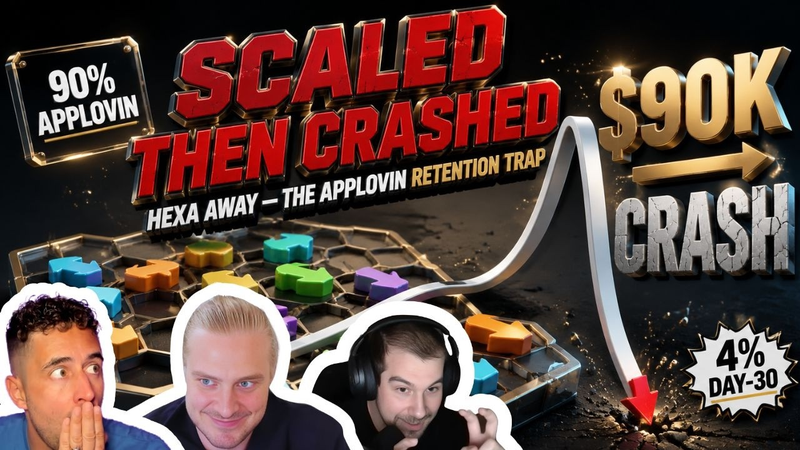
maybe do it this way. So we have it actually ordered on data much more based on release date. So we have stuff like after yarn loop. Yarn loop is the follow up on pixel flow of course. Hexa out for instance this was we just covered on the sonar February 14. What is hexa out? Hexa out is pretty much you see there is a mashup of arrows and hexasord. So yeah this is actually an innovation here. not really going after like a category that was like waiting to be taken. This is like an innovation because you take something that works like the arrows puzzle which is now all the rave around it and they just probably didn't want to end up here with all these arrows copies. So they iterate and then they added the hexa mechanic into it. And there we go. We have this very very nice hexa out setup. That's again I think I saw Yeah, you see that was their template setup here. So it looks like this. Uh they all done. So
again they just switch something that works with something new. And again this 20% iteration that's it because again arrows works perfectly. Arrows is literally killing it these days. So why not try that? If we continue their path uh what they have next on it is for instance quicksand. What is quicksend? Quick send is the quick uh send whatever sorry the voodoo game basically that's the send send one and it's going after that it's very very similar to it. What's the next game? Solitaire sword. What is solitire sword? Solitude sword is solitire associations with the level design. So yeah exactly same setup. Solid uh solitary association is the big game that is making a lot of money on ad revenue. Again, it means their space to try to convert these guys into IP revenue and make them and capture them make them unstable. Very obvious move, very easy move. If you know what you're doing, if
you have the puzzle expertise, you can capture it so on so forth. Again, the loop and the core game plays there for you. What you need to do which is the magic which I'm not undermining but it's extremely hard but extremely important is that you need to do the level based design the blockers the mechanics monetize it be able to find the you know the pressure points of fail state that's why uh for instance you'll see soon as I'll show more examples you need to add new vectors to kind of go around yeah this takes a lot of expertise but once you have it and you create stuff like magisord you have a money printer basically so if we again continue this path at and look at for instance ground games. Uh yeah, Grand Games doing very similarly. Um so if you look at their setup so water sword we already magic sword to which is the water sword on steroids in IP we covered already. Car match is like um block jam 3D. The voodoo game again driven by mainly IP very very nice very
cute uh you know their signature style. Blockstar is the stuff with uh again we talk about that gran uh spike exact same setup here. Everybody now wants to capture the giant audience that block blast from hungry games is has created into an IP game. So like why not try blockout is an follow up on color block gem. This is just like we can do it better. That's also possible. They're going after Rolik. uh and it's working out pretty well if I understand correctly because the game is scaling like crazy. So already nearly 3 million uh month. So again very very easily readable strategy and then pixel pop. What is pixel pop? Uh sorry note here. Pixel pop is the continuation on where do I have them? Uh pixel flow. So yeah, this is just another version of pixel flow because why not why not try that if they can avoid scoply
scope legal team. So yeah because it works like color blockout and again none of these games that you see on their portfolio like if you look at here aren't like completely original like this is the key with the market like you don't need to go and reinvent the wheel. You don't need to go and completely change something and like, you know, figure out this completely new core because it's not tested and it's extremely extremely risky. And these guys, you see that they're picking stuff that works and iterating it by 20 30% or making it better like you know with with blockout or with the with the pixel pops game I I just showed you. Like it's just like it works. will make it a little bit better or reskin the team or change some mechanic and and like like 5% iteration maybe or like with carage same same thing it's like shoe shot with magic sword much more harder of course because nobody they weren't copying like the the level design meta or the blockers they probably had to figure out like nobody
kind of told them that so that's much more iteration and last one again a great example like the latest game they have here we can end with that is Aerogam Aerogam If you look at it, uh, which is the latest game, it's not even tracked here, but it was just released recently, is again, uh, set up on arrows. Like very, very obvious move. Like, if you would tell me like what's happening, they're going pretty much on all these like deterministic puzzlers all the way on sword channel. It's like extremely obvious move. So, pick a game which is trending extremely high, making a lot of ad revenue, and turn it into level based IP puzzler, and they have it here. And you see the thing here like they're adding obstacles into the game play of course because they need level design and what we have here time because then we need fail state like it's you know normal arrows like okay you can literally go without fail state if you're not you know pushing it basically because like yeah you can go like infinitely. So here they need to add and again this is the expertise like you
need to know like do you add moves do you add time do you add this or that this is your expertise to translate it core and push it to next level to be driven by so here is a great example what what they're doing again and again it's completely logical and completely obvious so let's say next time you see some you know giant game trending or whatever which like this all is pretty much done by uh the guys from where did we have it? Where did I put the sort category? Here uh the guys from lessmore which I'm guessing are the ones that come came up with this idea. Maybe they took it from somewhere else somewhere sitting behind 20 somewhere I don't know and scale it up. Uh of course they have the first movement advantage but again it's not IP based. So again if somebody wants to take it they will take it and they will go. So it's extremely obvious. So, next time there's a new game trending on the sword genre or whatever puzzle genre or block genre, you bet that these two
studios will try and go after it with this kind of iteration setup because it's just your shot. Like why you shouldn't take this shot if it's like it's proven, it has a lot of traction, it has a lot of traffic and this is how you should do these new course. This is how you should take and go after these new games because it's, you know, it's all a lottery. Like we all playing a lottery and it's not about you having the winning ticket. It's about you being having the consistency to constantly get new tickets and once you win and then you go and you end up like I said with the guys here on Grand Games where if you look at their games you see that there it's not explosive growth. They just like consistently adding new and new games here that are scaling. And like if we go here you see that for instance one of the other shots which is blockout. I didn't thought that like this will be the one. I really thought Blockstar would probably be it, but again, it seems this isn't really working out yet. Uh yeah, Block Out is doing extremely well, 130k already, and
you see how it's spiky. So now they're doing like half a million a day. So perfect strategy honestly. Even though it's not this explosive new like Pixel Flow, whatever like we need this, we need that or like this new game that come out of nowhere. It's just very consistent and that's what people want because that's how it works. So kind of pick your strategy, pick your, you know, strengths and weaknesses and know what you're doing. That's the important part. Hope this gives you a little bit more kind of insight on what's happening in the current market. I would hope that more studios would get this like very strict methodological approach because then we would see much less failed games and much more logical iterations. Anyway, that was for today. Thanks for listening and see you next time. Chomp.
Auto-generated captions from YouTube — names and numbers may be misheard.
















Comments