Game Design reports and market data
Documents
Tokenomics #11 - Inside Illuvium’s $72m Land Sale with Economy Designer Khalid Alroumi
Illuvium’s recent $72 million land NFT sale serves as a strategic blueprint for balancing speculative investment with long-term gameplay sustainability in the Web3 sector.
- Illuvium generated $72 million in revenue through a strategic land NFT sale designed to fund long-term development and establish a multi-game ecosystem.
- The economic model focuses on decoupling token production from consumption to protect the ecosystem against inflationary pressures and ensure long-term sustainability.
- The project utilizes a multi-genre approach, combining an auto-battler, an RPG, and a city-builder to cater to both high-frequency competitive gamers and yield-oriented investors.
1 vs 2 Token Economies for Games - The Metacast by Naavik
The current landscape of blockchain gaming is undergoing a critical transition, moving away from speculative play-to-earn models that rely on unsustainable economic structures.
- Long-term economic viability in blockchain gaming depends on rigorous central-banking-style management of asset emissions, sinks, and utility rather than the specific number of tokens used.
- To ensure structural stability and prevent hyperinflation, game economies must be designed so that the net return on investment for the average player remains negative.
- Developers should move away from rigid dual-token systems by using internal automated market makers to peg in-game resources to a single governance token, decoupling utility from external market volatility.
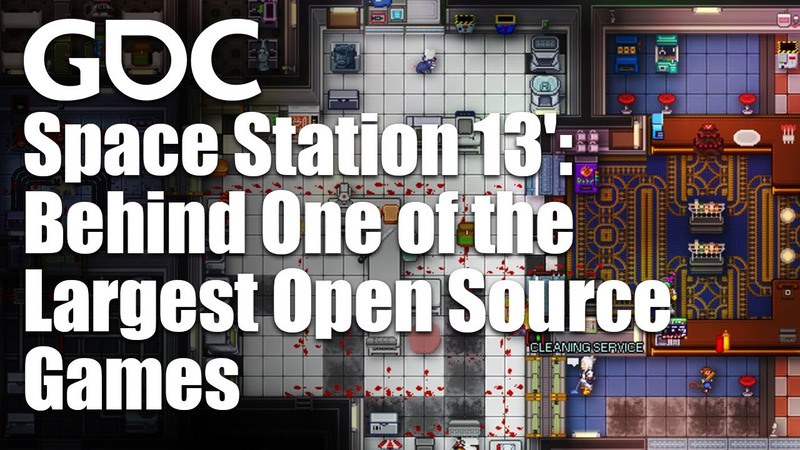
'Space Station 13': Behind One of the Largest Open Source Games
Space Station 13 (SS13) serves as a primary case study for large-scale, open-source game development.
- Space Station 13 operates as a decentralized, open-source project with over 100 unique contributors per month, managed by a core team of approximately 70 members, including 25 maintainers and 40 issue managers.
- The project utilizes a player-driven development model where nearly all pull requests originate from the community, requiring maintainers to act as curators who balance player-submitted features against the game's overall design vision.
- Open-source development allows for rapid bug resolution, with critical issues often identified and patched within seconds or minutes due to the high volume of eyes on the codebase.
I PLAYED YOUR GAMES! | Game Design Feedback
Effective game design hinges on the seamless integration of intuitive mechanics, clear visual hierarchy, and platform-specific optimization.
- Developers must avoid porting mobile-first UI and control schemes to PC, as non-native iconography and input methods create a disconnect that undermines the core gameplay experience.
- Platformers require jump buffers and responsive control schemes to ensure movement feels precise, while complex mechanics should be introduced through gradual onboarding to prevent player frustration.
- Visual hierarchy in stylized or low-poly games can be improved by using atmospheric fog, gradients, and color correction to prevent high-contrast backgrounds from obscuring foreground gameplay elements.
Token Economy Design for Games - The Metacast by Naavik
Token design in gaming functions most effectively as a complementary tool rather than a primary driver of engagement.
- Token design should function as a complementary tool for engagement rather than a primary driver, as prioritizing financial extraction over fun undermines long-term game viability.
- Successful economic models must focus on 'value to earn' to ensure in-game achievements retain intrinsic meaning rather than becoming vehicles for speculative financial gain.
- Integrating real-money economies directly into core gameplay risks disrupting the immersive 'magic circle,' leading to unsustainable models and negative player experiences.
Don't Make Your Dream Game
The primary objective is to provide a strategic framework for aspiring game developers considering the development of their first project, specifically addressing the risks associated with pursuing a high-fidelity dream game.
- Prioritize project scope over high-fidelity visuals to ensure the final product is cohesive and well-executed within available financial and technical constraints.
- Avoid the 'cohesion trap' where high-end graphics create an unsustainable expectation for design, animation, and coding quality that inexperienced teams often fail to meet.
- Focus on building a portfolio through smaller, polished prototypes rather than attempting high-risk, complex projects like survival sandboxes or open-world games as a first effort.

Battle Passes - Everything You Should Know and Then Some
Battle passes have emerged as a foundational monetization and retention strategy, currently utilized by over 60 percent of top-grossing mobile titles.
- Battle passes are now a foundational strategy used by over 60 percent of top-grossing mobile titles to shift monetization from whale-focused models to broader, subscription-like engagement.
- Industry standards for cycle lengths are trending toward one month for mobile games and three months for PC and console titles to maintain consistent player engagement.
- Developers must balance reward generosity with economic sustainability, as overly aggressive structures—such as those seen in Clash Royale—can saturate the game economy and trigger long-term revenue decline.
Matchmaking Retention Through Emotional Variability - The Metacast by Naavik
The modern gaming industry is currently defined by a dual focus on aggressive intellectual property expansion and systemic consolidation.
- Competitive matchmaking is shifting from strict skill-based systems toward emotional variability models designed to optimize player retention by managing win-loss ratios.
- Major publishers are aggressively expanding flagship gaming intellectual properties, such as God of War and Horizon Zero Dawn, into film and television to leverage global brand reach.
- Industry consolidation is being driven by tech conglomerates acquiring studios to secure content pipelines for subscription services, raising concerns about potential creative stagnation.
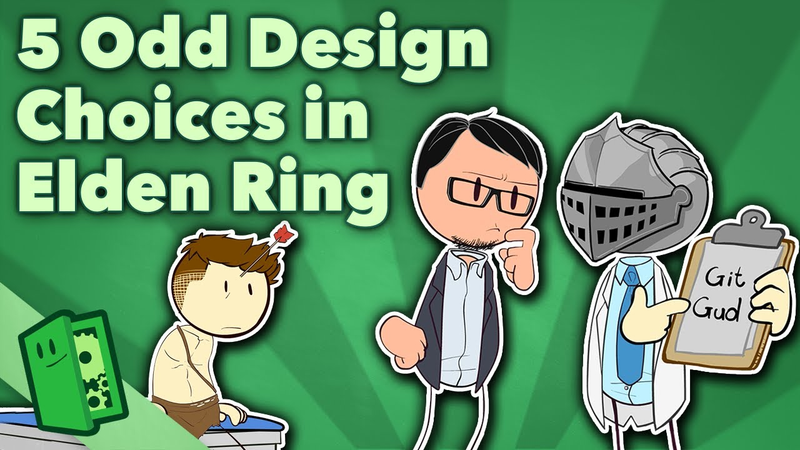
5 ODD Design Choices in Elden Ring - Extra Credits Video Games
Elden Ring represents a significant evolution in FromSoftware’s design philosophy, characterized by deliberate shifts intended to modernize the Soulsborne experience while maintaining its core challenge.
- FromSoftware designed Elden Ring to modernize the Soulsborne formula by diversifying player builds and moving away from the stagnant, traditional playstyles of previous titles.
- The integration of Focus Points (FP) as a universal resource for both magic and weapon skills forces melee-focused players to invest in additional stats, increasing the complexity of character progression.
- Developers actively discourage 'sword and board' turtling strategies by restricting the use of powerful Ashes of War when a shield is equipped.
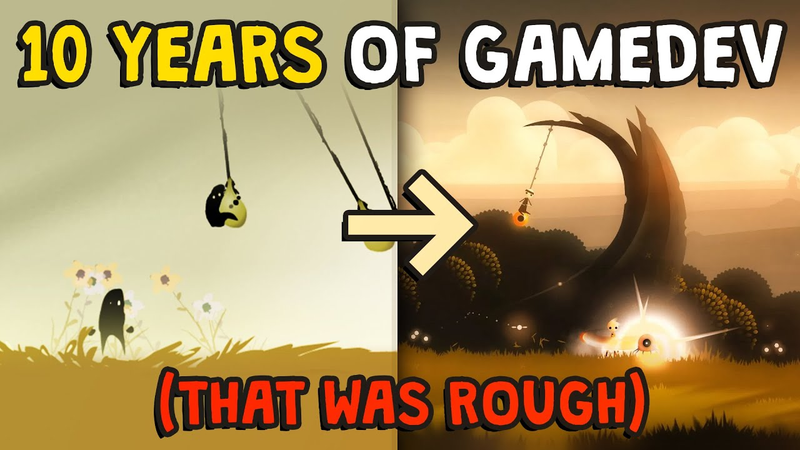
How NOT To Make Indie Games
The primary thesis of this analysis is that personal psychological traits, while often perceived as obstacles, can be managed and integrated into a sustainable indie game development career.
- Developers should avoid the 'restrictive developer identity' trap, where projects are driven by external validation and feature bloat rather than genuine creative interest.
- Indie teams must avoid the trap of recreating the scale of classic titles, as attempting to match the complexity of nostalgic influences is rarely financially or logistically feasible.
- To mitigate the impact of attention-related struggles like ADHD, developers should formalize project management structures and utilize professional partnerships to enforce strict deadlines.
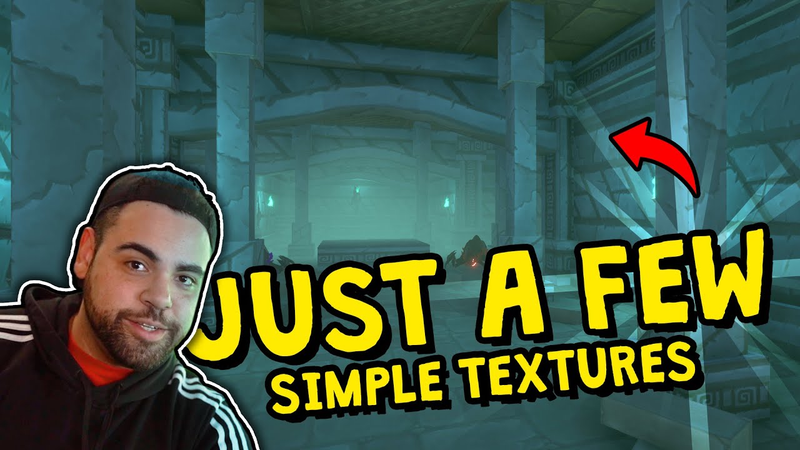
Make A Level With Just A Few Textures (Blender + Unity Tutorial)
This tutorial outlines a workflow for creating modular 3D dungeon environments using minimal texture assets and basic modeling techniques in Blender, followed by assembly in the Unity game engine.
- High-quality, stylized environments can be achieved by using a single master texture mapped across modular geometry rather than relying on large libraries of unique assets.
- Modular design relies on 'Lego-style' construction, where developers create diverse architectural elements like walls, floors, and arches from repeating mesh patterns.
- Mathematical precision is essential for seamless connectivity, requiring vertices to be snapped to consistent grid sizes, such as 3x3 or 5-meter increments.
Building Narrative Games with Yarn Spinner
Yarn Spinner serves as a specialized, open-source scripting language engineered to streamline the development of branching narrative games.
- Yarn Spinner is an open-source, domain-specific scripting language designed to bridge the gap between simple tools like Twine and more complex, logic-heavy systems like Ink.
- The tool allows developers to write dialogue as a screenplay, integrating text, branching choices, and game-state commands within the same script files.
- Yarn projects link multiple individual yarn scripts together, which is a recommended best practice for managing narrative complexity in larger game projects.