1 free read left. Create a free account for unlimited reading + AI research.
Create free account
How NOT To Make Indie Games
Key insights
6 takeaways- 01Developers should avoid the 'restrictive developer identity' trap, where projects are driven by external validation and feature bloat rather than genuine creative interest.
- 02Sustainable development requires treating game creation as one component of an evolving identity rather than a rigid brand, which helps prevent burnout and creative stagnation.
- 03To mitigate the impact of attention-related struggles like ADHD, developers should formalize project management structures and utilize professional partnerships to enforce strict deadlines.
- 04Personal psychological traits like impulsivity should be managed through structured workflows, allowing developers to leverage these characteristics as creative strengths rather than allowing them to dictate poor business decisions.
- 05Indie teams must avoid the trap of recreating the scale of classic titles, as attempting to match the complexity of nostalgic influences is rarely financially or logistically feasible.
- 06Indie projects should focus on distilling nostalgic influences into smaller, manageable scopes that feature a unique, modern twist.
Ask AI about this video
Transcript
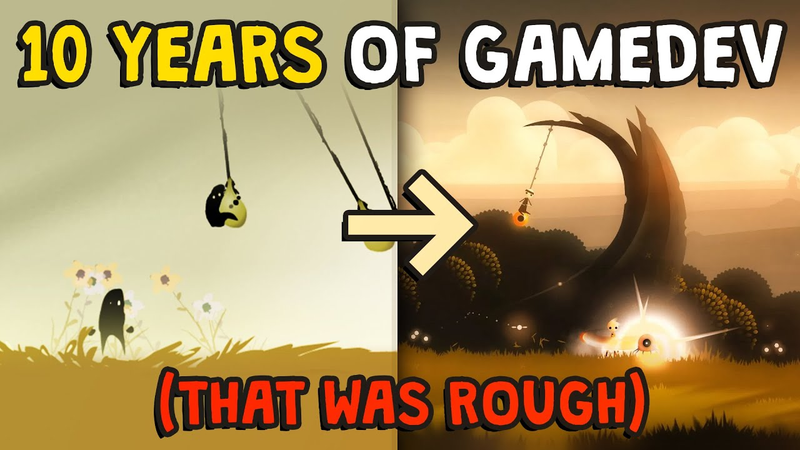
As a father of two kids, I often wonder about the impact of their environments and also just their genetic makeup on how they think on their personalities. I mean, I was born with a variety of problems in my personality. I mean, maybe it was my environment. I don't know. But regardless, these personal issues have been a blight on my decadel long indie gamedev career. And honestly, I thought these personal problems were fixed, but they always find a way of rearing their ugly little heads at the worst times when I'm making games. So, I want to talk about these awful personality traits that I was born with and how I've had to overcome them daily for the last decade of making games. And ultimately, I want you to be encouraged. Despite me having a very broken brain by default, I want you to know that I've somehow managed to make a ton of indie games and to have those games pay my family's bills, which is really cool. Okay, let's start from the very beginning. When I was 18, I made a game called Koma. It was a super small free flash game and I made it just for fun. I just wanted to release a game, so I released it for free. And I was surprised that it suddenly just blew up like that. Right now, I think it has
over 2 million plays on Newgrounds. And by the way, Newgrounds is like the OG it.io. I even made close to $20,000 on that game from ad revenue and also a small publishing agreement. And that eventually actually fizzled out. But suddenly my identity kind of shifted. I was no longer this dorky Thomas in high school. At least that's what I thought. but rather I was a really cool guy with $20,000 in his bank account and something to finally brag about. So, like clockwork, my main goal was now to affirm my new gamedev identity to anyone and everyone who asked. And more importantly, I needed to affirm it to myself. Now, it's kind of an odd thing. Why do human beings feel the need to fit into an identity into a brand? Why do we need to brand ourselves as something? I'm a gamedev. That's all I am. Don't reject that I'm a game dev. Otherwise, I'll make sure you know that you've rejected me. I mean, why can't we just be collage of a variety of personality traits? Game dev being one of them. Being a father, being a husband, being a boyfriend, being a girlfriend, there's a
ton of traits that you are. You're a kaleidoscope of little identities. If one fragment, one little sliver of that kaleidoscope falls short, who cares, right? You're not just one thing. Ultimately, constantly pressuring yourself to be inside of a box into a brand, an identity, it's going to change your behavior. Now, suddenly, every decision you make for your game is to ensure you maintain that identity. Thomas the GameDev. For me, this resulted in decisions that just weren't genuine. Rather, they were kind of self-centered. About 2 years into the production of my first commercial release, Pinstripe, here are a few examples. First, I would collapse like a dying star every time I was rejected from a game festival. And then I would restructure silly stuff that nobody cares about for my game just so that I could get approval from the judges for those festivals. Secondly, I would overpolish illustrations, details that no one cared about because I didn't want to be labeled a fraud. And then thirdly, I added a bunch of features for no reason because gamers like features. These decisions resulted in a project that took four years to finish as
opposed to just [music] one or maybe two. I think that my first commercial release, Pinstripe, it was kind of an echo of a heart set on proving an identity rather than a project made solely because I just liked making games. I think the ultimate identity is one that is everchanging, fragmented into little bits. A kaleidoscope of beautiful personality traits and hobbies and gifts and pleasures, not something that's forced into a singular box that's honestly destined to change. We all change. If you think about your career in this way, it's going to be your best friend when you make games. You're going to hopefully only lock in on mechanics and features for your game that you genuinely love, as opposed to forcing yourself to do things that community approves of. All right, let's move on to the second flaw. Growing up, I'm pretty sure I had severe struggles paying attention and staying still. I'm not really sure what I had. I've taken tests online that say I'm ripe with ADHD, but obviously those tests can only go so far. So, I'm just going to assume something isn't perfectly right in my head. But, of course, perhaps
that's exactly [music] what I was meant to be. Here's what I mean. After releasing Pinstripe, I had enough savings to support my family, my new daughter, and make my next game Never Song. The problem is, despite learning to reject that gamedev identity that we were talking about earlier, a new monster reared a legal head. I was constantly changing things. I was distracted, trying new styles. I was kind of all over the place. And what's worse, my schedule was sporadic. Sure, I was able to work full-time, you know, 8 hours a day, but I was working randomly, sometimes in the evening, sometimes till 3:00 a.m., sometimes early in the morning. And by the way, the term game design document and schedule was something that never entered my vocabulary until it was actually [music] kind of forced on me by my publisher, Serenity Forge. These attention issues really came to a head when I received that message from Serenity Forge. And they were just kindly asking me to finalize the launch deadline of Neverong. They had kind of had enough of me changing everything all the time. They really needed the game to be done. And I remember I was at the gym. I got the call and I had to sit down because a
lot of anxiety came up because I had never really had to worry about a schedule. And honestly, I I thought, don't my impulsive decisions make me kind of like [music] the Kanye of gamedev? No, not really. Believe it or not, you can balance out your impulsivity or your constant need to feel out what works for your game and what doesn't with a schedule. You can actually account for the freedom to be impulsive, to make changes, [music] and to guess and check. It's kind of like what my parents used to call blow money. Blow money was a certain portion of our family budget that you can spend on whatever you want. So make a schedule and account for that blow money or what we would call maybe blow moments. Wow, that's never mind. I know it's hard, but you can have attention issues or anxiety, ADHD, and still make games. That's totally fine. According to a quick Google search of a medical condition, when has this ever gone wrong? ADHD can actually be a superpower. Hyperfocus, resilience, creativity, and courage [music] are just a few. It's just a Google search, but hopefully you can get my point. Despite
my constant struggle with paying attention, I was resilient. That was a personality trait that I had. Without resilience, I would have crumbled pretty fast every time I was rejected by an indie game festival. Without courage, I wouldn't have launched my Kickstarter campaign and raised over $100,000. even the negative stuff, depression, anxiety. Without those traits, my games wouldn't have been shrouded in gloom, which is honestly what makes them unique. Obviously, I'm not a medical professional, but ultimately, I feel like I was able to overcome my mental [music] struggles, my mental handicaps. And I released Never Song on every platform, including Apple Arcade. And that was a big day. That was one of my luckiest deals for my games to this day. [music] And now I'm flawless. I'm flawree. Unflawed. Perfect. Wrong. Obviously, recently a new flaw has been growing inside of me. Honestly, I think this little demon has been there all along, laying dormant inside of me from the moment I was born. Perhaps you know this one, and I think it's [music] the king of personality flaws when it comes to game development, and that is nostalgia. Or maybe a better word for
you is inspiration. For me, it's probably nostalgia more than inspiration. What I mean is, as I get older, I'm often too easily inspired by the things in my past. I don't really like new games. I like the old ones, right? Does anyone feel this way? I look at new stuff, new games, and I kind of get smug. Guess it's just something that happens when you get older. I'd rather just recreate the games of [music] my childhood. The problem is whether it's a new game or an old game. This is just too expensive. Remaking Banjo Kazouie, Ocarina of Time, or The Wind Waker, these are still monumental achievements even with the technology we have now. Recently, I have to admit this was the number one flaw in my team's latest project, Father. The goal was to make a Halflifeesque game. as my third commercial release. Perhaps I was a bit too confident and I just felt justified in attempting to remake HalfLife. Not only is this insanely expensive and timeconuming, I think it's ultimately kind of foolish. I recently had a conversation with my buddy Jangu Yang. He goes by Z. I had a conversation with him on my channel and he said something that kind of made me sad. Kind of send
chills up my spine. I haven't played the game yet, but I'm willing to bet that what makes Father unique is not because because it plays like Quake, right? Like I I think if what makes Father unique is because it plays like Quake, then people would just go buy Quake. [laughter] He basically confronted me without knowing it. I was too inspired. I was too nostalgic about those old games. Honestly, you've got to step back whenever you feel ultra nostalgic. Ultra inspired. And the first question should be, can you afford to recreate this game? And I know most of you aren't paying yourself an actual salary, but you're still spending time. You're spending emotional energy. Can you afford to spend that time and energy on something so big? And the question is especially relevant if you're not even creating something new about those games. Now, does this mean that my next game, Father, is dead? I don't know, honestly. But I do think there was a miscalculation there. So, I'll keep you posted. Instead, I think you should just enjoy inspiration, enjoy the nostalgia, and distill it down, all of it, all the things you loved, into a small little
diamond of a game, and then add a twist. Here's an example. I love Super Mario 64. I love Banjo Kazouie and I love dogs. So, I'm going to make a hyper simplistic 3D adventure platformer with a puppy. That's the side project that me and my team are working on right now. The temptation is still there, though. Like, Mario can cartwheel jump or Banjo Kazouie can defeat bosses or in Ocarina of Time there's a dayight cycle. You have to temper all of that inspiration. After all, you're making a game that's the same price as a Big Mac meal. So, don't overvalue your work. And like I discussed at the beginning of the video, don't overvalue yourself and your identity. And I guess that's what I'm trying to do with this side project. I guess it's called Dog Game right now. That's the working title. It's basically just super tight character controller, a beautiful tuni world, and that's about it. Nothing too complicated and it's something that's manageable. Guys, in conclusion, you're making a silly little game. Sure, it could bring in six figures. It could bring in a million bucks, but that's nothing compared to the kaleidoscope that you are. Don't box yourself in. Don't let a single flaw control you. And finally, don't let your past, the inspiration, the nostalgia
from your childhood box you in either and force you to make a bad decision. All right, so those are the mistakes that I've made. I'm still making those mistakes, guys, and I'm still still working on those personality flaws. We don't make mistakes. We have happy accidents. The encouraging thing here is I'm running a full-time game studio. I've been doing it for a while. All of us have flaws. And it's more than funny, honestly, that these flaws are actually your forte. You just got to learn how to temper
Summary
The primary thesis of this analysis is that personal psychological traits, while often perceived as obstacles, can be managed and integrated into a sustainable indie game development career. Rather than viewing personality flaws as permanent barriers, developers should embrace a multifaceted identity and implement structured workflows to mitigate the negative impacts of impulsivity, rigid branding, and excessive nostalgia.
Key findings emphasize that early success can lead to a restrictive "developer identity," where creators make decisions based on external validation—such as festival approval or feature bloat—rather than genuine creative interest. This behavior often results in prolonged production cycles and projects that lack authenticity. Furthermore, while attention-related struggles like ADHD can lead to erratic scheduling and constant scope creep, these challenges can be balanced by formalizing project management and utilizing professional partnerships to enforce deadlines. The author notes that these same traits, when tempered, contribute to unique creative outputs and resilience.
A significant conclusion centers on the danger of nostalgia. Attempting to recreate the scale and complexity of classic titles is often financially and logistically unfeasible for indie teams. Instead, developers are encouraged to distill nostalgic influences into smaller, manageable projects that feature a unique twist. By treating game development as one component of a broader, evolving identity, creators can avoid the burnout associated with trying to maintain a singular, rigid brand. Ultimately, the industry requires a balance between creative freedom and disciplined execution, where developers leverage their inherent personality traits as strengths rather than allowing them to dictate poor business decisions.

















Comments