Game Design reports and market data
Documents

The importance of understanding your players with Josh Rivers from Solsten
Solsten provides game development studios with AI-driven psychological insights to foster human-centric design.
- Solsten provides AI-driven psychological profiling to help studios move beyond surface-level demographic and behavioral metrics to understand the underlying motivations driving player engagement.
- Psychological profiling in Eve Online, which focused on themes of friendship and overcoming challenges, resulted in double-digit increases in player completion rates.
- The developer of Linguinis successfully pivoted a new feature to a team-based format after identifying that their player base was motivated by collaboration rather than competition, leading to improved engagement.
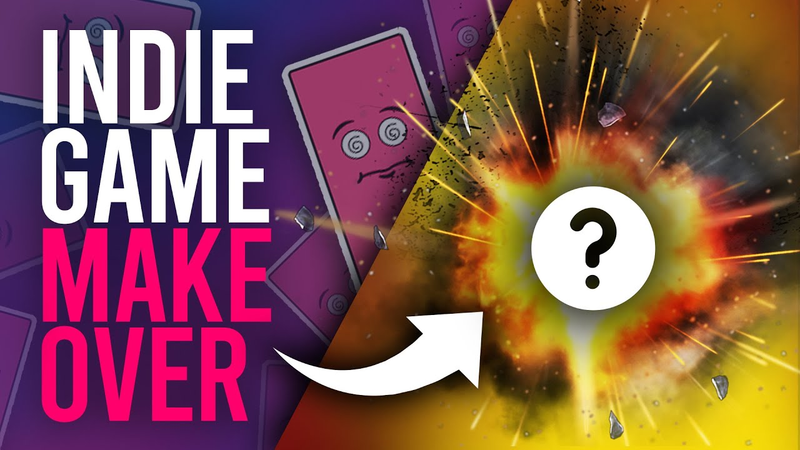
A subscriber sent me their game for a MAKEOVER
The primary objective of this game development analysis is to demonstrate how to elevate a mechanically simple mobile game through thematic integration, intentional art direction, and atmospheric design.
- Simple mechanics can achieve market differentiation by applying cohesive thematic integration, intentional art direction, and atmospheric design.
- Adding narrative context, such as a clear objective like a bird searching for lost eggs, creates an emotional hook that improves player retention.
- Visual identity should be established through deliberate, non-traditional color palettes and textures rather than generic aesthetic choices.
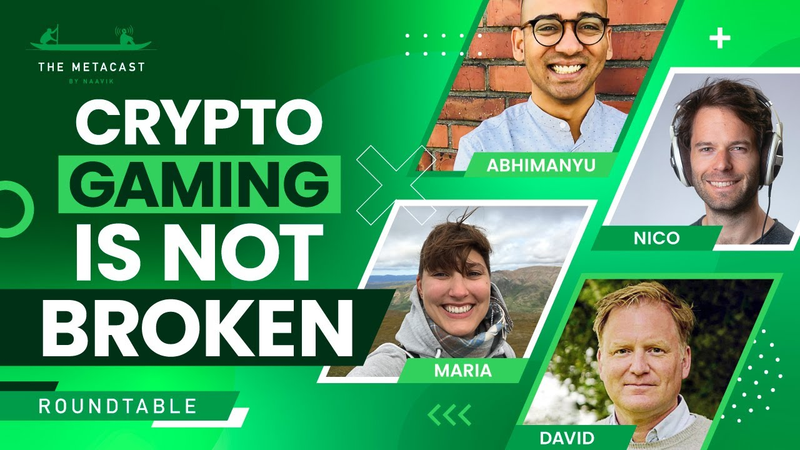
Game Design Innovation Requires Growing Pains - The Metacast by Naavik
Electronic Arts is actively pursuing strategic partnerships or acquisition opportunities to maintain its competitive standing amidst a wave of industry consolidation.
- Electronic Arts is actively pursuing potential mergers or strategic partnerships with major media entities like Apple, Disney, or Amazon to maintain competitiveness against rivals such as Microsoft and Take-Two.
- EA’s decision to terminate its FIFA licensing agreement signals a strategic pivot toward prioritizing proprietary intellectual property and operational autonomy over third-party brand reliance.
- The crypto gaming industry is moving away from speculative NFT scarcity and DeFi mechanics, shifting focus toward integrating blockchain primitives as foundational tools for genuine in-game utility.
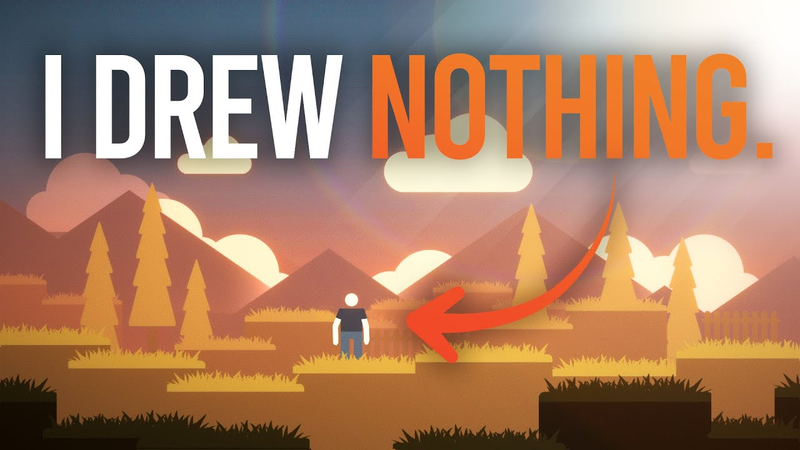
Make A Beautiful 2D Game Without DRAWING A THING (PS + Unity Tutorial)
This guide outlines a workflow for creating aesthetically pleasing 2D game environments in Unity without requiring traditional illustration or drawing skills.
- Professional-quality 2D environments can be created without manual illustration by using simple vector silhouettes sourced from repositories like Noun Project.
- Unity’s PSD Importer allows for the seamless integration of layered PSB files, enabling developers to arrange basic shapes as sprites within the engine.
- Environmental depth is achieved by arranging sprites along the Z-axis and applying a custom sprite shader, as standard Unity sprite shaders do not natively support atmospheric fog.
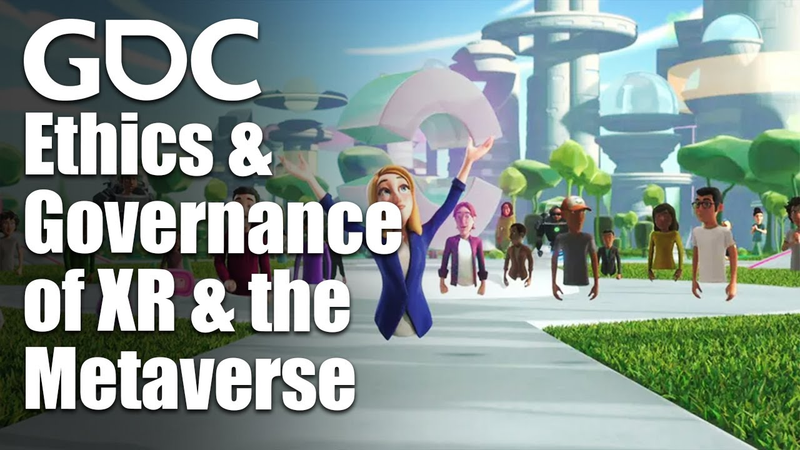
A Brave New (Virtual) World: Ethics and Governance of XR and the Metaverse
The metaverse represents a critical juncture in digital evolution, forcing a choice between centralized corporate control and a decentralized, interoperable future.
- The metaverse currently faces a significant adoption hurdle, with approximately one-third of respondents in the GDC State of the Game Industry report expressing doubt that the technology will deliver on its promised potential.
- Governance models within decentralized autonomous organizations (DAOs) are prone to plutocracy when voting power is tied to token ownership, which risks centralizing wealth and influence rather than fostering democratic participation.
- The future of the metaverse will likely mirror the evolution of the early internet, where walled gardens eventually lose relevance as users demand greater interoperability and the freedom to move their digital assets between platforms.

How to Run (and Survive) a Writers' Room
The writers' room model, adapted from television production, provides a structured yet agile framework for modern game development.
- The writers' room model shifts game narrative development from isolated writing to a collaborative, team-based framework to improve creative depth and consistency.
- The head writer acts as a strategic bridge between the writing staff and production stakeholders, serving as the final arbiter of style to maintain a unified narrative vision.
- Leadership must insulate the writing team from external corporate politics and provide clear, well-defined parameters for assignments to reduce staff turnover and improve output quality.

You're Overthinking Your Indie Game...
Successful indie game development relies on balancing proven, reliable mechanics with a unique, marketable gimmick.
- Indie developers should anchor their games in proven, reliable mechanics while differentiating the product through a single, unique gimmick or distinct visual style.
- Games must be immediately understandable through short-form media like GIFs to ensure marketability, while maintaining enough depth to sustain long-term player engagement.
- Indie studios should prioritize a 'hot tamale' approach, focusing on a concentrated, high-quality experience rather than attempting to build a sprawling or generic title.
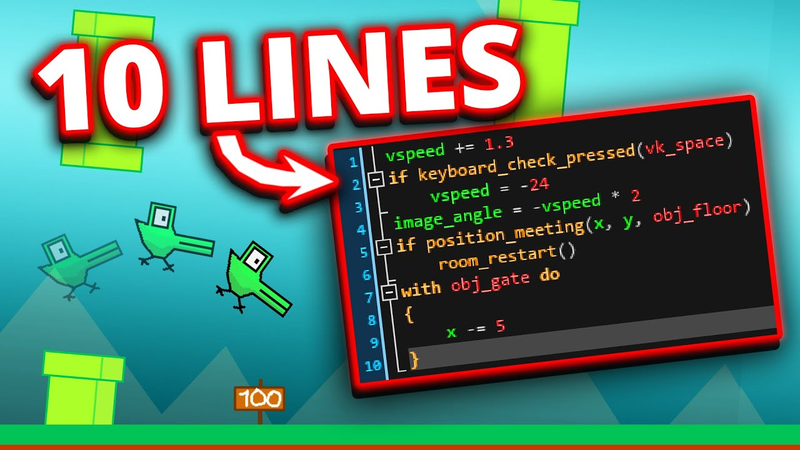
Making a Game With 10 Lines of Code Only (Challenge)
This challenge explores the creative potential of game development under strict constraints, specifically limiting the codebase to ten lines per project.
- Strict code constraints, such as a 10-line limit, force developers to prioritize mathematical tuning and iterative design over raw code volume to achieve gameplay depth.
- Functional game mechanics—including physics, collision detection, and AI—can be effectively implemented by leveraging built-in engine features like sprite editors and effect layers rather than custom-coded systems.
- The experiment demonstrated that complex systems, such as cellular automata for procedural building or vehicle drift physics, are achievable through efficient logic and nested functions.
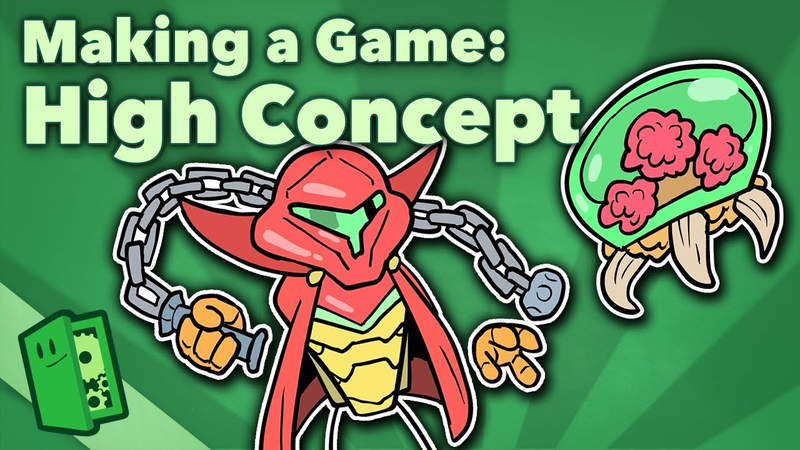
Design Land: High Concept - Extra Credits Video Games
The process of defining a high concept for a video game is a critical early-stage design phase that requires focus to avoid the pitfalls of convolution and project instability.
- A successful high concept must be distilled into a single, concise core idea to serve as the foundation for all subsequent development and prevent project instability.
- Designers must identify whether the game's inception point is mechanical or narrative to avoid the 'gulf of convolution' caused by disparate, unfocused features.
- The 'brevity test' dictates that a viable game concept must be capable of being summarized in a single sentence or paragraph.

The Hollow Knight Look IN 15 MINS (EASY 2D UNITY TUTORIAL)
The provided content outlines a technical workflow for replicating the visual aesthetic of the game Hollow Knight within the Unity game engine.
- Use grayscale sprites imported via Unity’s 2D PSD Importer to enable dynamic color manipulation and lighting adjustments directly within the engine.
- Implement a dual-camera system with separate culling masks to apply depth-of-field post-processing to background layers while keeping foreground elements sharp.
- Utilize a custom 'diffuse with fog' shader to ensure 2D sprites interact realistically with global fog settings for atmospheric depth.
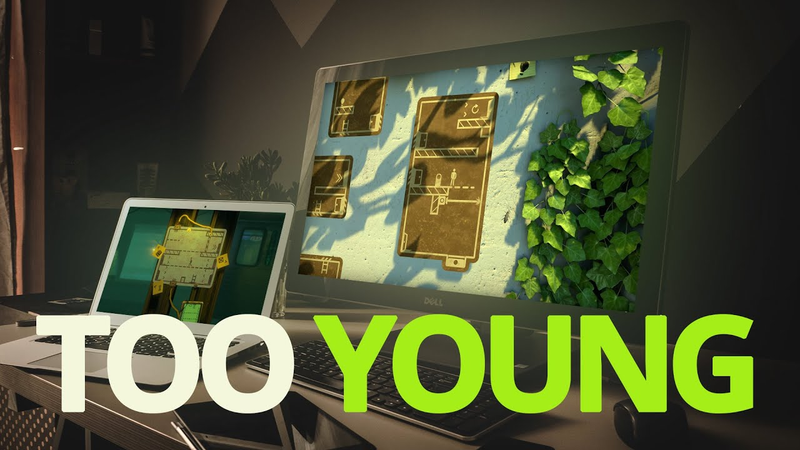
Starting A Full Time Indie Game Studio At 20 YEARS OLD
Establishing a successful indie game studio requires a strategic balance between creative ambition and the pragmatic humility to seek mentorship.
- Commercial viability in a saturated market is best achieved by pairing proven gameplay mechanics with a distinct visual style to target niche audiences rather than competing directly with AAA studios.
- Achieving significant sales benchmarks, such as surpassing 100,000 units, requires persistent iteration, high review scores, and a long-term commitment to project scalability rather than relying on an initial launch spike.
- Crowdfunding campaigns should avoid the common pitfalls of over-promising on stretch goals or platform-specific ports, as these commitments often lead to technical debt and compromised product quality.

Robbie Ferguson: How to Design and Scale Blockchain-Powered Game Economies - The Metacast by Naavik
The integration of blockchain technology into gaming serves as a foundational shift toward true digital ownership and decentralized economic agency.
- The gaming industry is projected to reach 100 million blockchain-integrated players within the next two years as content quality shifts toward AA-standard experiences.
- Sustainable blockchain economies must prioritize traditional gaming metrics like player retention and acquisition costs over speculative, inflationary play-to-earn models.
- Zero-Knowledge roll-up architecture is the technical standard for scaling game economies, as it provides Ethereum-level security while eliminating high transaction costs and centralized friction.