VideoDeconstructor of Fun
Tokenomics #11 - Inside Illuvium’s $72m Land Sale with Economy Designer Khalid Alroumi
17 Jun 202256 min video
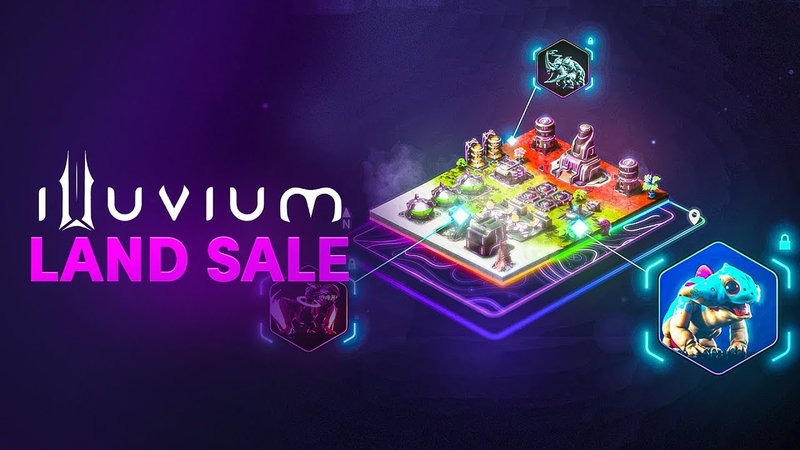
welcome friends it's time for another tokenomics i've got a very very exciting episode for you today uh today no mishka i've got anton bachmann principal at play ventures greetings travelers uh it's me ethan the uh executive producer of legendary heroes unchained and i'm very very excited to have our special guest khalid al-rumi from alluvium hello everyone thank you so much ethan for having me yeah of course i was uh really excited khalid said yes to coming on uh because as we look at uh crypto winter and everyone uh being worried about the bear market elluvium just did a 72 million dollar land sale and we're here to talk about the land sale and all things alluvium with uh the system and economy designer uh on that project
um so khalid can you start by just giving us a little background about yourself and and your experience in game development yeah sure so like i'm from kuwait and i've been a gamer all my life uh being from kuwait you know it's a bit hard to get into the game industry so all of my experience actually comes from starting my own studios so i've been working in free to play games running my own studios for around 10 years oh wow uh and just uh yeah for most most like focusing mostly on build and battle games small teams you know taking the big guy's head head to uh and actually we had to close our studios on on 2021 you know because the free to play space was becoming much much harder for for indies i think especially if you're focusing on these type of games you know the ltv versus cpi issue was becoming
pretty difficult to solve basically so the web 3 game looked interesting and then we decided to take a leap on that awesome that's really amazing that you have that kind of indie developer spirit and you were able to grow something and build a team build a game release it from kuwait is there much of a developer community out there or is it just mostly you it's it's pretty minimal like there is some hobbyist i would say some little attempts here and there but but no nothing major nothing major oh yeah um so why don't you give us a start uh and just tell us about alluvium uh what is the game uh where is it in its development cycle yeah yeah sure so basically eluvium is an ecosystem that consists of of two parts essentially so we have one part which is the dao that has the ilv token at its heart basically where the token holders are
the owners of of the dell and then you have the other part which is the eluvium universe which will consist of as much as i am trying to avoid you know calling it a metaverse but it's it's like a universe that consists of multiple games you know that at the spine you have the the alluvials which are our versions of pokemons that will be usable across all the games so currently what we have we have elluvium arena which is an auto battler something similar to tft we have eluvium overworld which is a third person rpg where you get to run around collect resources get into battle with with alluvials and trying to capture them and the last game that we currently have is eluvium zero which is the land gameplay basically got it so you thought well it was really hard to make one build in battle live ops game with the team of ten i know i'll go work on a game that's three games simultaneously exactly exactly it's a bit crazy but like this is what happened and and
honestly like at the time where i wanted to you know get into the space most of the projects were not that appealing the vm was very appealing to me yeah absolutely feeling good um just to give what would you say what would you what would you say were the main things uh that attracted you to the project so me coming from a a background where gameplay was the first thing that we focus on in terms of games it is it is something that is very appealing to see you know a studio that is a gameplay first you know where where the moment that i had the first interview with with aaron one of the co-founders like the first thing that we we get to talk about was was the depth and how are we going to achieve the depth then we started solving problems related to you know achieving depth with minimal complexity and things like that nothing really compares with the other meetings that i had with the other companies and what they are focusing so yeah that
was the main thing i would say got it um i i mentioned the uh the land sale as one of the uh success points uh already for alluvium 72 million dollars just closed the other day can you tell us uh do you know some of the other uh kind of vanity stats i know alluvium is just crushing it both with its token and with the alluvials themselves um so give the audience a sense of the game's success success so far yeah yeah sure so uh believe it or not like elluvium was was founded on i think if i'm not mistaken on late 2020 and until now we we didn't have any major nfts out like we have some small things here and there but now nothing major the land sale is the first nft collection that is out we currently have around 220k discord users 330 000 on twitter you
know i think our our community is is by far the biggest achievement that we have their loyalty uh we have run into some incidents where there have been some compromises some hacks and the community stood by us and then truly proved like even i think i would attribute that the land sale and the sector that achieved is to the community so uh yeah and we are currently around a little bit over 200 employees god wow so that's huge and the um alluvium token i'm just looking at it on coin gecko right now it's at 270 dollars per token uh with a 176 million dollar circulating market cap right now so it's really uh an amazing kind of uh basis for your dow and for your community and a sign of how much that community believes in it and between uh the token holdings the liquidity of the token and now the
land sail uh alluvium has a lot of uh uh gun powder in the barrel with which to develop all these games yeah yeah exactly and it's definitely this year is going to be very interesting for lugi like we got a lot of stuff that are in the pipeline so it's going to be very interesting what's your uh role on the team uh so currently my official role is a game designer and what i focus on is mostly uh systems economy and balanced design i move from working on illuvium zero which is around gameplay to the overworld uh end and the bottle butler as well got it so that is there anything is there anything you would you could pinpoint from mirroring back to your free-to-play design experience that anything can highlight what are the biggest kind of changes in your work right now now that you have to also take into account how how an open economy
might be uh it might be sort of affecting the economy obviously there are additional components also with the land gameplay which we can get into in a in a few moments but anything you could highlight on kind of what what feels different now yeah yeah sure so uh i think the area where ha it has or it feels very different is the land gameplay so eluvium zero is basically very similar to a city builder where you get to you know create resources build buildings optimize your layout to increase your resource output so something similar to what you would see in a builder game on mobile but the way you try to optimize it is completely different so no longer we are just focusing on retention and monetization here we have some other things to put into perspective you know so that's that's by far the the biggest challenge is that what is my paradigm exactly what i'm trying to focus on optimizing it's completely different here you might need
to optimize for the floor price for nfts you need to make sure that the economy is sustainable you need to make sure that uh the cadence of which the players play are not necessarily similar to free to play where you want them to to you know build a habit and then keep on playing no it's completely different and i still didn't you know put the dots exactly this is the way how it should be done it's still a mystery to me i'm still discovering it got it why do you think the um that's really interesting why do you think the play pattern uh will be or should be different okay so i could give you an example so in in our land gameplay it's it's i would say that the gameplay is not really uh the star of the show you know lands uh once we get into like i could discuss them in detail later on but it's like the main purpose of them is to generate fuel so you know uh yeah the experience needs to be engaging but it needs it it doesn't need to be tedious enough where it's like we are making uh the land owners really
get to work to get their view you want the experience to be just enough for them to be engaging enough but you don't need them to be on the app always you don't need you know to to drain them or you know just keep monetizing them constantly it doesn't work like that it needs to be a pleasant experience for them where they would be able to get their yield without having to go through a tedious amount of work got it so uh if i think about some of the land games or appointment games i've played on browser mobile free to play there might be a reason if i'm playing optimally for me to visit my city once an hour or even more frequent if i really want to min max it um and that the uh theory behind something like that is that forming that daily habit where someone's checking their their city every hour to collect their resources and set new appointments and collect appointments
um that will lead to long-term retention just because when they think they have a free moment what they're going to do is open up their city and it sounds like um with alluvium you're expecting a different player type with different motivations and if someone's more of an investor than a game player they might want to only check in once a day or even less you know couple times a week and that you're uh as a designer focusing on that play pattern uh more is is that right that's 100 right like you don't want it to be tedious enough where the investor would say you know what it's not worth my time why would i want to keep that land you know so that's why i actually had to design it in a way where it's like logging in once a day is more than enough and it needs to be you know as seamless as possible but of course like this is a theory i could be wrong but like this is how it is now this is how it makes sense to me yeah i i uh i would love to uh uh learn
the results of any a b test that happened as a result uh to try and test that frequency i know for my um for the economy i'm working on currently i uh am focusing more on game players than investors as a player type um and that may be an advantage of not having a token out there yet that um we can thank uh you know people who are in it purely for yield and purely for investment uh are great but they can also be very challenging for your community and so uh you know i my our theory is by focusing on the game play uh we'll make something that people who are who start as investors will actually want to check in every hour and maximize their resources anyways because they're having fun so it'll be interesting to see which
which theory works out yeah i mean it depends on the game like this is what happens in alluvium land gameplay which is mostly investor people like players who are seeking yields but that's completely not the case when it comes to illuvi marina which is the auto battler it's completely different so if you think about the different experiences there might be a reason to check in with different alluvium experiences every hour but the land itself the land had what was um the floor price for even the lowest to your land was quite quite high right yeah i think like now currently i'm not sure it could be half an eighth so you can expect anybody who is playing the land game currently is in that investor class and that leads to then the design that's such a great insight um that i'm going to yeah actually yeah actually tying to that tying to that i have a question maybe both of you uh
if we if we assuming that or if the assumption is that we put um a good amount of of early assets into the hands of players before before the game is out and before it's maybe discoverable through uh through conventional ways and then on the other hand on free to play in in the free-to-play market usually or for many games some of those really early cohorts are going to be the golden cohorts for your game that will stick around for years and monetize for years now in this in the scenario where we're putting putting assets into the hands of either purely investors or investor investor gamers what do what what do you think is the audience that we're attracting here in the beginning uh and and um is it a good or a bad thing or does it bring its own challenges with it um yeah my i think it's super challenging to have an uh an audience of
of investors you know there's something mike rubinelli and i talked about a lot on his episode when he was explaining blockchain brawlers like um if you have people who are just asking who are saying like um hey you made this gameplay balance and now the floor price is down what are you gonna do about it and his response was i'm not gonna do anything about it i'm optimizing for the gameplay experience not for the floor price and this is the right um long-term um choice for the game and that that i thought was really interesting um [Music] and so i think i mean investors as a class of player it's just a new type of player that that come with their own uh needs i think that are unique and it sounds like khalid is already kind of uh understanding their needs and adapting to them
um i uh i would think you know a lot of a lot of the success that uh i've had on different free-to-play games has come from guild experiences and in a guild it's pretty you know even in the top guilds in the game it's it's um common for there to be a couple heavy hitters who are like the really big spenders and then a lot of other people supporting them somehow and so you know without tipping my hat too much about some of my forthcoming designs that's something i'm thinking about a lot which is if i have for every investor how do i design game play that 50 free players might want to support that person and for them all to have fun and benefit together yeah so i would say that the initial audience as you said antoine is is mostly speculators investors looking to make
profit i think a very small minority of them are really die-hard fans of the gameplay or the enjoyable experience and i think it's a bit tricky uh ideally you would like to you know for to tip them over towards you know you know what like this is a really cool game i don't mind playing it or i like to playing it like that would be the best scenario but they are definitely tricky and i don't think usually they would come with patience i think they lack patience yeah i mean the on the benefit though like you the team has business success front loaded right like uh i've been on projects that have never achieved 72 million dollars in sales i've been on projects where it takes uh many many months of live ops to achieve that level of sales and revenue and so on one hand having
having this level of success um gives the team a lot of security and runway i imagine i mean 200 employees is a lot of people that's a pretty pretty high burn rate but like having the security that you're not um needing to if you're in a venture back company constantly be thinking about how do we get to the next metrics of business success so that we unlock our next round of funding um it almost feels like you can relax into it a little bit and take your time which is very like it's a benefit i mean just having having that front loaded business success i think is a benefit and then on the flip side you need to um as khalid said know about think about the considerations of of those people who are believing in you currently and figure out how you want to design gameplay for them and also releases for
them right i expect they want like constant forward momentum for sure for sure um as an economy designer what are what are some of the challenges you face when you're thinking about setting up the economy for all these interlocking parts right like we all three of us know how difficult it is just to develop the power economy for one free-to-play game that's self-contained and now you're talking about having multiple different experiences um it sounds very exciting but also uh very challenging so kind of how do you how do you approach your work what are some of the challenges you face when thinking about how do i develop this long-term sustainable economy yeah yeah so that's definitely a major issue now uh that i don't think is has a very clear answer yet but as i mentioned before like no longer we're just focusing on retention and
monetization we need to keep in mind that the players want the floor price for the nfts to remain or if not just increase in price you need to make sure that the utility token has enough sinks in the economy and then you know its prices table or going up and basically the key question is is how could you make sure to create enough utility for for the blockchain assets in your ecosystem you know that's a very very difficult thing to do it's like how could i convince you that this nft has a lot of utility without attaching a monetary yield to it right that's that's the main problem that's the main problem this is what we're trying to achieve right so you said what is uh so when somebody owns land what is what does the land-based gameplay look like or shaping up like what are the uh is it outputting tokens is it outputting non-crypto resources that are used in
other game modes like how does it tie into this ecosystem yeah so it's funny that you said that because land is a purely utility token producing us okay you know it's not like the other things that are like the alluvials which are similar to pokemon things like that so we we we we know that like we were not trying to tip it around like this these these are the lands this is what they do they produce fuel which is an erc uh 20 token and the fuel is basically used in all of elluvium games so basically i could give you a use cases that if you need to craft an item in the overworld you would need on top of the materials some fuel and that fuel is generated from the land gameplay so once a user generates a fuel they could directly switch it to eth via a liquidity pool that we're going to set up and players who want to craft stuff who wants to catch or go into trips into the
overall they need to buy fuel from there so that's exactly how it is now and this is the fuel earned passively through land ownership or is there a game active gameplay component also to generating fuel so uh it's basically like there is some gameplay element to it where there is like some some game theory because we have three types of fuel and each land can produce three type of fuel and you could optimize your your your your land depending on which type of fuel you want to generate and that has some gameplay elements in it but most of the time you're just clicking you know produce fuel and then you're gonna wait a few hours then you get your fuel that's basically how it is got it because i think i've seen uh this kind of currency generating programs and staking programs being usually divided into into two camps so either you have the kind of passive approach where simply kind of owning uh and passively
staking something uh against the protocol or against the treasury uh yields you some kind of reward and then the other camp which is maybe a bit more emerging would be tying most if not all of these gameplay rewards that are reserved from the treasury tied to to to gameplay actions so let's say logging in daily doing your daily quests uh participating in events etc and through that kind of bootstrap also bootstrap a bit more active gameplay uh rather than than only rewarding um sort of passio passive passive ownership and personally i think the latter camp obviously there's a wide spectrum here and a bit of a mix and match most of the projects out there personally i like the the latter one more with more active participation being rewarded in the in the daily gameplay you possibly also tied to skill and how you how you manage on the leader weekly leaderboards monthly leader boards etc uh and i think it it also ties a bit
closer to why i think some of those leading d5 protocols manage to do their own uh governance token distribution so well so if we look at something like compound and uniswap i think uni swap mainly which which iran the the protocol and the service run for years without any native token uh and to listeners who are not familiar with uni swap it's uh it's a decentralized the leading decentralized exchange built on builds on ethereum and then when uni swap decided that they're going to have their own native governance token when there was a use case for it then those were distributed to the users of uni swap who had been using the protocol up until a certain time stamp and and therefore all the whole initial supply uh went to the active users of uniswap and um obviously i had been using the protocol i like the service that it provided and uh naturally i had uh i had a stronger belief to that product beyond kind of the speculative value of
the uni swap token and that that's maybe where i'm a fan of of of maybe in the future seeing more of these gameplay rewards uh and governance token rewards being distributed to active players that continuously participate in the game uh do gameplay play with other players etc but um yeah but naturally we'll see a lot of a lot of these hybrid models going forward right because it sounds like uh khalid and the eluvian team have the challenge of they have a um they have a strong community of investors that they need to uh transform into game players by making fun experiences for them and uh the type of model you talked about sounds like how do we attract and retain a group of players and then at some point we turn them into investors by rewarding them for their gameplay and their belief exactly and there and there
right and there i think the approach is more about increasing the metrics across the board so without with a game you're looking to retain people you're looking to monetize them and by progressively introducing more on-chain elements you're you're sort of incentivizing them even more to become an integral part of that game community or or that game ecosystem uh but again just throwing just just just there's just things baseball here yeah just to to add a bit and on that it's like what i think we're trying to do is we're trying to cater for the different types of i don't know what you want to call it like stake uh people who take mistake in your ecosystem so the land gave play might be more uh inclined to for investors while we have the the auto battler which is maybe more for uh gameplay heavy players while the overworld is maybe four four type of explorers or or uh people who might want to take risk and
they want to see like do i get this rare alluvial or or not you know so what we're trying to do is just like two to two mix it ups because you know we do have an ecosystem and this is what we're trying to do got it uh what state are each of these three games in i know that uh i i know i filled out a form for uh beta for the auto battler so i know that some people are out there testing it right now but what what state of development are these three different experiences in currently yeah so speaking about about the beta actually is like a i i had a lot of you know promises uh promising a lot of people that you know i could help get them in but those promises weren't filled in and i think that that people in charge of this are covered they hate me now oh man so i invited the wrong person onto the podcast is what you're saying if my my
end game was just to get it yeah so yeah like a illuvium arena which is our auto butler is currently on private beta and we're planning to release another version if i'm not mistaken by the end of the month or maybe early next month and it's going very well the feedback have been amazing you could really see how people in this in this space are really hungry to have their hands on something that is you know that has good gameplay that they want to play uh the overworld but we're still working on it and i think there is like a version ready to be put in front of users i'm not sure when i don't want to put a date on it but of course maybe in a month or two i would say and elluvium zero which is the land gameplay we're planning to release an open alpha version which should be accessible for everyone uh next month at some not sure maybe like
uh we're gonna try mid next month something like that regarding the testing aspect uh now if we look at mobile free to play then i mean you push a build uh you acquire users very kind of you can a lot a lot of stuff you can control in terms of cohort size what countries you're acquiring from age groups etc uh and now probably correct me if i'm wrong a lot of this test user base comes from your discord they're early supporters uh early investors early players etc uh do you think do you feel that the feedback from from this process is more valuable or less valuable than for example the feedback you're getting on your product by by acquiring users uh in the more the more web 2 way during soft launch or um yeah yeah basically uh what what what are your feelings on kind of does this is this a better model or is this currently still a worse model yeah so what i'm seeing is that it's
definitely the feedback would be biased you know especially if they have invested in it you know they they wouldn't complain as much as someone who would just close the game and you would see they want attention as low as 25 or something like that that's the bottom like truth so what we're testing on is is not really uh how how people how much are they engaged but more of just like in trying to prove the product are we meeting their expectations the overall sentiment you know things that are qualitative as opposed to quantitative as much as in the web 2 space we are still early uh i'm i'm still trying to think of what type of kpis would i be looking at if we're running a web 3 game that that's still i would love to read an article like that yeah you know i uh hopefully i'll i'll write one of those someday i i expect to that as a community of game developers we will invent a lot of new metrics uh
and introduce them into the into the vocabulary uh one i've been thinking a lot about as an example i'm very interested in finding out if there's a correlation between uh game engagement and um token price and token volume right like i have a theory that the more tao you have in your games the more activity you'll have on your token um and and that's part of what's so interesting about um uh web 3 games is that because of the decentralized nature of token exchange like there there is there will be people buying and selling and trading your tokens that might not even know you're a game they might just randomly be active on uh on on different um swapping protocols
uh or just purely they're just playing the game of of uh trading and so that's one of the ones i'm most interested in uh right now in terms of new metrics is like um and a new exploration what is the relationship between game engagement and floor price of nfts and token trading activities and are these like is it com in our control or is it out of our control you know um very interesting that you said that because like if you have an example like theta arena where it's like you've seen their user base just grow but it almost had no impact on their token processor that shows you like there is a weak link there yeah so maybe it's like a good metric is that if the the link is pretty strong then this shows that most of your users are web3 yeah folks you know so i i think the yeah one of the problems um with a lot of the economies i've seen so
far and i've talked about it before is inflationary um tokens that the game play where the more people who join the more token supply is created like slp or like uh thetans tokens and that if there aren't appropriate um utility for that token if there's no taps that take it out of the marketplace as you have more players as out of the economy like the it's just creating supply is naturally going to decrease the price and that's not what you want with the game you want a game where the more people who join it the token price either stays stable or increases if it's decreasing because of your success then like you have a product that's not sustainable long term yeah exactly exactly um how do you think about
i know that's a very broad question but um how do you think about building that sustainable economy for these multiple inter weaving um experiences it's it's one of the things that both most excites me as a designer and most frightens me uh as a designer um uh about it so i'm i'm kind of just curious how you're approaching the problem yeah uh it's definitely a very you know hard problem to solve and then you we've seen a lot of companies fall into that same whole over and over again you know not thinking long term enough but but i i think the approach to solve it is let's try to avoid having like the people or the players who generate the demand for the token their incentive shouldn't be that we want to generate even more of that token i think that's that's the bottom line of the
problem you need to isolate so you have people who generate the token and then you need other people who who are consuming it who their intention is not to increase their production otherwise going to be a cycle that will spiral out of got control so in alluvium it sounds like um you'll have one group of players um who own the land and are producing fuel and then you'll have other players who are uh one who are collectors who want to collect all the eluvians they can and different events in the overworld gameplay and for everything they do they're going to need fuel so either they need to buy a piece of land and produce their own or multiple pieces of land or if their need for fuel outstrips their supply they'll need to trade for it um from other players who own it um yes that's exactly how we're doing it that's it that's 100 right so we have the land owners who are generating the fuel and then you have all the other type of players who are
uh seeking these nfts and they they they are after the the utility that is coming from those energies they generate the demand for the fuel and is there any um uh free fuel free daily fuel or free or ability to create some amount of fuel for non-landowning players um or do they essentially need to pay to play uh so there are ways to to play without needing fuel so in all the the the nft assets that we have you know it's mostly tiered into tier zero one two three up to five so usually the tier zeroes do not cost fuel and you can please play them like without without having to spend any any money but for any tier beyond tier zero you need to go buy some fuel from the liquidity pool and then do the actions needed to acquire one of these nfts
so does this also include if we think about the onboarding onboarding process so so is it doing the game or is is arena for example a game where for the first session you need to connect your wallet or is there free to play mode that you can try out sort of in a more frictionless way how are you guys thinking about that yeah so so in an arena we have different game modes so we have one which is the pvp and then we have one that is called survival which is like a wave based pve mode and we have one that is the leviathan which is uh basically like a type of wager uh game mode so the survival mode uh at its current state which these these things are subject to change but you can hop on play without uh needing to have any of the nfts because daily we're going to generate nfts for you and you can just play that that part of the game without having to have nfts but if you want to go to the pvp that's a different story you need to have your
own uh nfts to do so so we're trying to to mix it up we're trying to mix it up got it and then presumably that process as a as a first time player when when you've been engaging with the free modes then uh us uh assuming there's some some design trying to find all the players uh to create either create a wallet connect a wallet are you thinking about having for example hosted wallets for people who are creating it for the first time or or do you think you already immediately went when you're looking to convert people to to to wallet players that they'll have a meta mask or or something else available uh so we're we're not we're still a bit early to 200 solve this but we want to eliminate the friction as much as possible you know uh so i can't i can't give you a very hard answer unfortunately yeah got it
um one of the things when i asked for vanity stats uh you talked about you have a very large discord community a very large twitter community and that's you know like the strength of the project in the backbone of the project and as a designer how much time do you spend interacting with the community like i could see i could see myself get into a trap of basically spending all day on discord and not doing any of my spreadsheet work or spec work or uh other um you know like there's there's a positive and a negative so what what are your interactions with like with your community how do you use them to help make your designs better help you make better choices um and then on the flip side how do you guard your own personal time and space and and and make room for yourself and and not spend uh all day working and all night
on discord that these are like the traps i fear yourself yeah so so this is definitely a new environment for me like uh coming from free to play where we we sit in the dark development for a year and a half and then we come out to the public then we engage with the community here it's completely different and honestly i don't spend spend uh as much time as i want with the community because as i said like the game is growing so fast we have multiple products and our design team is fairly small so we don't have really enough time to do to do so plus the community are very hungry for information because they are most of the time invested into the project and as much as you want to be transparent you don't want to say something and then they would invest based on that something that you said then it changes then you can imagine how the backlash be so it's definitely tricky i try to be uh how would i say it like it's like i
very careful with whatever we say we try to be as transparent as as we can but that's very tricky it's very tricky yeah it's almost it's almost like um you need your own media team right like who's whose job it is to view community like beyond community management beyond marketing like a pr team whose job it is to plan out the messaging for the community on a regular basis to like keep them satisfied yeah and it's very hard to keep track of what things have been said what things have changed you know in videos and interviews and on discord channel it's it's very hard to keep track of all of that yeah how how big is the design team yeah currently how many characters currently we are four people including one of the co-founders which is erin got it that's four yeah that's really i mean i
could have a team of four p four designers on an auto battler on just an auto battler and still have capacity for more uh or like work for more so that's uh that's a really small team when i think about um this many different interconnected products yeah yeah yeah it's definitely maybe that's why this is what attracted me to to leave you i'm just addicted to to this small team vs big project yeah um what are some of the biggest what are some of the lessons you've learned so far going from this free to play uh ten years of free-to-play development uh into web three i think a lot of the dof audience is uh free you know primarily free to play mobile i think that's where the majority of the listeners are and if they're listening to this they're they've either
red pill like me or they're toying with it and want to learn more um as you've made this transition what are some of the things you've learned i mean we've already highlighted a couple of them but uh in in terms of player types but what are some of the new lessons already about crypto game development so by far like the biggest differences is the power of community and how much it could you know uh how can i say it in power uh game studio like this one is something that is completely different like in in free to play the way we handled it was as i said we sit in the dark and then here is our project and then we look at some numbers and either we kill it or we keep it here it's completely different you feel like you you have some other parties that are with you in the journey you're not alone and then you're not just solving it on your own and then putting it out there you know your entire team you have a token holders you have people who are interested in the game you have
different type of parties yeah so it's it's definitely a very different experience than free to play and i think free to play should should take some of these parts and try to implement them whether it is even if they just take the token as part of you know just like the the fundraising i think that would be just enough of a achievement compared to what you used to be in free to play yeah absolutely i um i par and i talked a little bit about this with space dog when we talked about void runners and and uh developing releasing your uh game design document essentially your white paper is part of the process um i as a designer am notoriously bad at accepting feedback not that i don't listen but that my like my resp i'm very grumpy basically and so
i prefer to get my feedback and comments and written so that i can be grumpy alone before i then go oh that's a good point that person made and then make adjustments right like i have to work work it out with the punching bag before i am able to listen and and hear what people are saying um and so i can kind of imagine myself like uh imagine having a private channel in discord with some you know 50 100 trusted community members and saying like hey here's the spec for the new arena mode um let us know what you think put comments what do you like what do you not like and part of me thinks like oh i bet that could help you know as long as i had faith in in in myself and stayed true to design that could really help guide some of the decisions and some and the other part of me thinks like oh that will destroy you ethan like you would
you would hate people so much if you got feedback on a spec but um i don't know how so as i tell this story about my own struggles like how are you leveraging the community to help improve designs before they go out are you releasing specs to people are you just really you know releasing features and talking about it afterwards it sounds like you use the sentiment to help inform some of the metrics you're tracking as well yeah we are but we're not doing it to the force of like everything is out there because obviously lucky i think it's it's a bit bad if every decision taking is is done via the community you know i don't think that's a good practice but it's good that every once in a while you put something out there you check the feedback and then you get back into just fixing it or doing something and it's different i must say like it's different if they have stakes in it
it's different it's not like they have nothing to lose let me just you know not even give it a good look and just put my comments no no they will really look very deeply into it and they would give insight that i have never seen before wow on a related note i think calling just personal opinion i think calling these white papers it might have been a bit archaic i think that comes from the fact that some of the early or early blockchain protocols i mean had very strict technical specifications and where the name come from one way we should call a new term here i mean what won't be talking about or what are we talking about yeah we're releasing our game design document because that's what these essentially are game design documents with the token design as well uh i don't know if they should be called game papers or something else but but um yeah i think that's that's what the void runners team call their game papers like yeah that's true i i like that i just uh i
yeah also the the entire term white list and blacklist is quite loaded and uh worth removing from vocabulary actually um yeah i uh yeah it'll be it'll be interesting we should be calling we should be calling whitelist the whitelisted people the chosen ones the chosen ones where we're you're on the list of you're on the list of the chosen ones now yeah they're all becoming jews basically they're part of the chosen people um we're calling ours uh we're we're trying to be careful and make sure to say allow list i like allow list for that um it's uh and that's actually i'm modeling out uh allow list size per gotcha drop uh this week is is my big fun task
khaled as you as you look forward to the future um does it feel you know in in free to play we kind of think about soft launch worldwide launch live ops and then live ops is just forever and um this new web 3 model feels almost early access like right you could you could almost map it to you guys have done a kickstarter campaign and now you've released part of it to early access and then you actually did like the token launch could be viewed as its first campaign the land launches is a campaign does this feel like you might just be in perpetual uh early access forever does it feel like there'll be a point where you say like is it per experience you'll be like hey arena mode is live like um i don't know does it feel significantly different as a as a launch uh system than um uh mobile
free to play it it does it does it does it it definitely does and it's it's much better of an experience you know you get the feedback uh much sooner than what would happen free to play and you know you would at least have some you would generate some revenue before you the game is out which which i think now is is a is a good thing but later on i think that that as sad as it would be i don't think it will last where they could up you know pre-book the revenue before the game is out i don't think a lot of people would be able to pull that out later on yeah but this is what it is now and you know everyone is utilizing it but it's definitely different and it's definitely less punishing than free to play that's what they have to say for sure anton do you have a question normally when you put your money nope all right i was just uh i was just planning a joke
but um okay we'll save it for the next step we were saving for the next episode as a cliffhanger well just to to close it out um seven you know 72 million dollars it's it's a giant land sale um are there any parts of it that you think are the uh keys to why it was so successful um things you would uh recommend to other um game designers as they think about how they plan out their own land sales or nft launches like why do you think alluvium was so successful uh especially against the background of like the hype cycle's over crypto winter is here it's a bear market like i i have to be honest i was not expecting uh the project to put up these sort of numbers i was a little afraid and you guys crushed it so like what do you think are the uh keys to this success yeah so so you know aside from that the
people are working at eluvium and and how much time and effort that they put in into into the land sale and it's success like there are definitely some things that i would attribute the success to and uh obviously the first one is like the goodwill of the brand like as i said the brunt have been out there for a very long time and we're not just in it to just you know sell nfts as soon as we can we really made sure that there there is some products that are out there at least people played the beta and then they checked how the gameplay would be so that was attributed to the success as well as we very clearly communicated what is the utility that you're going to get from the lands it's very clear you're going to get fuel and you're going to get blueprints which you could acquire if you scan and then you get a bio data and so on which would be used for skins later on in the other games so the utilities is very well communicated people know exactly what they are getting
into and even the fuel we stated that it would be as you know equivalent to five percent of the company's revenue you know that we were very detailed on exactly what the people will get so transparency the goodwill of the brand and i think the enormous work that they have been done in our company like in the marketing department did paid evidence and going into the land sale we had we had a few main concerns one is like we wanted to avoid gas wars as much as possible especially seeing what happened to the other lands and we wanted to avoid failed transaction and we wanted to utilize price discovery and the the entire uh dutch auction system with batched lands that we did was entirely designed to do this and because of that like if you compare the the the total gas fees and the other deeds which is around 170 million compared to us which is three hundred and eighty thousand dollars like the difference is is astronomical yeah
and it was a really success like i i would i would put this as a kate's case study of how a proper nft sales should be like we had no white list we had nothing pure dutch auction with batches to avoid bottlenecks uh of transactions and it went smoothly and perfectly finger wow that's great if uh in i've just added it to my fantasy pile of work that i'll never get to uh writing a case study on this uh on this land sale for the community maybe i can convince somebody in the i bet i'll just convince i'll just trick javier into writing it for me and uh that'll that'll be how i do uh well khaled i was thinking about writing something to be honest if you'd like to in all seriousness if if you'd like to uh uh uh uh uh article about the land sale i know i'd love to learn from you and and i'm sure the audience would as well there's a it's a huge success and there's a lot um
that people should pay attention to with that uh i think uh we'll bring this episode to a close anton thank you for uh uh co-piloting this interview with me and khalid and the elluvium team congrats on all your success and thank you for coming on and sharing yes thanks and we hope we hope all the listeners fly with us again [Laughter] thank you so much for having me it was a pleasure bye friends
Auto-generated captions from YouTube — names and numbers may be misheard.
Illuvium’s recent $72 million land NFT sale serves as a strategic blueprint for balancing speculative investment with long-term gameplay sustainability in the Web3 sector. By establishing a multi-game universe that encompasses an auto-battler, an RPG, and a city-builder, the project aims to create a diverse ecosystem where different player motivations—ranging from yield-seeking investors to competitive gamers—can coexist. The core thesis centers on decoupling token production from consumption, ensuring that the economic engine remains resilient against inflationary pressures while providing sufficient operational runway for ongoing development.
The economic architecture prioritizes utility-driven assets over speculative hype, utilizing a stakeholder model that invites community feedback throughout the design process. To accommodate varying levels of engagement, the project differentiates between high-frequency competitive titles and lower-frequency, yield-oriented land gameplay. This approach allows the ecosystem to capture significant front-loaded capital while maintaining a focus on long-term retention. Furthermore, the implementation of free-to-play modes ensures accessibility, preventing the barrier to entry from becoming a deterrent for new users who do not wish to participate in the NFT market.
Technical execution played a critical role in the project’s success, particularly the use of a batched Dutch auction mechanism that mitigated gas fees and transaction failures during the land sale. By maintaining transparency and aligning asset utility with clear value propositions, the development team has successfully navigated the complexities of managing a decentralized community. Moving forward, the project remains focused on refining metrics that correlate active gameplay with token health, aiming to transition early speculators into long-term participants while fostering a sustainable, player-driven economy that transcends traditional free-to-play monetization models.

Deconstructor of Fun · 2026

Deconstructor of Fun · 2026

Deconstructor of Fun · 2026

Deconstructor of Fun · 2026

Deconstructor of Fun · 2026

Deconstructor of Fun · 2026

Deconstructor of Fun · 2026

Deconstructor of Fun · 2026

Deconstructor of Fun · 2026

Deconstructor of Fun · 2026

Deconstructor of Fun · 2026

Deconstructor of Fun · 2026
Deconstructor of Fun · 2021
Naavik · 2024
Naavik · 2024

Naavik · 2024
Deconstructor of Fun · 2022
Deconstructor of Fun · 2022
Deconstructor of Fun · 2022

Deconstructor of Fun · 2022

Deconstructor of Fun · 2022
Deconstructor of Fun · 2022
Deconstructor of Fun · 2021
Deconstructor of Fun · 2021
Comments