Game Design reports and market data
Documents
Game Monetisation Design: Strategies, Trends, and Best Practices with Oscar Clark
Sustainable game monetization centers on the principle that revenue should be a byproduct of player value rather than an end in itself.
- Prioritize player value over immediate revenue, as viewing money as the sole driver causes designers to miss the psychological factors that influence engagement and retention.
- Design monetization around 'shortcuts'—tools that allow players to play longer, perform better, or maximize rewards—while distinguishing between temporary consumables and permanent aspirational items.
- Understand the 'fan' economy by recognizing that a player's willingness to spend is not directly correlated to their disposable income; developers should value all fans regardless of their monthly spend level.
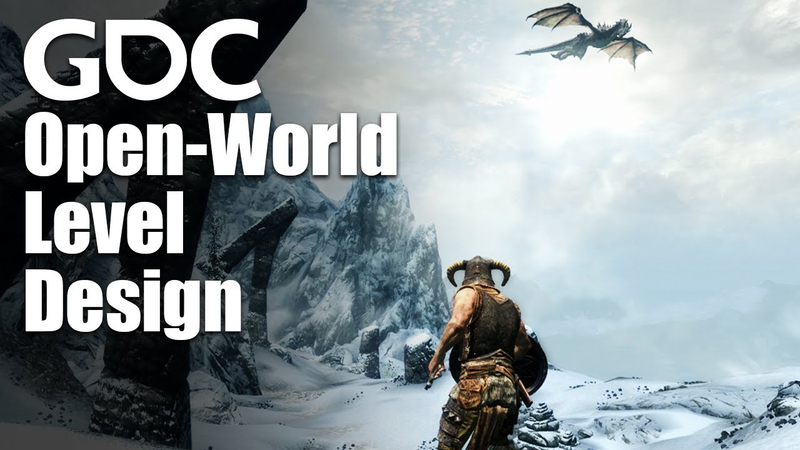
Level and Quest Design Collaboration from 'Skyrim' to 'Starfield'
Successful game development at Bethesda Game Studios relies on the deep integration of level design and narrative architecture, moving away from rigid departmental silos toward a model of shared responsibility.
- Establish clear ownership boundaries early: level designers must have final authority over layout and combat encounters, while quest designers retain final authority over narrative, story, and characters.
- Avoid the 'buffer time' trap when scoping complex content; when a project exceeds the capacity of a single designer, it is more effective to split responsibilities between specialized roles rather than simply extending the deadline.
- Foster cross-departmental collaboration by creating shared project-centered goals, allowing teams to bypass bureaucratic overhead and rapidly reallocate resources during critical development phases.

2.5 gamers x Live AM(F)A #4 - Ask Me Anything @ July 18 6 pm CET
Mobile game monetization currently relies on a sophisticated hybrid model that integrates both in-app purchases and advertising to maximize lifetime value.
- To optimize ad revenue, implement banner ads across all menus rather than limiting them to a single screen, and maintain a consistent ad unit across scene changes to avoid unnecessary auction reloads.
- When managing banner ad refresh rates in mediation platforms like LevelPlay or MAX, set them to 10 seconds to maximize impressions, though be aware that excessively low refresh rates can negatively impact user retention.
- Improve ad revenue by 8% to 10% by integrating Moloco’s ad network, which is currently supported on MAX and LevelPlay with upcoming support for AdMob.
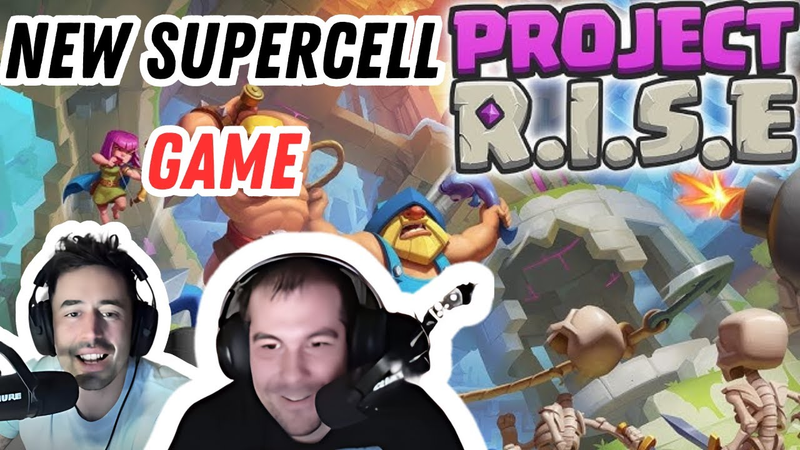
Project RISE review: Supercells *NEW* Rogue-lite Game is in pre-alpha!
Project RISE represents a strategic pivot for Supercell, marking a departure from the studio’s traditional focus on competitive player-versus-player experiences toward a cooperative, rogue-lite PVE model.
- Supercell is pivoting from its traditional competitive PvP focus to a cooperative, rogue-lite PvE model set within the Clash universe.
- Project RISE features a floor-based progression system with extraction-style mechanics that allow players to retain upgrades between sessions.
- The current pre-alpha build suffers from technical instability, including performance lag and a lack of essential UI elements like mini-maps.

The Next Era of Voice Games
Voice-controlled gaming is undergoing a fundamental shift, moving from primitive, high-friction interactions to sophisticated, AI-driven experiences that leverage the natural human instinct for speech.
- Advancements in large language models and native audio-to-audio processing have reduced latency to under half a second, transforming voice from a novelty into a high-fidelity primary input mechanism.
- The sector is successfully targeting casual demographics—specifically millennial parents, children, and seniors—to convert passive television-viewing time into active, social gaming engagement.
- Studios are utilizing subscription-based models that prioritize high user retention over aggressive monetization, with development cycles typically lasting between six and nine months.

Banana Special: Exploring the Potential, Mechanics & Popularity of the Banana Game with/ Joseph Kim
The viral success of the clicker game Banana on Steam, which achieved peak concurrent player counts approaching 900,000, serves as a definitive case study in the power of speculative digital economies.
- The clicker game 'Banana' reached nearly 900,000 peak concurrent players on Steam, demonstrating the massive market demand for speculative digital asset trading.
- The game's success proves that play-to-earn mechanics can achieve significant scale and profitability using the existing Steam Community Marketplace without requiring blockchain technology.
- A substantial portion of the game's engagement is driven by bot farms rather than organic gameplay, highlighting that the economic potential of virtual items often outweighs traditional design loops.
The Psychology of Knowing Something is Sus | Extra Credits Gaming
The Iowa Gambling Task serves as a foundational psychological study for understanding how human brains process patterns and make decisions.
- The Iowa Gambling Task demonstrates that the human brain detects complex patterns and makes intuitive judgments long before the conscious mind can articulate them, with physiological stress responses appearing as early as the 10th draw in rigged scenarios.
- While participants in the Iowa Gambling Task felt an intuitive inkling about rigged decks by the 50th draw, they were only able to consciously identify the patterns after 70 draws.
- Players often utilize 'thin slicing' to master game mechanics intuitively, which can make traditional, heavy-handed tutorials feel tedious or redundant to experienced users.

Inside Voodoo’s #1 Hit: The Story of Mob Control’s $200M+ Rise
Voodoo has successfully pivoted from a hypercasual focus to a midcore model, driven by a decentralized studio structure that prioritizes team autonomy and performance-based incentives.
- Voodoo has successfully transitioned from a hypercasual model to a midcore strategy, resulting in the hit title 'Mob Control' generating over $200 million in cumulative revenue.
- The company utilizes a decentralized, post-agile production model where small, senior-level teams operate with high autonomy and rapid two-to-three-week development cycles.
- Strategic integration of base-builder mechanics into 'Mob Control' directly resulted in a 20% increase in the game's lifetime value.
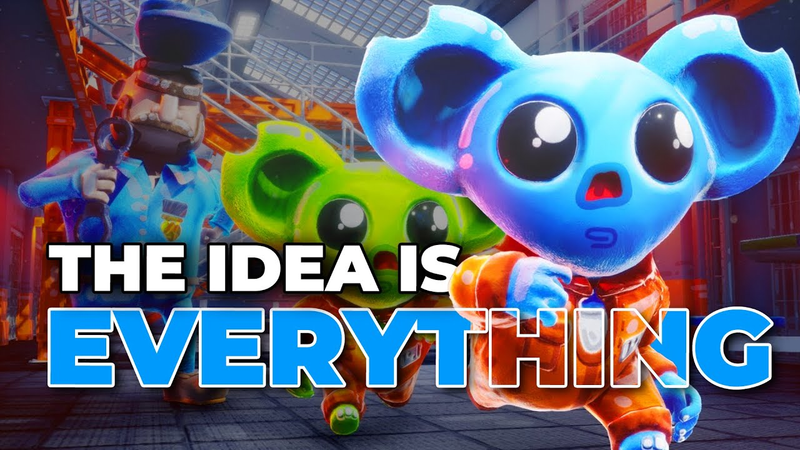
The Secret To A Million Dollar Game Idea
The process of developing a commercially successful indie game relies on identifying high-potential concepts through market analysis and strategic simplification.
- Identify high-potential game concepts by analyzing market trends on platforms like SteamDB to find established genres with proven audience demand.
- Target underserved or overly serious AAA concepts and adapt them into accessible, stylized, and budget-conscious indie products.
- Prioritize production efficiency by using stylized, unified character models instead of high-fidelity, photorealistic graphics to avoid prohibitive development timelines.
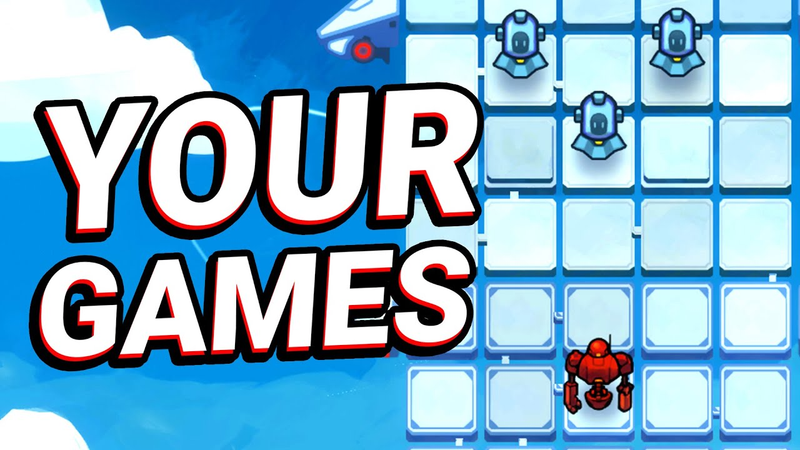
YOUR GAMES | Game Design Feedback
This analysis provides game design feedback for three independent titles, focusing on mechanics, level design, and marketing viability.
- Developers must balance technical execution with player-focused design to ensure commercial viability, as strong core mechanics alone are insufficient for market success.
- The movement-focused title requires higher skill ceilings through increased momentum-based mechanics and refined jump physics to improve gameplay depth.
- The swarm-based strategy game suffers from a lack of tactical variety; developers should introduce diverse enemy behaviors to prevent the over-reliance on static, clumped turret defenses.
Make the Trailer Before the Game: A Marketing First Way to Prototype
Prioritizing the creation of a game trailer before full-scale production serves as a critical diagnostic and strategic tool for modern game development.
- Prototyping a trailer early in development serves as a 'short-circuit' tool to define the game's core emotion, tone, and unique selling points before getting bogged down in complex mechanics.
- A trailer acts as a strategic framework that aligns the development team, investors, and collaborators around a shared vision, preventing scope creep and ensuring that gameplay mechanics serve a clear, marketable goal.
- Effective game trailers should follow a specific narrative template: establish the genre with an opening shot, clearly explain the unique hook, and only then showcase secondary features like boss battles or character skins.

Thwips and Hugs: The Animation of 'Marvel's Spider-Man 2'
Insomniac Games approaches the development of Marvel’s Spider-Man 2 through a performance-first philosophy that prioritizes actor-driven movement and iterative collaboration over rigid pre-planning.
- Insomniac Games utilized the PlayStation 5's high-speed SSD to enable seamless transitions during the Sandman boss fight, streaming open-world assets like pedestrians and traffic in real-time to maintain gameplay continuity during large-scale cinematic sequences.
- To ensure authentic American Sign Language (ASL) representation, the team employed deaf body doubles and interpreters on set, allowing actors to perform signing sequences while maintaining eye contact and physical alignment with their scene partners.
- Performance capture for complex combat sequences involved using multiple stunt actors to mirror main cast members, which allowed the team to capture cleaner data by avoiding gravity-related constraints and providing multiple variations for animation selection.