Game Design reports and market data
Documents

Idle Outpost Zombie Apocalypse Review: (down)scaling?
Idle Outpost represents a significant case study in the evolution of the mobile idle genre, blending established mechanics from titles like Adventure Communist, Eatventure, and Legend of Mushroom.
- Idle Outpost experienced a sharp scaling phase from May to mid-July, peaking at approximately 100k daily downloads and 85k daily active users before declining to roughly 35k daily active users.
- The game's core loop is a hybrid model that combines the mechanics of 'Eatventure' with the meta-progression systems found in 'Legend of Mushroom' and 'Whiteout Survival'.
- The game utilizes a multi-currency economy to interconnect various modes, including artifact summoning, pet leveling, asynchronous PvP, and a gacha-based 'magic lamp' system.
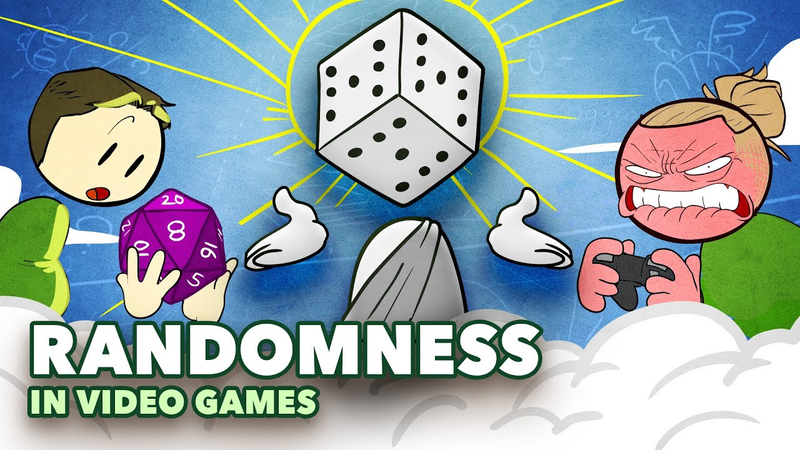
Randomness in Video Games | Compilation | Extra Credits Gaming
Randomness serves as a fundamental tool in game design, functioning as a mechanism to evoke specific emotional responses, heighten suspense, and challenge player intuition.
- Designers should use clarity when they want players to think through a problem, but use obfuscation when they want to evoke specific emotional responses like nervousness, hope, or power.
- The frustration level of RNG in games can be estimated using the formula: Frustration = Time Lost × Percentage Chance of Losing, which helps designers identify if a game's randomness is unfairly punishing.
- To maintain consistent player engagement, designers should reduce the impact of randomness as the game progresses; for example, a game might allow a 35% chance of RNG-based loss at 20 minutes, but only an 11.7% chance at the one-hour mark.

System-Centric Puzzle Design in 'Patrick's Parabox'
The development of the award-winning puzzle game Patrick’s Parabox serves as a case study for system-centric design, where the primary objective is to showcase a core recursive mechanic rather than purely challenging the player.
- Iterate on puzzle difficulty by trimming the possibility space, such as constraining objects within walls to limit incorrect moves and ensure players focus on the intended solution path.
- Utilize playtesting sessions where users record both their screen and voice narration to gain deep insights into their mental models, emotional states, and specific points of confusion.
- Crowdsource puzzle ideas by observing 'almost happen' moments, where a playtester attempts an action that fails but could be turned into a valid, core mechanic or solution in a future level.

Mastering F2P Cosmetics Monetization in Games
Effective free-to-play cosmetic monetization relies on the intersection of social signaling, player engagement, and carefully managed in-game economies.
- The presence of a secondary market significantly alters monetization strategy, as seen in platforms like Second Life, which generates $180–$200 million in revenue from a relatively small base of 50,000–60,000 concurrent users.
- Managing a secondary market requires rigorous economic oversight to prevent hyperinflation, as evidenced by the collapse of Gaia Online after the introduction of a currency-producing item.
- Player motivation for cosmetic purchases is driven by status and social signaling, particularly in competitive multiplayer games where spectating mechanics force players to visually engage with others' gear.
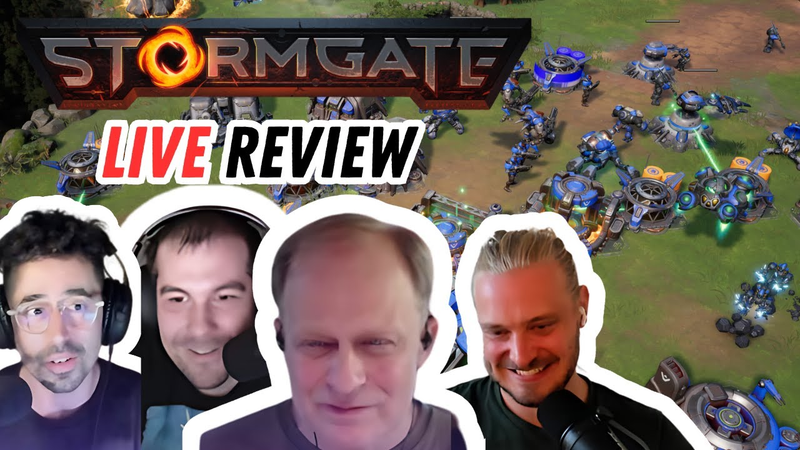
Inside Stormgate with Tim Morten: In-Depth Live Review & Gameplay with Insights
Frost Giant Studios is positioning Stormgate as a modern successor to the classic real-time strategy genre, specifically targeting the legacy of Blizzard titles like StarCraft and Warcraft.
- Frost Giant Studios is developing Stormgate as a free-to-play real-time strategy game using Unreal Engine and proprietary SnowPlay technology to manage high unit counts and network complexity.
- The monetization model rejects pay-to-win mechanics in favor of à la carte purchases for campaign expansions, cooperative commanders, and cosmetic items.
- The studio maintains creative independence through a combination of private investment and crowdfunding, bypassing traditional publishing deals to avoid KPI-heavy mobile gaming metrics.
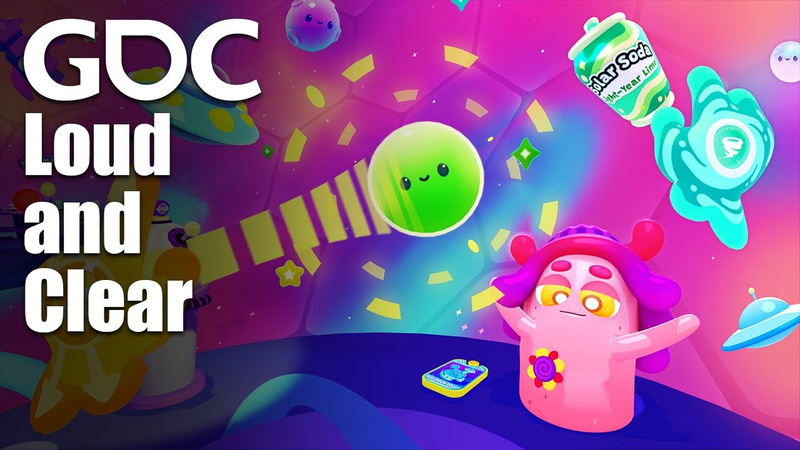
Loud and Clear: Improving Accessibility for Low Vision Players in 'Cosmonious High'
Owlchemy Labs has established a new standard for inclusive virtual reality design through a comprehensive accessibility update for the title Cosmonious High.
- Owlchemy Labs implemented a 'describable item system' in 'Cosmonious High' that functions like alt text, using text-to-speech (TTS) to describe interactive objects, journals, and tutorial popups for blind and low-vision players.
- The development team utilized spatialized audio to provide players with a sense of an object's location, using volume and directional sound to help players narrow their search for items in the virtual environment.
- A dedicated 'assist button' was mapped to unused controller inputs, allowing players to trigger or cancel TTS descriptions on demand, giving them control over the information flow and preventing audio clutter.

Web3 Innovation with Mirai Labs
Mirai Labs has transitioned from a specialized game developer into a comprehensive technology provider focused on solving the friction points that hinder mass-market Web3 adoption.
- Mirai Labs has evolved from a game developer into a technology provider, leveraging its experience from the 2021 launch of Pegaxy, which generated $200 million in NFT trading volume.
- The studio now employs 110 staff members focused on building mobile-first infrastructure, including proprietary decentralized payment systems and single sign-on services to reduce Web3 friction.
- Mirai Labs has shifted its development strategy toward high-quality mobile titles like the roguelite shooter Petopia, prioritizing sustainable retention over speculative, token-heavy mechanics.

Softlaunch Sonar #5: More Whiteout survival-like games coming!
The mobile gaming landscape is currently defined by a rapid cycle of iteration and cross-genre hybridization.
- Major Chinese developers including Century Games, FunPlus, and 37Games are aggressively diversifying their portfolios by expanding from 4X strategy into casual genres like puzzle, merge, and renovation.
- The mobile market is seeing a surge in 'Whiteout Survival-like' 4X strategy titles, characterized by high-frequency development cycles and rigorous testing of themes and user interfaces.
- Developers are increasingly integrating complex PC-inspired mechanics, such as roguelike inventory management systems, into mobile tower defense and RPG titles to improve long-term engagement.

Hearing Health in Video Games
The World Health Organization is spearheading the development of international hearing safety standards for the video game industry, mirroring existing protocols for mobile devices.
- The World Health Organization is establishing international hearing safety standards for the gaming industry to address the irreversible destruction of inner ear hair cells caused by prolonged headphone use.
- The industry is adopting 'equal energy principles' to allow players to track cumulative sound dosage, aiming to prevent permanent conditions like tinnitus.
- New accessibility frameworks will integrate real-time telemetry to monitor sound pressure levels, alongside features like dynamic range limiting and granular audio settings.

Building Cognitive Accessibility Into Your Games
Cognitive accessibility in gaming centers on the design and implementation of features that enable players to effectively perceive, process, and act upon information.
- Cognitive accessibility addresses barriers related to information processing, including conditions like ADHD, PTSD, and traumatic brain injuries, as well as situational or temporary needs that affect any player.
- Developers should implement accessibility features early in the design phase rather than as an afterthought, as this allows for more effective integration of modular and customizable gameplay elements.
- Key recommended practices include providing manual save options, offering detailed content warnings, sharing accessibility information prior to launch, and conducting regular testing for light and motion sensitivities.
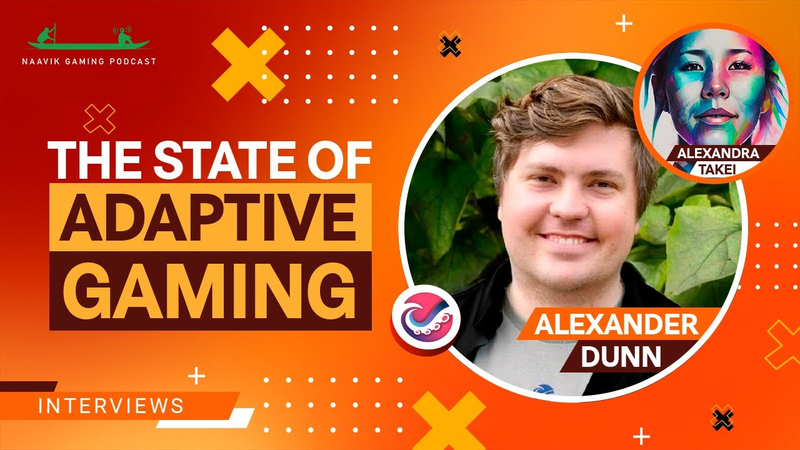
The State of Adaptive Gaming
The global gaming industry is undergoing a fundamental shift toward inclusive design, driven by the need to accommodate a player base that includes between 46 million and 300 million individuals with disabilities.
- Gamers with disabilities represent a significant market segment, with estimates ranging from 46 million to 300 million individuals globally.
- Inclusive design is a strong business growth strategy, as players with disabilities demonstrate higher brand loyalty and spend 2.3 times more on in-game purchases than the average player.
- The industry is shifting from expensive, specialized hardware toward software-based accessibility solutions that leverage machine learning and mobile neural processing units for voice, gesture, and facial recognition.
Retention for Mobile Games 101
Mobile game success relies on a dual-pronged strategy that balances offensive engagement tactics with defensive churn mitigation.
- Retention is an offensive strategy focused on player motivation and progression, while churn management is a defensive strategy focused on identifying and removing friction points in UI, UX, and SDK integrations.
- Effective retention analysis requires moving beyond simple level-to-level funnels by tracking granular events to understand player behavior between progression milestones.
- To identify churn, analyze the time spent on specific events by measuring the deviation in player progression speeds across cohorts, which can be constructed using standard tools like Excel or Google Sheets.