Transcript
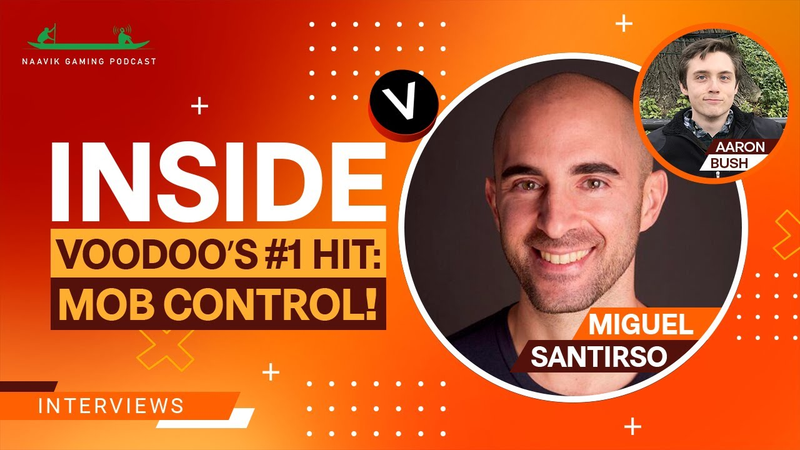
[Music] welcome to the novic gaming podcast where it is our mission to explore the business and future of video games we bring together the industry's brightest Builders investors and thinkers to keep a pulse on current events dissect emerging Trends and games share Lessons Learned and have a great time this podcast is also part of novic growing ecosystem which ranges from free and premium research to Consulting and AD advisory services for more information visit [Music] www.nic.edu event and the privilege of sitting down with Miguel cerso Miguel is the leader behind voodoo's biggest game mob control as well as a New Rising Star in Block Jam we chat about voodoo's Evolution what it's like to operate within Voodoo
how Miguel's team masterminded mob controls Blockbuster success and much more so without further Ado please enjoy my conversation with Miguel serso Miguel it's great to be here in Barcelona with you today thank you super nice to have you here and thank you for coming all the way here of course and I think the best place for us to begin today is just by you telling us your story a little bit so could you kick this off just by saying how you got to voodo what you've been working on over the past two years so maybe maybe an interesting fact to know about me you know that describes quite well who I am is that I created my first video game when I was 12 wow so basically all my life uh dedicated to this of course I studied Computer Engineering I I started as a as a developer first in a smaller company called five ants then I moved to King I was there for seven years in different roles my last role was in
Kanda as as producer uh and then Alvar from from voodo he gave me the opportunity to come to voodo and build my own studio and well here I am it's been three years at M awesome and we'll talk much more about your studio Mambo as well as the games that you've been working on later in this interview but I think we should spend a little bit of time just talking about Voodoo how it works what's changed the set the context for for what we'll dig dig into later um and so to start maybe you could just tell us a bit about how the studio system works inside of voodoo and maybe what's changed over the past couple years yeah no first of all I love to speak about voodo because it's a really different company uh I come from keing I have many friends in in many other companies in the industry and I can't tell you voodo is really unique um the founders I don't think they would Define Voodoo as a gaming company maybe they would Define it more as a tech company
inter say yeah and they and they see the company almost like an umbrella for many initiatives that they fund and they you know if when something works they put more money into it when when something doesn't work maybe they tweak it or they stop it right and inside this umbrella you have a constellations of many studios many are internal many are external but pretty much they all work in the same way and we are independent one important thing to know about Voodoo is that we create silos by default uh in most uh companies they want to create like a unique culture you know almost like a sect you know everyone thinks the same everyone works in the same way at voodo now like at Voodoo each studio is their own almost like their own mini company and they manage their their feature autonomously so it's really really unique and and very fun gotcha and since you mentioned how internally the team views video just as much as a technology company as a company I'll go ahead and
ask for this now just because the topic has been um on a lot of people's mind lately the voodoo recently acquired be real the social media um app um and that's not the only social media app with edro Voodoo and obviously your job is centered very much on games but maybe you can speak for Voodoo at a high level of just what's going on here like like why focus on social media why focus on these other things yeah well first of all because of the reason I gave you before I don't have like a lot of detailed information we are siloed by default but I can go back to the mission of the company the mission of the company is literally entertain the world and it doesn't have to happen through video games of course Mobile gaming it's a one of the top ways to entertain the world but social media social media maybe it's as well like uh the other one that is really really big in smartphones today so of course Voodoo is in Social and in social media social networks of
course we have already a social network for teenagers and honestly I wasn't part of the negotiations but I think rud saw the opportunity to buy this really unique um company which is V real maybe the only really successful one in the last 10 years I think it was a good deal and we went for it you know you have to to risk in life to a good stuff too yeah well I'm excited to see where all of that goes but but back to games um one thing that has defined vo's story over the past couple years has been it's pivot from from All Things hyper casual to now hybrid casual but really just casual um I'm curious when it comes to like how the studios work within Voodoo how the games get made and go through voodoo's process how has the process of prototyping and then testing and then iter rating versus discarding like how
has all of that changed over the past couple years no huge changes and really honestly kudos to the whole company for doing this in in two to three years so really really impressive to transition the whole company uh completely uh and one thing about the hyper C to some years ago we said that hyper C is dead you know like y they was said many times now maybe we would start saying that hybrid Castle is dead because oh as you as you mentioned in reality we we see this just as a stepping stone towards the really the the casual or midcore games that we want to to build eventually and in terms of uh how we changed the I think it's pretty much the same we still have the same uh High paced prototyping culture that we had in the past we we had it in what we call the core division of the company uh maybe the the difference is that now we have this bigger um more long-term oriented studios in the live division which is for example where my
studio belongs uh that we are prepared to take this kind of like gems that the core division finds we take them and we build them uh into a long-term uh sustainable business so that's the the difference however the hyper Castle spirit is still very useful in the prototyping part of the business gotcha what are the the metrics of success that your team or V of large looks for to take something that has been a prototype has been made by the core team that then your studio would then pick it up and take it in the next bundle so this has really really changed that maybe it's the one thing that I when I look back three years ago this has changed three four years ago I think wodoo had a more narrow approach to this when with the hard thresholds that for example if a game is about a certain number in CPI then it would be immediately killed I
think now we are less dogmatic we look at the uh you know overall picture we look at all the metrics like for example we look at even detail things like okay this game has a no ads in up purchase how many people are deciding to remove the ads right because if you if a player pays whatever $5 to remove the ads it's because they are seeing themselves playing this game long term so even that small thing which is is look it could look like very detailed uh we we we focus on these type of things as well so it's like a more overall picture and it's a lot more intuitive than before Let's uh let's say scientific and the other thing that uh it's a bit more as well nuanced than before is that we try to see a long-term uh we try to find a long-term vision for the game maybe the game has good metrics but nobody can really imagine how this game could become a top 20 grossing game and maybe
we will not take it gotcha um so I guess now I'm curious can you tell us about Mambo Studio itself like what was the story of how that got started and how how do you run it how does it operate yeah yeah so it's super honestly I love it maybe we could do a full hour inter when this no but just aside uh so it was uh built three years ago and already from the beginning it had a very clear Mission which is to take you know these gems that we find from the prototyping process and very clearly very like without ambiguity turn that game into a top 20 grossing game so that's the mission that we have and honestly we are still on track to do this I we can go into that that's awesome but this team was built for that so that means we started with really really senior and talented people like for example I have a creative director that has like maybe 20 years of experience we work together at King and uh
from there we started from our Network we started bringing only the top top talents and uh and well basically slowly in in increments of three weeks uh we've been gradually uh evolving the uh the the the game right um so that's a bit the story we started being five four five people now we are nearly 30 people in m control so it's me having having increased so we we'll get to All Things m control in a moment but a couple more questions about the the culture element of of running a studio within Voodoo um one perception of voodo um from from the outside is that voodo is a is a high performance culture but it's also High ownership in the sense that um individual Studios like yours I'm sure it's influenced largely by the parent company to some extent but you also have say in how you organiz how you work
could you maybe talk through how that works like what did you take from Voodoo versus like what isi to Mambo yeah yeah so first of all without Vu this story would would be impossible for example all the know how about user acquisition um their brand to hire people um well first of all having the funds to to invest in in UA and all that so mob control without Voodoo would have been impossible for us right um but then beyond that it's true that we have a lot of autonomy ownership uh decision power um in and W do only really demands from us certain business objectives but the way to achieve these objectives it's up to us it's our responsibility for some people this could be really stressful for me and the people we hire this is a challenge and we thrive in challenge right the other part which really closes the loop you know if were designing a a
game this will really close the the core Loop of the game is the bonus system all uh Studios we and this is I think unique in the industry we are all incentivized with a with a bonus structure which is directly connected to the profits generated by the game it does not have a limit a maximum limit uh so basically the the more we we grow the game the better and it's true that if you succeed at Voodoo and you and you basic help the company grow uh you will be rewarded financially as well and I think this is only a fair um deal this you know for for the listeners thinking about how this impacts your day-to-day I would summarize it with two ideas right like one is your work when you're working on a feature an ay test on a change in the game you know that if you do it well and the audience really takes it and enjoys it and and you know in in in in general in proed business
maybe three months later they this will have a direct impact on your on your income so it's really motivating not only for from the financial perspective but also from the kind of like reward more intrinsic reward yeah of course yeah and the other side benefit is that suddenly the whole team is aligned You Know the Way to Grow and the way to earn more and all that it's no longer to get the promotion before your colleagues that doesn't matter in 3 years as a manager I had zero conversations about promotions right people are obsessed like okay how do we make this game bigger and that's all so it's really beautiful for for the correct type of people I love that uh being able to align incentives with pure upside in that kind of way your team is also fully remote As I understand which is also pretty unique and I know um I'm not sure about within Voodoo but at large many
teams struggle to build high performance close teams when everyone is scattered around yeah how have you been able to pull that off yeah yeah no of course uh we come with practice from Co since Co I started being a a producer in candy soda in a full remote setting and of course there this was a large team so we started practicing uh how to do it uh processes ways of working uh tools so already when I came to Voodoo I had in my mind a very clear image of how we how we did this but the reality is that it has pros and cons I I would say two cons one is that when things get hard when it's time to push it's a lot harder in Via video conferencing it's hard to have the sensation of okay we are all together in the same room suffering a bit but we are doing this together when you are uh you know kilometers away or in different C it's totally different
and the other one it's a bit more subtle I'm a bit more difficult to realize but many of us and I I included in myself in this group many of us we build our social life around work and colleagues Y and what I found is especially maybe with Engineers which maybe have less tendency to to have a social life you know a very wide social life Etc I found that many for sometime struggled you know at a personal level like they don't have this uh social aspect of meeting people and and we are all humans after all right so I really really for anyone who's working remote I really encourage you to you know start finding Hobbies outside of outside of work and start bending your friendships and your social networks around Hobbies or something which is not work I think it overall is healthier but it comes a shock for for
many people does your team still come together in person yeah yeah so actually next week I'm meeting with the with the team uh for blob Jam twice a year we we fly everyone basically to catalunia to to the Barcelona area uh and we all go to a super nice place uh we we have fun together we we do Sports we have dinner we we as well have some social part and we do a bit of Workshop you know to align around the ways of working and gain Vision well we discover how tall everyone is now tell this question oh wow you looked uh shorter before uh so it's really really important and I can tell you sometimes you can feel on the in the weeks after the Meetup you can feel a bit of a better mood you know people are more oh yeah I had fun with this guy uh a couple weeks ago now I want to have fun as well at work it's it's important yeah yeah my them is fly remote as well and every time we come
together I'm always told by someone de wow you're shorter I thought human B so so I totally understand um question before we start digging into your game specifically um as Mambo your studio and the games that you've been working on have scaled the pretty high heights how is the way that you have worked with Voodoo changed yeah yeah am so when we started three years ago you have to think that we had still not systematized this uh hybridization uh framework right three years ago we were still we knew we wanted to leave uh the hypers castle space we knew more or less where we wanted to be but we didn't know exactly how so back then it was a lot more chaotic I would say like each Studio was trying different things different approaches for example I really remember the controversy of should we keep the hyper Castle game and start with a clone you know or should we just take the
original one and continue from there so three years ago it was a lot like that of course when you're a small Studio you don't have like dedicated UA support so we were very much uh on our own which I would say it was one of the keys to us succeeding because we were really free fully fully free to do whatever we needed to do and we were really focused then of course as the game becomes more and more important to the to the revenue of the company obviously it has good good things and bad things the good thing is that for example now we have a huge um dedicated team in the growth division for user acquisition marketing all that stuff the Central Tech team is really supporting us so basically we are the the the you know the the main uh the main part of the company that that they support uh but as well of course when that comes a lot of pressure and responsibility now I think now it's
roughly 25% of the revenue that comes from Mob control so it's uh the in the line stops growing then of course you you start getting questions but well it's to be expected you know we we know it's a it's a business uh but beyond that not not big changes you can imagine more dedicated support from user acquisition more dedicated support from Central Services but uh not much else for example if you are curious about product input it's the same really I'm really really uh grateful for for Voodoo because they even if they sometimes they have ideas on the direction uh of the product they really trust the teams and they let us choose and in the end we are aligned most of the time but uh yeah it works like that awesome well let's go ahead and dive into mob control because it's an interesting story um but let's let's start by maybe you can just tell us a bit about
the game there there will be some people listening to this who probably haven't played or quite understand how large the game is now so maybe you could just describe what the game is and then share some stats around around its success yeah yeah very good now so mob control for I wouldn't say I wouldn't be able to say what gen it is or what type of game it is it's basically a an oddly satisfying game where you move a cannon left to right this cannon shoots uh characters and these characters have to go through multiplying Gates until you know one character can become 100 characters right I think the the fun of the game is that it's really easy and it's really mindless right you can we know that many of our players play more control while they are watching Netflix or doing other activities uh and I think it comes down to being really easy really satisfying and uh and seeing so many units colliding and all the physics around it it makes it uh super fun so that's the
core gamep play of course around it we've built um full power PR where you unlock cards uh an economy um season pass all the you know bels and whistles that that you that you know in free to play H but the core gam play is is still the same it is really oddly satisfying Pastime you know it's something that is it I think mob control is really really efficient at turning off your brain when you when you want uh so that would be around mob control in terms of stats I think uh now we are getting close to 200 million cumulative $200 million wow which is a huge accomplishment for us congrats wow we are very happy H we are doing that with a really aggressive uh raw Target I think Voodoo already made this public it's a 150 in our case it's actually
160% after 4 months so that if you make the math that's a lot of profit um and we know that for example uh the company knows this we could be making the same amount of profit but with a lot more revenue and have this game uh a lot higher in the charts but we don't want to do that you know we basically the philosophy is why if it's the same amount of profit for voodo why would be why would we be giving you know so much money to all the third parties that participate in in this business so we want to maybe wait a bit longer uh to to do that um so yeah I think I think that's a bit of a summary of of what mob control is for us yeah super helpful and maybe you could also just share the story of how mob control got started where Voodoo was that and then how your team got to take it over yeah so it's a great example of this strategy where we start with prototyping in one side of the company and then we move it to life
uh Mob control was actually built by a super talented team in Paris an internal studio so different to other games this one is an internal game um and it was built by a by a small uh group of people maybe four or five people in three months something like that from the very first lines of code to to when they saw it was successful uh from there they iterated a bit more but very quickly it was uh basic it was one of the first games that they moved into the Life Division um they mve it to us we were initially like four or five people as well uh but the difference is that in core they have the mission to prototype many games a year yeah isn't it over a thousand games yeah yeah the the whole company testing more than a thousand games year which that's crazy it's crazy it's a machine it's really it's hard when you're inside you realize from outside I don't know how it looks but it's really a really well owned machine of prototyping things
right and so when you're in life and you get this one game you know out of a thousand this one game that passed all the benchmarks and and you really take it it's like you're they are giving you the most priced gift you know like oh my God I I I have a core gamepl that is magical somehow you put mob controls gameplay and somehow it has low CPI people love it it has good retention so it's like a a bit of a magic you know like wo like a black magic there you go yeah yeah that's why wo is called her and um and then from there we started with um one of the first things we did was to have a a long-term vision from the very beginning we know what we want to do with this game and we started executing in increments of two to three weeks uh slowly uh and then how it works is the game is always in a worldwide launch Vo do we don't do soft launches or Regional
launches we don't do any of that our games are always launched worldwide full launch since the beginning why is that by the way so look um I've seen the two approaches for example at King they they're super careful you know they want to keep the new game secret they launch them and a different brand they don't talk about it they launch it only in a couple countries yeah and what I see is they launch again they take a snapshot of the metrix and say okay cool the metrics are good then they take it off the market they work on it for three months they launch it and they take another snapshot of their of their metrics and this Gap that you have in the middle it's what kills you because you have lost the continuity of the of the metrics and you you lose the you're not in touch with the game and and the product so how I see it is look we launch it it's like we have a patient and we we are taking the the the vitals of the patient
constantly uh we are always uh pushing a small amount of UA but it's continuous so our evolution charts um are continuous we don't have this break so we can really understand if we are moving forward or not in a on a weekly basis so honestly I think it's a it's a really really um good way to do it I would recommend this to to every company to be honest awesome um so I wanted get into the details of mob control um as you said you basically took a a pretty minimalist game that hooks people for whatever reason something and in your studio you then like built upon it in a bunch of different ways and so I want to to break this down into a few areas um and I and we can talk about what you have done but also like what you're thinking about for the future as well some of these and so to start I want to
talk about like the core and meta design um like what did you choose to keep from from the Prototype that did well versus like in terms of like the core gaml itself like how did you iterate and build upon it yeah in terms of the core game play again when our mindset was okay weed this beautiful gift we don't want to mess with that with with that too much so the C play really it's really similar to the original one and we only changed it either because it was required for The Meta for example to introduce the power progressions the different types of characters we added a bit of variety as well because it's true that it was becoming repetitive after a while sure um and we as well improve the visuals but the essence we didn't want to touch it because we know it has something uh special the majority of our work so far has been in the meta I think the original game um after 5 days there was nothing to do
B like the game would even break in terms of balancing so our idea was okay we we start fixing the game from the beginning and first okay we make a couple changes and now it's fun for 3 weeks instead of 5 days okay cool that was successful now okay we make a few more changes and now it's f for three months and we we kept uh doing that um until a moment where we said okay now the game it's reasonable to play this game for over a year you know like okay cool now we could we can relax on that type of problem and then you start thinking of monetization about maybe trying to move people into enough purchases you start uh doing that and to summarize the overarching goal is to make the game fun for the long term and to make it resilient because our biggest fear is uh something happens in the market the user acquisition gets complicated uh for a month and the game drops too much this is what we want to
protect yeah well it's already a $200 million game you were saying um so how do you think about the future from the design side yeah yeah look the our Benchmark and I am not exaggerating is that mob control maybe in two to two to three years will be next to the top midcore games and I'm really really convinced we we can do that uh and for example for new joiners in the team or even for the team itself I explain it with a comparison Everyone likes to reference supercell so we can take a supercell as a reference right squad basters for example I've been told it took five full years to develop five years right then from there we will see if it's a success for them or not but well it took this time well mob control it took three years or we've been working on Mob control for 3 years so far so we and and it's a i of a happy accident that you know after these three years uh we made2 200 million the
extremely happy accident a very happy accident but uh if you fliping that way then you can see very clearly okay we have now two more years to to finish the game and really get to the level of of these other huge games and the benefit is thanks to this uh Revenue that we've made now we've been able to use the success and attract an extremely extremely talented uh Team I think you could meet everyone I wish this was possible you could be surprised at the talent density that we have and at the specific talents that that we we' been able to attract into into a game like more control so really really I'm very happy about this yeah that's amazing U let's talk about the production methodologies of mob control um because I imagine as Mambo took over the game as the game has scaled like how you think about building out the new casual features and whatever else has
probably changed a bit over time too could you maybe just walk me through how that works out yeah maybe you know a fun way to say it is that we are in a We are following a post post agile uh methodology uh this means that of course we take the best the best ideas from agile but we have really removed everything that is not necessary one of the key things to make this possible is that we own only or pretty much only hire really senior people and and employees with you know High entrepreneurial attitude and high autonomy and when you hire these people the last thing you want to do is to have producer come up with a list of jeta tickets and then okay now your job is to move your tickets from left to right y we don't want that at all in fact we don't use jeta or any kind of proper task management uh tool and our idea in terms of production methodology is we
create small uh groups of people the temporary groups of people let's say one developer one UI UF designer one artist and one game designer for example three or four people depending on the project and we give them a high level brief of what we want to do and we tell them okay uh now you have uh six weeks to do this for example six weeks is a very usual time box and then for them it should feel like they go into a mini game Jam right where they are really they can organize themselves in any way they want and they can make decisions along the way of course the rest of the team is there to support them we have QA as well which is supporting them but really they can really focus on their mission for this month and a half after that we basically we do a play time they show their work to the rest of the team normally there is a huge amount of Fe feedback on these playtime sessions like
loads and loads of postage they go back to their cave let's say they fix what they can in three four five days and then they merge it and and ready to AB test because we a test everything of course M uh again going back to the previous points Voodoo and and my teams are focused really on giving autonomy ownership and space for the really talented people to thrive you know my my Benchmark as a manager is that people in my teams do their best job in their lives with me of course it's not always POS you this is the ambition I have yeah yeah yeah what would you say in terms of um increasing the LTV of mob control has been the feature that your team added that made the biggest difference yeah look this one I can answer uh clearly because it's very fresh in my mind the it really the biggest AB test um we've done in m control it's also the hardest
I don't know if you've seen it but very recently like just a few weeks ago we replaced U the main progression system in the game with a completely new one which we call the base Builder just for for the audience before we had a linear progression system where you are like just filling up these little dioramas which by the way has been copied by many games I know uh it's funny because we need that because of like of resources we couldn't do anything fancier uh but the problem with that old system is that it becomes repetitive at first it's really good to give this uh midterm goals but after a while it becomes repetitive and not interesting uh so now we removed all that and now we have a mini base Builder uh type of thing where you have three functional buildings and then the town hall which is the let's say the central building and well with going into detail by playing and playing you are upgrading
and leveling them up uh this we had to iterate on this over six months it's been a big effort for us in the company when people were starting to get nervous like okay guys what are you doing why why are you working on one feature for six months of course it was not one feature it was the main prion of my game uh but now after release yeah it has been the biggest uh uh AB test I think it gave uh TW more than 20% LTV uplift for existing users which for us it's huge really really huge uh in our scale for new users a bit less of course because it's a long-term feature I think it was maybe four 5% uplifting the first week um but really a huge success and the thing that makes me happiest is that it made an impact in retention as well because I don't know what you think but for me at least and for my teams retention is always the magic that is really really difficult to move uh so just getting a couple points there uh it
was it was great yeah yeah well that's amazing I also want to talk about the monetization of the game and I guess if you you zoom out Voodoo has gone through quite a transformation and like going from hyper casual to more casual games yeah that have radically different types of of monetization tactics but even within mob control your team you know helped transform the economy of the game I'm curious what you learned so far from that and if it's specific to mob control that's great but even if there are broader takeaways that app elsewhere that' be amazing too no I think there is one takeaway that is applicable to any game in development especially if you develop it gradually as we did um it's just on based on how much uh persuasion power you have on players to ask them for effort right when you have a prototype like a hyper Castle game you have very little power to persuade right because it's a very simple game it
doesn't project long term so you cannot even convince them to watch our reward in video right so in then what do you do okay you show them interstitials there is like here there is no persuasion required you just put it there and you very simple exactly so you force players to to do that so honestly I I wouldn't be if I was a developer starting on a new game I wouldn't be proud and I would say okay look at the beginning I start with interstitials because this guarantees a minimum monetization from each player then and this was the case for remote control then as we started to make the game more interesting more long term you start to have maybe um bigger goals uh and a deeper economy and they start to have some incentives for players to make a big a bit of effort right still we couldn't persuade people into partying with their dollars right but well now I can uh persuade them to part with 30 seconds for a rewarded
medium so one of the first things we did was to reduce their pressure or interstitials which by the way was the biggest a test in terms of uh retention and we added some RV placements to well to monetize with rewarded videos our hypothesis was okay we will lose a bit of money in the first three days but overall in the long term it would be better but what happened was actually because we reduced uh in interstitials people started playing longer they started watching more rewarded videos in the end the funny thing is they continued watching the exact amount of ads per day it's just that now half of them were op in so of course the perception is much better right yeah so that was the the second phase of monetization in Mo control and then we continue doing that we continue uh deepening the economy uh and actually we we did something in mob control which I'm quite proud and I think it was the
game that really made it popular we introduced the skip it uh which uh was a fun a fun story uh and basically this allows for this thing that I call Self segmentation uh players can choose so basically look we have the same placements across the game uh but if you don't like ads well you can pay you can use the skip it right and as soon as you buy skip it all the rewarded videos disappear right so players are choosing that was the first thing I did yeah exactly I for for someone like you that of course you are someone that you know can afford it you like games of course that's a great choice and thank you for of course but then our our second market in terms of Dow is India okay in India I can't tell you they are not interested in skip it so they can the game supports both uh economist in a very elegant way then if you look into
the future yes I don't know but probably we want to move away from interal I I wish that one day mob control has almost no interstitials or maybe only in certain markets uh and for that we need to continue pushing into rewarded videos and in a purchases probably just spoiler alert you know for those coping skip it soly will have to move away from skip it and and more into a proper uh hardcore currency but that's the that's the journey just as you improve the game more and more you have more persuasion power with players and then you can ask them for more effort uh so that's the journey and I recommend that to to anyone that makes sense and semi-related how has the team's approach to Marketing in UA changed because of all of these other yeah so I mean marketing for me it's like a literally black Mar I don't understand it we've
tried nor yeah that's why maybe we are good at it uh look the biggest thing that has changed is uh number of size of the team in marketing now we um we are more people doing more creatives every week I think overall the compan is doing 500 creatives per week or something like that which is a hot um we moved a bit more into quality let's say less like less like a shortgun approach of doing many quick creatives and do maybe a tiny bit more thought AIT a bit more thinking a bit more polish in it's creative to try to increase the chances and as well to to try to attract a bit of um more high value player base and of course over time we've became we have become a lot better at collaborating now we the the creative team and and as we have a very very close uh relationship and even if we are in separate divisions of the company but uh maybe flipping the question the things that have not
changed for example we tried to go more into a really marketing approach where we really think of the message and we try to come up with a great creative with high production values for us this has not worked at all uh so it's a bit sometimes as a as a professional it's a bit disappointing that sometimes the the crappiest uh the better you know in terms of uh CPI which is I for different yeah well I have a couple more uh Mob control questions and then we can start to wrap up but one interesting thing about mob control now is that you have this big partnership with Hasbro Transformers specifically tell me about that how has that gone you know is this a viable strategy for for other games kind of in your orbit it's a still an open question but look yes it good that we had this interview today and not last week because some things have evolved there uh a couple weeks ago
we released Optimus Prime and the Optimus Prime uh chapter because this is basically we have planned four chapters in total for the collaboration and Optimus Prime has been really great for us um we've gotten I think they they told me today the biggest um featuring in the stores in the history of voodo it's not I mean it's it's great I think we got um both with UA and and the featuring in 4 days 1 million and a half new installs which is great for us so quite a bit boosting Organics there and yeah we basically the two seasons with Transformers have been the best seasons so that's the good side now on the less positive side we we and this is personally like tooo and maybe it's our fault we haven't been able to crack the user acquisition for Transformers yet meaning that none of the creatives featuring Transformers has performed better than
our best creatives so that part hasn't been a success yet but we we continue trying and in terms of uh monetization in our purchases yes they have been the best seasons so far but it's not like oh my God we sold double the season passes size before it was like yeah 10% yeah so I would say uh considering um the impact it has had in the financials and the for that we put the opportunity cost I would Define it as a success for us I I am I am not regretting doing it as well we work a lot of learnings but it's not something that we will uh proactively pursue in the in the short term yeah okay makes sense um so lastly let's talk about what's next for Mob control um you've already teased some ways that you're thinking differently about the meta design going forward and the economy design going forward but is there anything else or anything big that you want to highlight about what you're
thinking about this game's future yeah so look uh to explain what we want to build with u mob control I want you maybe to visualize a big part of our audience this is real real people you know we have a Discord Channel I personally speak with players every week uh we speak with them I know the best players in the world of remote control and I can see the profile these are most mostly men but actually one just for your information one of the top players in the world is a woman so I have we have both and I'm very proud of that um most are men but Regard in any case men and women maybe middle age so from 30 to 50s even they are all Gamers they played in the past maybe they play now a little bit but they still have this desire to play games and to feel power progressions and to learn and you know
like this uh excitement that they get from playing but they don't have the time maybe they have a full-time job they are parents they whatever you know they have a busy life uh and they don't have either the time to invest in League of legens or something like that or they don't have the energy to go into this uh you know midcore games where it's super competitive and you want to throw the fun into the world you know if it's real PVP for someone to win someone else has to lose right so ultimately all these games have this uh flaw in our case we say okay that's all and fine there are many great games in that space we want to create a game that gives you all this nice emotions from leveling leveling up from learning how to play learning new strategies new metas uh uh all the economy optimization parts that many people uh like but without so much losing it's a game where the win rate is over 80% of course that is achieved with
asynchronous gameplay with Bots with some very clever game design uh and that's basically what we want to do so we are going to continue uh basically working in that direction we are going in this last six months of the year we're going to actually for the first time start introducing a lot of variety and new things in the game play which is exciting and scary yeah for example one of the next big things that we are doing is a system where for the first time we are giving you the option to strategize and defend in different ways oh because now if you notice it's like a PVP I think PVP game but as a Defender there is nothing you can do really and now for the first time you will be able to choose um different strategic aspects of of the defense of course without making it super hardcore but I think it will players will will love it and will have a huge expansion of the economy as well on that side that's one of the big
things then we really believe in uh what I call life experience people call it liveops but I'm a bit tired of the word so so I just say life experience in the end we want to turn m control into a platform where we have a menu of um different events of different durations different uh requirements Etc and almost as if it was um a you know a live broadcasting we will be activating the activating events and and all the stuff we are building the technology and the events to to do that and I I know already that players love this constant variety and and they really appreciate it that would be the the second pillar and the third uh this has been in the backlog for three years now uh finally we are going to give uh players the option to team up in Clans and of course to compete Clan versus Clan I can tell you they're going to love it right now
even if the game doesn't have Clans there are maybe 50 Clans unofficial Clans in the in the game where they organize on Discord they all put like they have a naming convention in the username to mark that they are part of a clan they have their own tutorials like there is a whole Community there and we are going to give them the tools to to expand on that so I'm really excited about that yeah that sounds exciting I'm really intrigued to see where all of this goes yeah um but a few final questions for you that we can quickly hit on as we we wrap up um first uh Mambo studio is no longer just a one game Studio your team recently took over block Jam I believe which is another Rising Star within Voodoo um could you tell us about the transition from going to add more games maybe you can share briefly what BL Jam is but tell that story yeah well BL Jam first of all it's
a a game that was built outside of wudo initially it was built by a super talented uh company in the US actually called the party up uh and they they built the core gameplay the the the game showed great promise so voodo U decided to to create a very strong collaboration with them and we worked with them for some months and then ultimately uh following our strategy we decided to move it into a live studio this is the same uh that we do with all the all the games and and yeah blj is this uh puzzle game where you basically have to tap on on cute characters that have colors uh they go down into a limited tray and when you match three they disappear making more space for other uh color characters and there are many games like like this one uh but uh for example coming from Candy Crush the big difference I see is that in this game you have a lot of depth uh strategic depth you can see um many layers of the
colors that are coming to you in candicrash of course it's random and they are coming it's reshuffling all the time this has uh pros and cons but for many people this creates a much more interesting strategy uh and much more thinking so it's a within I would categorize it within the puzzle space of mobile games and a bit niche in the sense that it's a bit more brainy and a bit more of thinking again so that's a block Jam um and yeah that's it yeah how do you think about managing that game differently from Mob control no we uh the opposite I think we we manage both games uh in the same way and we apply the same philosophy uh voodo applies to the studios even if both games are within one Studio the two teams are separated um of course they collaborate with build technology together we things but the the two in terms of for chart
and stuff they they are completely isolated and we but we try to manage them in the same way because in the end it's a reflection of my personality I guess so they they they follow the same processes makes sense so mob control seems like it still has a big future blockchain seems like it has a a big future too um is there anything else about Mambo Studio that you're excited about for the future future for now no look I'm a person that I really I maybe I have an idea long term like a very big idea but I don't like to create uh detailed long-term plans because anyway they are impossible to execute things are always changing especially in a company as crazy as Voodoo where there are new things happening every quarter yeah I don't I'm not like a big uh long-term planner uh what I can tell you is that we I am really really impressed with the talent density that we achieved we have two super talented teams we have
long-term Visions exciting uh long-term Visions for the for the two games uh and well I I hope uh that if we meet again the the both both games will be much higher in the in the grossing charts yeah cool Final question for you then um Voodoo is a big place there's a lot going on I want you to look beyond your own Studio look at the rest of voo what are you most excited about for the next few years well first of all we we start in speak speak about B real and maybe we can as well mention that I am personally very excited with uh B real I think it's a social network that found like a very fun mechanic and it was viral many people like it even today if some people feel like it's dying in many countries it's really really popular for example in France and um this shows that as well it same as the core gameplay in mob control has some magic in it I I think B real has some magic in it and
now with the expertise of voodoo in finding ways to monetize it to to grow it to to do user acquisition I really thinking this could be a game changer for Voodoo as a whole and then in terms of games the thing that really excites me is because we have this machine that is processing so many games maybe in a couple years we will have systematized this uh process of growing um from a prototype into a big title that maybe voodo will have fingers crossed three four five games in the top charts and that for us uh it will be a really arer yeah that would be amazing well Miguel that's all I got today you did a great job um and I really appreciate getting the chance to sit down with you today yeah thank J it those a pleasure if you enjoy today's episode whether on YouTube or your favorite podcast app make sure to like subscribe
comment or give a five-star review and if you want to reach out or provide feedback shoot us a note at podcast nov. or find us on Twitter and Linkedin plus if you want to learn more about what navic has to offer make sure to check out our website www.nic.edu and advisory Services again that is www.nic.edu [Music]
Auto-generated captions from YouTube — names and numbers may be misheard.




















Comments