Game Design reports and market data
Documents

Face-to-Parameter Translation via Neural Network Renderer
The face-to-parameter translation technology addresses the labor-intensive nature of character customization in role-playing games by automating the creation of in-game avatars from a single user-provided photograph.
- The technology automates character creation by translating a single photograph into game-engine-compatible parameters, significantly reducing the labor required for avatar customization.
- The system utilizes a three-part neural network architecture, including an 'imitator' trained on 20,000 randomly generated parameter sets to replicate game engine rendering behavior.
- By combining a face recognition network and a semantic segmentation network, the framework uses gradient descent to iteratively optimize facial parameters until the digital character matches the input photo.
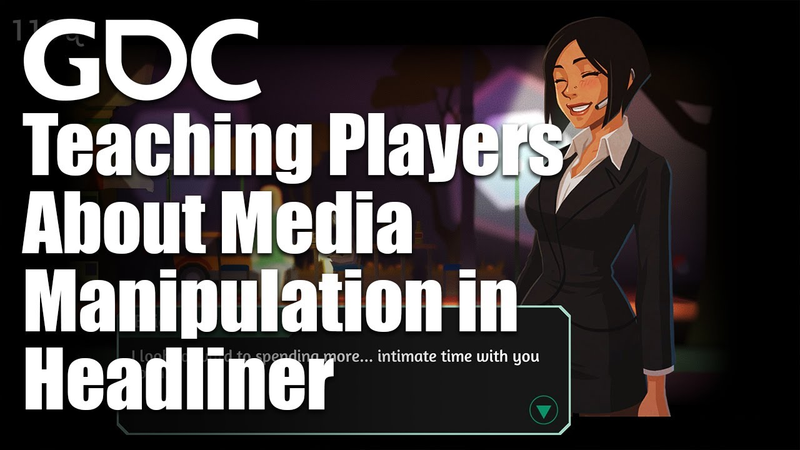
Stop & Think: Teaching Players About Media Manipulation in Headliner
Headliner and its sequel, Headliner: Avenues, function as interactive simulations designed to cultivate player awareness regarding media manipulation and the influence of personal bias.
- The Headliner series uses interactive simulation to teach media literacy by placing players in the role of a news editor who shapes public perception through editorial choices.
- Development of the games relied on mining actual social media advertising data and analyzing real-world news rhetoric to ensure narrative authenticity.
- The games avoid a preachy tone by using a fictional setting as a buffer, which reduces player defensiveness and encourages engagement with sensitive, divisive social issues.

The Sound of Anthem
The development of Anthem’s audio landscape centers on the integration of high-tech, heroic action within a grounded, science-fantasy environment.
- The audio team utilized the Frostbite engine’s dynamic mixing capabilities to integrate mechanical precision with organic immersion across the game's science-fantasy environment.
- Javelin exosuit audio is generated through a layer-based system that maps real-time game parameters like velocity, pitch, and surface interaction to mechanical servos and thrusters.
- The modular design philosophy for the four Javelin classes—Colossus, Storm, Interceptor, and Ranger—enables high-fidelity movement feedback without requiring manual, bespoke editing for every animation.
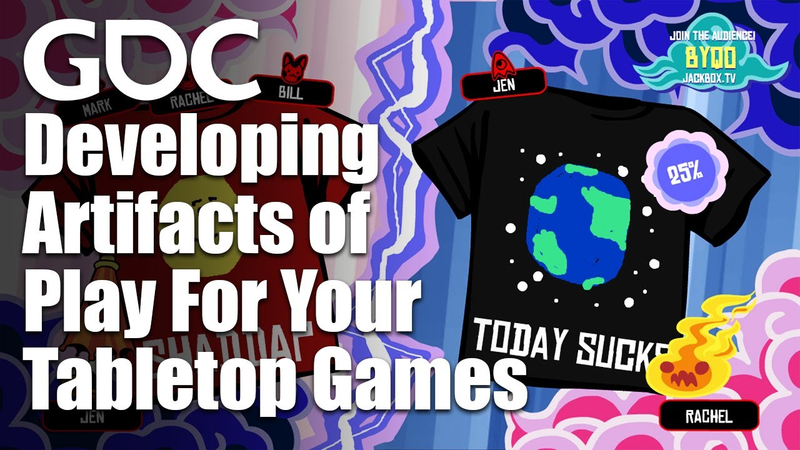
Developing Artifacts of Play For Your Tabletop Games
Artifacts of play are defined as items created during a game session that outlive the experience itself, serving as tangible or intangible mementos of the players' specific choices and interactions.
- Artifacts of play are items created during a session that serve as tangible or intangible mementos, effectively extending the game's emotional resonance and marketability beyond the initial experience.
- Designers should integrate artifact creation directly into the game's rules, ensuring that the act of playing inherently produces a unique, personalized object.
- Successful implementation requires designers to relinquish some control, allowing players to act as co-authors who shape the game's narrative or physical state.

Game Narratives for Diverse Audiences | PGC Digital #1
The gaming industry faces a critical need to evolve its narrative strategies to better reflect and attract diverse global audiences.
- The industry must move beyond the 'everyman' white male hero archetype to reach untapped global demographics and reduce toxic gatekeeping within player communities.
- Adopting 'hopepunk' narrative themes—which prioritize empathy, vulnerability, and collective action—allows developers to move away from stagnant 'grimdark' tropes.
- Gameplay mechanics should be realigned with narrative themes by incorporating non-traditional verbs, such as the mischievous exploration in 'Untitled Goose Game' or the delivery-focused tasks in 'Death Stranding'.

Interactive Streaming & the Future of Gaming | PGC Digital #1
The gaming industry is currently undergoing a fundamental transition toward a 3.0 model, shifting away from isolated player experiences to embrace mass participation through interactive streaming.
- The gaming industry is transitioning to a 3.0 model that integrates mass-participation interactive streaming to monetize the currently underserved viewer demographic.
- Developers should implement a tiered interactivity framework consisting of informational data views, customizable user experiences, and influential mechanics where spectators directly impact gameplay.
- To ensure long-term viability, developers must prioritize cloud-native experiences over recycled legacy content.
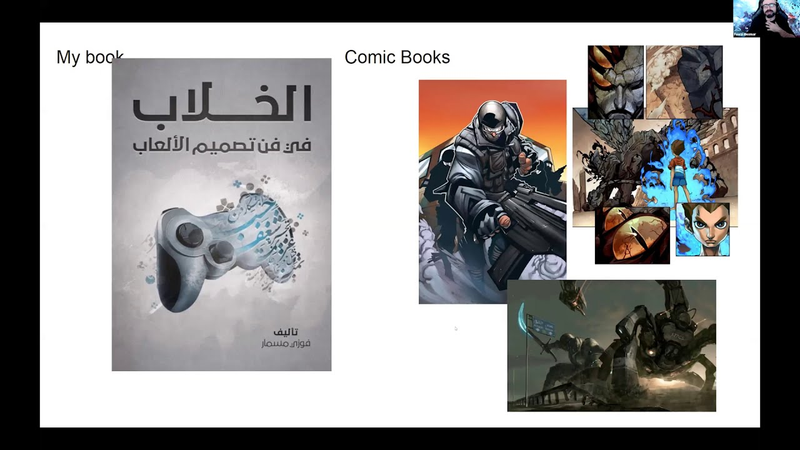
DICE & Effective Prototyping | PGC Digital #1
Prototyping serves as a critical risk-mitigation strategy in game development, functioning as the process of creating functional, low-fidelity models to validate core gameplay mechanics before committing to full-scale production.
- Prototyping acts as a primary risk-mitigation strategy by validating core gameplay mechanics through low-fidelity models before full-scale production begins.
- Teams should prioritize resources by mapping features on a matrix based on their criticality and level of uncertainty, focusing exclusively on essential but unproven elements.
- Strict time-boxing and a hypothesis-driven approach are required to prevent development bloat and the accumulation of technical debt.
Wash Away Your COVID-19 Worries with Soap (Cutting) | PGC Digital #1
The development and successful launch of the hyper-casual game Soap Cutting serves as a case study for transforming viral ASMR trends into high-performing mobile entertainment.
- CrazyLabs and a Mumbai-based studio developed and launched the hyper-casual game Soap Cutting in less than two months, reaching the top of the charts by December 24, 2019.
- The United States is the primary market for the title, accounting for approximately 80% of total revenue.
- The game’s monetization strategy relies heavily on an ad-based model, with interstitial ads generating roughly 60% of total revenue, supplemented by rewarded videos and minor in-app purchases.
Digital Media for Children - Keeping the Next Generation of Gamers Safe | PGC Digital #1
The regulatory landscape for children’s digital safety is currently defined by the Children’s Online Privacy Protection Act (COPPA) in the United States, which mandates stringent requirements for data collection, parental consent, and content classification.
- Developers must conduct a case-by-case analysis to determine if content is child-directed under COPPA, as this classification legally mandates the disabling of behavioral tracking and personalized advertising.
- The shift toward shared liability between platforms and creators has caused a 50 percent average revenue decline for children’s channels on platforms like YouTube.
- App stores have restricted third-party software development kits, forcing developers to abandon standard analytics and advertising solutions that rely on user tracking.
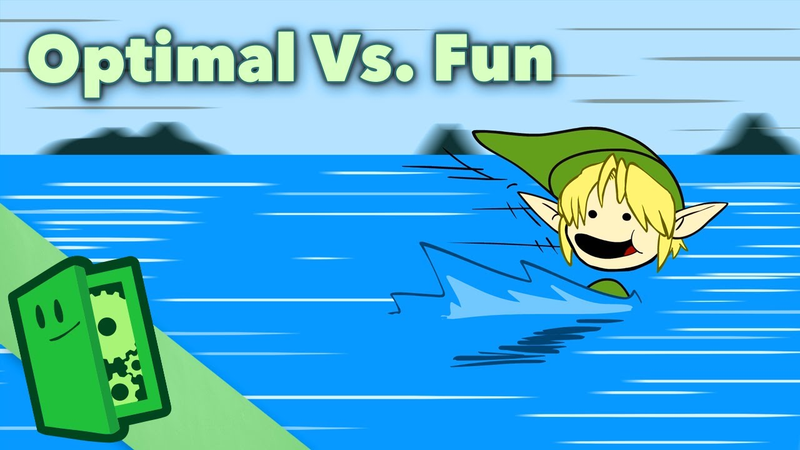
Optimal vs Fun - Designing for Different Playstyles - Extra Credits
The tension between optimal play and player-defined fun represents a fundamental challenge in game design.
- Game design must balance the tension between 'optimal play,' which prioritizes statistical success, and 'fun,' which focuses on subjective player preferences like role-playing or creativity.
- Forcing players into rigid, optimized builds to overcome late-game challenges diminishes player agency and can alienate those who prioritize thematic expression over raw efficiency.
- Effective design acknowledges that for many players, the process of crunching numbers and testing builds is a primary source of enjoyment rather than a chore.

AR Game Design 101 | PGC Digital #1
Augmented Reality (AR) game design requires a shift in perspective from traditional screen-based development to a model that integrates digital assets into the physical world.
- Successful AR design requires integrating digital assets into the physical environment through environmental awareness, specifically by matching ground planes, lighting, and shadows to the real world.
- To prevent physical fatigue from holding devices at arm's length, AR sessions should be limited to short bursts of 30 seconds to two minutes, followed by resting periods using traditional screen-space interfaces.
- Designers must prioritize situational awareness and social context to ensure gameplay does not cause physical danger or social stress in public environments.

Enabling Creators: The Unreal Ecosystem | PGC Digital #1
The Unreal ecosystem functions as a comprehensive support framework designed to democratize high-end game development by providing creators with professional-grade technology, financial backing, and distribution infrastructure.
- The Unreal ecosystem provides independent developers with the same professional-grade tools and technology used in large-scale internal projects like Fortnite.
- The Epic Games Store supports developer profitability by offering a competitive 12 percent revenue share model.
- The Unreal MegaGrants program provides direct financial capital to support game development, educational initiatives, and open-source projects that demonstrate technical viability.