Game Design reports and market data
Documents

Talking Burnout, Making Art With Drinkbox's Gabby DaRienzo
Professional success in the independent game industry requires a strategic balance between creative output and the administrative demands of business management.
- Freelance artists must treat their careers as enterprises by balancing creative output with dedicated time for networking, self-marketing, and portfolio diversification.
- Transitioning from freelance work to a structured studio environment can mitigate burnout by providing organized production pipelines and enforced work-life boundaries.
- Burnout is often exacerbated by an industry culture that mistakenly equates overwork with professional dedication and manifests through persistent frustration and unhealthy perfectionism.

Until You Fall: Building Satisfying VR Combat on a Budget
Effective virtual reality combat design relies on prioritizing the core gameplay loop over high-fidelity, physics-based interactions that often introduce unnecessary friction.
- Prioritize the core player fantasy over universal interactivity by cutting secondary VR features that do not directly serve the primary gameplay loop, such as picking up environmental objects or enemy weapons.
- Combat the 'waggle' effect by mechanically incentivizing exaggerated, high-effort movements, ensuring that the most effective way to play the game is also the most physically engaging and visually rewarding.
- Avoid the 'immersion trap' by establishing a baseline for interaction fidelity and removing any features that fall below that threshold, which helps control development scope and prevents gameplay friction.
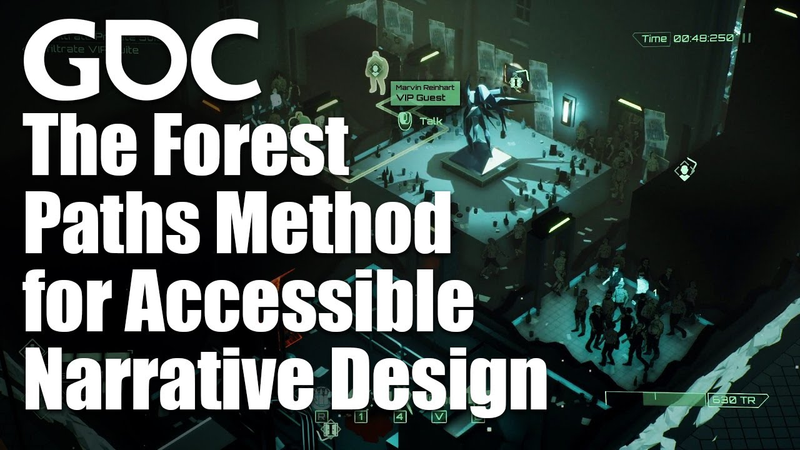
The Forest Paths Method for Accessible Narrative Design
The Forest Paths method provides a structured framework for integrating narrative design with core gameplay mechanics, ensuring that thematic goals remain aligned with functional player activities.
- The Forest Paths method aligns narrative design with core gameplay by mapping dramatic questions and player objectives simultaneously to prevent disconnects between story beats and mechanical execution.
- A visual matrix is used to track character transformation, resource management, and thematic escalation, ensuring narrative arcs evolve in tandem with the game's internal logic.
- Designers link specific gameplay loops, such as resource gathering or vehicle maintenance, to emotional states like isolation or mortality to create a rhythmic, immersive player experience.

How many game objects are in my Steam game? | Let's Play Neversong Episode 5
This analysis examines the technical architecture and development process of the 2D indie game Neversong, specifically focusing on scene management and object hierarchy within the Unity engine.
- A single forest level in Neversong contains approximately 2,400 total game objects, with roughly 1,200 objects actively loaded into memory at any given time.
- The game utilizes a scene management strategy where a significant portion of the 2,400 objects remain disabled in the Unity hierarchy until triggered by specific gameplay events.
- The project's architecture relies on a complex hierarchy of prefabs, static objects, and parent-child relationships to manage the density of assets within individual screen boxes.
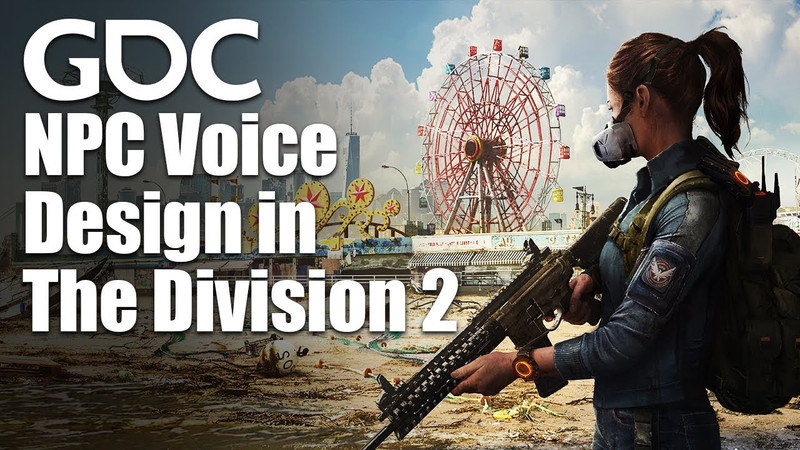
NPC Voice Design in The Division 2
The development of The Division 2 prioritized the creation of systemic, AI-driven voice barks to enhance player immersion and provide essential gameplay feedback.
- The Division 2 utilized a stimulus-based architecture for NPC voice barks, replacing rigid, timer-based dialogue with dynamic, context-aware reactions to combat and player behavior.
- The project managed a massive scale of over 93,000 lines of dialogue per language, distributed across 364 unique characters.
- Development efficiency and localization quality were improved by replacing hard-coded logic with a centralized, data-driven tag system using modular starter and response matrices.

3 Easy Effects To Make Your Game Look GORGEOUS | Let's Play Neversong Episode 4
The primary purpose of this presentation is to demonstrate how specific visual effects and post-processing techniques can enhance the aesthetic quality of a 2D game within the Unity engine.
- Removing core post-processing and environmental effects results in a 20% to 30% reduction in a game's perceived ambient quality and emotional impact.
- Trail renderers applied to character sprites effectively simulate motion and energy, enhancing the visual fluidity of 2D animation.
- Color correction ramps, created using one-pixel-high gradients, provide precise control over shadows, mid-tones, and highlights to establish environmental mood.

Skill Progression, Visual Attention, and Efficiently Getting Good at Esports
The mastery of competitive esports relies on the psychological concept of affordances, which are the perceived possibilities for action within a digital environment.
- Player skill progression in competitive games follows a trajectory where mechanical skills, such as camera control and ability usage, show a steep initial learning curve before plateauing, while strategic meta-level skills continue to develop as players gain experience.
- The theory of 'affordances' explains that expert players perceive the game environment differently than novices, identifying specific opportunities for action—such as tactical positioning or resource management—that remain invisible to less experienced players.
- Visual attention in esports is divided into exploratory actions, which gather information about the environment, and performatory actions, which execute specific game-winning maneuvers based on that gathered data.

Saving the World with Games - Citizen Science and More - Extra Credits
Games serve as powerful tools for citizen science and real-world problem-solving, moving beyond entertainment to facilitate tangible contributions to medicine, urban planning, and physical therapy.
- Gamified citizen science projects leverage human pattern recognition to solve complex research problems faster than traditional algorithms, such as when 57,000 Foldit players deciphered an AIDS-related enzyme structure in three weeks after a decade of scientific stagnation.
- Large-scale crowdsourcing through games can mobilize massive participant bases, exemplified by EyeWire engaging 250,000 players to map complex neural circuits.
- The United Nations’ Block by Block initiative has utilized Minecraft across 35 countries to facilitate community-led urban planning and identify local safety concerns.

VR Lessons Learned in the Level Design of 'Blood & Truth'
The development of virtual reality (VR) action-adventure titles requires a specialized approach to level design that prioritizes player comfort, spatial awareness, and intuitive interaction.
- To minimize motion sickness, implement easing in and out for movement and vary speed based on distance, as moving short distances quickly is a common comfort trigger.
- Establish strict cover metrics to ensure players can comfortably see over cover, duck to feel safe, and reach interactable items like ammo or weapons.
- Utilize a rail-based traversal system with 'snap zones' to automate approximately 90% of movement, which helps maintain a consistent, comfortable experience for the player.
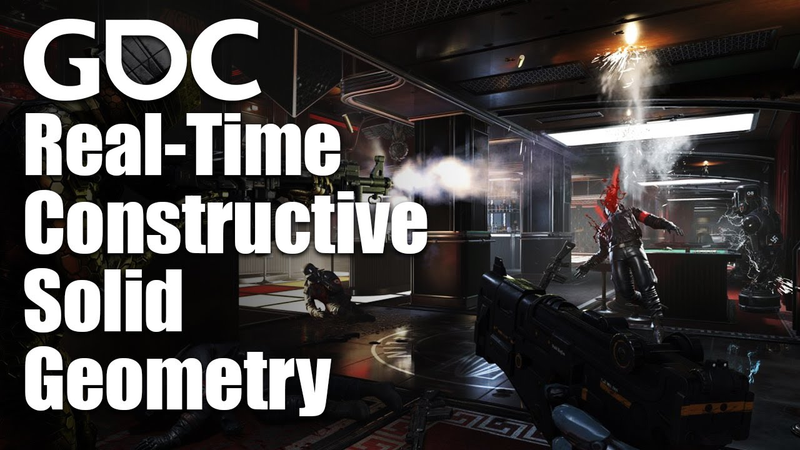
Geometry in Milliseconds: Real-Time Constructive Solid Geometry
Constructive Solid Geometry serves as a foundational methodology for game level design, facilitating rapid prototyping and iterative workflows by allowing designers to manipulate geometry in real-time.
- Modern CSG implementations have shifted from inefficient Binary Space Partition (BSP) trees to per-brush computation, treating individual convex brushes as the primary unit for real-time processing.
- The system utilizes boolean operation lookup tables and routing tables to categorize polygon pieces against brush planes, effectively determining which surfaces are discarded and which remain visible.
- To minimize redundant data and optimize processing, the framework encodes branching paths into indexable structures and utilizes row caching.
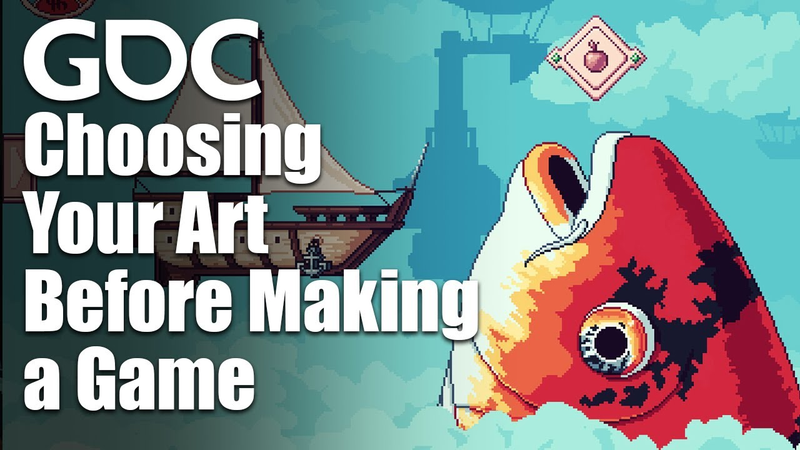
Aesthetic Driven Development: Choosing Your Art Before Making a Game
Aesthetic-driven development prioritizes the creation of visual assets and audience validation before formalizing gameplay mechanics.
- Aesthetic-driven development uses visual assets as primary market research to validate audience interest before committing to full-scale gameplay production.
- A two-person Latvian studio successfully validated their game's art style through a 40-day visual testing phase, resulting in 10,000 copies sold within seven months of early access.
- Developers can gauge market appeal by posting daily visual concepts on social media, using metrics like likes and shares to filter ideas based on audience engagement.
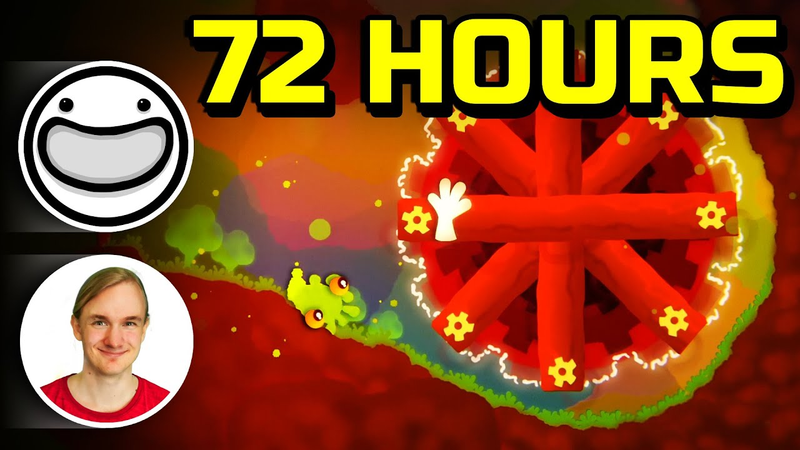
Making a 72 Hour Game Together
The collaborative development of the game Egdar’s Blobs during the Ludum Dare 46 game jam serves as a case study in rapid prototyping and the logistical challenges of remote game development.
- External playtesting is essential even in 72-hour development cycles, as developers lose perspective and often misjudge the intended difficulty curve compared to actual player behavior.
- The project demonstrated that a minimalist concept—where players manipulate the environment to protect a character—is highly effective for managing scope and ensuring a polished result within tight timeframes.
- Technical failures in version control, specifically a Unity Collab malfunction, resulted in a loss of four hours of productivity on the second day of development.