Game Design reports and market data
Documents

Vehicle Feel Masterclass: Balancing Arcade Accessibility with Simulation Depth
Effective vehicle design relies on a physicality-first philosophy that bridges the gap between arcade accessibility and simulation depth.
- To balance arcade accessibility with simulation depth, developers should build on a foundation of physical simulation and then apply input assists that emphasize desired behaviors while counteracting forces that hinder player enjoyment.
- Vehicle-led cameras are preferred over camera-led systems for high-precision gameplay, as they provide more direct control and better feedback on the vehicle's physical state, despite making it harder for players to look behind them.
- When emulating complex real-world mechanics like drifting, developers should re-center steering inputs so that zero input maintains a drift angle rather than straightening the wheels, allowing players to achieve professional-level control on analog pads.

Brain, UX & Design with Celia Hodent | Game Dev Unchained Episode 227
User experience design functions as a critical bridge between a developer’s intended vision and the actual perception of the player.
- UX design functions as a bridge between developer vision and player perception by applying cognitive science to mitigate subjective bias and ensure intuitive mechanics.
- Developers should foster intrinsic motivation by applying Self-Determination Theory, which focuses on satisfying the psychological needs for competence, autonomy, and relatedness.
- Immersive technologies like VR and AR require a shift away from traditional heads-up displays to address physiological mismatches between visual stimuli and the vestibular system that cause motion sickness.
An Architectural Approach to Level Design: Creating an Art Theory for Game Worlds (and So Can You!)
This presentation advocates for the professionalization of level design through the development of formal design theories, encouraging practitioners to document and share their unique workflows.
- Level design should be treated as a formal discipline comparable to architecture and classical design, requiring a robust, publicly accessible body of literature to elevate its cultural status.
- Designers can bypass non-disclosure agreements by abstracting their workflows into universal, teachable concepts rather than focusing on specific, proprietary game projects.
- The industry suffers from a 'culture of fear' regarding information sharing that hinders the development of a shared, sophisticated canon of design knowledge.
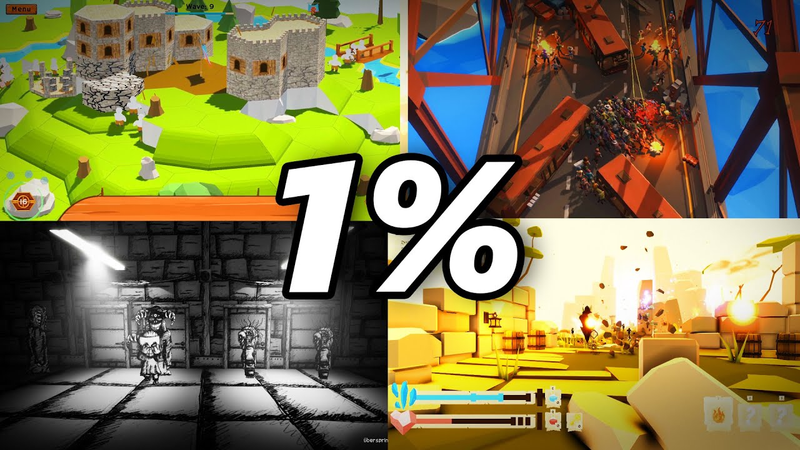
I Played 1% of Your Games (My Feedback)
Indie game development often falters when creators prioritize visual aesthetics over the fundamental clarity of player experience.
- Prioritize intuitive player experience and clear onboarding over visual aesthetics, as poor communication of core mechanics leads directly to user disengagement.
- Combat systems require strategic depth through diverse enemy types and faster movement mechanics to avoid the stagnation caused by repetitive, low-stakes encounters.
- Meaningful progression systems, such as unlockable abilities, are essential to transition gameplay from passive interaction to a dynamic loop that rewards player skill.
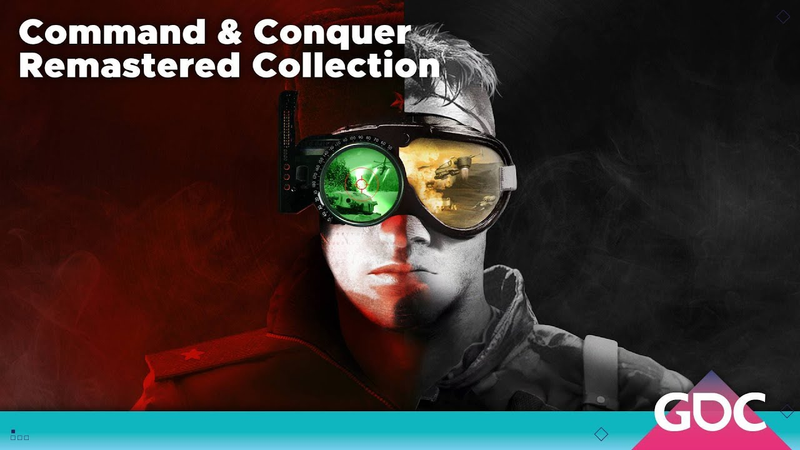
GDC Plays Command & Conquer Remastered Collection with Jim Vessella
The Command & Conquer Remastered Collection represents a strategic effort to revitalize a foundational real-time strategy franchise by balancing authentic 1990s gameplay with contemporary technical standards.
- EA partnered with Petroglyph Games and Lemon Sky Studios to develop the Command & Conquer Remastered Collection, leveraging the latter's prior experience in remastering legacy titles.
- Development began in November 2018 with a community-first approach, utilizing feedback from a community council to guide creative decisions before pre-production even started.
- Lemon Sky Studios re-conceptualized every game asset by referencing original hand-drawn sketches, manuals, and cinematics to create high-definition 3D models that were then exported as 2D sprites to maintain the original aesthetic.
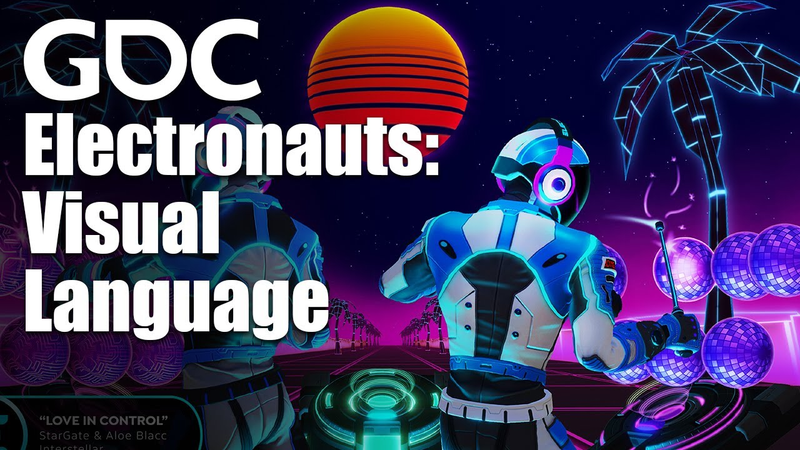
Visual Language of Electronauts: An Immersive Sound Based VR Experience
Electronauts is an immersive virtual reality music creation experience designed to enable users to perform music regardless of their formal musical training.
- Electronauts is a music creation experience developed by Survios that utilizes a proprietary 'Music Reality Engine' to ensure user inputs remain on-beat regardless of musical skill.
- The visual design of the experience was heavily influenced by 1980s synth-wave aesthetics, utilizing neon color palettes, geometric shapes, and cosmic imagery to create a psychedelic, sensory-overloading environment.
- The environment design for the 'Prodigy One' hub was inspired by professional audio equipment, incorporating speakers, equalizers, and turntables into the architecture to reinforce the theme of sound-driven creation.

The Distributed Art Direction of Edith Finch
The development of What Remains of Edith Finch serves as a case study in distributed art direction, where a small, independent team successfully navigated the absence of a singular art director by prioritizing iterative collaboration and shared creative goals.
- Giant Sparrow successfully developed What Remains of Edith Finch over a five-year cycle using a decentralized, non-hierarchical art direction model rather than a traditional top-down structure.
- The team utilized a 'just-in-time' methodology, allowing the visual style to evolve organically alongside gameplay mechanics and narrative requirements rather than adhering to a rigid pre-planned aesthetic.
- To ensure high-quality, story-driven environmental design, the team produced approximately three times the amount of material that was ultimately included in the final game.

Chatbot Game Manifesto: Golden Rules for Making a New Kind of Game
Chatbot games represent a distinct genre of semantic, narrative-driven experiences that prioritize emotional engagement over traditional mechanical inputs.
- Prioritize deterministic design and meticulous writing over complex, opaque machine learning systems to maintain precise control over the narrative experience.
- Mitigate the 'chatbot trap' of repetitive AI responses by utilizing large databases or modular sentence-building systems capable of generating millions of unique lines.
- Design systems to handle player input failures gracefully by employing evasive, open-ended responses and explicitly confirming when the AI has successfully parsed a specific intent.
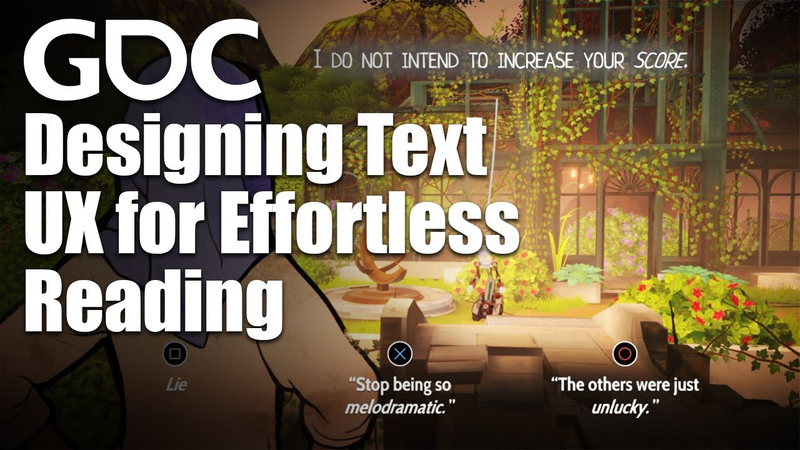
Designing Text UX for Effortless Reading
Optimizing text user experience in video games requires a fundamental shift in perspective, treating written content as a core gameplay element rather than a secondary aesthetic layer.
- Treat text as a core gameplay element rather than a secondary aesthetic layer to minimize cognitive friction for the player.
- Optimize readability by maintaining line lengths between five and fifteen words and utilizing generous margins and paragraph spacing.
- Calibrate typeface selection and layout design specifically to the player’s viewing distance to ensure accessibility and clarity.

Games, Psychology, And UX With Celia Hodent
User experience in game development functions as a critical design mindset that prioritizes human cognitive limitations over developer convenience.
- Game UX is a design mindset that prioritizes human cognitive limitations—such as flaws in perception, attention, and memory—over developer convenience to reduce unnecessary friction.
- Developers often suffer from 'curse of knowledge' bias, leading them to incorrectly assume players will tolerate confusing mechanics that the developers themselves find intuitive.
- Effective player onboarding and clear affordances are essential to mitigate the forgetting curve and interference of procedural memory, which otherwise lead to increased player attrition.
Games as a Service is Dead
The Games as a Service model is increasingly unsustainable for the majority of mobile developers, as the industry has shifted away from the organic virality that once defined early social gaming.
- Success in the current mobile market is determined by front-loaded store performance and initial install velocity rather than long-term iterative retention strategies.
- Developers must maximize conversion metrics during the first 30 days of a global launch, as organic visibility inevitably declines after this window.
- The pre-launch open beta phase is the most critical period for optimizing store conversion rates through constant A/B testing of icons, preview videos, and feature graphics.
Mastering Kombat: Designing Mortal Kombat 11's Empowering Tutorial Mode
Fighting games often suffer from high player dropout rates due to steep learning curves and exclusionary design.
- NetherRealm improved player retention in Mortal Kombat 11 by segmenting their audience into four categories—campaigners, dabblers, connoisseurs, and PvP players—and building a tiered tutorial roadmap that maps specific skills to each group's needs.
- To combat player frustration and drop-off, the studio moved away from a flat tutorial structure to a hierarchical system that allows for incremental rewards, such as premium currency and exclusive character gear, at the end of every lesson and category.
- The tutorial design utilizes 'Show and Tell' visual aids, such as freezing the game world and color-coding character meshes, to help players identify complex, time-sensitive situational mechanics that were previously difficult to recognize.