Game Design reports and market data
Documents
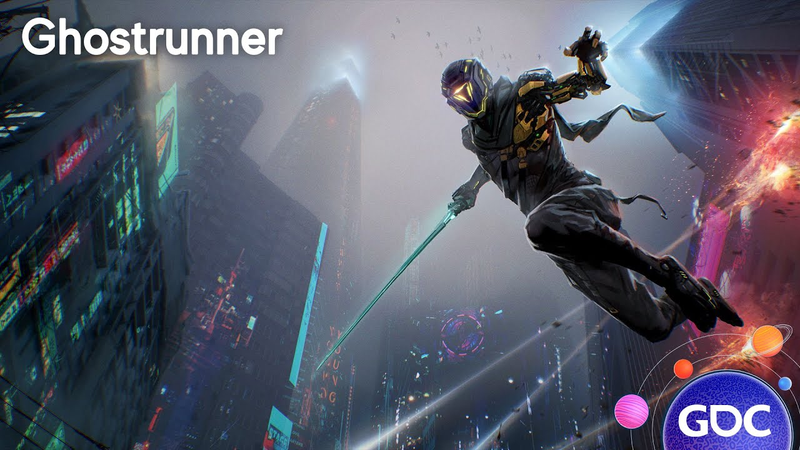
GDC Plays Ghostrunner with One More Level
The development of Ghostrunner represents a strategic shift toward high-fidelity, first-person action, moving away from the studio’s previous top-down design roots.
- Ghostrunner centers on a 'one-hit, one-kill' mechanic, which the developers adapted into a first-person perspective to differentiate the title from traditional action games.
- To maintain gameplay momentum, the developers designed levels to be 'waterproofed'—ensuring fluid movement and navigation while allowing for multiple player-chosen routes without stopping the action.
- Narrative exposition is delivered primarily through in-game dialogue rather than face-to-face interactions, utilizing quieter, non-combat platforming sections to ensure players can absorb the story without interrupting the game's pace.

Was GLaDOS Wrong About Science? - Momentum & Physics in Portal - Extra Credits
The core gameplay of the puzzle shooter Portal relies heavily on the intuitive application of momentum and energy conservation to navigate test chambers.
- Portal’s core gameplay relies on the player's intuitive understanding of Newton’s laws of motion, specifically the conversion of potential energy into kinetic energy.
- The portal gun mechanic fundamentally violates the first law of thermodynamics by creating potential energy out of nothing when objects are moved between portals at different elevations.
- The game ignores the physical constraints of energy transfer by allowing for the instantaneous redirection of momentum without accounting for the work required to change an object's state.

Beta test my next major game project?
The platform Full-Time Game Dev serves as a comprehensive educational resource designed to transition aspiring developers into full-time careers within the independent game industry.
- The 'Full-Time Game Dev' platform posits that technical coding skills are secondary to mastering marketing, business operations, and funding strategies for a sustainable indie career.
- The curriculum is built on the creator's decade of experience launching titles such as 'Pinstripe' and 'NeverSong'.
- Core modules integrate technical instruction in 2D illustration, C# programming, and Unity with business-focused training on social media growth, game design bibles, and Steam launch execution.
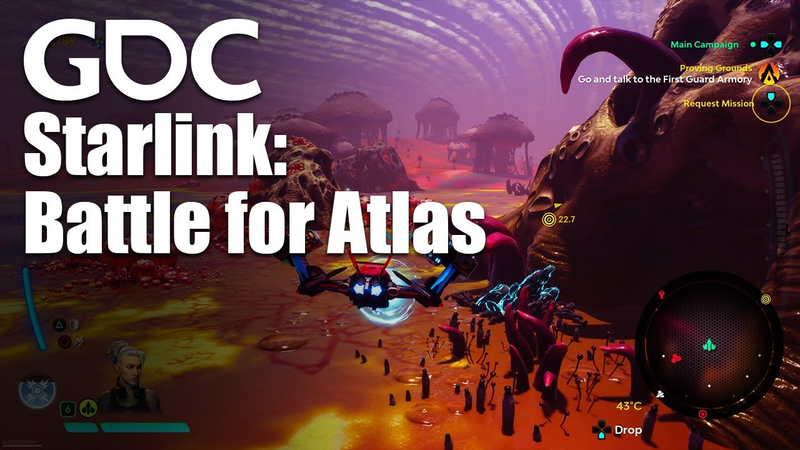
From Game Jam to the Creation of Starlink: Battle for Atlas
The development of Starlink: Battle for Atlas serves as a case study in balancing radical creative experimentation with the rigid demands of AAA production.
- To overcome the challenges of a wide-open innovation mandate, the Ubisoft 'Tomcat' team utilized a two-week iterative cycle consisting of brainstorming, pitching, voting, planning, and rapid prototyping.
- The team scaled brainstorming by starting with individuals, moving to pairs, and then groups of four, which allowed the team to generate hundreds of unique ideas rather than relying on the limited output of individuals.
- The team utilized a 'validate by any means necessary' approach during the one-week prototyping phase, employing diverse methods such as paper prototypes, existing game engines, and physical hardware hacks to prove concepts quickly.

I Built an Infinite Bathroom In Unity
The development of an infinite, procedurally generated public restroom within the Unity game engine serves as a practical exploration of the Wave Function Collapse (WFC) algorithm.
- The Wave Function Collapse (WFC) algorithm enables the creation of complex, self-consistent 3D environments by treating level design as a logic puzzle governed by adjacency and rotation rules.
- Successful implementation of the WFC system required the creation and precise labeling of 75 distinct modular 3D puzzle pieces, including toilets, cabinets, and structural elements.
- Infinite space is achieved by generating modular segments that are duplicated and arranged in a continuous loop, utilizing camera wrapping to create a seamless, endless environment.
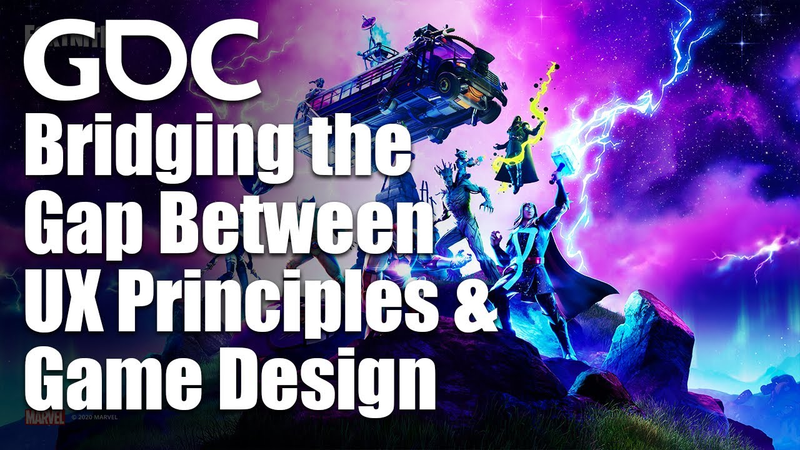
Bridging the Gap Between UX Principles and Game Design
This analysis explores the integration of User Experience (UX) principles into game design, arguing that both disciplines share the fundamental goals of clarifying player intent, fostering empathy, and providing meaningful experiences.
- Apply Gestalt laws of proximity and similarity to 3D combat encounters to help players intuitively prioritize threats without relying on intrusive UI elements.
- Use consistent visual language, such as specific shapes to denote safety or danger, to guide player navigation through 3D environments instinctively.
- Implement backend adjustments, such as the 'magic bullets' system used in Gears of War, to ensure core mechanics remain rewarding for both novice and expert players.

Using Educational Games in the Classroom: Guidelines for Successful Learning Outcomes
Digital games serve as powerful pedagogical instruments capable of enhancing student motivation, cognitive development, and technical proficiency when integrated into formal education.
- Educational games function most effectively as supplements to traditional instruction rather than replacements, requiring structured reflection and debriefing to connect game mechanics to curriculum objectives.
- Successful integration relies on a rigorous evaluation process that balances pedagogical alignment with technical feasibility, including accessibility for students with disabilities and compatibility with existing school infrastructure.
- Game-based learning leverages constructivist theories and immersive environments to facilitate trial-and-error experimentation, which is critical for mastering complex problem-solving and technical skills.
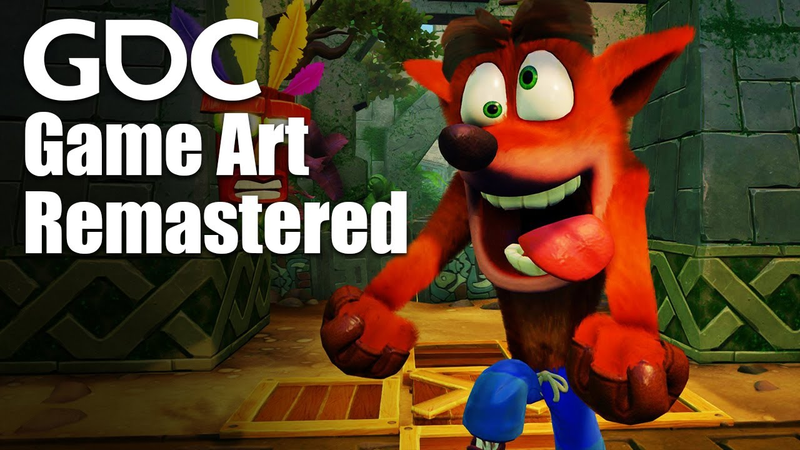
Game Art Remastered: From Crash, to Kerrigan, to Corley Motors
Modernizing classic video games requires a delicate balance between technical innovation and the preservation of original design intent.
- Successful game remasters require a balance between modern technical upgrades and the preservation of original design intent, silhouettes, and core gameplay mechanics.
- Remastering projects like StarCraft, the Crash Bandicoot trilogy, and Full Throttle often necessitate reverse-engineering legacy architecture and building custom tools to support 4K and widescreen standards.
- Production cycles are frequently complicated by the loss of original source files and documentation, forcing teams to rely on archival research and manual rotoscoping to reconstruct missing assets.
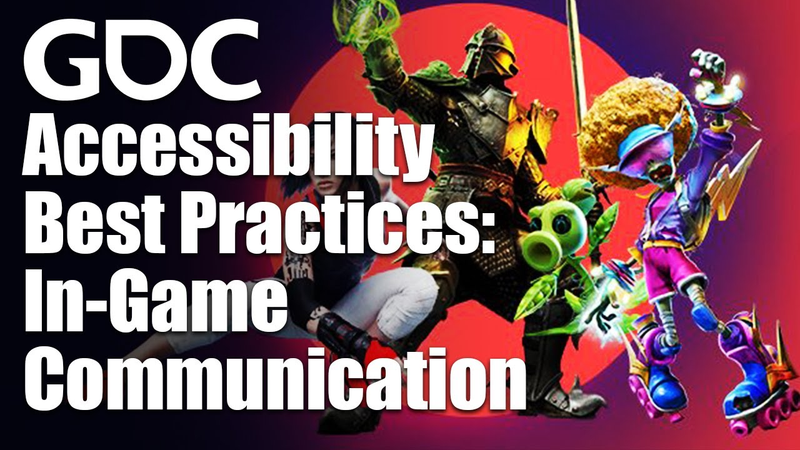
Accessibility Best Practices: In-Game Communication
Accessibility in modern gaming functions as a critical bridge between diverse player needs and digital environments, requiring developers to proactively eliminate mismatches that hinder engagement.
- Prioritize legible typography by using a minimum font size of 28 pixels tall and 3 pixels wide on a 1080p screen, while maintaining a 4.5:1 contrast ratio to ensure accessibility for all players.
- Implement a 'welcome screen' or 'hospitality screen' that allows players to configure essential accessibility settings, such as volume and communication preferences, before the game fully installs or begins.
- Provide menu narration to assist players with vision impairments, using either pre-recorded audio for straightforward implementation or text-to-speech engines like IBM Watson or CMU Flite for dynamic, scalable solutions.
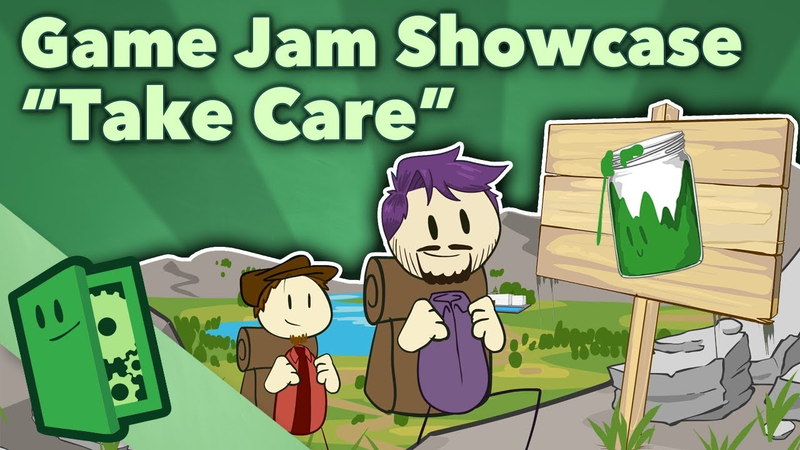
Game Jam Showcase - ep 6 - Take Care - Extra Credits
The sixth Extra Credits game jam, centered on the theme of Take Care, highlights the creative potential of rapid game development within a 72-hour timeframe.
- The sixth Extra Credits game jam, sponsored by Core, generated over 500 game submissions centered on the theme of 'Take Care' within a 72-hour development window.
- Modern game development platforms like Core allow creators to build functional, polished, and multiplayer-capable titles without requiring extensive coding experience.
- The event showcased a wide range of design philosophies, including procedural generation in 'Game of 1000+ Poems', meditative multiplayer tools like 'Now', and minimalist UI-driven storytelling in 'Fall of Bronze'.
Superstar: Designing for Interactive Game Streams: Incorporating Stream Viewers into Your Vision
Modern game design is undergoing a fundamental shift that treats live stream viewers as active participants rather than passive observers.
- Game developers have historically focused exclusively on the player experience, leaving the massive, growing audience of live-stream viewers as an underserved market for engagement and monetization.
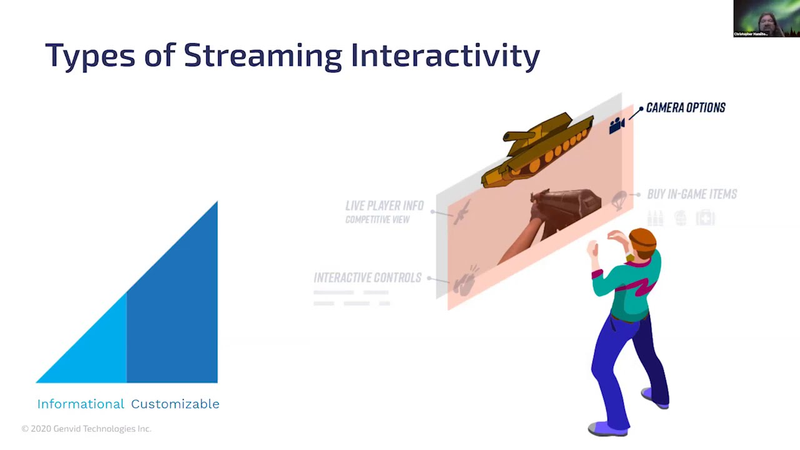
- Interactive streaming technology allows viewers to transition from passive observers to active participants, enabling them to influence gameplay through mechanics like cheering, voting, or purchasing in-game items.
- Massive online events like Fortnite's Travis Scott concert, which reached 12.3 million viewers, demonstrate that games are increasingly serving as social platforms for shared experiences beyond traditional gameplay.

Superstar Session: Live Ops: A Ten Year Journey of Iteration & Best Practices
Live operations (LiveOps) serve as a critical framework for modern game development, shifting the focus from a static product release to a continuous, iterative service model.
- LiveOps requires shifting from a static product release model to a continuous, iterative service model that treats games as evolving ecosystems.
- Monetization strategies—whether advertising, virtual goods, or premium content—must be defined during early development to dictate the required technical stack and engagement models.
- Studios should prioritize early content releases to facilitate rapid iteration rather than relying on unpredictable viral success.