Game Design reports and market data
Documents
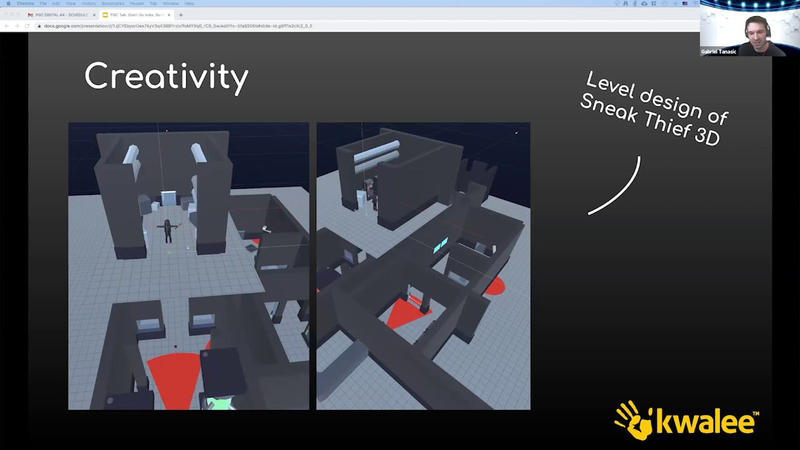
Superstar Session: Don't Go Indie, Go Hyper!
The hypercasual gaming sector offers a distinct alternative to traditional indie development, characterized by rapid prototyping, high creative turnover, and a focus on gameplay over complex production values.
- Hypercasual development prioritizes rapid prototyping, with core functionality often developed in under one week to allow for immediate marketability testing via click-through rate (CTR) analysis.
- The business model mitigates financial risk by utilizing a 'fail fast' approach, where developers abandon underperforming concepts early to focus resources exclusively on high-potential projects.
- Hypercasual games rely on broad accessibility and engaging mechanics rather than deep narratives or high-fidelity graphics, allowing for the use of asset packs and simplified programming to lower entry barriers.
Schrodinger's Coin - Quantum Multiverse Theory in Bioshock Infinite - Extra Credits
BioShock Infinite utilizes the quantum multiverse theory to construct its narrative, grounding its complex plot in real-world scientific concepts while ultimately diverging from established physical laws.
- BioShock Infinite uses the quantum multiverse theory to frame the narrative, where pivotal binary choices like Booker DeWitt’s baptism create distinct, parallel realities.
- The game utilizes the concept of quantum superposition to depict Booker DeWitt and Comstock as the same individual existing in different states simultaneously.
- Elizabeth’s ability to traverse realities is grounded in her physical connection to two universes, placing her in a state of permanent quantum suspension.

how I made & played a game with PEWDIEPIE in 14 days
The account details a 14-day game development challenge undertaken by indie developer Thomas Brush, who successfully leveraged a social media dare to collaborate with high-profile content creator PewDiePie.
- Strategic collaboration with high-profile influencers can serve as a primary catalyst for rapid career growth and audience acquisition for indie developers.
- Executing a high-pressure, 14-day development challenge demonstrates that professional-grade projects can be completed under strict time constraints through iterative design.
- Live-streaming the entire development process functions as a powerful marketing tool, directly contributing to a substantial increase in the developer's subscriber base.
Multiple Middles & Mutazione
The narrative design of the 2019 game Mutazione utilizes a structural approach termed multiple middles to facilitate an ensemble-driven, soap opera-style narrative.
- The 'multiple middles' narrative design approach prioritizes exploration-based discovery over traditional branching dialogue or multiple endings, allowing players to engage with an ensemble cast at their own pace.
- By structuring the game around mandatory 'A-plots' and optional 'B' and 'C' subplots, the narrative ensures that all characters receive development while allowing players to choose which interpersonal dramas to investigate.
- To maintain transparency and player agency, the game uses a diegetic journal system that clearly distinguishes between mandatory story-advancing actions and optional content, giving players control over when to trigger the next time-of-day transition.
The UX Challenges of Adapting Classic UNO to Mobile
Adapting the classic card game UNO for mobile platforms requires a strategic balance between preserving the core physical experience and innovating for digital constraints.
- To bridge the gap between physical and digital play, developers transitioned from a rigid, tiled card layout to a 3D perspective that mimics the natural arc and posture of a human hand holding cards.
- To solve the problem of complex rule sets across 150 countries, the team abandoned a cluttered list of options in favor of a 'game mode' system that allows players to create and save custom rule configurations, resulting in 488 possible variations.
- The design team applied Hick's Law to address player churn, recognizing that presenting too many rule options on a small mobile screen increased decision time and negatively impacted the user experience.
How to Reduce In-Game Inflation by Monitoring Your Economic Systems
Managing economic stability in complex MMORPGs requires a proactive approach to monitoring and regulating in-game inflation, which mirrors the challenges faced by central banks in real-world economies.
- Developers must treat in-game economies as dynamic systems by balancing time, labor, and currency to prevent price volatility and maintain player confidence.
- The five primary drivers of inflation are excessive currency issuance, insufficient essential item production, declining player populations, market manipulation by bots, and the sudden influx of 'sleeping money' from returning players.
- Teams should implement robust visualization tools to track currency flow, exchange rates, and transaction networks to identify imbalances between currency issued and collected.
Destiny, The Traveler & How to Fix Planets - The Science of Destiny - Extra Credits
The analysis examines the scientific feasibility of the planetary environments featured in the video game Destiny, specifically focusing on why the game’s mechanics treat the Moon, Venus, and Mars as having Earth-like gravity and atmospheric conditions.
- The Traveler serves as a narrative device to justify the uniform gravity and atmospheric conditions required for consistent combat mechanics across different planets.
- Lunar combat in reality would be hindered by one-sixth Earth gravity, which would cause extreme weapon recoil and erratic projectile trajectories.
- Venusian surface activity is physically impossible under real-world conditions due to atmospheric pressure that is 90 times greater than Earth's.
Productive Dissension: How a Diverse Writers' Room Created Life is Strange: Before the Storm
The production of the 1,500-page script for the interactive game Life is Strange: Before the Storm utilized a collaborative writers' room model adapted from television production.
- To manage the 1500+ page script for 'Life is Strange: Before the Storm,' Deck Nine Games utilized a television-style writers' room to foster collaborative narrative design.
- A productive writers' room requires an 'etiquette of exchange,' which is a shared vocabulary and methodology that allows a team to debate complex story elements while maintaining focus.
- The lead writer must act as a decisive curator who frames discussions, navigates the 'whirlwind' of creative ideas, and maintains the project's compositional velocity.
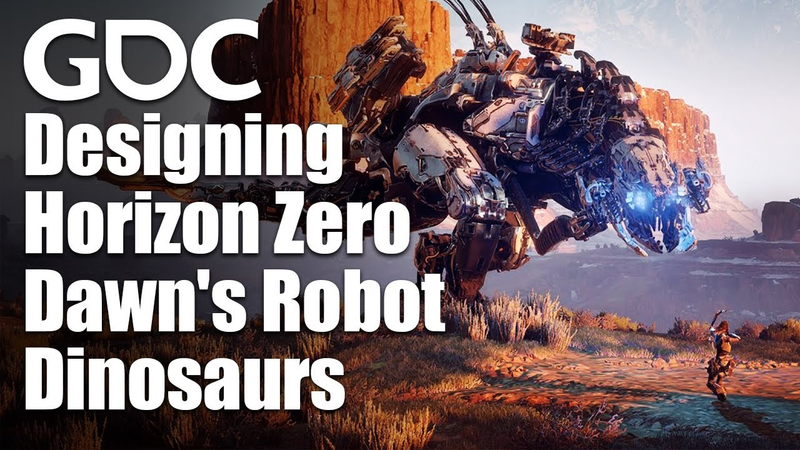
A No-Nonsense Approach to Designing Horizon Zero Dawn's Robot Dinosaurs
Guerrilla Games developed Horizon Zero Dawn to revitalize its creative output following a decade of work on the Killzone franchise.
- Guerrilla Games developed Horizon Zero Dawn to pivot away from the Killzone franchise and establish a distinct, vibrant post-apocalyptic intellectual property.
- The design team utilized intrinsic ideation, a methodology that grounds all visual elements, architecture, and societal structures in logical environmental and resource-based constraints.
- To ensure intuitive combat, the studio transitioned from military-inspired aesthetics to biomimetic designs modeled after real-world animal and dinosaur behaviors.
Depiction of War in Games: Can You Do Better?
Video games frequently reduce the experience of war to a cycle of hyper-violent, high-intensity combat that fails to capture the intricate reality of military operations.
- Military training simulators like Bohemia Interactive’s VBS series demonstrate that war involves hundreds of non-kinetic tasks—such as using turn signals in convoys—that are essential to operations but rarely represented in commercial first-person shooters.
- Game developers can move beyond narrow, combat-focused narratives by adopting a 'pyramid of conflict' structure, where global, local, and personal feuds overlap to create complex, shifting alliances similar to those found in 'Game of Thrones' or 'The Witcher 3'.
- Modern warfare often involves 'unlawful combatants' who blend into civilian populations, creating scenarios where soldiers must make split-second, high-stakes moral decisions under the rules of engagement rather than simply identifying and shooting enemies.
Inspiring Creativity through Internal Game Jams
Internal game jams function as essential catalysts for innovation, cross-disciplinary collaboration, and professional development within the gaming industry.
- Internal game jams act as catalysts for innovation by providing a low-stakes environment that bypasses the paralysis of long-term production cycles.
- Teams must aggressively cut scope to ensure the delivery of a functional, playable product within a strict 48-hour window.
- Successful jams require diverse, cross-disciplinary teams of engineers, artists, and producers to break down departmental silos.

YOUR ART redrawn by PROFESSIONAL GAME ARTIST
High-quality digital game art is achievable through methodical layering and fundamental design principles rather than reliance on expensive hardware or innate artistic talent.
- High-quality game art is primarily driven by methodical layering, iterative refinement, and disciplined composition rather than expensive hardware or innate talent.
- Establishing a consistent light source, such as a moon or lantern, is the foundational step for logically placing shadows and highlights to unify a composition.
- Visual depth and scale are achieved by applying motion blurs to atmospheric elements like clouds and reflections while incorporating foreground details such as vines or grass.